Lexus EV Cars: The Short Answer
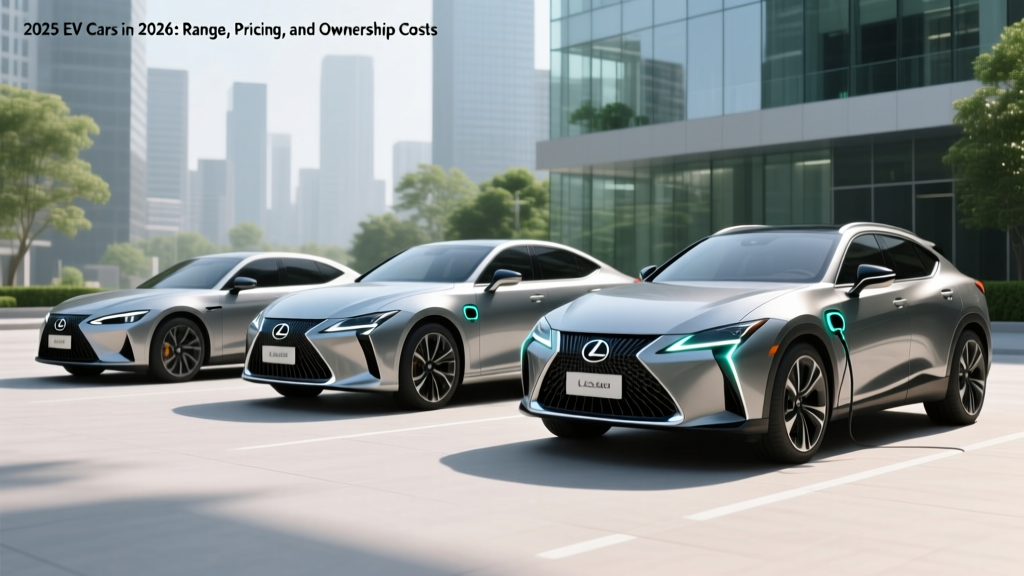
Lexus currently sells two dedicated battery-electric models in the U.S.: the RZ 450e (dual-motor AWD, 222-mile EPA range, starting at $54,350) and the RZ 300e (single-motor FWD, 266-mile EPA range, starting at $49,350). Both ride on Toyota's e-TNGA platform with a 71.4 kWh usable NMC lithium-ion battery. Neither qualifies for the federal §30D tax credit in 2026 because final assembly occurs in Japan. The RZ line prioritizes ride refinement and cabin quietness over class-leading range or charging speed — expect 10–80% DC fast charging in roughly 30 minutes at a peak of 150 kW. For buyers seeking a luxury EV crossover with 250+ miles of range and sub-20-minute fast charging, competitors like the Genesis GV60 or BMW iX deliver more on paper. The Lexus EV lineup makes sense if you value brand trust, dealer service familiarity, and a plush ride over maximum efficiency.
Current Lexus EV Models and Key Specs
As of the 2026 model year, the Lexus RZ is the brand's only dedicated EV nameplate. It's offered in two powertrain configurations across three trim levels (Premium, Premium Plus, Luxury). Here's what the numbers look like:
| Spec | RZ 450e (AWD) | RZ 300e (FWD) |
|---|---|---|
| Drivetrain | Dual-motor AWD | Single-motor FWD |
| Horsepower | 308 hp | 201 hp |
| 0–60 mph | 4.6 seconds | 7.0 seconds |
| Battery (usable) | 71.4 kWh NMC | 71.4 kWh NMC |
| EPA Range | 220 mi (18" wheels) / 196 mi (20" wheels) | 266 mi (18" wheels) |
| MPGe (combined) | 102 MPGe | 115 MPGe |
| Max DC Charge Rate | 150 kW (peak) | 150 kW (peak) |
| 10–80% DC Charge | ~30 minutes | ~30 minutes |
| Level 2 (240V) Rate | 7.68 kW (~9.5 hours 0–100%) | 7.68 kW (~9.5 hours 0–100%) |
| Base MSRP | $54,350 | $49,350 |
| Battery Warranty | 10 yr / 150,000 mi | 10 yr / 150,000 mi |
Source: fueleconomy.gov and Lexus USA specifications. Verify trim-level pricing with your dealer as destination fees and options apply.
Real-World Range Expectations
The RZ 450e's EPA rating of 220 miles (on 18-inch wheels) is modest for a luxury crossover in this price range. In real-world highway driving at 70–75 mph, expect approximately 180–200 miles in mild weather. In cold conditions (below 30°F), range can drop to 150–170 miles due to battery chemistry limitations and cabin heating demands. The RZ 300e's 266-mile EPA figure translates more favorably — roughly 225–245 miles on the highway in temperate conditions. Neither model includes a heat pump as standard on all trims, which impacts cold-weather efficiency compared to competitors like the Hyundai Ioniq 5 or BMW iX.
Charging Speed and Infrastructure Reality
The RZ's 150 kW peak DC fast-charging rate is the most common criticism from EV reviewers. For context, the Hyundai Ioniq 5 peaks at 240 kW and the Porsche Macan Electric at 270 kW. Here's what that means in practice:
| Charging Level | Power | Miles Added per Hour | Typical Use Case |
|---|---|---|---|
| Level 1 (120V) | 1.4 kW | ~4–5 mi/hr | Emergency / overnight trickle |
| Level 2 (240V, 32A) | 7.68 kW | ~25–28 mi/hr | Home overnight charging |
| DC Fast Charge | 150 kW peak | ~150 mi in 30 min (10–80%) | Road trips |
The RZ uses a CCS1 connector for DC fast charging and a J1772 inlet for Level 2. Lexus does not currently offer a NACS (Tesla Supercharger) port on the RZ, though Toyota has announced future NACS adoption. For 2026, RZ owners can access Tesla Superchargers using a CCS-to-NACS adapter where supported, but native NACS compatibility is not available.
Charging curve reality: The 150 kW figure is a peak, not a sustained rate. The RZ typically holds above 100 kW through roughly 50% state of charge (SoC), then tapers progressively. Above 80% SoC, charging slows dramatically to protect the battery — a 10–80% session takes roughly 30 minutes, but 80–100% can add another 30+ minutes. Plan road-trip stops around the 10–80% window for efficiency.
Lexus EV vs. Gas and Hybrid Alternatives
Lexus built its reputation on hybrid mastery — the RX 500h and NX 450h+ are among the best luxury hybrids available. So how does the RZ EV stack up against its own stablemates and gas competitors?
| Vehicle | Powertrain | MSRP | EPA Range / MPG | Annual Fuel Cost* |
|---|---|---|---|---|
| Lexus RZ 450e | BEV (AWD) | $54,350 | 220 mi / 102 MPGe | ~$750 |
| Lexus RX 350h | HEV (AWD) | $52,550 | 36 MPG combined | ~$1,850 |
| Lexus RX 500h | HEV (AWD) | $62,350 | 30 MPG combined | ~$2,200 |
| BMW iX xDrive50 | BEV (AWD) | $87,250 | 324 mi / 86 MPGe | ~$900 |
| Genesis GV60 | BEV (AWD) | $53,350 | 248 mi / 95 MPGe | ~$800 |
*Annual fuel cost estimates based on 15,000 miles/year, $3.50/gal gas, and $0.16/kWh electricity (national average). Your costs vary by local rates and driving patterns. Source: fueleconomy.gov.
The RZ 450e saves roughly $1,100–$1,450 per year in fuel compared to the RX 350h hybrid. Over five years, that's $5,500–$7,250 in fuel savings. However, the RZ doesn't qualify for the $7,500 federal tax credit, so the net purchase cost is higher than a credit-eligible EV. The hybrid RX 350h offers 500+ miles of total range with no charging infrastructure dependence — a legitimate advantage for apartment dwellers or frequent road-trippers in charging-sparse regions.
Total Ownership Cost Breakdown
Here's a realistic five-year cost projection for the RZ 450e Premium versus the RX 350h, assuming 15,000 miles/year, home Level 2 charging at $0.16/kWh, and national-average insurance rates:
| Cost Category | RZ 450e (5 Years) | RX 350h (5 Years) |
|---|---|---|
| Purchase Price (MSRP) | $54,350 | $52,550 |
| Federal Tax Credit (§30D) | $0 (Japan-assembled) | N/A |
| Fuel / Electricity | ~$3,750 | ~$9,250 |
| Maintenance | ~$1,500 | ~$3,500 |
| Insurance (avg) | ~$12,500 | ~$10,500 |
| Estimated Depreciation | ~$24,000 | ~$19,000 |
| Total 5-Year Cost | ~$96,100 | ~$94,800 |
Insurance estimates based on industry averages; EV premiums are typically 15–25% higher than equivalent ICE/hybrid models. Depreciation is an estimate — EV resale values remain volatile. Consult your insurer for exact quotes.
The five-year costs are remarkably close. The RZ saves on fuel and maintenance (no oil changes, fewer brake replacements due to regenerative braking), but higher insurance premiums and steeper depreciation offset those gains. The break-even point heavily depends on your local electricity rates, annual mileage, and whether your state offers additional EV incentives.
First-Time EV Buyer Considerations
If the Lexus RZ would be your first EV, these practical factors determine whether ownership is seamless or frustrating:
Home Charging Access
This is the single biggest variable. With a home Level 2 charger (240V, 32A), the RZ adds roughly 25–28 miles of range per hour — an overnight session easily replenishes a full day's driving. Installation costs range from $500–$2,500 if your electrical panel has spare capacity, or $2,500–$5,000+ if you need a panel upgrade to 200A. Get a quote from a licensed electrician before purchasing. Without home charging, relying on public DC fast chargers at 150 kW peak means 30+ minute sessions multiple times per week — feasible but inconvenient.
Driving Patterns and Climate
The RZ 450e's 220-mile range works well for daily commutes under 60 miles round-trip with home charging. For regular 200+ mile highway trips, you'll need to plan charging stops — and at 30 minutes per stop (10–80%), that adds meaningful time. In cold climates (consistent sub-30°F winters), the effective range drops 20–30%, making the RZ 300e's 266-mile rating a more practical choice for northern buyers.
Tax Credit and Incentive Reality
Under current IRS §30D rules, the Lexus RZ does not qualify for the $7,500 federal tax credit because it is assembled in Motomachi, Japan — failing the North American final assembly requirement. Some states offer separate EV rebates (California's CVRP, Colorado's state credit, etc.) that may apply regardless of assembly location. Check your state's energy office for current programs.
| Common Misconception | Fact |
|---|---|
| "All EVs qualify for the $7,500 tax credit" | The §30D credit requires North American assembly, income caps ($150K single / $300K joint), MSRP caps ($55K for SUVs), and battery-sourcing thresholds. The RZ fails the assembly requirement. |
| "EV batteries need replacing every few years" | Lexus warrants the RZ battery for 10 years / 150,000 miles with a 70% capacity retention threshold. Industry data shows most NMC batteries retain 85–90% capacity at 100,000 miles. |
| "The RZ charges at 150 kW the whole time" | 150 kW is a peak rate. Sustained charging averages closer to 80–100 kW over a 10–80% session due to the charge curve taper. |
| "EVs are always cheaper to own" | Without a tax credit, the RZ 450e's five-year cost is comparable to the RX 350h hybrid. Savings depend on mileage, electricity rates, and insurance costs. |
Decision Framework: Is a Lexus EV Right for You?
Choose the Lexus RZ 450e if:
- You have reliable home Level 2 charging and a daily commute under 80 miles
- You prioritize cabin quietness, ride comfort, and Lexus dealer service over maximum range
- You want AWD traction and a 4.6-second 0–60 time for highway merging confidence
- You're a current Lexus owner who values brand continuity and loyalty incentives
Choose the Lexus RZ 300e if:
- Range is your priority — 266 EPA miles is meaningfully more practical than 220
- You live in a warmer climate where cold-weather range loss is less severe
- You want a lower starting price ($49,350 vs $54,350) and don't need AWD
Look elsewhere (Genesis GV60, BMW iX, Hyundai Ioniq 5) if:
- You regularly drive 250+ miles between charging stops and need faster DC charging (200+ kW)
- Federal tax credit eligibility matters to your purchase math
- You want native NACS / Tesla Supercharger access without an adapter
- You need three rows of seating or significant cargo/towing capacity
Frequently Asked Questions
Does any Lexus EV qualify for the federal tax credit?
No. As of 2026, the Lexus RZ is assembled in Japan and does not meet the North American final assembly requirement of IRS §30D. Lexus has not announced plans to shift RZ production to the U.S. Check your state for separate incentive programs that may apply.
Will Lexus add more EV models soon?
Toyota (Lexus's parent company) has announced a next-generation EV platform with improved battery chemistry expected around 2027–2028, including potential solid-state battery options. A larger Lexus electric SUV and sedan are anticipated, but no U.S.-market models beyond the RZ are confirmed for sale as of early 2026. Any future models should be considered announced/preliminary until official pricing and EPA certification are released.
How long will the Lexus RZ battery last?
Lexus provides a 10-year / 150,000-mile warranty on the high-voltage battery, guaranteeing it will retain at least 70% of original capacity. The 71.4 kWh NMC battery uses a chemistry with proven longevity — industry data from similar Toyota/Lexus battery packs suggests 85–90% capacity retention at 100,000 miles under normal use. Avoid habitual DC fast charging to 100% and prolonged storage at very low or very high SoC to maximize longevity.
Can I charge the Lexus RZ at Tesla Superchargers?
The RZ uses a CCS1 connector and does not have a native NACS port. You can access some Tesla Supercharger stations using a CCS-to-NACS adapter, but compatibility varies by station and Tesla's adapter program terms. Check Tesla's website for the current list of Supercharger stations open to non-Tesla EVs before relying on this for road trips.
Is the Lexus RZ a good first EV?
It can be, with caveats. The RZ is refined, comfortable, and backed by Lexus's strong dealer network and warranty support. However, its relatively modest range (220–266 miles), 150 kW peak charging speed, and lack of federal tax credit eligibility mean it's not the most practical or cost-effective entry point into EV ownership. If you have home charging and moderate daily mileage, it's a pleasant experience. If you're stretching your budget or lack reliable home charging, a longer-range, faster-charging, credit-eligible EV may serve you better.