The Quick Answer: Should You Buy a Lexus Electric Car?
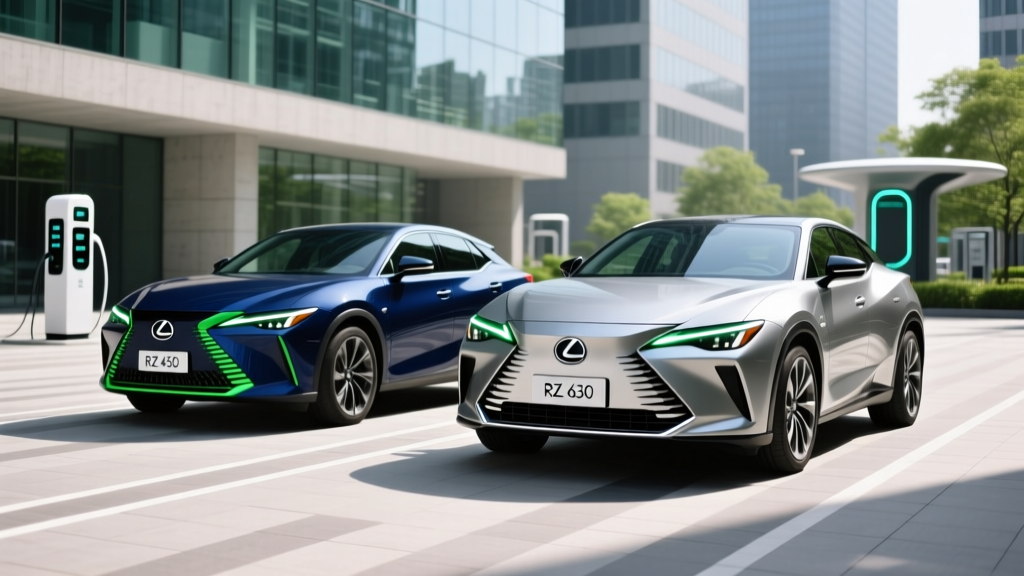
Lexus currently sells two fully electric models for 2026: the RZ 450e (dual-motor AWD, 227 miles EPA range, starting ~$55,175) and the RZ 300e (single-motor FWD, 266 miles EPA range, starting ~$46,975). Both use a 72.8 kWh (usable) NMC battery and support up to 150 kW DC fast charging (10–80% in roughly 30 minutes). If you want the quietest, most refined entry into EV ownership and already have access to Level 2 home charging, the RZ line delivers. However, Lexus hybrids like the RX 500h offer 560+ miles of total range, faster refueling, and lower starting prices — making them the pragmatic pick if you road-trip frequently, live in a charging desert, or lack reliable home charging.
The 2026 Lexus EV Lineup: RZ 450e and RZ 300e
Lexus has taken a measured approach to electrification, and as of the 2026 model year the RZ remains the brand's sole dedicated EV nameplate. Built on the e-TNGA platform (shared with the Toyota bZ4X and Subaru Solterra), the RZ comes in two powertrain configurations:
| Spec | 2026 RZ 450e (AWD) | 2026 RZ 300e (FWD) |
|---|---|---|
| Drivetrain | Dual-motor AWD | Single-motor FWD |
| Horsepower | 308 hp | 201 hp |
| 0–60 mph | 5.0 sec | 7.4 sec |
| Battery (usable) | 72.8 kWh NMC | 72.8 kWh NMC |
| EPA Range | 227 mi (Premium); 196 mi (Luxury w/ 20" wheels) | 266 mi (Premium); 236 mi (Luxury) |
| MPGe (combined) | 102 MPGe | 116 MPGe |
| Max DC Fast Charge | 150 kW (CCS1 / NACS adapter) | 150 kW (CCS1 / NACS adapter) |
| 10–80% DC Time | ~30 min | ~30 min |
| Level 2 (240V) Charge Rate | ~7.7 kW | ~7.7 kW |
| Starting MSRP | $55,175 | $46,975 |
| Battery Warranty | 8 yr / 100,000 mi | 8 yr / 100,000 mi |
Source: fueleconomy.gov and Lexus USA specifications.
Real-World Range: What the EPA Sticker Doesn't Tell You
The EPA numbers above assume a mix of city and highway driving at moderate temperatures. In practice, several factors compress range meaningfully:
- Highway driving (75+ mph): Expect roughly 15–20% less range. An RZ 450e Premium rated at 227 miles may deliver ~180–195 miles on a sustained interstate trip.
- Cold weather (below 32°F): Battery chemistry and cabin heating can reduce range by 20–30%. The same RZ 450e could drop to 155–175 miles in freezing conditions. The RZ does not include a dedicated heat pump as standard on all trims, which affects cold-weather efficiency compared to competitors like the Hyundai Ioniq 5 or Tesla Model Y.
- Elevation and terrain: Mountain passes with sustained climbing will cut range further, though regenerative braking on descents recovers some energy.
Real-World Range Expectation: RZ 450e Premium — EPA 227 mi; expect ~180–200 mi highway, ~155–175 mi in freezing cold. RZ 300e Premium — EPA 266 mi; expect ~215–240 mi highway, ~185–210 mi in freezing cold. Plan charging stops conservatively.
Charging: Speeds, Connectors, and Home Setup
Charging Levels at a Glance
| Level | Power | Miles Added per Hour | Typical Use |
|---|---|---|---|
| Level 1 (120V) | ~1.4 kW | ~3–4 mi/hr | Overnight trickle, emergencies |
| Level 2 (240V) | ~7.7 kW | ~22–26 mi/hr | Home daily charging, workplace |
| DC Fast Charge | Up to 150 kW | ~150–200 mi in 30 min (10–80%) | Road trips |
Connector note: The RZ ships with a CCS1 port. Lexus offers a NACS adapter for Tesla Supercharger access. As Tesla's network opens broadly, this adapter significantly expands your road-trip charging options — a critical consideration given that Electrify America and EVgo reliability varies by location.
Charging curve reality: The 150 kW peak rate only holds briefly at low state of charge (roughly 10–30%). From 50% onward, the rate tapers significantly, and above 80% it slows to a trickle to protect the NMC battery. That's why the 10–80% metric (~30 minutes) is the meaningful one — charging from 80–100% can add another 25–35 minutes.
Home Charging Installation
Most RZ owners will want a Level 2 home charger (240V, 32–48 amp circuit). Budget for the following:
| Item | Cost Range |
|---|---|
| Level 2 charger hardware (ChargePoint, Emporia, Wallbox) | $350–$700 |
| Electrician labor (new 50A circuit, conduit, outlet/hardwire) | $500–$2,000 |
| Electrical panel upgrade (if needed — older homes with 100A panels) | $1,500–$4,000 |
| Permit and inspection | $50–$300 |
| Total (typical, no panel upgrade) | $900–$3,000 |
Always hire a licensed electrician and pull a permit. Final costs depend on your panel capacity, the distance from panel to garage, and local code requirements.
Lexus EV vs. Lexus Hybrid: The Numbers That Matter
Many Lexus shoppers cross-shop the RZ with hybrid models like the RX 350h or RX 500h. Here's how they compare for a buyer who drives 12,000 miles per year:
| Factor | RZ 450e (EV) | RX 350h (Hybrid) |
|---|---|---|
| Starting MSRP | $55,175 | $53,395 |
| EPA Efficiency | 102 MPGe (2.97 kWh/mi) | 36 MPG combined |
| Total Range | ~227 mi | ~560 mi |
| Annual Fuel/Energy Cost (12k mi/yr) | ~$540 (at $0.15/kWh, home charging) | ~$1,167 (at $3.50/gal) |
| Refueling/Recharge Time | 8–10 hr (Level 2 home); 30 min (DC fast) | ~5 min (gas station) |
| Oil Changes | None | 2× per year (~$150–$250/yr) |
| Federal Tax Credit (§30D) | Up to $7,500 (eligibility varies) | Up to $7,500 (PHEV only — RX 350h HEV does not qualify) |
| Estimated 5-Year Fuel Savings vs. Gas (30 MPG baseline) | ~$3,100 | ~$1,200 |
Energy cost assumptions: electricity at $0.15/kWh national average; gasoline at $3.50/gal. Your rates may vary significantly — check your utility's EV time-of-use plans for lower overnight rates.
The RZ wins on per-mile energy cost and maintenance simplicity, but the RX hybrid eliminates range anxiety entirely. If you drive more than 250 miles in a day regularly, or if your apartment or neighborhood lacks charging access, the hybrid remains the lower-friction choice.
Cost of Ownership: 5-Year Breakdown
| Cost Category | RZ 450e Premium | RX 350h Premium (HEV) |
|---|---|---|
| Purchase Price (MSRP) | $55,175 | $53,395 |
| Federal Tax Credit (§30D) | Up to $7,500* | $0 (HEV not eligible) |
| Home Charger Install | ~$1,500 | $0 |
| 5-Year Energy/Fuel | ~$2,700 | ~$5,835 |
| 5-Year Maintenance (est.) | ~$800 | ~$2,200 |
| 5-Year Insurance (est.) | ~$10,500 | ~$8,500 |
| Net 5-Year Cost (before depreciation) | ~$63,175 | ~$69,930 |
*§30D Tax Credit caveat: The federal EV tax credit has income caps ($150K single / $300K joint), MSRP caps ($55K for SUVs), and battery sourcing/critical mineral requirements that change yearly. The RZ 450e Premium at $55,175 sits right at the SUV MSRP cap — confirm current-year eligibility on irs.gov or with a tax professional before counting on the credit. Point-of-sale transfer is available if eligible.
Insurance premiums for EVs tend to run 15–25% higher than comparable ICE or hybrid models due to higher repair costs after collisions. Get quotes before committing.
Common Misconceptions About Lexus Electric Cars
| Myth | Fact |
|---|---|
| "Lexus EVs have the same range as Tesla." | The RZ 450e's 227-mile EPA range trails the Tesla Model Y Long Range (320+ mi) and the Hyundai Ioniq 5 (305 mi). The RZ 300e at 266 mi is more competitive but still mid-pack. |
| "The battery will need replacing in 5 years." | NMC batteries in modern EVs typically retain 85–90% capacity after 100,000 miles. Lexus warrants the battery for 8 years/100,000 miles against defects and excessive degradation. Full replacement, if ever needed, runs $12,000–$18,000 out of warranty. |
| "You can charge at any Tesla Supercharger." | Only with a NACS adapter. Not all Supercharger stalls have the Magic Dock CCS adapter built in. Confirm station compatibility in the Tesla app before relying on it. |
| "The RZ qualifies for the full $7,500 tax credit." | Eligibility depends on your income, the vehicle's MSRP, and battery mineral sourcing rules that shift annually. Always verify on irs.gov for the current tax year. |
| "EVs are worse in the cold." | EVs do lose range in freezing weather (20–30%), but they start instantly, don't idle to warm up, and can precondition the cabin while plugged in — something gas cars can't do safely in a garage. |
Decision Framework: Is a Lexus EV Right for You?
Choose the RZ 450e or RZ 300e if:
- You have access to Level 2 home charging (garage or dedicated parking with 240V outlet).
- Your daily commute is under 80 miles round-trip, meaning you'll rarely need public fast charging.
- You value cabin quietness, ride refinement, and Lexus dealer service over maximum range or sporty dynamics.
- You live in a moderate climate or can accept cold-weather range reduction.
- You want to reduce per-mile energy costs and don't mind a 200-mile practical range ceiling.
Choose a Lexus Hybrid (RX 350h, NX 350h, TX 500h) instead if:
- You lack reliable home or workplace charging access.
- You take road trips longer than 250 miles more than a few times per year.
- You live in an area with sparse DC fast-charging infrastructure (rural or charging-desert regions).
- You want maximum total range (560+ miles) with zero refueling-planning friction.
- You want a lower purchase price and lower insurance premiums.
Consider a competitor EV if:
- You need 300+ miles of EPA range — look at the Tesla Model Y, Hyundai Ioniq 5, or Chevrolet Blazer EV.
- You want faster DC charging (250–350 kW peak) — the Ioniq 5 and Genesis GV60 charge 10–80% in ~18 minutes on 800V architecture.
- You want three rows of seating — the Kia EV9 or Rivian R1S offer that; the RZ is strictly a two-row crossover.
What First-Time Lexus EV Buyers Should Know
- Get a home charging assessment first. Before purchasing, have an electrician evaluate your panel capacity. A 200A panel typically supports a 48A Level 2 charger without upgrade. A 100A panel may require a $1,500–$4,000 upgrade.
- Understand kW vs. kWh. kWh (kilowatt-hours) measures battery capacity — the RZ has 72.8 kWh usable. kW (kilowatts) measures charge speed — the RZ charges at up to 150 kW. They are not interchangeable.
- Precondition before fast charging. Use the RZ's navigation to route to a DC fast charger; the car will warm the battery to optimize charge speed. Skipping preconditioning in cold weather can double your charging time.
- Check your utility's EV rate plan. Many utilities offer time-of-use plans with overnight rates as low as $0.06–$0.10/kWh, cutting your annual charging cost nearly in half vs. the national average.
- Verify tax credit eligibility before signing. The §30D credit has moved targets on battery sourcing and critical minerals. Confirm the RZ qualifies in the current tax year at fueleconomy.gov's tax credit page.
- Test the public charging network near you. Download the PlugShare or ChargePoint app and check DC fast charger availability along your most common road-trip routes before buying.
Does the Lexus RZ support Tesla Superchargers?
Yes, with a NACS adapter. Lexus offers an adapter that enables access to Tesla's Supercharger network. Confirm adapter availability for your model year at your dealer, and check that the specific Supercharger station supports non-Tesla vehicles via the Tesla app.
How long will the Lexus RZ battery last?
Lexus warrants the high-voltage battery for 8 years or 100,000 miles. Based on NMC degradation data from similar platforms, expect roughly 10–15% capacity loss over 100,000 miles under normal use. Avoid routinely charging to 100% or letting the battery sit at 0% for extended periods to maximize longevity.
Is the Lexus RZ a good first EV?
It's a strong choice if you prioritize build quality, dealer support, and a comfortable ride over maximum range or cutting-edge tech. Its ~227–266 mile EPA range is adequate for daily driving and moderate road trips, but competitors like the Ioniq 5 offer faster charging and more range at similar price points.
Will Lexus release more electric models?
Lexus has announced plans for a broader EV lineup including a next-generation electric sedan and additional SUVs, but as of 2026, the RZ remains the only production EV available for purchase. Any future models should be treated as announced/preliminary until official specs and pricing are confirmed.
How does the RZ compare to the Toyota bZ4X?
Both share the e-TNGA platform and similar battery capacity. The RZ offers a more premium interior, standard leatherette, and a quieter cabin, but starts roughly $12,000 higher. The bZ4X is the value play; the RZ is the refinement play.