The Quick Answer
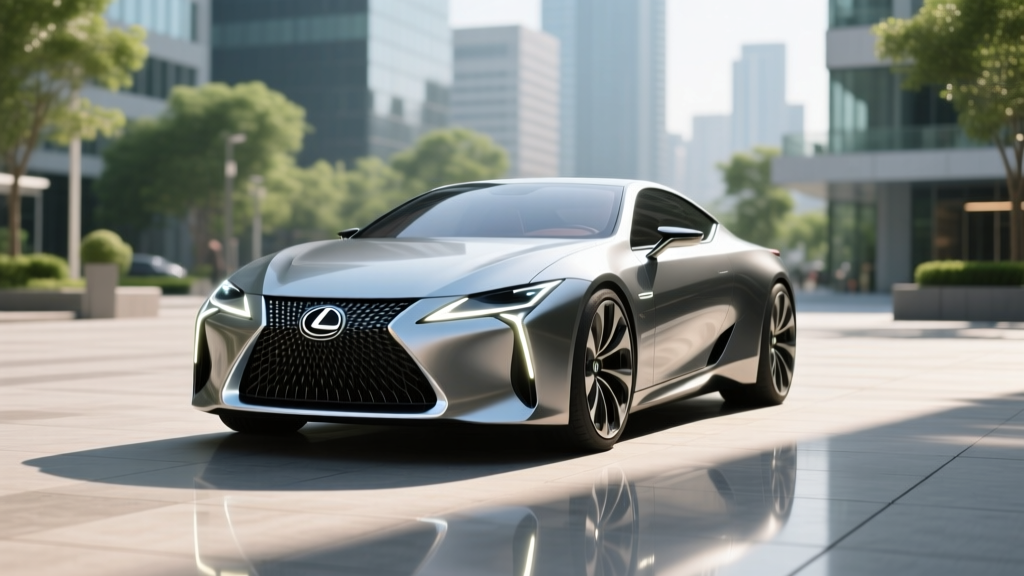
As of 2026, Lexus offers one fully electric vehicle in the U.S.: the Lexus RZ 450e, a compact luxury SUV built on Toyota's dedicated e-TNGA platform with an EPA-estimated range of up to 220 miles (220-mile FWD model) or 196 miles (AWD DIRECT4). Pricing starts at approximately $54,350 before destination. The RZ qualifies for up to $3,750 of the federal §30D tax credit depending on battery mineral sourcing, buyer income, and MSRP caps — not the full $7,500 many shoppers assume. If you want Lexus luxury with longer range or more cargo space, the brand's hybrid lineup (RX 500h, TX 500h) remains compelling, while the upcoming three-row Lexus LF-Z Electrified production model (announced, expected late 2026/2027) promises 300+ miles of range. Your decision hinges on three factors: daily mileage, home charging access, and whether you need more than 220 miles of real-world range.
What Lexus Electric Cars Are Actually Available?
Lexus has been slower to electrify than competitors like BMW, Mercedes, and Genesis. The brand's first dedicated EV, the RZ 450e, launched for the 2023 model year and carries into 2026 with modest updates. Here is the current state of play:
| Model | Type | EPA Range / MPG | Battery | Starting MSRP |
|---|---|---|---|---|
| RZ 450e (FWD) | BEV | 220 mi (EPA) | 71.4 kWh (NMC) | ~$54,350 |
| RZ 450e (AWD DIRECT4) | BEV | 196 mi (EPA) | 71.4 kWh (NMC) | ~$56,350 |
| RX 500h | PHEV-like HEV | 36 MPG combined | ~1.8 kWh (NiMH-style) | ~$62,550 |
| TX 500h | HEV (3-row) | 30 MPG combined | ~1.4 kWh | ~$63,500 |
| LF-Z Electrified (announced) | BEV (3-row) | 300+ mi (estimated) | ~100 kWh (est.) | TBA |
The RZ shares its platform with the Toyota bZ4X and Subaru Solterra, but Lexus tuning, materials, and the available DIRECT4 dual-motor AWD system set it apart. The 71.4 kWh usable battery is smaller than rivals like the BMW iX xDrive50 (105 kWh usable) or the Genesis Electrified GV70 (77.4 kWh usable), which directly explains the RZ's shorter range.
Real-World Range: What to Actually Expect
EPA vs. Reality — RZ 450e
EPA Sticker: 220 miles (FWD) / 196 miles (AWD DIRECT4)
Real-World Highway (70 mph, 68°F): ~185–200 miles (FWD), ~165–180 miles (AWD)
Cold Weather (32°F, highway): ~145–165 miles (FWD), ~130–150 miles (AWD)
Efficiency: 102 MPGe combined (FWD) / 97 MPGe combined (AWD) — source: fueleconomy.gov
The RZ's range is its most common criticism, and the numbers bear it out. A 220-mile EPA rating is adequate for a commuter who drives under 80 miles round-trip and charges at home nightly. It becomes a liability on road trips exceeding 350 miles, where you'll need two DC fast-charge stops — each adding 25–40 minutes depending on charger availability and battery preconditioning.
Lexus does not currently offer a heat pump on the RZ (some markets received one in later production runs — verify with your dealer). Without a heat pump, cold-weather cabin heating draws directly from the traction battery, causing the 20–30% range loss typical of resistive-heating EVs. If you live above the 37th parallel, budget for 150 miles of usable winter range on the AWD model.
Charging: Speeds, Costs, and Home Setup
Understanding the difference between kW (kilowatts — the rate of power delivery) and kWh (kilowatt-hours — the total energy stored) is essential. The RZ's 71.4 kWh battery holds energy; the charger's kW rating determines how fast that energy flows.
| Charging Level | Power (kW) | Miles Added per Hour | 0–100% / 10–80% Time |
|---|---|---|---|
| Level 1 (120V household) | ~1.4 kW | ~5 mi/hr | ~50 hours (full) |
| Level 2 (240V, 32A home) | ~7.7 kW | ~25 mi/hr | ~9.5 hours (full) |
| Level 2 (240V, 48A hardwired) | ~11.5 kW | ~37 mi/hr | ~6.5 hours (full) |
| DC Fast Charge (CCS) | Peak 150 kW | ~500 mi/hr (peak) | 10–80% in ~30 min |
The RZ's peak DC fast-charging rate of 150 kW is below the 200–250+ kW rates offered by Hyundai's E-GMP platform or Tesla's Supercharger V3/V4 network. Expect the charge curve to taper significantly above 60% SoC — a typical 10–80% session takes about 30 minutes at a 150 kW charger, but you'll rarely sustain 150 kW for more than the first 10–15% of the session. This is normal battery physics: as the cells fill, internal resistance rises and the BMS (battery management system) throttles power to protect cell health.
Home Charging Installation Costs
| Item | Cost Range |
|---|---|
| Level 2 charger (32A–48A, J1772/NACS) | $350–$700 |
| Electrician labor (4–8 hours) | $600–$1,500 |
| Permit & inspection | $50–$250 |
| Electrical panel upgrade (if needed, 100A→200A) | $1,500–$3,500 |
| Total (no panel upgrade) | $1,000–$2,450 |
| Total (with panel upgrade) | $2,500–$5,950 |
Note: Final electrical specifications should be confirmed by a licensed electrician based on your home's panel capacity, conduit run length, and local code.
Lexus RZ vs. Gas & Hybrid: Total Cost of Ownership
Lexus buyers often cross-shop the RZ with the brand's own hybrid lineup — particularly the RX 350h and RX 500h. This is smart, because Lexus hybrids are among the most efficient luxury vehicles on the road. Let's compare five-year costs.
| Cost Category | RZ 450e AWD | RX 350h AWD (HEV) | RX 350 AWD (Gas) |
|---|---|---|---|
| MSRP (base) | $56,350 | $53,500 | $50,750 |
| Federal tax credit (§30D) | −$3,750* | $0 | $0 |
| Effective purchase price | $52,600 | $53,500 | $50,750 |
| Fuel / energy (60k mi) | $4,200** | $6,800 | $9,600 |
| Maintenance (60k mi) | $1,200 | $3,200 | $3,800 |
| Insurance (5-yr avg) | $11,500 | $9,800 | $9,200 |
| 5-Year Total | $69,500 | $73,300 | $73,350 |
*§30D credit eligibility depends on buyer income (≤$150k single / $300k joint), vehicle MSRP caps ($80k SUV), and battery critical-mineral sourcing requirements per IRS rules. Verify with a tax professional. **Assumes 80% home charging at $0.16/kWh, 20% public DC at $0.40/kWh.
The RZ edges out the RX 350h over five years primarily through lower fuel and maintenance costs — EVs eliminate oil changes, transmission fluid, and brake pad replacements are rare thanks to regenerative braking. However, insurance premiums run 15–25% higher for the RZ, reflecting higher repair costs for EV-specific components and the aluminum-intensive body structure.
Federal Tax Credit: What You'll Actually Get
§30D Credit Checklist for the Lexus RZ 450e (2026)
- Maximum credit: $7,500 ($3,750 for critical minerals + $3,750 for battery components)
- RZ likely qualifies for: $3,750 (half-credit) — battery sourcing rules disqualify one of the two components for many Japanese-built EVs
- MSRP cap: Vehicle must be under $80,000 (RZ qualifies — base MSRP ~$54,350–$59,900)
- Buyer income cap: AGI ≤ $150,000 (single) / $225,000 (head of household) / $300,000 (joint)
- Point-of-sale transfer: Available — you can apply the credit as a down payment reduction at the dealer
- Lease loophole (commercial credit §45W): If you lease the RZ, the lessor (Lexus Financial) receives a $7,500 commercial credit and may pass savings to you as a lower monthly payment — confirm with the dealer
The critical-mineral and battery-component sourcing requirements, which phase in stricter thresholds each year, are why the RZ typically qualifies for only $3,750 rather than $7,500. Always verify current eligibility at fueleconomy.gov before purchasing, as sourcing rules update annually.
Battery Longevity, Warranty, and Replacement
The RZ uses an NMC (nickel-manganese-cobalt) lithium-ion battery with a gross capacity of 72.8 kWh (71.4 kWh usable). Lexus provides a battery warranty of 8 years / 100,000 miles against defects, and guarantees the battery will retain at least 70% of its original capacity during that period. In states that follow California's CARB rules (including NY, MA, WA, OR, and others), the warranty extends to 10 years / 150,000 miles.
Based on data from the Toyota bZ4X (same platform), expect approximately 8–12% degradation over 5 years / 75,000 miles under normal use. The battery management system maintains a top and bottom buffer (roughly 4% top, 4% bottom) to prevent the cells from reaching true 0% or 100%, which accelerates degradation. If you primarily charge to 80% daily and use DC fast charging sparingly (under 20% of total charges), you can expect the RZ to retain 85–90% of its capacity at the 5-year mark.
A full battery replacement, should it be needed out of warranty, is estimated at $12,000–$18,000 including labor — though this cost is expected to decline as the battery supply chain matures.
Decision Framework: Should You Buy the RZ or Look Elsewhere?
Choose the Lexus RZ 450e If:
- Your daily commute is under 80 miles round-trip
- You have (or can install) Level 2 home charging
- You value Lexus build quality, dealer experience, and resale value
- You rarely drive more than 300 miles in a single day without stopping
- You qualify for at least $3,750 of the §30D credit or can benefit from the lease loophole
Choose a Lexus Hybrid (RX 350h / TX 500h) Instead If:
- You regularly drive 400+ miles in a day (road trips, rural routes)
- You live in an apartment or condo without charging access
- You live in a region with sparse public DC fast-charging infrastructure
- You need three rows of seating (TX 500h offers this; RZ does not)
- You experience extreme winters where 30%+ range loss would push you below your daily needs
Wait for the LF-Z Electrified (Announced) If:
- You need 300+ miles of EPA range with Lexus luxury
- You want a three-row electric Lexus
- Your purchase timeline is flexible into late 2026 or 2027
| Myth | Fact |
|---|---|
| "The RZ gets the full $7,500 tax credit." | As of 2026, the RZ typically qualifies for $3,750 due to battery mineral sourcing rules. Leasing may unlock more via §45W. |
| "EV batteries need replacing every 5 years." | NMC batteries in modern BMS-managed packs typically retain 85–92% capacity at 100,000 miles. Full replacements are rare and covered under warranty for 8 years. |
| "Charging an EV costs as much as gas." | At the U.S. average electricity rate of $0.16/kWh, the RZ costs ~$0.05/mile to fuel at home vs. ~$0.14/mile for the gas RX 350 at $3.50/gal. |
| "Lexus has no electric options." | The RZ 450e is available now. The LF-Z Electrified is announced for late 2026/2027 with 300+ mile range. |
| "The RZ charges as fast as a Tesla." | The RZ peaks at 150 kW (10–80% in ~30 min). Tesla Model Y peaks at 250 kW (10–80% in ~18 min). Access to Tesla Superchargers requires an adapter for CCS-equipped RZ models. |
First-Time EV Buyer Essentials
If the RZ is your first electric vehicle, here are the ownership realities no brochure mentions:
- Preconditioning matters. The RZ can warm or cool its battery before you arrive at a DC fast charger (navigate to the charger via the infotainment system to trigger this). A preconditioned battery charges 15–25% faster in cold weather.
- The 80% rule. For daily driving, set your charge limit to 80%. Charging to 100% occasionally for road trips is fine, but daily 100% charges accelerate NMC degradation over years.
- Public charging is inconsistent. Networks like Electrify America and EVgo have improved, but expect 10–15% of chargers to be out of service or slower than rated at any given time. Always have a backup charger mapped on road trips.
- Your electrical panel may need upgrading. Homes built before 1990 often have 100-amp panels. Adding a 48-amp Level 2 charger on a 60-amp breaker may require a panel upgrade to 200 amps — a $1,500–$3,500 expense.
- Regenerative braking changes your driving. The RZ offers adjustable regen levels. In the strongest setting, you can drive mostly with one pedal, lifting off the accelerator to slow down. This extends range and reduces brake wear to near zero.
A Note on Lexus Safety System+ 3.0
The RZ comes equipped with Lexus Safety System+ 3.0, which includes adaptive cruise control, lane-centering assist, and automatic emergency braking. This is an SAE Level 2 driver-assistance system — meaning the driver must remain fully engaged, hands on or near the wheel, and eyes on the road at all times. It is not self-driving and does not replace driver attention. No consumer Lexus vehicle offers Level 3 or higher automation.
Frequently Asked Questions
Does the Lexus RZ use CCS or NACS (Tesla) charging?
The RZ 450e sold in the U.S. uses the CCS1 connector for DC fast charging and J1772 for Level 2. Lexus has announced NACS adoption for future models, and CCS-to-NACS adapters are available for access to Tesla Supercharger stations — though charging speeds may be limited by adapter throughput.
Can I tow with the Lexus RZ 450e?
Yes, but modestly. The RZ 450e AWD DIRECT4 has a maximum towing capacity of 2,000 pounds when properly equipped — enough for a small utility trailer or a pair of jet skis, but not a boat or camper. Towing will reduce range by 30–50% depending on trailer weight and aerodynamics.
How does the RZ compare to the BMW iX or Genesis Electrified GV70?
The BMW iX xDrive50 offers 324 miles of EPA range, a 105 kWh battery, and 200+ kW charging — but starts at $87,250. The Genesis Electrified GV70 offers 236 miles, 77.4 kWh, and 240 kW charging starting at ~$67,000. The RZ's advantage is its lower entry price, Lexus reliability reputation, and strong resale value. Its disadvantage is shorter range and slower charging.
Is leasing the RZ better than buying for the tax credit?
Possibly. Under the commercial clean vehicle credit (§45W), the leasing company receives a $7,500 credit that they may pass on as a reduced monthly payment. This bypasses the buyer income caps, MSRP caps, and battery-sourcing requirements of §30D. Ask your Lexus dealer whether their current lease offers reflect this pass-through.
What happens if the RZ battery fails after the warranty?
Out-of-warranty battery replacement is estimated at $12,000–$18,000. However, catastrophic battery failure after the warranty period is statistically rare in modern liquid-cooled NMC packs. More common is gradual capacity loss — if your battery drops below 70% capacity within the 8-year/100,000-mile warranty, Lexus will repair or replace it at no cost.