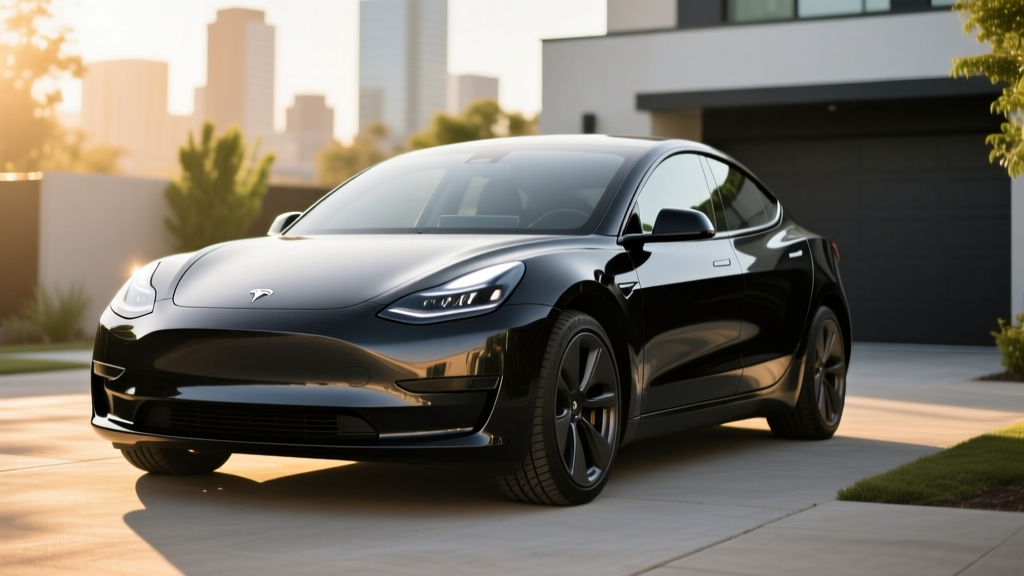
If you're asking "what is the least expensive Tesla?" in 2026, the answer is the Tesla Model 3 Rear-Wheel Drive. Starting at $38,990 before any incentives, it undercuts every other Tesla in the lineup — and thanks to a refreshed design, LFP battery durability, and access to the Supercharger network, it remains one of the most compelling entry points into EV ownership on the market.
But "least expensive" doesn't mean "cheap." The Model 3 RWD trades dual-motor performance and some premium features for a lower sticker price. Below, we break down every number that matters: real-world range, charging speed, tax-credit math, and how it stacks up against the Hyundai Ioniq 6, BMW i4, and Chevy Equinox EV.
Spec Sheet: 2026 Tesla Model 3 Rear-Wheel Drive
| Spec | 2026 Model 3 RWD |
|---|---|
| Base MSRP | $38,990 |
| EPA Range | 363 miles |
| Battery (usable) | ~60 kWh, LFP (lithium iron phosphate) |
| Drivetrain | Rear-Wheel Drive (single motor) |
| Horsepower | 271 hp |
| 0–60 mph | 5.8 seconds |
| Peak DC Fast Charge | 170 kW |
| 10–80% DC Fast Charge | ~25 minutes |
| Level 2 Home Charging | 11.5 kW (~44 mi/hr) |
| EPA Efficiency | 132 MPGe / 25 kWh/100 mi |
| Cargo Volume | 23 cu ft (rear trunk) + 3.1 cu ft (frunk) |
| Rear Legroom | 35.2 inches |
| Battery Warranty | 8 years / 100,000 miles (70% retention) |
| Federal Tax Credit | Up to $7,500 (eligibility rules apply) |
Real-World Range: What the EPA Sticker Doesn't Tell You
EPA Estimated Range: 363 miles
Real-World Expectation: ~290–320 miles highway; ~240–270 miles in freezing weather
The EPA's 363-mile figure for the Model 3 RWD is among the highest of any single-motor EV in this price bracket. But EPA testing uses a blended cycle that favors city and suburban driving, where regenerative braking recaptures energy and aerodynamic drag is lower.
On a sustained 75-mph highway run in moderate temperatures (60–75°F), expect roughly 290 to 320 miles before you need to plug in. That's still enough to cover Los Angeles to Las Vegas or Boston to Philadelphia on a single charge — but it means you'll want to plan a brief Supercharger stop on longer trips rather than running the battery to zero.
Cold weather is the bigger variable. At 20°F or below, LFP batteries lose more range than NMC chemistry — often 25–35%. Preconditioning the battery while plugged in (a feature Tesla enables through the app and navigation) recovers some of that loss by warming the cells before you drive, but in deep winter you should plan for roughly 240–270 miles of usable range.
One practical advantage of the LFP pack: Tesla recommends charging it to 100% regularly, unlike NMC batteries where daily 80% limits are preferred. That means your daily usable range is closer to the full 363 miles, not just 80% of it.
Charging Speed: DC Fast, Level 2, and the Supercharger Advantage
| Charging Level | Power / Rate | Speed | Typical Use |
|---|---|---|---|
| Level 1 (120V) | ~1.4 kW | ~5 mi/hr | Emergency / trickle |
| Level 2 (240V, 48A) | 11.5 kW | ~44 mi/hr | Home overnight |
| DC Fast (peak) | 170 kW | 10–80% in ~25 min | Road trips |
The Model 3 RWD peaks at 170 kW on a DC fast charger. That's slower than the Long Range AWD variant (which can hit ~250 kW), but it's still competitive for this price segment. On a V3 Supercharger or equivalent 170+ kW station, a 10–80% session takes about 25 minutes.
The charge curve matters more than the peak number. LFP batteries tend to hold their peak charge rate longer than NMC before tapering, which means the Model 3 RWD sustains useful charging speeds through most of the session. You'll see tapering above 80%, where speeds drop to ~50–60 kW — standard behavior, and a reason to avoid charging past 80% on road trips unless you need the extra miles.
At home on a Level 2 wall connector (240V, 48-amp circuit), the onboard charger accepts up to 11.5 kW, adding roughly 44 miles of range per hour. A full overnight session easily replenishes a day's worth of driving. Installation costs for a home Level 2 setup typically run $500–$2,000 depending on panel capacity and conduit length — budget for a licensed electrician to assess your 200-amp panel.
Access to Tesla's Supercharger network (now 6,500+ stations in North America) remains a significant ownership advantage. With NACS as the native connector, there's no adapter needed, and routing through the car's navigation automatically preconditions the battery for faster charging on arrival.
Performance and Driving Dynamics
The single rear motor produces 271 horsepower and propels the Model 3 RWD from 0 to 60 mph in 5.8 seconds. That's brisker than most gas-powered compact sedans and more than adequate for highway merging and passing.
The refreshed Model 3 (sometimes called "Highland") brought meaningful improvements: a quieter cabin with acoustic glass, revised suspension tuning that absorbs rough pavement more gracefully, and ventilated front seats. Rear-seat comfort remains a weak point — legroom at 35.2 inches is tighter than a Toyota Camry, and the low floor forces a knees-up seating position for taller passengers.
Regenerative braking is strong enough for one-pedal driving in most conditions, though Tesla removed the user-adjustable regen setting in recent updates — it's always on, always strong. If you prefer a coasting feel, this takes adjustment.
Technology, Driver Assistance, and Notable Drawbacks
The cabin is dominated by a 15.4-inch touchscreen that handles virtually every function: climate, media, navigation, vehicle settings, and even the speedometer (there is no traditional instrument cluster). A small rear touchscreen for passengers was added in the refresh. Build quality has improved noticeably, with tighter panel gaps and better materials than pre-2024 models.
Tesla's Autopilot comes standard — a Level 2 driver-assist system that includes adaptive cruise control, lane centering, and automatic emergency braking. It is not self-driving; you must keep your hands on the wheel and eyes on the road at all times. Full Self-Driving (Supervised) is available as a $8,000 add-on or $99/month subscription, but it remains a Level 2 system despite the name, and its real-world reliability varies significantly by road type and conditions.
Notable drawbacks include the absence of Apple CarPlay and Android Auto (Tesla uses its own infotainment ecosystem), no physical buttons for common functions like wiper speed or mirror adjustment, and limited rear visibility due to the sloping rear glass.
Pricing, Tax Credits, and Total Cost
| Item | Amount |
|---|---|
| Base MSRP (Model 3 RWD) | $38,990 |
| Destination Fee | $1,390 |
| Federal Tax Credit (§30D) | Up to $7,500* |
| Effective Price (with full credit) | ~$32,880 |
*Federal tax credit eligibility under IRS §30D depends on multiple factors: buyer income caps ($150K single / $300K joint MAGI), vehicle MSRP cap ($55,000 for sedans), battery critical-mineral and component sourcing requirements, and point-of-sale transfer availability. The Model 3 RWD's MSRP is well under the sedan cap. Verify current-year sourcing compliance and your personal eligibility on IRS.gov or with a tax professional. Rules change frequently.
If you qualify for the full $7,500 credit and elect a point-of-sale transfer, your effective purchase price drops to roughly $32,880 before state incentives, dealer fees, or optional paint/wheel upgrades. Tesla's mid-range paint colors ($1,500–$2,000) and the 19-inch Nova wheels ($1,500) can push an as-tested price to $43,000–$45,000 before credits.
Operating costs are where the Model 3 RWD shines. At 25 kWh/100 mi and a national average electricity rate of ~$0.16/kWh, fueling costs roughly $4.00 per 100 miles — compared to ~$12–$14 per 100 miles for a 30-MPG gas sedan at $3.60/gallon. Over 15,000 miles per year, that's approximately $1,200–$1,500 in annual fuel savings.
Who Should Buy the Model 3 RWD?
Pros
- Lowest price of any new Tesla — and one of the cheapest 350+ mi range EVs
- LFP battery: charge to 100% daily, excellent cycle life
- Supercharger network access with native NACS connector
- Strong efficiency (132 MPGe) keeps operating costs very low
- Improved cabin quietness and ride quality post-refresh
Cons
- Rear seat is cramped for adults over 6 feet
- No Apple CarPlay or Android Auto
- 170 kW peak charging is slower than Long Range and some rivals
- LFP range loss in extreme cold is more pronounced than NMC
- No physical controls — everything goes through the touchscreen
Best for: Solo commuters, couples without rear-seat needs, and cost-conscious buyers who want maximum range per dollar with the lowest running costs. If you regularly carry adult passengers in the backseat, need AWD for snow-belt winters, or want the fastest possible DC charging, the Model 3 Long Range AWD ($47,990) or a competitor like the Hyundai Ioniq 6 may serve you better.
Model 3 RWD vs. Key Competitors
At ~$33,000 after the federal credit, the Model 3 RWD competes with the Hyundai Ioniq 6 SE ($39,250, 361 mi EPA), the Chevrolet Equinox EV 3RS (~$43,000, 319 mi), and the BMW i4 eDrive35 ($52,200, 301 mi). The Model 3 wins on price-to-range ratio and Supercharger access; the Ioniq 6 counters with faster 350-kW charging capability and physical buttons; the Equinox EV offers a crossover form factor some buyers prefer.
For the specific question of "what is the least expensive Tesla," the Model 3 RWD isn't just the cheapest Tesla — it's arguably the best value-per-mile EV available in 2026 when the tax credit applies.
Frequently Asked Questions
What is the real-world range of the Tesla Model 3 RWD?
Expect 290–320 miles on highway trips in moderate weather, and 240–270 miles in freezing conditions. The EPA sticker says 363 miles, but real-world driving — especially sustained highway speeds and cold temperatures — reduces that figure. Preconditioning helps recover some cold-weather range.
How fast does the Model 3 RWD charge?
On a DC fast charger, it peaks at 170 kW and reaches 10–80% in approximately 25 minutes. At home on a Level 2 wall connector (11.5 kW), it adds about 44 miles of range per hour, fully replenishing overnight.
Does the Tesla Model 3 qualify for the federal EV tax credit?
The Model 3 RWD's MSRP is under the $55,000 sedan cap, and it has historically qualified for up to $7,500 under §30D. However, eligibility depends on battery-sourcing requirements, your income level, and current-year IRS rules. Always verify on IRS.gov before purchasing.
How much does the least expensive Tesla cost after tax credits?
With the full $7,500 federal credit applied at point of sale, the effective price is approximately $32,880 (plus destination and any options). State incentives may reduce this further — check fueleconomy.gov for current listings.
Is the Model 3 RWD worth buying over competitors?
If your priorities are lowest cost, longest range, and Supercharger network access, the Model 3 RWD is hard to beat. If you need more rear-seat space, faster DC charging, or CarPlay/Android Auto, the Hyundai Ioniq 6 is a strong alternative at a similar price.
What is the battery warranty on the Model 3 RWD?
Tesla covers the LFP battery for 8 years or 100,000 miles, whichever comes first, with a minimum 70% capacity retention guarantee. LFP chemistry generally shows slower degradation than NMC, and Tesla's track record on warranty claims is well-documented.