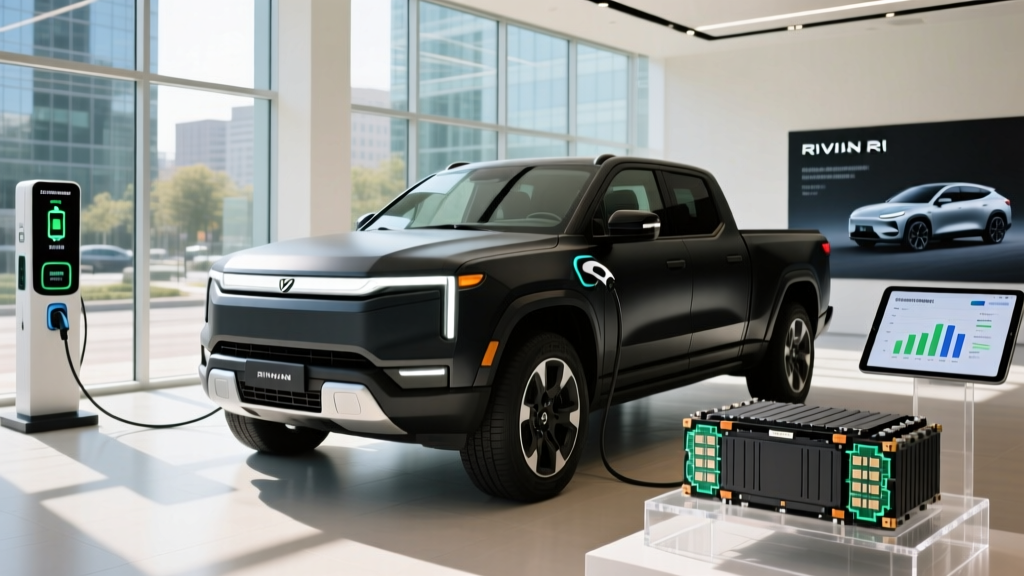
Rivian's Q3 2025 earnings call delivered more than balance-sheet updates — it confirmed the company's trajectory toward profitability while revealing critical details about the 2026 model-year R1S and R1T lineup. For EV shoppers weighing a Rivian purchase against competitors like the Tesla Model X, Ford F-150 Lightning, or Chevrolet Silverado EV, the financial health of the automaker matters just as much as the hardware. In this analysis, we break down what the Q3 2025 earnings mean for buyers and provide a full spec review of the current 2026 Rivian R1 Dual-Motor and Tri-Motor platforms.
What Rivian's Q3 2025 Earnings Mean for Buyers
Rivian reported Q3 2025 results in early November 2025, highlighting a meaningful reduction in per-unit production costs, improved gross margin, and a reaffirmed annual delivery guidance. The company's transition to its Gen 2 drive unit and battery architecture — first introduced on the 2025 model-year R1 vehicles — has been central to cutting manufacturing complexity and boosting margins. For prospective buyers, the key takeaways are:
- Financial stability: Rivian's cash position, bolstered by the Volkswagen joint venture investment, supports continued R&D and the planned R2 midsize SUV launch (expected 2026). This reduces the "will they still be around?" concern that plagues startup EV buyers.
- Gen 2 platform maturity: The 2025/2026 R1S and R1T benefit from fewer parts (Rivian cited ~40% fewer components in the drive unit), end-to-end software architecture, and improved thermal management — translating to better efficiency and reliability.
- Software-defined improvements: Over-the-air updates continue to add features post-purchase, including enhanced Highway Assist and new driver-assist capabilities rolled out through late 2025.
While earnings reports are inherently investor-facing, the production and margin data directly inform how confident a buyer can be in Rivian's long-term parts availability, service network growth, and resale value trajectory.
2026 Rivian R1S & R1T: Range, Battery, and Efficiency
The 2026 Rivian R1S (three-row SUV) and R1T (pickup) share the same skateboard platform and battery options. Rivian currently offers three battery packs:
| Spec | Standard Pack | Large Pack | Max Pack |
|---|---|---|---|
| Usable Capacity | ~95 kWh | ~117 kWh | ~141 kWh |
| Chemistry | NMC (Nickel Manganese Cobalt) | NMC | NMC |
| EPA Range (Dual-Motor R1S) | ~270 mi | ~352 mi | ~410 mi |
| EPA Range (Dual-Motor R1T) | ~270 mi | ~352 mi | ~420 mi |
| Efficiency (Dual-Motor) | ~76 MPGe | ~73 MPGe | ~70 MPGe |
Efficiency figures reflect the trade-off inherent in large, heavy adventure vehicles. The R1S Dual-Motor Large Pack achieves roughly 48-50 kWh/100mi in mixed driving — respectable for a 7,000-lb SUV, but not comparable to a sedan like the Hyundai Ioniq 6 (which sips ~25 kWh/100mi). If efficiency is your top priority, the R1 platform isn't optimized for it. If capability and space are, the efficiency is a reasonable cost of entry.
Charging Speed: DC Fast Charging and Home Level 2
Charging speed remains one of the most consequential specs for road-tripping EV owners. The Gen 2 R1 platform brought meaningful improvements over the original 2022-2024 models.
| Charging Level | Power | Speed / Notes |
|---|---|---|
| Level 1 (120V household) | ~1.4 kW | ~3-4 miles per hour |
| Level 2 (240V home/public) | 11.5 kW (48A) | ~25-30 miles per hour; full charge in 10-14 hours depending on pack |
| DC Fast Charge (CCS) | Peak ~200 kW | 10-80% in ~30 min (Large Pack); taper begins significantly above 80% |
| NACS Adapter (Tesla Supercharger) | Peak ~170-200 kW | Access to 20,000+ Superchargers; adapter included with 2025+ models |
The Gen 2 R1 vehicles peak around 200 kW on DC fast chargers, which is competitive but not class-leading — the Hyundai Ioniq 5 peaks at 240 kW, and the Lucid Air at over 300 kW. However, Rivian's charge curve is relatively flat through the 20-60% SoC window, meaning sustained charging speeds are practical. Expect 10-80% in roughly 30 minutes for the Large Pack on a 350 kW-capable Electrify America or Tesla Supercharger stall. Above 80%, the charge rate tapers sharply to protect the NMC cells — plan to unplug at 80% on road trips rather than waiting for a full top-off.
For home charging, the 11.5 kW onboard charger means a Large Pack (117 kWh) takes about 10-11 hours from near-empty to full — easily achievable with overnight charging on a properly installed Level 2 circuit. Most owners will rarely charge from 0%; topping off from 30-80% takes roughly 5 hours at home, which covers most daily use cases.
Performance, Drivetrain, and Capability
The 2026 R1 lineup offers three drivetrain configurations, each with distinct performance profiles:
| Configuration | Drivetrain | Horsepower | 0-60 mph | Max Towing |
|---|---|---|---|---|
| Dual-Motor | AWD (2 motors) | 533 hp | 4.5 sec | 7,700 lbs (R1T) |
| Performance Dual-Motor | AWD (2 motors) | 665 hp | 3.5 sec | 7,700 lbs (R1T) |
| Tri-Motor | AWD (3 motors) | 850 hp | 2.9 sec | 7,700 lbs (R1T) |
The Dual-Motor is the volume seller and the smart choice for most buyers — 533 hp is already supercar-rivaling territory in a vehicle that seats seven (R1S) or offers a 4.5-foot bed (R1T). The Tri-Motor is a halo configuration: thrilling but with a significant price premium and slightly reduced range due to the extra motor's weight and energy draw.
Towing capacity of 7,700 lbs is legitimate and tested, but note the range penalty: towing a 5,000-lb trailer at highway speeds can cut range by 40-50%. Plan charging stops accordingly if you tow frequently.
Pricing, Trims, and Federal Tax Credit Eligibility
Rivian simplified its trim structure for the 2025/2026 model years, offering Adventure and Ascend (premium) packages across Dual-Motor, Performance Dual-Motor, and Tri-Motor configurations.
| Model / Config | Base MSRP (2026 est.) | As-Tested (typical) |
|---|---|---|
| R1S Dual-Motor Adventure | ~$75,900 | $82,000-$88,000 |
| R1S Tri-Motor Ascend | ~$99,900 | $105,000+ |
| R1T Dual-Motor Adventure | ~$69,900 | $76,000-$84,000 |
| R1T Tri-Motor Ascend | ~$94,900 | $100,000+ |
- SUV MSRP cap: The R1S qualifies as an SUV under IRS guidelines, with an $80,000 MSRP cap. Base Dual-Motor Adventure trims may qualify; optioned-up models exceeding $80,000 MSRP do not.
- Pickup MSRP cap: The R1T also qualifies under the $80,000 SUV/truck cap.
- Buyer income limits: AGI must not exceed $150,000 (single), $225,000 (head of household), or $300,000 (joint) for the tax year.
- Battery sourcing: Critical mineral and battery component sourcing requirements phase in progressively. Rivian has been working to secure North American supply chains, but specific credit amounts ($3,750 or $7,500) depend on current-year sourcing compliance. Always verify on IRS.gov before purchasing.
- Point-of-sale transfer: Eligible buyers can transfer the credit to the dealer at purchase, reducing the upfront price rather than waiting for a tax refund.
Interior, Cargo, Tech, and Driver Assistance
The R1S offers three rows of seating with the following cargo and passenger dimensions:
- Cargo (behind 3rd row): ~10.6 cu ft
- Cargo (3rd row folded): ~46.7 cu ft
- Cargo (all rows folded): ~91.6 cu ft
- Front legroom: 41.3 inches
- Second-row legroom: 39.5 inches
- Third-row legroom: 30.4 inches (best for children or short trips)
The R1T offers a 4.5-foot bed (54 inches) with a unique Gear Tunnel — a lockable, pass-through storage compartment behind the rear seats that adds ~11 cu ft of enclosed cargo space. The R1T also features a powered tonneau cover and an available Camp Kitchen accessory.
Infotainment: Rivian runs a proprietary 15.6-inch center touchscreen with integrated navigation, streaming apps, and a connected ecosystem. There is no Apple CarPlay or Android Auto — a deliberate choice by Rivian that remains controversial. The native system is well-designed but means you're locked into Rivian's software ecosystem.
Driver Assistance: Highway Assist (SAE Level 2) provides adaptive cruise control with lane centering on divided highways. It requires continuous driver supervision — this is not a hands-off autonomous system. Rivian has been expanding Highway Assist coverage and refining the system via OTA updates, but it trails GM's Super Cruise and Ford's BlueCruise in hands-free highway coverage.
Warranty and Ownership Considerations
| Coverage | Term |
|---|---|
| Limited Vehicle Warranty | 5 years / 60,000 miles |
| Battery & Drive Unit Warranty | 8 years / 175,000 miles |
| Battery Retention Threshold | 70% capacity over warranty term |
Rivian's battery warranty is competitive, matching or exceeding most rivals. The 175,000-mile drive unit coverage is generous. However, Rivian's service network is still growing — as of late 2025, the company operates roughly 50 service centers and a mobile service fleet. Buyers in rural areas should verify service accessibility before committing.
Insurance costs tend to run higher than comparable ICE vehicles. Expect quotes 15-25% above a similarly priced gasoline SUV, driven by repair complexity and parts availability. Get a quote before ordering.
Pros, Cons, and Who the R1 Is For
Pros
- Class-leading adventure capability (ground clearance, wading, off-road modes)
- Excellent build quality post-Gen 2 transition
- Strong DC fast-charge speed with NACS Supercharger access
- Unique R1T Gear Tunnel and Camp Kitchen ecosystem
- OTA updates continuously add features
- 8-year/175,000-mile battery warranty
Cons
- No Apple CarPlay or Android Auto
- High starting price; tax credit eligibility is trim-dependent
- Third-row space in R1S is tight for adults
- Service network still expanding — rural coverage gaps
- Highway Assist trails Super Cruise/BlueCruise in hands-free coverage
- Efficiency lags behind lighter, more aero-focused EVs
- Active families who need three rows (R1S) or a truck bed (R1T) and regularly drive to trailheads, campsites, or ski areas
- Home chargers with Level 2 access who can absorb daily driving costs at ~4¢/mile (vs. ~12-15¢/mile for gas)
- Tech-forward buyers who prefer an integrated software ecosystem over phone-mirroring
- Not ideal for: budget-conscious shoppers, efficiency maximizers, or those without reliable home charging access
Frequently Asked Questions
What is the real-world range of the Rivian R1S and R1T?
The EPA rates the Dual-Motor R1S Large Pack at 352 miles. In real-world highway driving at 70 mph, expect approximately 300-315 miles. In cold weather (below 30°F), range drops to roughly 250-280 miles. The Max Pack extends these figures by about 15-18%.
How fast does the R1 charge on DC fast chargers and at home?
On DC fast chargers, the Gen 2 R1 peaks at approximately 200 kW, achieving 10-80% in about 30 minutes for the Large Pack. At home on Level 2 (11.5 kW / 48A), expect 25-30 miles of range per hour of charging, or a full overnight charge in 10-14 hours.
Does the Rivian R1 qualify for the $7,500 federal EV tax credit?
It depends on trim, MSRP, buyer income, and battery-sourcing compliance. The R1S and R1T qualify under the $80,000 SUV/truck MSRP cap, but optioned-up models may exceed this threshold. Income caps apply ($300,000 joint AGI max). Verify current eligibility at IRS.gov and consult a tax professional.
Is the Rivian R1 worth buying vs. the Tesla Model X or Ford F-150 Lightning?
The R1S offers more off-road capability and a more distinctive adventure-oriented design than the Model X, but the Tesla has better Supercharger integration (though Rivian now has NACS access), a more mature driver-assist system, and standard CarPlay alternatives. The F-150 Lightning is larger, more affordable, and better for traditional truck duties, but the R1T's Gear Tunnel and refined ride quality give it an edge for lifestyle-oriented truck buyers.
What are Rivian's biggest risks as a company?
Despite Q3 2025 margin improvements, Rivian is still not consistently profitable. The R2 launch is critical to achieving volume and sustainability. Service network density and long-term parts availability remain concerns for buyers outside major metro areas. The VW joint venture provides a financial backstop, reducing existential risk.