The Case for Leasing a Rivian R1S in 2026
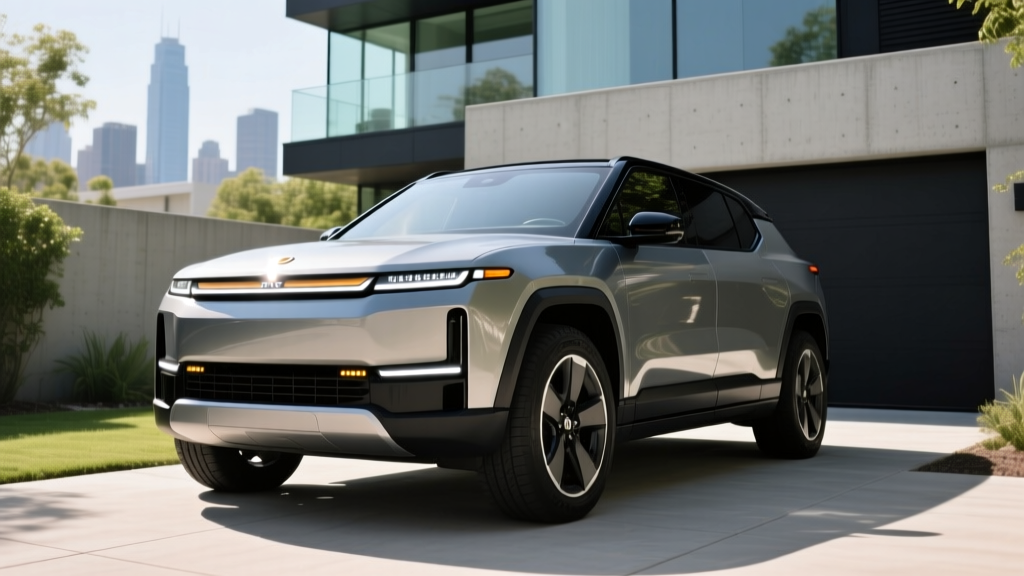
The Rivian R1S remains one of the most capable electric SUVs on the market — a three-row, body-on-frame family hauler that can tow 7,700 pounds, ford 36 inches of water, and still hit 60 mph in under three seconds in its top performance guise. But at a starting MSRP hovering around $79,900, the upfront cost is substantial. That's where leasing a Rivian R1S becomes an attractive strategy: lower monthly payments, the ability to upgrade as battery tech evolves, and — critically — access to the full $7,500 federal EV tax credit via the lease loophole even if you exceed IRS income caps.
This guide breaks down every number that matters for the 2026 R1S: real-world range, charging speeds, pricing by trim, tax-credit mechanics, and how it stacks up against the Tesla Model X, Cadillac Escalade IQ, and Mercedes EQS SUV.
Range, Battery, and Real-World Efficiency
The 2026 Rivian R1S is offered with two battery packs across its Dual-Motor and Tri-Motor configurations. Rivian uses NMC (nickel manganese cobalt) chemistry in both, prioritizing energy density for maximum range in a heavy vehicle.
| Configuration | Battery (usable kWh) | Chemistry | EPA Range | MPGe (combined) | kWh/100 mi |
|---|---|---|---|---|---|
| Dual-Motor Standard | 92 kWh | NMC | 270 mi | 73 MPGe | 46 |
| Dual-Motor Max | 141 kWh | NMC | 410 mi | 70 MPGe | 48 |
| Tri-Motor Max | 141 kWh | NMC | 370 mi | 65 MPGe | 52 |
The EPA 410-mile figure on the Dual-Motor Max is impressive on paper, but plan for real-world conditions. In highway testing at 70-75 mph, expect roughly 320–350 miles before needing a charge. In cold weather (below 30°F), range can drop 20–30%, bringing the Max pack down to approximately 280–310 miles. The Standard pack's 270-mile EPA rating translates to roughly 210–230 miles on the highway in winter. Rivian's heat pump helps mitigate cold-weather losses, but physics is physics with a 7,000-pound SUV.
For efficiency context, the R1S Dual-Motor consumes about 46–48 kWh per 100 miles — typical for a large body-on-frame EV. Compare that to the Tesla Model X at roughly 38–40 kWh/100mi, and you'll see the efficiency penalty of the Rivian's truck-based architecture. That said, the R1S trades some efficiency for genuine off-road capability and towing capacity the Model X can't match.
Charging Speeds: DC Fast and Home Level 2
Charging speed is where R1S owners need to calibrate expectations. The R1S uses a NACS connector natively (Rivian switched to NACS starting with 2025 models), giving it direct access to Tesla's Supercharger network without an adapter — a significant practical advantage for road trips.
| Charging Level | Power (kW) | Speed | Notes |
|---|---|---|---|
| Level 1 (120V) | ~1.4 kW | ~3 mi/hr | Emergency/trickle only |
| Level 2 (240V, 48A) | 11.5 kW | ~25 mi/hr | Home Wall Connector; ~16 hr for full Max pack |
| Level 2 (240V, 32A) | 7.7 kW | ~17 mi/hr | Standard portable charger |
| DC Fast Charge | Peak 220 kW | 10–80% in ~21 min (Standard), ~30 min (Max) | Sustained rate tapers significantly above 80% |
A few critical notes on charging the R1S:
- Peak vs. sustained: The 220 kW peak applies primarily between 10–30% State of Charge. Above 50%, the charge curve tapers to roughly 120–140 kW, and above 80% it drops below 60 kW. A "10–80% in ~21 minutes" claim is for the Standard pack; the Max pack's larger battery means a longer session despite similar peak rates.
- Preconditioning matters: Use the Rivian app to precondition the battery before arriving at a DC fast charger. A cold battery will charge significantly slower — sometimes peaking at only 100–130 kW until it warms up.
- Home charging reality: Most R1S lessees install a 48-amp Level 2 home charger (requiring a 60-amp circuit). Budget $800–$2,500 for professional installation depending on your electrical panel's capacity and distance from the panel to the garage. A 200-amp panel upgrade adds $1,500–$3,000 if needed.
Performance and Drivetrain
The R1S delivers supercar-rivaling acceleration in a package that seats seven. Here's the performance breakdown by configuration:
| Configuration | Drivetrain | Horsepower | Torque (lb-ft) | 0–60 mph | Towing Capacity |
|---|---|---|---|---|---|
| Dual-Motor (Standard/Max) | AWD | 533 hp | 610 | 4.5 sec | 7,700 lb |
| Tri-Motor (Max) | AWD | 850 hp | 1,103 | 2.9 sec | 7,700 lb |
The Dual-Motor is the volume seller and the rational choice for most families — 533 hp is more than sufficient, and the 4.5-second 0–60 time is quicker than any internal-combustion SUV in this class. The Tri-Motor is a performance statement: 850 hp and a 2.9-second 0–60 makes it one of the quickest production SUVs ever built, but it costs roughly $15,000 more and sacrifices 40 miles of range.
Rivian's quad-motor setup (one motor per wheel) was discontinued after 2024; the current Tri-Motor uses a rear-axle dual-motor unit paired with a single front motor. Towing capacity is 7,700 pounds across all configurations — best-in-class for electric SUVs, though expect range to drop by 40–50% when towing a heavy trailer at highway speeds.
Pricing, Trim Levels, and the §30D Tax Credit
Rivian offers the R1S in a simplified trim structure for 2026. Pricing below reflects current MSRP before any incentives:
| Trim | MSRP | §30D Credit Eligible? | Effective Price (with credit) |
|---|---|---|---|
| Dual-Motor Standard | $79,900 | Yes (if income/sourcing met) | $72,400 |
| Dual-Motor Max | $89,900 | Yes (if income/sourcing met) | $82,400 |
| Tri-Motor Max | $99,900 | Yes (if income/sourcing met) | $92,400 |
The $7,500 federal EV tax credit has strict eligibility requirements:
- MSRP cap: SUVs must be under $80,000 MSRP. Only the base Dual-Motor Standard at $79,900 qualifies — adding options that push the sticker above $80,000 disqualifies the vehicle.
- Income caps: Modified AGI must not exceed $300,000 (joint), $225,000 (head of household), or $150,000 (single).
- Battery sourcing: A percentage of critical minerals and battery components must be sourced from the U.S. or free-trade-agreement countries. Rivian's supply chain has improved, but verify current-year compliance on the DOE's qualifying vehicle list before purchasing.
- Point-of-sale transfer: You can transfer the credit to the dealer at purchase, reducing the purchase price immediately rather than waiting for a tax refund.
Why Leasing Changes the Tax Credit Equation
Here's the critical advantage of leasing a Rivian R1S: under current IRS guidance, the §30D credit on a leased vehicle is claimed by the lessor (the leasing company), not the lessee. This means income caps do not apply to you, and the lessor typically passes the credit through as a capitalized-cost reduction — effectively lowering your monthly payment. Even if your household income exceeds $300,000, a lease can still capture the $7,500 benefit.
Typical 2026 R1S lease terms run 36–39 months with $5,000–$7,500 due at signing and monthly payments in the $900–$1,400 range depending on trim and money-down structure. Compare this to a purchase loan at current rates, where monthly payments often exceed $1,500 for a similarly equipped R1S.
Cargo, Passenger Space, and Daily Practicality
The R1S is a genuine three-row SUV with seating for seven. Interior dimensions make it competitive with large ICE SUVs like the Toyota Sequoia and Ford Expedition:
- Cargo behind 3rd row: 20.0 cu ft (enough for groceries and a couple of suitcases)
- Cargo behind 2nd row (3rd row folded): 57.0 cu ft
- Max cargo (all rear seats folded): 104.7 cu ft
- Front legroom: 41.3 inches
- Second-row legroom: 38.9 inches
- Third-row legroom: 32.1 inches (best for children or short trips)
- Front trunk (frunk): 11.0 cu ft — large enough for a charging cable kit and a soft bag
The third row is usable for adults on short trips but tight for long highway drives. Families with older children will find it practical; those regularly carrying six or seven adults should cross-shop the Cadillac Escalade IQ for its more generous third row.
Technology, Driver Assistance, and Standout Features
Rivian's software-defined vehicle approach means the R1S receives regular over-the-air updates that add features and refine existing ones. Key tech highlights for 2026:
- 15.6-inch center touchscreen with Rivian's custom OS — responsive, well-organized, and free of Apple CarPlay/Android Auto (a notable drawback for some buyers)
- Driver+ (Level 2 ADAS): Adaptive cruise control with lane centering on highways. Competent but not class-leading — Tesla's Autopilot and GM's Super Cruise remain smoother in lane-keeping and on-ramp merges. The driver must remain engaged at all times.
- Highway Assist: Hands-on-wheel lane centering that works on mapped divided highways. Requires driver supervision — this is SAE Level 2, not autonomous driving.
- Camp Kitchen & Gear Tunnel: Available slide-out camp kitchen accessory and the signature gear tunnel (a pass-through storage compartment between the rear wheels) that's ideal for skis, camping gear, or long cargo.
- Air suspension: Standard across all trims, with adjustable ride height from 6.0 to 14.9 inches of ground clearance — enabling both highway comfort and serious off-road capability.
- V2L (Vehicle-to-Load): Built-in 120V and 240V outlets can power appliances, tools, or a campsite — up to 6.6 kW of output.
Rivian's Driver+ and Highway Assist are SAE Level 2 driver-assistance systems. They require continuous driver supervision — hands on the wheel, eyes on the road. They do not make the R1S self-driving. The system will disengage in construction zones, on unmapped roads, and in heavy rain or snow. Treat it as a fatigue-reduction aid, not a replacement for attentive driving.
Warranty Coverage and Long-Term Ownership
| Coverage | Term |
|---|---|
| Bumper-to-Bumper | 5 years / 60,000 miles |
| Battery & Powertrain | 8 years / 100,000 miles |
| Battery Capacity Retention | 8 years / 100,000 miles (minimum 70% capacity) |
| Corrosion Perforation | 5 years / unlimited miles |
The 8-year/100,000-mile battery warranty with a 70% capacity retention floor is industry-standard, matching Tesla and Ford. For lessees on a 36–39 month term, the battery warranty will extend well beyond the lease period — a significant advantage of leasing, as you hand the vehicle back before major degradation concerns arise.
Rivian's NMC batteries have shown moderate degradation in real-world fleet data: expect roughly 5–8% capacity loss over the first 60,000 miles, with the curve flattening thereafter. To maximize longevity, avoid routinely charging to 100% on DC fast chargers and use the vehicle's built-in charge-limit setting to cap daily charging at 80–90%.
R1S vs. Key Competitors: Is It Worth Leasing?
| Attribute | Rivian R1S Dual-Motor Max | Tesla Model X LR | Cadillac Escalade IQ |
|---|---|---|---|
| EPA Range | 410 mi | 335 mi | 308 mi |
| Battery (kWh) | 141 (NMC) | ~100 (NMC) | ~200 (NMC) |
| 0–60 mph | 4.5 sec | 3.8 sec | ~4.8 sec |
| Seating | 7 | 5 or 7 | 7 |
| Towing | 7,700 lb | 5,000 lb | 7,500 lb |
| Base MSRP | $89,900 | $79,990 | $129,990 |
| DC Fast Peak | 220 kW | 250 kW | ~200 kW |
| Off-Road Capability | Excellent | Limited | Moderate |
- Choose the R1S if: You need genuine off-road capability, class-leading towing, a usable third row, and maximum range — and you want to avoid the depreciation risk of a $90K+ EV by leasing.
- Choose the Model X if: You prioritize Supercharger network access (though Rivian now has it too), the quickest acceleration, and the lowest starting price — and you rarely leave pavement.
- Choose the Escalade IQ if: Luxury, ride quality, and brand prestige matter more than range and efficiency, and budget is flexible above $130K.
Pros and Cons at a Glance
- Best-in-class EPA range (410 mi, Max pack)
- Genuine off-road capability with air suspension
- 7,700-lb towing — highest among electric SUVs
- NACS native — direct Tesla Supercharger access
- Lease loophole captures $7,500 credit regardless of income
- Regular OTA updates add new features
- Spacious frunk and gear tunnel storage
- Only base trim qualifies for §30D credit on purchase (MSRP cap)
- No Apple CarPlay or Android Auto
- Third row tight for adults on long trips
- DC fast charging peaks at 220 kW — slower than Hyundai/Kia's 350 kW capability
- Driver+ ADAS lags behind Tesla Autopilot and GM Super Cruise
- Service center network still expanding — wait times in some regions
- Heavy vehicle = higher tire wear and electricity cost per mile
Frequently Asked Questions
What is the real-world range of the Rivian R1S?
The EPA rates the Dual-Motor Max at 410 miles, but expect 320–350 miles in real-world highway driving at 70–75 mph. In cold weather (below 30°F), plan for 280–310 miles. The Standard pack delivers roughly 210–230 highway miles in winter.
How fast does the R1S charge at home and on the road?
On a 48-amp Level 2 home charger, the R1S adds about 25 miles of range per hour (11.5 kW), fully recharging the Standard pack overnight. On DC fast chargers, it peaks at 220 kW and charges from 10–80% in about 21 minutes (Standard) or 30 minutes (Max), though the curve tapers significantly above 80%.
Does the Rivian R1S qualify for the $7,500 federal tax credit?
For purchase, only the base Dual-Motor Standard at $79,900 MSRP qualifies — and only if your income is under the §30D caps ($300K joint / $150K single) and the battery meets sourcing requirements. For leases, the leasing company claims the credit and typically passes it through as a cap-cost reduction, with no income cap applying to you. Verify current eligibility at IRS.gov.
Is leasing the R1S better than buying?
Leasing makes sense if you want to access the $7,500 credit regardless of income, prefer lower monthly payments, want to avoid long-term depreciation risk on a $80K–$100K EV, and plan to upgrade in 3 years. Buying makes more sense if you drive fewer than 12,000 miles per year, plan to keep the vehicle 7+ years, and qualify for the credit on purchase.
How does the R1S compare to the Tesla Model X?
The R1S offers more range (410 vs 335 mi), better towing (7,700 vs 5,000 lb), and genuine off-road capability. The Model X counters with quicker acceleration, a more mature service network, and a lower starting price. Both now access Tesla's Supercharger network.
What does the Rivian R1S cost to charge per month?
At the U.S. average residential electricity rate of ~$0.17/kWh and 1,000 miles/month, expect roughly $78–$85/month to charge a Dual-Motor Max at home. Public DC fast charging costs more — typically $0.35–$0.55/kWh, or $160–$220/month for the same mileage.