Quick Verdict: Is Leasing a Tesla Model Y the Smartest Move?
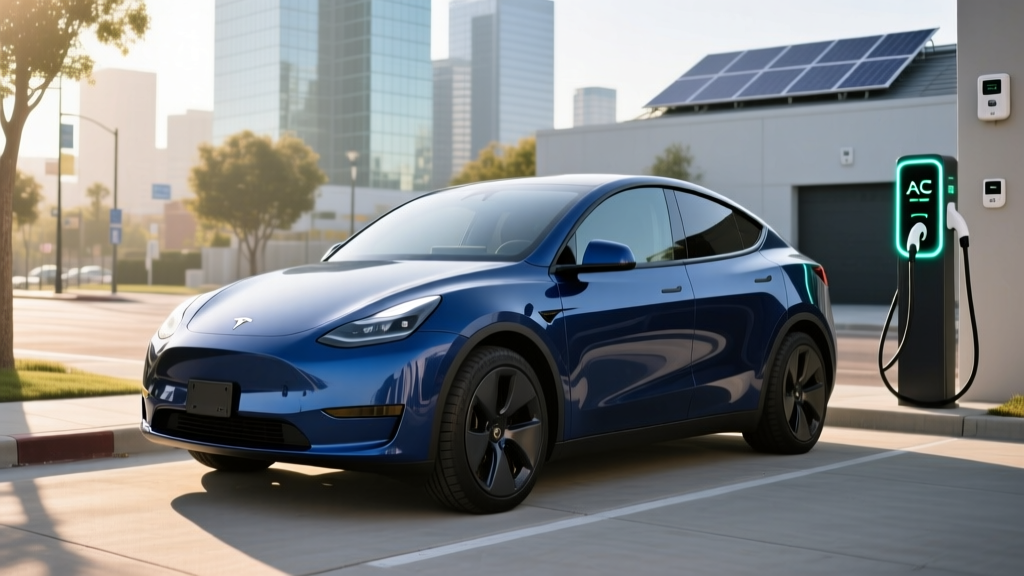
The Tesla Model Y remains one of the best-selling electric vehicles globally for good reason: it delivers strong range, access to the Supercharger network, and practical crossover utility. But for 2026, the decision to lease a Tesla Model Y versus buying outright hinges on shifting federal tax-credit rules, Tesla's aggressive lease pricing, and a rapidly evolving competitive landscape. If you want to drive a well-rounded electric SUV without committing to long-term depreciation risk, leasing can lock in a lower monthly payment while capturing the $7,500 federal credit through Tesla's lease structure — even if your income exceeds the IRS purchase caps.
| Spec | Value |
|---|---|
| EPA Range | 320 miles |
| Battery (usable) | ~75 kWh, NMC (2170 cells) |
| Efficiency | 122 MPGe combined / 28 kWh/100 mi |
| Max DC Fast Charge | 250 kW peak |
| 10–80% DC Charge Time | ~25 minutes |
| Level 2 Home Charging | 11.5 kW (~44 mi/hr) |
| 0–60 mph | 4.8 seconds |
| Horsepower | 384 hp (dual motor) |
| Drivetrain | Dual-motor AWD |
| Cargo Volume | 30.2 cu ft (rear seats up) / 72.1 cu ft (folded) |
| Rear Legroom | 37.0 inches |
| Battery Warranty | 8 years / 120,000 miles |
| Base MSRP | $44,990 |
| As-Tested (w/ FSD, wheels) | ~$54,490 |
Real-World Range: What the EPA Sticker Doesn't Tell You
EPA Estimated Range: 320 miles (Long Range AWD) | 295 miles (Performance)
Real-World Expectation: 260–290 miles on highway road trips at 70+ mph; 220–250 miles in sub-freezing winter conditions; 300+ miles in mixed city/regenerative driving.
The Model Y Long Range AWD carries an EPA-estimated 320 miles of range. That number is achievable in moderate temperatures with mixed city driving, where regenerative braking recovers significant energy. However, highway-only trips at sustained speeds above 70 mph typically yield 260–290 miles before you'll want to stop. Cold weather (below 32°F) compounds this: expect a 15–25% reduction, dropping usable range to roughly 220–250 miles. The Model Y's heat pump helps mitigate cabin-heating losses compared to resistive heaters, but battery chemistry itself slows in cold, reducing both range and charge acceptance.
The standard-range RWD variant, which uses an LFP (lithium iron phosphate) battery, carries a lower EPA rating around 260 miles but offers a distinct advantage: Tesla recommends regular charging to 100%, whereas the NMC-equipped Long Range and Performance trims benefit from daily limits of 80–90% to preserve long-term battery health. For lease customers who plan to return the vehicle in 36 months, this distinction matters less — but it affects daily usability.
Charging Speed: Supercharger Network and Home Setup
| Level | Power | Speed |
|---|---|---|
| Level 1 (120V household) | ~1.4 kW | ~4–5 miles/hour |
| Level 2 (240V home, Wall Connector) | 11.5 kW | ~44 miles/hour |
| Level 2 (public J1772 w/ adapter) | Up to 11.5 kW | ~44 miles/hour |
| DC Fast Charge (Supercharger V3) | 250 kW peak | 10–80% in ~25 min |
| DC Fast Charge (Supercharger V4) | Up to 325 kW* | 10–80% in ~20 min* |
| CCS Station (w/ Tesla CCS adapter) | Up to 150–175 kW | 10–80% in ~35 min |
*V4 speeds depend on station hardware, battery preconditioning, and ambient temperature.
The Model Y's charging architecture peaks at 250 kW on V3 Superchargers, which is competitive but not class-leading — the Hyundai Ioniq 5 and Kia EV6 can accept 350 kW on 800-volt architecture. In practice, the Model Y sustains strong charging speeds between 10–50% State of Charge, then tapers progressively above 80%. Tesla's trip planner automatically preconditions the battery when you navigate to a Supercharger, which is essential for achieving peak charge rates in cold or cool weather.
For home charging, the Tesla Wall Connector delivers up to 11.5 kW on a 60-amp circuit (48-amp continuous draw). Expect a full overnight charge from 20% to 90% in roughly 6 hours. Installation costs for a dedicated 240V/60A circuit typically range from $800–$2,500 depending on panel proximity and local permitting. Most lease agreements don't include home charger installation, so budget separately.
Pricing, Lease Terms, and the Federal Tax Credit
| Trim | Base MSRP | Destination | Est. Monthly Lease (36 mo, 10k mi/yr) | Federal Credit in Lease |
|---|---|---|---|---|
| Long Range AWD | $44,990 | $1,390 | ~$499–$599 | $7,500 applied as cap-cost reduction |
| Performance | $48,990 | $1,390 | ~$579–$679 | $7,500 applied as cap-cost reduction |
Tesla frequently adjusts pricing and lease offers, but as of early 2026, the Long Range AWD starts at $44,990 before destination. When you lease a Tesla Model Y through Tesla's financial services, the $7,500 federal EV tax credit is typically applied as a capitalized-cost reduction (lowering the effective lease price), rather than requiring you to claim it on your tax return. This is a critical distinction from purchasing: under IRS §30D rules, buyers who purchase must meet income caps ($150,000 single / $300,000 joint) and the vehicle must satisfy battery-sourcing and critical-minerals requirements. Lease customers generally bypass the income and sourcing restrictions because the credit flows to the lessor (Tesla), who passes it through as a lower lease cost.
However, this structure is not guaranteed. Tesla's lease terms can change monthly, and not every trim or configuration may qualify. Always confirm with Tesla's finance team whether the current lease offer includes the full $7,500 credit as a cap-cost reduction before signing.
Tax Credit Eligibility Checklist (Purchase — for comparison)
- Vehicle MSRP at or below $80,000 (SUVs/crossovers) — Model Y qualifies
- Buyer AGI: ≤$150,000 (single), ≤$225,000 (head of household), ≤$300,000 (joint)
- Battery critical minerals and components must meet annual sourcing thresholds (increasing yearly)
- Vehicle must be assembled in North America — Model Y (Fremont/Austin) qualifies
- Point-of-sale transfer available at purchase (dealer-registered) — reduces out-of-pocket at delivery
Performance, Efficiency, and Daily Driving
The Model Y Long Range AWD produces 384 horsepower from its dual-motor setup and hits 0–60 mph in 4.8 seconds — brisk for a family crossover. The Performance trim drops that to 3.5 seconds with 455 hp, but sacrifices roughly 25 miles of EPA range (295 mi). Efficiency for the Long Range sits at 122 MPGe combined (28 kWh/100 miles), which is among the best in its class and translates to roughly $0.04–$0.06 per mile when charging at home on a national-average electricity rate of $0.16/kWh.
Ride quality has improved with the 2025 Juniper refresh, which added revised suspension tuning, acoustic glass, and ventilated front seats. The cabin is noticeably quieter at highway speeds than pre-2025 models. Steering remains direct and confidence-inspiring, though the lack of physical stalks (turn signals are now steering-wheel buttons) continues to divide owners.
Interior, Cargo, and Standout Tech
The Model Y's minimalist interior centers on a 15.4-inch touchscreen that controls virtually every function. Rear passengers get an 8-inch screen for climate and entertainment. Cargo space is generous: 30.2 cubic feet behind the second row, expanding to 72.1 cu ft with seats folded. The rear trunk opening is wide and low, making it practical for strollers, groceries, and camping gear. A small front trunk (frunk) adds roughly 4.1 cu ft for charging cables or a soft bag.
Standout tech includes:
- Tesla Supercharger network with 6,000+ North American V3/V4 stalls — the most reliable DC network by uptime metrics
- Over-the-air updates that add features post-delivery
- Sentry Mode and Dashcam (requires USB drive)
- Tesla App with remote climate, location, and charge management
- Available Full Self-Driving (Supervised) — a Level 2 driver-assist system, not autonomous driving
ADAS Clarification: Tesla Autopilot and FSD (Supervised) are SAE Level 2 driver-assistance systems. The driver must remain fully attentive, keep hands on the wheel, and be prepared to take over at any time. These systems do not make the Model Y self-driving. Misuse has resulted in NHTSA investigations and documented collisions.
Notable drawbacks:
- No Apple CarPlay or Android Auto — Tesla's proprietary infotainment only
- Turn-signal buttons on the steering wheel require an adjustment period
- Panel gaps and paint quality, while improved, still trail legacy luxury brands
- No heads-up display
- FSD monthly subscription ($99/mo) adds cost without delivering full autonomy
Model Y vs. Key Competitors: Is It Still the Best Choice?
Pros
- Access to the Supercharger network — best-in-class reliability and coverage
- Strong efficiency (122 MPGe) keeps per-mile charging costs low
- Lease structure can capture full $7,500 credit regardless of buyer income
- Spacious cargo area (72.1 cu ft max) and practical liftback design
- Continuous OTA improvements and strong resale value history
Cons
- Peak DC charge rate (250 kW) trails 800V competitors (350 kW)
- No Apple CarPlay/Android Auto
- FSD remains Level 2 — expensive and not autonomous
- Cold-weather range loss is significant without preconditioning discipline
- Turn-signal button layout is polarizing
Choose the Tesla Model Y if: You prioritize Supercharger access for road trips, want the lowest per-mile charging cost, and can adapt to Tesla's proprietary infotainment ecosystem.
Consider the Hyundai Ioniq 5 or Kia EV6 if: You want faster 350-kW DC charging, prefer physical buttons and CarPlay, and primarily drive in urban/suburban settings where CCS charging is adequate.
Consider the Ford Mustang Mach-E if: You want a more traditional cockpit layout, BlueCruise hands-free highway driving (on mapped roads), and competitive pricing around $43,000.
Who Should Lease the Model Y?
Leasing a Tesla Model Y makes the most sense for:
- Commuters driving 30–80 miles daily who can charge at home overnight and want minimal fuel cost
- Families needing 5-passenger seating, generous cargo room, and strong safety ratings (NHTSA 5-star overall)
- Tax-credit maximizers whose income exceeds the IRS purchase caps — leasing can still pass through the $7,500 credit
- Tech-forward buyers who value OTA updates, app integration, and the Supercharger ecosystem
It's a weaker fit for buyers in extreme-cold climates without garage parking (range loss compounds), those who need Apple CarPlay for work, or drivers who want Level 3+ hands-free highway capability currently offered by GM's Super Cruise or Ford's BlueCruise on compatible roads.
Frequently Asked Questions
What is the real-world range of the 2026 Tesla Model Y?
EPA-rated at 320 miles (Long Range AWD), expect 260–290 miles on highway road trips and 220–250 miles in freezing weather. City driving with regen can approach or slightly exceed the EPA number in mild temperatures.
How fast does the Model Y charge at home and on the road?
At home on a Level 2 Wall Connector (11.5 kW), you'll add roughly 44 miles per hour of charging. On a Tesla V3 Supercharger, the battery charges from 10–80% in approximately 25 minutes, peaking at 250 kW before tapering above 80%.
How much does the Model Y cost after the federal tax credit?
When leasing, Tesla typically applies the $7,500 credit as a capitalized-cost reduction, effectively lowering monthly payments. On a purchase, the credit is available at point-of-sale if you meet IRS income caps and battery-sourcing requirements. Always confirm current eligibility with Tesla and your tax professional.
Does the Tesla Model Y qualify for the federal EV tax credit in 2026?
The Model Y is assembled in the US and falls under the $80,000 SUV MSRP cap, making it eligible for the full $7,500 credit — provided battery-sourcing thresholds are met and (for purchases) buyer income is within IRS limits. Lease customers typically benefit regardless of personal income, as the credit goes to the lessor.
Is it better to buy or lease a Tesla Model Y?
Leasing is advantageous if you want lower monthly payments, plan to upgrade in 3 years, or exceed the IRS income caps for the purchase credit. Buying makes more sense if you drive high annual miles (lease penalties apply over 10–15k mi/yr), want to keep the vehicle 5+ years, or want to build equity. Tesla's lease terms don't always include a purchase option at lease-end, so factor that in.
What's the battery warranty on the Model Y?
Tesla covers the battery and drive unit for 8 years or 120,000 miles (whichever comes first) with a minimum 70% capacity retention guarantee. For a 36-month lease, you'll remain well within warranty coverage.