Quick Verdict: A Driver's EV That Rewards Every Commute
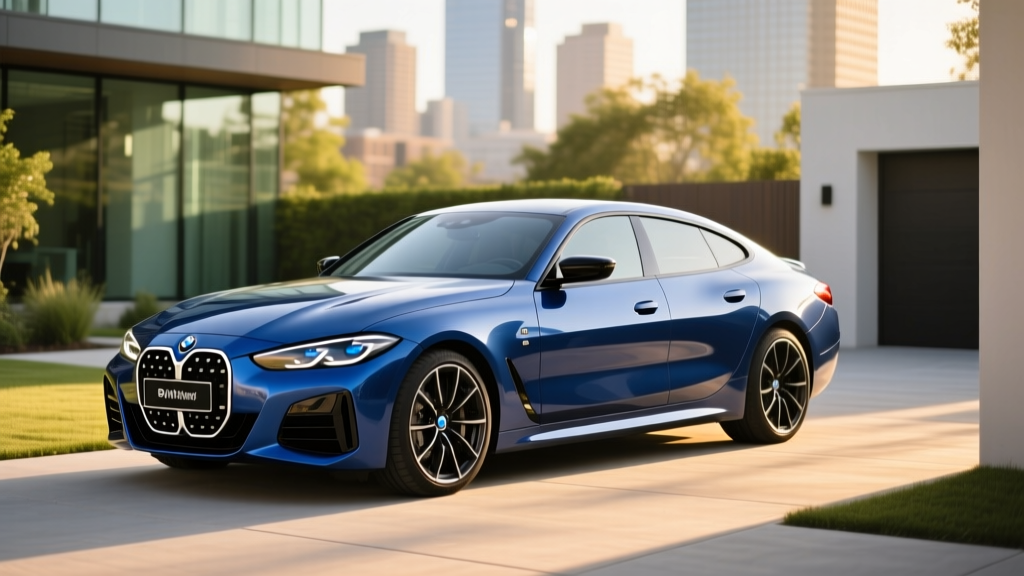
The BMW i4 remains one of the most satisfying electric sedans to drive — a low-slung, rear-wheel-drive (or dual-motor AWD) machine that trades crossover practicality for genuine handling engagement. For 2026, the i4 lineup carries forward with the eDrive40 (335 hp, RWD) and the M50 (536 hp, AWD), both riding on BMW's CLAR platform with an 83.9 kWh usable NMC lithium-ion battery. If you've been searching whether to lease the BMW i4 or buy outright, the answer depends heavily on your mileage, your state's incentives, and how the federal EV tax credit applies to your income — details we unpack below with exact numbers.
| Spec | eDrive40 | xDrive40 | M50 |
|---|---|---|---|
| EPA Range | 301 mi | 287 mi | 269 mi |
| Battery (usable) | 83.9 kWh, NMC | ||
| Drivetrain | RWD | AWD (dual-motor) | AWD (dual-motor) |
| Horsepower | 335 hp | 396 hp | 536 hp |
| 0–60 mph | 5.5 sec | 4.9 sec | 3.7 sec |
| Peak DC Charge Rate | 205 kW | ||
| 10–80% DC Fast Charge | ~31 min | ||
| Level 2 (11 kW onboard) | ~8.5 hrs (0–100%) | ||
| MPGe (combined) | 109 MPGe | 102 MPGe | 97 MPGe |
| kWh/100 mi | 31 | 33 | 35 |
| Base MSRP | $57,900 | $62,900 | $70,700 |
Source: EPA / fueleconomy.gov and BMW USA product specifications.
Real-World Range: What the EPA Sticker Doesn't Tell You
EPA Estimate: 301 miles (eDrive40) / 269 miles (M50)
Real-World Expectation: ~260–280 mi highway; ~220–250 mi in sub-35°F cold weather
The i4's 83.9 kWh usable battery (roughly 81.5 kWh net in practice after buffer management) delivers strong efficiency for its performance class. The eDrive40's 31 kWh/100 mi rating is competitive with the Tesla Model 3 Long Range and better than the Polestar 2 Long Range. But real-world range depends heavily on three variables:
- Highway driving at 75+ mph: Expect a 10–15% reduction from EPA. The i4's aerodynamic profile (0.29 Cd for eDrive40) helps, but sustained high-speed driving consumes noticeably more energy than city regen-heavy commuting.
- Cold weather (below 35°F): The i4 uses a heat pump (standard on 2026 models) that mitigates cabin-heating energy draw, but battery chemistry still loses efficiency in cold. Plan for 15–25% range reduction. Preconditioning the battery while plugged in is essential to recover range and preserve fast-charging speeds.
- Terrain and driving style: Mountain passes and aggressive acceleration (especially in the M50's 536 hp Sport mode) will drop efficiency to 38–42 kWh/100 mi, cutting effective range to ~200 miles between charges.
For daily commuting under 60 miles round-trip, the i4's real-world range is a non-issue — you'll charge at home every few days and rarely visit a public charger. For road trips exceeding 250 miles, you'll need at least one DC fast-charge stop.
Charging Speed: 205 kW Peak, But Watch the Curve
| Charging Level | Power (kW) | Rate | Notes |
|---|---|---|---|
| Level 1 (120V) | ~1.4 kW | ~4 mi/hr | Emergency / overnight trickle only |
| Level 2 (240V, 48A) | 11 kW (onboard max) | ~35 mi/hr | Full charge in ~8.5 hours |
| DC Fast Charge | 205 kW peak | 10–80% in ~31 min | CCS1 connector; tapers sharply above 80% |
The i4 charges via CCS1 (Combined Charging System) at public DC stations — compatible with Electrify America, EVgo, and ChargePoint DC networks. BMW has not adopted the Tesla NACS connector on the i4 as of the 2026 model year, though adapters are available for Supercharger access.
Charging curve reality: The 205 kW peak rate is achieved only between roughly 10–35% state of charge (SoC), provided the battery is preconditioned (the i4 does this automatically when a DC charger is set as a navigation destination). From 35–60%, the rate tapers to ~150 kW; from 60–80%, it drops to ~90–100 kW. Above 80%, charging slows dramatically to ~50 kW and below — BMW's battery management system protects the NMC cells from stress at high SoC. For road trips, plan your stops to charge from 10–80% and move on rather than waiting for a full charge.
Home charging setup: The i4's 11 kW onboard charger means you'll want a 48-amp Level 2 home station on a 60-amp circuit to maximize speed. A typical installation (charger + electrician + permit) runs $1,200–$2,500 depending on whether your electrical panel needs an upgrade. At 11 kW, a full 0–100% charge takes roughly 8.5 hours — ideal for overnight replenishment.
Performance: BMW's Rear-Drive DNA, Electrified
The i4 eDrive40 uses a single rear-mounted electrically excited synchronous motor (EESM) producing 335 hp and 317 lb-ft of torque. Unlike permanent-magnet motors, BMW's EESM design avoids rare-earth materials and delivers strong mid-range pull. The result: a 5.5-second 0–60 mph time with linear, responsive acceleration that feels quicker than the numbers suggest, thanks to instant torque delivery.
The M50 adds a front motor for dual-motor AWD and a combined 536 hp / 586 lb-ft. The 3.7-second 0–60 time puts it in sports-car territory, and the M-tuned adaptive suspension, rear-biased torque distribution, and 50/50-ish weight balance make it genuinely engaging on back roads. Steering weight is heavier and more communicative than most EVs, and the low center of gravity (battery pack mounted under the floor) keeps body roll minimal.
One-pedal driving is available via the highest regen setting (B mode), though BMW's default coasting mode (D) lets the car glide efficiently when you lift off the accelerator — a feature many hypermilers prefer on highways.
Pricing, Trims & the Federal Tax Credit Question
| Trim | Base MSRP | §30D Credit Eligibility | Effective Price (if eligible) |
|---|---|---|---|
| eDrive40 | $57,900 | Eligible (under $55K sedan cap — wait, sedan cap is $55,000) | See IRS rules below |
| xDrive40 | $62,900 | Exceeds $55K sedan MSRP cap | Not eligible for §30D purchase credit |
| M50 | $70,700 | Exceeds $55K sedan MSRP cap | Not eligible for §30D purchase credit |
This is where leasing vs. buying becomes critical.
Under IRS §30D rules, the federal EV tax credit for purchased vehicles has strict MSRP caps: $55,000 for sedans. The i4 is classified as a sedan, meaning the eDrive40 at $57,900 base MSRP already exceeds the cap before any options. In practice, no 2026 BMW i4 trim qualifies for the $7,500 §30D purchase credit at base pricing, and certainly not with common option packages.
Additionally, the §30D credit requires the buyer to meet income caps ($150,000 single / $300,000 joint filer AGI), and the vehicle must meet battery critical-mineral and component sourcing requirements that shift annually.
The lease loophole: Under IRS §45W, the commercial clean vehicle credit applies to vehicles leased through a financing entity. Many BMW Financial Services leases structure the transaction so the lessor claims the $7,500 credit and passes the savings to the lessee as a lease capital cost reduction. This means leasing an i4 M50 at $70,700 MSRP could effectively reduce your lease cost by up to $7,500 — savings you cannot access by purchasing. Always confirm with your BMW dealer that the specific lease includes the pass-through credit; it is not automatic.
§30D Purchase Credit Requirements (2026):
- MSRP ≤ $55,000 for sedans (i4 exceeds this at all trims)
- Buyer AGI ≤ $150K single / $225K head of household / $300K joint
- Battery critical minerals ≥ 60% from US or FTA partners (2026 threshold)
- Battery components ≥ 80% manufactured/assembled in North America (2026 threshold)
- No foreign entity of concern (FEOC) battery materials
- Point-of-sale transfer available if all criteria met
Interior, Cargo & Daily Livability
The i4 shares its cabin architecture with the 4 Series Gran Coupe, meaning you get BMW's Curved Display (12.3-inch instrument cluster + 14.9-inch infotainment touchscreen running iDrive 8.5), a sporty driving position, and premium materials including Sensatec synthetic leather standard, with Vernasca and Merino leather available.
Cargo: The i4's liftback design provides 16.6 cubic feet of cargo space behind the rear seats — more than a traditional sedan trunk and competitive with compact crossovers. Fold the 40/20/40 rear seats and you get approximately 45 cu ft. The Gran Coupe hatch makes loading bulky items easier than a Model 3's traditional trunk opening.
Passenger space: Front legroom is generous at 41.7 inches. Rear legroom measures 35.2 inches — adequate for adults on shorter trips but tighter than a Hyundai Ioniq 6 (37.4 in rear). The i4's transmission tunnel hump (a legacy of the shared CLAR platform with ICE 4 Series) intrudes on the rear center seat, making it a strict four-passenger car in comfort.
Tech highlights:
- Wireless Apple CarPlay and Android Auto
- BMW Digital Key Plus (UWB-based phone-as-key)
- Harman Kardon 17-speaker surround sound (optional)
- Driving Assistance Professional Package: adaptive cruise with stop-and-go, lane-keeping assist, automatic lane change (SAE Level 2 — driver must remain engaged)
- Parking Assistant Plus with 3D surround-view cameras and Reversing Assistant
Notable drawbacks: The rear-seat tunnel hump, the absence of a front trunk (frunk) due to the motor placement, and iDrive's occasional menu complexity for climate controls (though physical toggle buttons remain, unlike some competitors).
Battery Warranty, Longevity & Ownership Costs
BMW covers the i4's high-voltage battery with an 8-year / 100,000-mile warranty against defects and capacity loss below 70% of original capacity — the industry-standard threshold. The powertrain (electric motors, power electronics) carries the same 8-year/100,000-mile coverage. The basic vehicle warranty is 4 years / 50,000 miles.
The NMC battery chemistry in the i4 offers higher energy density than LFP alternatives (more range per kg), but it is more sensitive to sustained high-SoC storage and frequent DC fast charging. Best practices for long-term health:
- Set daily charge limit to 80–90% for routine use
- Avoid leaving the car at 100% SoC for extended periods
- Use DC fast charging for road trips, not daily commuting
- Precondition the battery in cold weather before fast charging
Based on degradation data from similar BMW NMC packs (iX, i7), expect approximately 8–12% capacity loss over 8 years / 100,000 miles under normal use. Full battery replacement costs are estimated at $15,000–$20,000 out of warranty, though this is rarely needed within the warranty period.
5-year estimated total cost of ownership (purchase, insurance, electricity, maintenance, depreciation) for the i4 eDrive40 runs approximately $58,000–$65,000 depending on your electricity rate, mileage, and state insurance premiums. EV insurance tends to run 15–25% higher than comparable ICE vehicles. Maintenance costs are significantly lower — no oil changes, brake pads last longer due to regen braking, and the cabin air filter is the primary recurring service item.
BMW i4 vs. Key Competitors: How Does It Stack Up?
| Vehicle | EPA Range | 0–60 mph | Peak DC kW | Base MSRP |
|---|---|---|---|---|
| BMW i4 eDrive40 | 301 mi | 5.5 sec | 205 kW | $57,900 |
| Tesla Model 3 Long Range | 363 mi | 4.2 sec | 250 kW | $47,740 |
| Hyundai Ioniq 6 SEL | 316 mi | 5.1 sec | 235 kW | $42,200 |
| Polestar 2 Long Range DM | 320 mi | 4.5 sec | 205 kW | $53,400 |
The i4 trades outright range and value leadership for build quality, driving dynamics, and brand cachet. The Tesla Model 3 Long Range wins on range (363 mi), Supercharger network access, and price — but its ride quality and interior material quality lag the BMW. The Hyundai Ioniq 6 offers the best value with strong range and 800V charging architecture (10–80% in ~18 min), but its rear visibility and low seating position divide buyers. The Polestar 2 matches the i4 on driving feel but offers less cargo versatility and a smaller dealer network.
Choose the BMW i4 if:
- You prioritize steering feel, chassis balance, and a premium cabin over maximum range
- You plan to lease and can access the $7,500 pass-through credit
- You want a liftback design for cargo flexibility without driving a crossover
- You value BMW's dealer/service network and certified repair facilities
Look elsewhere if:
- Range-per-dollar is your top priority (Model 3, Ioniq 6 win)
- You need a flat rear floor for a middle passenger
- You want NACS native access to Tesla Superchargers without an adapter
- You prefer the lowest possible purchase price with federal credit eligibility
Pros and Cons at a Glance
Pros
- Genuine sports-sedan handling with precise steering and adaptive damping
- Liftback cargo versatility (16.6 cu ft) exceeds typical sedans
- 301-mile EPA range adequate for most commutes and regional road trips
- Heat pump standard for cold-weather efficiency
- iDrive 8.5 with physical climate controls and wireless CarPlay/Android Auto
- Lease structure can access $7,500 credit that purchase cannot
- 8-year/100,000-mile battery and powertrain warranty
Cons
- Base MSRP exceeds $55K sedan cap — no §30D purchase credit at any trim
- Rear center tunnel hump limits comfortable 3-across seating
- No front trunk (frunk) — lost cargo opportunity
- CCS1 connector requires adapter for Tesla Supercharger access
- 205 kW peak DC charging is slower than 800V rivals (Ioniq 6, Taycan)
- Insurance premiums run 15–25% higher than ICE 4 Series equivalents
Frequently Asked Questions
What is the real-world range of the BMW i4?
The EPA rates the eDrive40 at 301 miles and the M50 at 269 miles. In real-world highway driving at 70–80 mph, expect 260–280 miles (eDrive40) and 230–250 miles (M50). In cold weather below 35°F, subtract another 15–25% due to battery chemistry limitations, even with the standard heat pump.
How fast does the BMW i4 charge?
On a DC fast charger, the i4 peaks at 205 kW and charges from 10–80% in approximately 31 minutes, assuming the battery is preconditioned. At home on a Level 2 (240V, 48A) charger, the 11 kW onboard charger delivers roughly 35 miles of range per hour, with a full charge taking about 8.5 hours.
Does the BMW i4 qualify for the federal EV tax credit?
Not for purchase — the i4's base MSRP ($57,900–$70,700) exceeds the IRS §30D sedan cap of $55,000 at all trim levels. However, leasing the i4 may allow the lessor to claim the $7,500 commercial clean vehicle credit under §45W and pass the savings to you as a lease cost reduction. Confirm this with your BMW dealer before signing.
Is it better to lease or buy the BMW i4?
Leasing is often the smarter financial move for the i4. You gain access to the $7,500 pass-through credit (unavailable on purchase), avoid long-term depreciation risk on a luxury EV, and can upgrade to newer battery technology in 3 years. Buying makes sense only if you drive under 10,000 miles/year (lease mileage penalties add up), plan to keep the car 6+ years, or want to modify the vehicle.
Is the BMW i4 worth it over a Tesla Model 3?
If driving dynamics, interior material quality, and dealer service experience matter to you, yes. The i4's steering feel, adaptive suspension, and cabin refinement exceed the Model 3. However, the Model 3 Long Range offers 62 more miles of EPA range, faster DC charging (250 kW), native Supercharger access, and a ~$10,000 lower starting price. It's a values-and-priorities decision.
What charger connector does the BMW i4 use?
The 2026 BMW i4 uses the CCS1 (Combined Charging System) connector for DC fast charging and J1772 for Level 2 AC charging. To use Tesla Superchargers, you'll need a CCS-to-NACS adapter (BMW offers one, and third-party options exist). BMW has not announced a native NACS port for the i4 as of the 2026 model year.