The Case for Leasing a Rivian: Why Buyers Are Choosing This Route
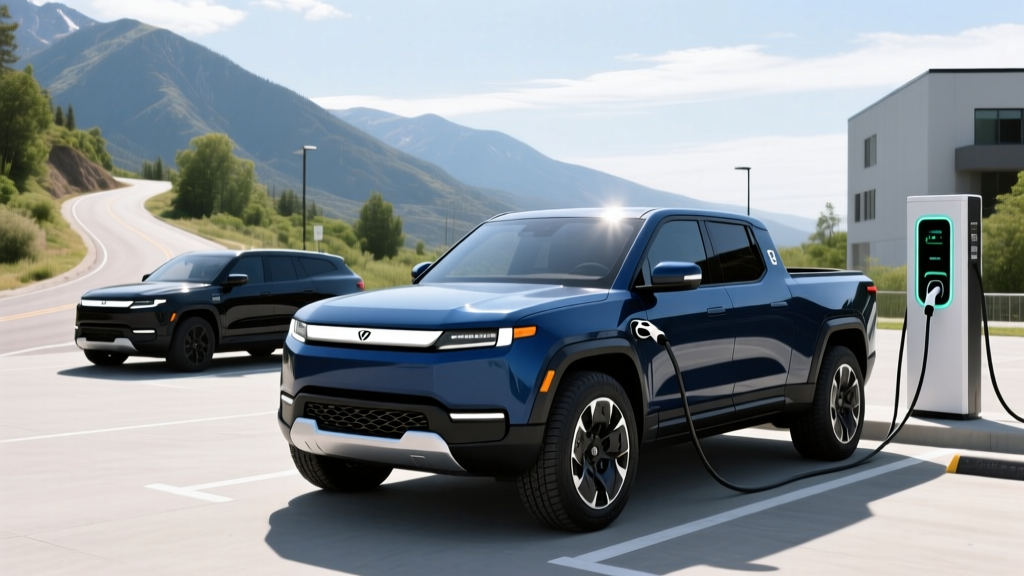
Rivian's R1T pickup and R1S SUV occupy a rare space in the EV market: adventure-capable, tech-forward vehicles with legitimate off-road chops and daily-driver practicality. But with base MSRPs stretching past $70,000 and rapid iteration between model years, many buyers are discovering that leasing a Rivian makes more financial sense than purchasing outright. A lease shields you from the steepest depreciation curves, locks in the current federal EV tax credit as a point-of-sale rebate, and lets you upgrade as Rivian's Gen 2 battery architecture and software platform mature.
This guide covers everything you need to evaluate whether a Rivian lease fits your budget and driving needs — from real-world range and DC fast-charging speeds to the specifics of the IRS §30D credit and how it interacts with lease agreements.
2026 Rivian R1T and R1S: EPA Range, Battery, and Real-World Expectations
Rivian currently offers two battery packs across the R1 lineup: the Standard battery and the larger Max battery. Both use NMC (nickel-manganese-cobalt) lithium-ion chemistry, which delivers higher energy density than LFP but is more sensitive to sustained high-state-of-charge storage. Here's what the EPA says — and what you should actually expect.
| Spec | R1T Dual-Motor (Standard) | R1T Dual-Motor (Max) | R1S Dual-Motor (Standard) | R1S Dual-Motor (Max) |
|---|---|---|---|---|
| EPA Range | 270 mi | 352 mi | 270 mi | 352 mi |
| Battery (Usable) | ~105 kWh (NMC) | ~141 kWh (NMC) | ~105 kWh (NMC) | ~141 kWh (NMC) |
| MPGe (Combined) | 70 MPGe | 70 MPGe | 69 MPGe | 69 MPGe |
| Efficiency | 48 kWh/100 mi | 48 kWh/100 mi | 49 kWh/100 mi | 49 kWh/100 mi |
| 0–60 mph | 4.5 sec | 4.5 sec | 4.6 sec | 4.6 sec |
| Horsepower | 533 hp | 533 hp | 533 hp | 533 hp |
| Drivetrain | Dual-Motor AWD | Dual-Motor AWD | Dual-Motor AWD | Dual-Motor AWD |
Real-World Range Reality: The EPA 270-mile Standard pack figure assumes mixed driving. On sustained highway trips at 75 mph, expect closer to 230–245 miles. In cold weather (below 30°F), range drops 15–25% due to cabin heating and battery thermal losses — figure 200–215 miles for the Standard pack. The Max pack's 352-mile EPA rating holds up better on road trips (expect ~300–315 highway) and remains a strong buffer in winter (~275–295 mi). Source: fueleconomy.gov.
Charging Speed: DC Fast Charging and Home Level 2 Setup
Charging speed is often the make-or-break factor for EV ownership satisfaction. Rivian's Gen 2 vehicles support peak DC fast-charging rates that make road trips viable, but understanding the charge curve — not just the peak number — is essential.
| Charging Level | Max Rate | Speed / Notes |
|---|---|---|
| Level 1 (120V household) | ~1.4 kW | ~3–4 miles/hour — emergency only |
| Level 2 (240V home, 48A) | 11.5 kW | ~25 miles/hour — full overnight charge in 10–14 hours |
| DC Fast Charge (Standard Pack) | Peak 200 kW | 10–80% in ~30 minutes; tapers significantly above 80% |
| DC Fast Charge (Max Pack) | Peak 220 kW | 10–80% in ~35 minutes; larger pack absorbs longer at peak |
Charge curve context: Rivian's peak kW rating is reached at a low state of charge (around 10–20% SoC) and tapers as the battery fills. You'll see sustained rates of 150–180 kW through about 50% SoC, then a gradual decline. This is normal for NMC chemistry — the battery management system protects cell longevity by reducing current as voltage rises. On a road trip, plan stops around the 10–80% window to avoid the slow taper above 80%.
For home charging, a 48-amp Level 2 wall connector on a 60-amp circuit is the sweet spot. Expect to spend $800–$1,500 on installation if your electrical panel has capacity; a panel upgrade to 200A can add $1,500–$3,000. Rivian sells its own Wall Connector, but any J1772-compatible Level 2 unit (or NACS unit for newer models with the native Tesla-style port) works.
Pricing, Trims, and the Federal EV Tax Credit
Rivian's pricing has shifted as the company scales production and introduces new configurations. Here's the current MSRP landscape for the 2026 model year, alongside how the IRS §30D federal tax credit applies.
| Model / Configuration | Base MSRP | §30D Credit Eligible? | Effective Price (with credit) |
|---|---|---|---|
| R1T Dual-Motor Standard | $69,900 | Yes — under $80K truck cap | ~$62,400 |
| R1T Dual-Motor Max | $75,900 | Yes — under $80K truck cap | ~$68,400 |
| R1S Dual-Motor Standard | $74,900 | Yes — under $80K SUV cap | ~$67,400 |
| R1S Dual-Motor Max | $79,900 | Yes — under $80K SUV cap | ~$72,400 |
| R1T/R1S Quad-Motor | $87,900+ | No — exceeds $80K MSRP cap | $87,900+ |
§30D Credit Requirements (2026 rules):
- MSRP cap: $80,000 for SUVs and pickups (vans). Tri-motor and Quad-motor trims exceed this.
- Income cap: Adjusted gross income ≤ $150K (single), $225K (head of household), $300K (joint).
- Battery sourcing: A percentage of critical minerals and battery components must be sourced from the U.S. or FTA partners — Rivian's current Dual-Motor packs generally qualify, but verify at purchase.
- Point-of-sale transfer: You can apply the $7,500 credit as an upfront rebate at the dealer, reducing your down payment or capitalized cost on a lease.
Rules change annually. Confirm current eligibility with your tax professional and the IRS before signing.
Lease-specific advantage: When you lease a Rivian, the §30D credit technically goes to the lessor (the financing entity), but most captive and third-party lessors pass it through as a capitalized-cost reduction. This effectively lowers your monthly payment. Unlike a purchase, a lease also bypasses the buyer income cap and MSRP cap in some structures — a provision known as the "commercial vehicle loophole" under §45W. Consult your tax advisor, as IRS guidance on this continues to evolve.
Cargo, Passenger Space, and Practicality
The R1T and R1S share a skateboard platform but diverge significantly in cargo and passenger utility.
R1T Pickup:
- Bed length: 4.5 feet (54 inches) — compact for a truck, but supplemented by the Gear Tunnel (11.7 cu ft of enclosed, pass-through storage behind the cab)
- Frunk (front trunk): 11.1 cu ft — large enough for a full-size cooler or charging cables
- Total cargo: ~57 cu ft (bed + frunk + Gear Tunnel combined)
- Towing capacity: up to 11,000 lbs (reduces range significantly when maxed out — expect a 40–50% range hit)
R1S SUV:
- Seating: up to 7 passengers across three rows
- Cargo behind 3rd row: 10.4 cu ft
- Cargo behind 2nd row (3rd row folded): 46.7 cu ft
- Max cargo (all rear seats folded): 88.2 cu ft
- Legroom: 41.3 in (front), 38.5 in (2nd row), 30.2 in (3rd row — tight for adults)
Tech, Driver Assists, and Standout Features
Rivian's software-defined approach means the vehicle improves over time via over-the-air updates. Key features include:
- Infotainment: 15.6-inch center touchscreen running Rivian's proprietary OS, plus a 12.3-inch digital instrument cluster. No Apple CarPlay or Android Auto — a notable drawback for many buyers who prefer phone mirroring.
- Driver Assist (Rivian Driver+): Adaptive cruise control with lane centering on highways. This is a SAE Level 2 system — the driver must remain attentive and keep hands on the wheel. It is not self-driving.
- Adventure Network: Rivian has built its own DC fast-charging network at adventure-oriented locations (near national parks, trailheads), though access is increasingly open to non-Rivian EVs.
- Unique features: Built-in air compressor (for tires and inflatables), camp kitchen option for the Gear Tunnel, integrated Bluetooth speaker (Camp Speaker), and a "Tank Turn" capability on Quad-Motor trims.
What Rivian Driver+ Does NOT Do: This system does not navigate autonomously, handle city intersections, or drive without supervision. It provides highway lane-centering and adaptive cruise. You are legally and practically responsible for the vehicle at all times. Only SAE Level 4 services (Waymo, Zoox) operate without a human driver.
Warranty Coverage and Battery Longevity
Rivian provides competitive warranty coverage for the EV segment:
- Basic vehicle warranty: 5 years / 60,000 miles
- Battery and drive unit: 8 years / 175,000 miles
- Battery capacity retention: Rivian warrants that the battery will retain at least 70% of its original capacity over the 8-year/175,000-mile period. If degradation exceeds 30%, Rivian will repair or replace the battery.
NMC chemistry typically shows a steeper initial degradation curve (2–4% in the first year) before leveling off. Real-world data from early R1T owners suggests most vehicles retain 90–94% capacity after 2 years and 30,000 miles. For a 36-month lease, battery degradation is unlikely to be a practical concern.
Pros and Cons: The Honest Assessment
Pros
- Class-leading adventure capability — genuine off-road modes, wading depth, built-in compressor
- Strong DC fast-charging (10–80% in ~30 min on Standard pack)
- Over-the-air updates continuously add features
- Unique storage solutions (Gear Tunnel, large frunk)
- §30D credit eligibility on Dual-Motor trims under $80K
- Leasing avoids long-term depreciation risk on a rapidly evolving platform
Cons
- No Apple CarPlay or Android Auto — a dealbreaker for some
- Efficiency is mediocre (48–49 kWh/100 mi) — it's a heavy, boxy vehicle
- Third row in R1S is cramped for adults
- Service center network is still expanding — rural owners may face long tow distances
- Towing cuts range nearly in half
- Quad-Motor trims exceed the $80K MSRP cap for the tax credit
Who Should Lease a Rivian — and Who Should Look Elsewhere?
Lease a Rivian if:
- You want an adventure-capable EV for camping, skiing, and weekend trips — not just commuting
- You want to lock in the $7,500 federal credit as a cap-cost reduction without worrying about future sourcing rule changes
- You prefer upgrading every 3 years as battery tech and charging infrastructure improve
- You need a truck bed (R1T) or three-row SUV (R1S) with electric powertrain
Look elsewhere if:
- You need maximum highway efficiency and range — consider the Tesla Model Y (320 mi EPA, 28 kWh/100 mi) or Hyundai Ioniq 5 (310 mi, superior efficiency)
- You rely on Apple CarPlay for navigation and music
- You tow frequently over long distances — a diesel or PHEV truck may be more practical
- You live far from a Rivian service center and can't tolerate potential downtime
Frequently Asked Questions
What is the real-world range of a Rivian R1T or R1S?
The EPA rates the Dual-Motor Standard pack at 270 miles and the Max pack at 352 miles. In real-world highway driving at 75 mph, expect about 230–245 miles (Standard) or 300–315 miles (Max). Cold weather below 30°F reduces range by 15–25%. Towing a trailer can cut range by 40–50%.
How fast does a Rivian charge at home and on the road?
At home on a 48-amp Level 2 charger, Rivian adds roughly 25 miles of range per hour (11.5 kW), fully charging overnight in 10–14 hours. On a DC fast charger, the Standard pack peaks at 200 kW (10–80% in ~30 minutes), while the Max pack peaks at 220 kW (10–80% in ~35 minutes). Plan to charge between 10–80% for the fastest speeds; charging slows substantially above 80%.
How much does a Rivian cost after the federal tax credit?
Dual-Motor configurations under the $80,000 MSRP cap qualify for the $7,500 §30D credit, bringing the R1T Standard to roughly $62,400 and the R1S Standard to about $67,400. Your adjusted gross income must fall under IRS caps ($150K single / $300K joint). When leasing, the credit is typically passed through as a capitalized-cost reduction, lowering your monthly payment.
Does a Rivian lease qualify for the federal EV tax credit?
Yes, but indirectly. The lessor claims the credit, and most pass it to you as a cap-cost reduction. Some lease structures may also bypass the MSRP and income caps under the commercial-vehicle provision (§45W), though IRS guidance continues to evolve. Always confirm with your tax professional before signing.
Is it worth leasing a Rivian vs. buying?
Leasing makes sense if you want to avoid depreciation risk on a rapidly iterating platform, lock in current tax credits, and upgrade in 36 months. Buying makes sense if you drive high annual miles (leases typically cap at 10,000–15,000 mi/yr with per-mile penalties), plan to keep the vehicle 7+ years, or want to customize it (lift kits, wraps, aftermarket accessories — which leases restrict).
Is Rivian better than a Tesla Model X or Ford F-150 Lightning?
It depends on your use case. The R1T offers a more refined adventure experience and better off-road capability than the F-150 Lightning, but the Lightning has a larger bed and more established service network. The R1S offers more personality and off-road ability than the Model X, but Tesla's Supercharger network and efficiency remain superior. The Rivian wins on build quality feel and adventure features; competitors win on charging infrastructure breadth and service accessibility.
What are Rivian's biggest drawbacks?
The lack of Apple CarPlay/Android Auto frustrates many buyers. Efficiency is below average for the EV segment (the R1T's aerodynamics and weight work against it). The service center footprint is still growing. And if you frequently tow heavy loads over long distances, the range penalty is severe enough that a PHEV or diesel may be more practical.