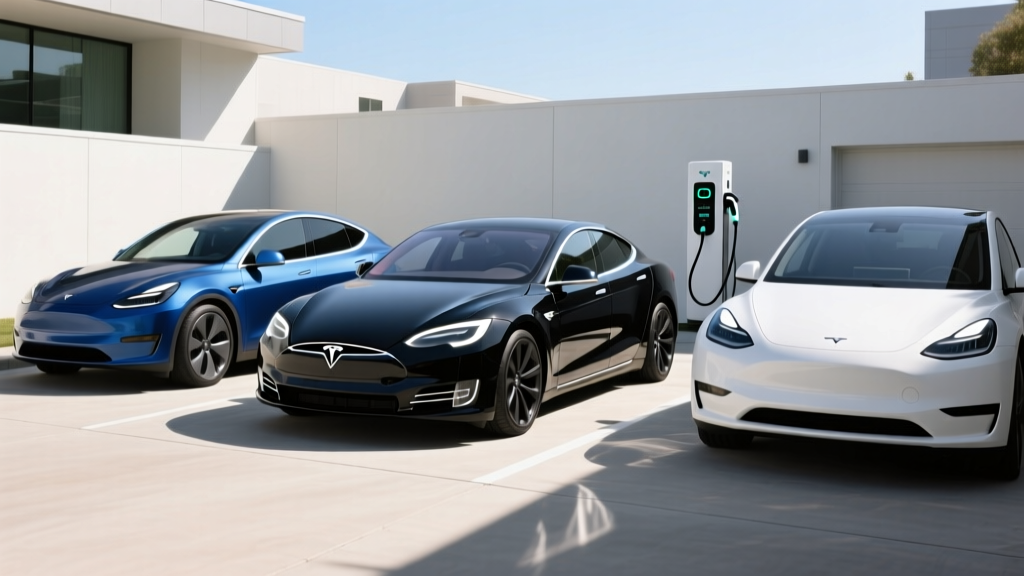
The phrase las megas Tesla — the "big ones" from Tesla — gets thrown around in Spanish-language EV communities and forums to describe the automaker's core lineup: the vehicles that move the most volume and define the brand. In 2026, that means the Model 3 sedan, the Model Y crossover, the Model S flagship sedan, and the Model X flagship SUV. Each occupies a distinct price and use-case bracket, and Tesla's rolling updates mean specs shift even within a single model year.
This guide breaks down all four with the exact numbers buyers need: EPA range, battery chemistry, DC fast-charge curves, real-world efficiency, pricing after the federal §30D tax credit, and the ownership realities that spec sheets leave out.
2026 Tesla Lineup at a Glance: Spec Comparison
| Spec | Model 3 Long Range AWD | Model Y Long Range AWD | Model S Long Range | Model X Long Range |
|---|---|---|---|---|
| EPA Range | 363 mi | 320 mi | 402 mi | 335 mi |
| Battery (usable) | ~75 kWh (NMC) | ~75 kWh (NMC) | ~95 kWh (NMC) | ~95 kWh (NMC) |
| Drivetrain | Dual-Motor AWD | Dual-Motor AWD | Dual-Motor AWD | Dual-Motor AWD |
| Horsepower | ~346 hp | ~384 hp | ~670 hp | ~670 hp |
| 0–60 mph | 4.2 sec | 4.8 sec | 3.1 sec | 3.8 sec |
| Peak DC Charge | 250 kW | 250 kW | 250 kW | 250 kW |
| 10–80% DCFC | ~28 min | ~27 min | ~35 min | ~34 min |
| Level 2 Rate | 11.5 kW (~44 mi/hr) | 11.5 kW (~44 mi/hr) | 11.5 kW (~44 mi/hr) | 11.5 kW (~44 mi/hr) |
| MPGe (combined) | 132 MPGe | 122 MPGe | 120 MPGe | 109 MPGe |
| Cargo (rear seats up) | 23 cu ft | 30 cu ft | 28 cu ft | 37 cu ft (+falcon doors) |
| Base MSRP | $47,740 | $48,240 | $79,990 | $84,990 |
Sources: fueleconomy.gov, Tesla.com specifications. Figures reflect 2026 model-year data as of publication. MSRP excludes destination fees.
Real-World Range: What the EPA Sticker Doesn't Tell You
The EPA combined-cycle numbers above assume a mix of city and highway driving at moderate temperatures. Here's what to expect in practice:
- Highway-only (75 mph): Subtract 10–15%. A Model 3 LR's 363-mile EPA rating drops to roughly 305–325 miles at sustained interstate speeds.
- Cold weather (below 32°F): Expect 20–30% range loss without preconditioning. That same Model 3 may deliver 250–290 miles on a freezing commute. Tesla's heat pump helps, but battery chemistry still suffers in the cold.
- City/regen-heavy driving: You can match or slightly exceed EPA numbers thanks to aggressive regenerative braking recapturing energy in stop-and-go traffic.
The Model S's 402-mile EPA rating is the standout — but its larger 95 kWh pack also means longer charge times and more weight working against it on mountain grades.
One factor often overlooked: Tesla's navigation system is remarkably accurate at predicting remaining range when you enter a destination. It accounts for elevation, temperature, and traffic — making the in-car estimate more trustworthy than the static EPA number for trip planning.
Charging Speed: DC Fast-Charge Curves and Home Level 2
All four models peak at 250 kW on V3 Superchargers, but peak rate is not sustained rate. The charge curve tapers significantly above 50–60% state of charge (SoC), which is why manufacturers quote 10–80% times rather than 0–100%.
| Charging Level | Power / Rate | Model 3 / Y | Model S / X |
|---|---|---|---|
| Level 1 (120V household) | ~1.4 kW | ~3–5 mi/hr | ~3–4 mi/hr |
| Level 2 (240V home, 48A) | 11.5 kW | ~44 mi/hr | ~38 mi/hr |
| DC Fast (V3 Supercharger) | Peak 250 kW | 10–80% in ~27–28 min | 10–80% in ~34–35 min |
| DC Fast (V4 Supercharger) | Peak 250 kW (current vehicles) | Same as V3 for current fleet | Same as V3 for current fleet |
Charging curve insight: The Model 3 and Y, with their smaller ~75 kWh packs, reach peak 250 kW only between roughly 10–30% SoC. After 50%, the rate drops to ~100–120 kW, and above 80% it falls below 50 kW. This is why Tesla recommends charging to 80% at Superchargers — the last 20% can take as long as the first 70%.
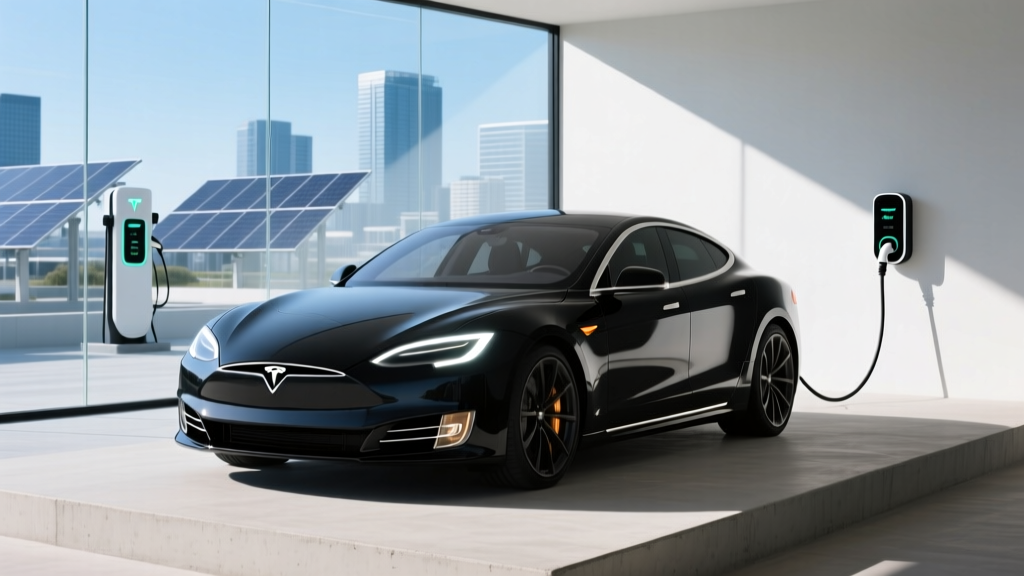
For home Level 2 charging, Tesla's Wall Connector at 48 amps on a 60-amp circuit delivers 11.5 kW. That fully replenishes a Model 3 overnight in roughly 6.5 hours. Expect to pay $500–$800 for the Wall Connector unit and $800–$2,000 for professional installation depending on panel proximity and whether a 200-amp service upgrade is needed.
Pricing, Trims, and Federal Tax Credit Eligibility
Tesla's pricing has stabilized after years of volatile cuts and hikes, but the federal tax credit landscape under IRS §30D remains complex. Here's where each model stands:
| Model / Trim | Base MSRP | §30D Credit Potential | Effective Price | MSRP Cap Status |
|---|---|---|---|---|
| Model 3 Long Range AWD | $47,740 | Up to $7,500 | ~$40,240 | Under $55,000 sedan cap ✓ |
| Model 3 RWD (LFP) | $38,990 | Up to $7,500 | ~$31,490 | Under $55,000 sedan cap ✓ |
| Model Y Long Range AWD | $48,240 | Up to $7,500 | ~$40,740 | Under $80,000 SUV cap ✓ |
| Model S Long Range | $79,990 | $0 (exceeds cap) | $79,990 | Over $55,000 sedan cap ✗ |
| Model X Long Range | $84,990 | $0 (exceeds cap) | $84,990 | Over $80,000 SUV cap ✗ |
Critical §30D caveats:
- Income caps: Modified AGI must not exceed $150,000 (single), $225,000 (head of household), or $300,000 (joint filers).
- Battery sourcing: The full $7,500 requires meeting both critical-mineral and battery-component sourcing thresholds, which shift annually. Tesla's Fremont-built vehicles have generally qualified, but verify current status at fueleconomy.gov before purchasing.
- Point-of-sale transfer: As of 2024+, you can transfer the credit to the dealer at purchase, reducing your out-of-pocket cost immediately rather than waiting for tax filing.
The Model 3 RWD with its LFP battery at ~$31,490 after the credit is arguably the best value in the entire Tesla lineup — if you can live with 272 miles of EPA range and a ~310-mile real-world highway range of roughly 230–245 miles.
Performance and Efficiency: Where the Megs Shine
The Model S Plaid (not profiled in depth here) grabs headlines with 1,020 hp and a 1.99-second 0–60 claim, but the Long Range variants of all four models deliver more than enough performance for real driving:
- Model 3 LR: 346 hp, 4.2-second 0–60, 132 MPGe combined — the efficiency champion of the group.
- Model Y LR: 384 hp, 4.8-second 0–60, 122 MPGe — slightly less efficient due to the taller, heavier crossover body.
- Model S LR: 670 hp, 3.1-second 0–60, 120 MPGe — supercar acceleration in a full-size luxury sedan.
- Model X LR: 670 hp, 3.8-second 0–60, 109 MPGe — the least efficient due to weight (~5,100 lb) and aerodynamic drag.
Efficiency translates directly to charging cost. At the national average electricity rate of ~$0.17/kWh, a Model 3 LR costs roughly $4.25 to "fill" its ~75 kWh battery for 363 miles of range — about 1.2 cents per mile. Compare that to a 30-MPG gas car at $3.50/gallon: 11.7 cents per mile. The per-mile fuel savings are dramatic, especially on high-mileage commutes.
Interior, Cargo, and Technology
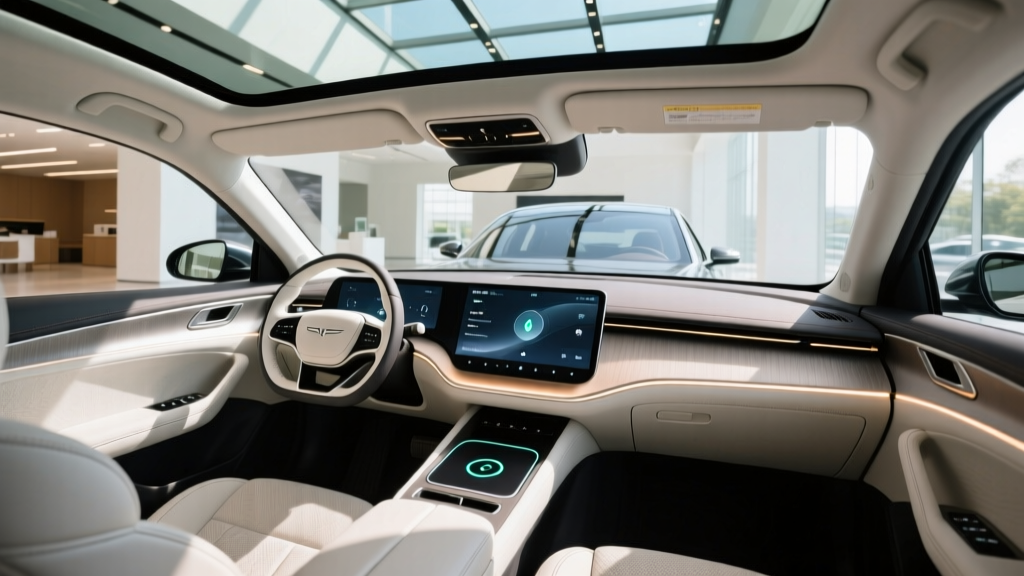
Model 3 remains the minimalist benchmark: a single 15.4-inch touchscreen controls everything, including glovebox release and mirror adjustment. The 2025+ "Highland" refresh added ventilated front seats, ambient lighting, rear-seat ventilation controls, and significantly improved NVH (noise, vibration, harshness). Cargo: 23 cu ft trunk plus a small frunk.
Model Y mirrors the Model 3 interior but in a crossover package with 30 cu ft behind the rear seats and 72 cu ft with seats folded. An optional third row (very small, best for children) is available. The "Juniper" refresh brought similar refinements to the Highland update.
Model S offers a 17-inch center touchscreen, 12.3-inch driver cluster, yoke or round steering wheel, and 28 cu ft of cargo (hatchback design). Rear-seat legroom is generous at 40.9 inches. The 22-speaker audio system is one of the best in any vehicle at any price.
Model X adds the signature falcon-wing rear doors (dramatic but occasionally slow in tight garages), 37 cu ft of cargo, and optional six- or seven-seat layouts. Second-row captain's chairs are comfortable but don't fold flat, limiting cargo flexibility.
Tech across all models: Tesla's infotainment is the industry's most responsive, with native navigation, streaming apps, Sentry Mode dashcam recording, and over-the-air updates that regularly add features. Autopilot (basic adaptive cruise + lane-keeping) is standard. Full Self-Driving (Supervised) is an $8,000 add-on or $99/month subscription — but this is SAE Level 2 driver-assist, not autonomous driving. You must remain engaged at all times.
Battery Chemistry, Warranty, and Longevity
Tesla uses two primary battery chemistries across its lineup:
| Chemistry | Used In | Energy Density | Cycle Life | Daily Charge Recommendation |
|---|---|---|---|---|
| NMC (Nickel Manganese Cobalt) | Model 3 LR, Model Y LR, Model S, Model X | Higher (more range per kg) | ~1,000–1,500 cycles | Charge to 80% daily, 100% for trips |
| LFP (Lithium Iron Phosphate) | Model 3 RWD, Model Y RWD | Lower (less range per kg) | ~3,000+ cycles | Charge to 100% regularly (recommended) |
LFP batteries sacrifice some energy density for dramatically longer cycle life and lower cost. If you plan to keep the car 10+ years or drive high annual mileage, an LFP Model 3 RWD may actually outlast an NMC Long Range in terms of battery health.
Warranty coverage across all models:
- Battery & Drive Unit: 8 years / 120,000 miles (Model 3/Y) or 8 years / 150,000 miles (Model S/X), with a minimum 70% capacity retention guarantee.
- Vehicle Limited Warranty: 4 years / 50,000 miles (basic), covering most non-powertrain components.
Real-world degradation data from fleet studies suggests Tesla NMC packs lose roughly 5–8% capacity in the first 50,000 miles, then degrade more slowly. LFP packs show even less measurable degradation at similar mileages. A replacement battery out of warranty costs $12,000–$20,000 depending on the model — rare but worth budgeting for if buying high-mileage used.
Who Should Buy Which Tesla?
Choose the Model 3 Long Range if: You road-trip regularly, need 300+ real-world highway miles, and want the best efficiency (132 MPGe) in the lineup.
Choose the Model Y Long Range if: You need crossover cargo space (30 cu ft), optional third-row seating, and the same Supercharger network access — the best-selling Tesla for a reason.
Choose the Model S if: You want flagship luxury, 400+ miles of range, 670 hp, and don't need to qualify for the tax credit. Best for executives and high-mileage luxury buyers.
Choose the Model X if: You need three rows, falcon-wing novelty, and 670 hp in an SUV — but accept that it's the least efficient and most expensive to own of the four.
Pros and Cons: The Honest Summary
- Access to Tesla's Supercharger network — the most reliable and extensive DC fast-charging network in North America
- Industry-leading over-the-air updates that add features post-purchase
- Best-in-class efficiency (Model 3 at 132 MPGe combined)
- Strong resale value relative to most EV competitors
- Standard Autopilot is genuinely useful for highway commuting
- LFP option provides exceptional battery longevity at a lower price
- Model S/X exceed MSRP caps — no federal tax credit
- Minimalist interior polarizes — no physical buttons for climate, mirrors, or glovebox
- Repair costs and insurance premiums run higher than segment averages
- FSD (Supervised) remains Level 2 — not self-driving despite the name
- Model X falcon-wing doors can be slow and have had reliability complaints
- 250 kW peak charge rate is no longer class-leading (Hyundai/Kia at 350 kW on 800V)
Frequently Asked Questions
What is the real-world range of the Tesla Model 3 Long Range?
The EPA rates it at 363 miles combined. In real-world highway driving at 75 mph, expect roughly 305–325 miles. In freezing temperatures, that can drop to 250–290 miles without preconditioning. City driving with regenerative braking can match or slightly exceed the EPA number.
How fast do Tesla models charge on DC fast chargers?
All current Tesla models peak at 250 kW on V3/V4 Superchargers. The Model 3 and Y reach 10–80% in approximately 27–28 minutes. The Model S and X, with larger ~95 kWh packs, take about 34–35 minutes. Charging slows significantly above 80% SoC.
Does the Tesla Model Y qualify for the $7,500 federal tax credit?
Yes, the Model Y Long Range AWD at $48,240 MSRP falls under the $80,000 SUV cap. However, you must also meet IRS §30D income limits ($300,000 joint / $150,000 single) and the vehicle must meet battery-sourcing requirements. Verify current eligibility at fueleconomy.gov and consult a tax professional.
Is the Tesla Model S worth it over the Model 3?
The Model S offers 402 miles of EPA range, 670 hp, adaptive air suspension, a premium 22-speaker audio system, and significantly more rear-seat legroom. But at $79,990 with no federal tax credit eligibility, it costs nearly double the Model 3 LR after incentives. It's worth it for luxury buyers who prioritize range and performance — not for value seekers.
How does Tesla's Supercharger network compare to competitors?
Tesla operates 6,000+ Supercharger stations in North America with industry-leading uptime (~99%). Most non-Tesla networks (Electrify America, EVgo) have improved but still trail in reliability. Tesla's NACS connector has been adopted by Ford, GM, Rivian, and others starting in 2025, making the Supercharger network accessible to non-Tesla EVs — which may increase wait times at popular stations.
Should I charge my Tesla to 100% every day?
If your Tesla has an NMC battery (Long Range, Performance, Model S, Model X), Tesla recommends setting the daily charge limit to 80% and charging to 100% only for road trips. If you have an LFP battery (Model 3 RWD, Model Y RWD), Tesla recommends charging to 100% at least once per week to maintain battery calibration.
What does Tesla's battery warranty actually cover?
Tesla warrants the battery and drive unit for 8 years / 120,000 miles (Model 3/Y) or 8 years / 150,000 miles (Model S/X). If capacity drops below 70% within that period, Tesla will replace or repair the battery to bring it above that threshold. This is a capacity-retention warranty, not a guarantee against any degradation.
Always verify current pricing, tax-credit eligibility, and specifications at Tesla.com and IRS.gov before purchasing. Rules and prices are subject to change.