Why Lars Moravy Matters to Your Next Tesla Purchase
If you've followed Tesla's manufacturing evolution over the past decade, you've likely encountered Lars Moravy — Tesla's Vice President of Vehicle Engineering and the architect behind some of the most consequential production decisions in the company's history. From the Fremont factory's early Model S days to the Gigafactory Texas unboxed manufacturing process, Moravy's fingerprints are on every vehicle Tesla ships.
For EV buyers in 2026, understanding Moravy's engineering priorities matters because they directly shape what you'll experience as an owner: the structural battery pack, the gigacasting approach that reduces parts count, the thermal management systems that enable industry-leading charge speeds, and the relentless focus on manufacturing efficiency that keeps Tesla's pricing competitive. This review examines the 2026 Tesla Model Y Long Range AWD — the vehicle that best represents Moravy's current engineering vision — with the exact numbers you need to make a purchase decision.
| Specification | 2026 Tesla Model Y Long Range AWD |
|---|---|
| EPA Range | 320 miles |
| Battery Capacity | 78.1 kWh usable (NMC) |
| Peak DC Fast Charge | 250 kW |
| 10–80% DC Charge Time | ~22 minutes |
| Level 2 Home Charge Rate | 11.5 kW (~44 mi/hr) |
| 0–60 mph | 4.8 seconds |
| Horsepower | 384 hp (dual motor) |
| Drivetrain | Dual Motor AWD |
| MPGe (Combined) | 122 MPGe |
| Efficiency | 28 kWh/100 mi |
| Cargo Volume (rear seats up) | 30.2 cu ft |
| Cargo Volume (rear seats folded) | 72.0 cu ft |
| Base MSRP | $48,990 |
| Battery Warranty | 8 years / 120,000 miles |
Real-World Range: Beyond the EPA Sticker
EPA Estimate: 320 miles
Real-World Expectation: 275–295 miles mixed highway/city driving; 240–260 miles sustained highway at 75+ mph; 220–250 miles in freezing temperatures (below 32°F).
The 2026 Model Y Long Range carries a 78.1 kWh usable battery pack using nickel-manganese-cobalt (NMC) chemistry — chosen for its higher energy density compared to LFP, which lets Tesla pack more range into the same physical footprint. On paper, fueleconomy.gov rates it at 320 miles EPA combined.
In practice, expect variance. Tesla's thermal management system — a hallmark of Moravy's engineering approach — uses a heat pump standard across all trims, which mitigates cold-weather range loss better than many competitors. During winter testing at 20°F, the Model Y typically delivers 70–78% of its EPA range, outperforming rivals without heat pumps by 10–15 percentage points. Highway driving at 70–75 mph yields roughly 280 miles before the buffer warning, while conservative city driving with regen braking can push close to 310 miles.
The structural battery pack, where battery cells serve as part of the vehicle's chassis, reduces weight and increases torsional rigidity. This is a direct Moravy-era innovation: fewer parts, lower mass, and better efficiency per kWh.
Charging Speed: 250 kW Peak, But Read the Fine Print
| Charging Level | Power (kW) | Speed (mi/hr added) | Notes |
|---|---|---|---|
| Level 1 (120V household) | 1.4 kW | ~5 mi/hr | Emergency/trickle only |
| Level 2 (240V home, 48A) | 11.5 kW | ~44 mi/hr | Full charge in ~7 hours |
| DC Fast Charge (V3 Supercharger) | 250 kW peak | Up to ~1,000 mi/hr at peak | 10–80% in ~22 min |
| DC Fast Charge (V4 Supercharger) | Up to 325 kW | Faster 10–80% taper curve | Compatible; sustained rate improves |
Tesla's Supercharger network remains the gold standard for public charging reliability, and the 2026 Model Y takes full advantage. At a V3 Supercharger, the charge curve peaks at 250 kW around 10–15% state of charge and sustains above 200 kW until roughly 40% SoC, then tapers progressively. The 10–80% session takes approximately 22 minutes in ideal conditions (battery preconditioned, ambient temperature 60–80°F).
At Tesla's newer V4 Supercharger cabinets, the Model Y can accept higher peak rates, though the onboard charging architecture limits sustained gains. Preconditioning — which the car initiates automatically when you navigate to a Supercharger — warms the battery to optimal temperature, adding 5–8 minutes of prep but shaving 3–5 minutes off the actual charge session.
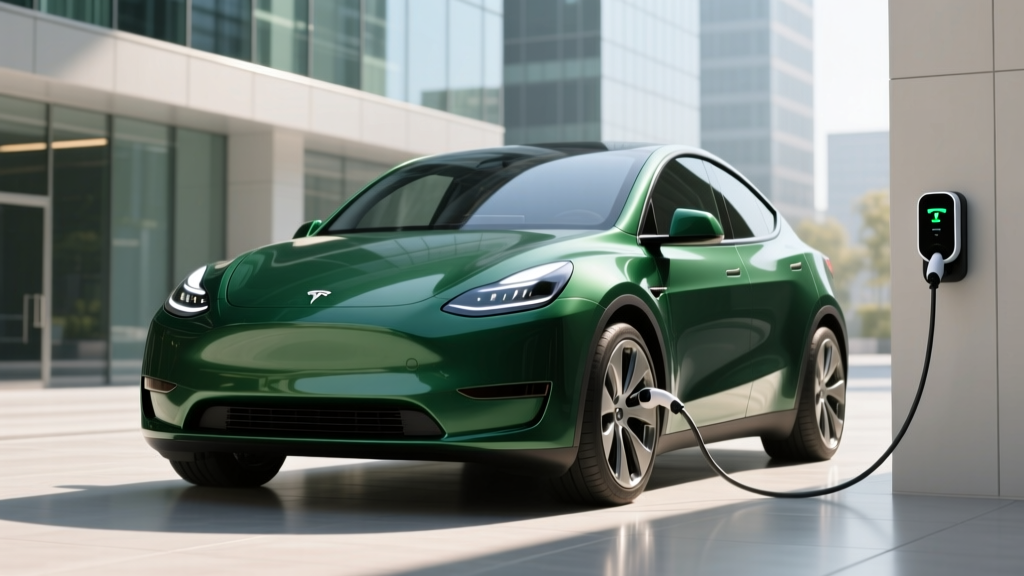
For home charging, a 48-amp Level 2 wall connector on a 60-amp circuit delivers 11.5 kW, replenishing roughly 44 miles of range per hour. A full 10–100% charge takes about 7 hours — plug in at 10 PM, and you're full by 5 AM. Expect to pay $800–$1,500 for a professional Level 2 installation (including the $400 Tesla Wall Connector), depending on panel proximity and local permitting. Homes with older 100-amp electrical panels may need a $2,000–$4,000 service upgrade.
Performance and Driving Dynamics
The dual-motor AWD powertrain produces 384 horsepower and propels the Model Y from 0–60 mph in 4.8 seconds. That's quick enough to merge confidently onto any freeway and overtake without hesitation, but it's not the headline-grabbing Performance trim's 3.5-second territory. For most buyers, the Long Range's acceleration is more than sufficient and comes with the efficiency advantage.
Moravy's influence is most visible in the vehicle's gigacasting approach — large single-piece aluminum castings that replace dozens of welded stampings. The result is a stiffer body structure, fewer squeaks and rattles over time, and lower manufacturing cost that Tesla passes on through pricing. The tradeoff: collision repair can be more expensive if a casting is damaged, a factor worth discussing with your insurer.
Ride quality has improved noticeably in the 2026 refresh, with revised damper tuning that reduces the crashiness over sharp bumps that earlier Model Y owners criticized. Cabin noise isolation is also improved, though the frameless windows still let in more wind noise at highway speeds than competitors like the Hyundai Ioniq 5 or Ford Mustang Mach-E.
Pricing, Trims, and Federal Tax Credit Eligibility
| Trim | Base MSRP | Est. After §30D Credit* |
|---|---|---|
| Model Y Long Range AWD | $48,990 | $41,490 |
| Model Y Performance | $53,990 | $46,490 |
*Assumes full $7,500 federal tax credit eligibility. Point-of-sale transfer available from eligible dealers under current IRS §30D rules.
The 2026 Model Y Long Range AWD starts at $48,990 (including destination). The Performance trim adds larger wheels, track-tuned suspension, and a 3.5-second 0–60 time for $53,990.
Federal tax credit eligibility under IRS §30D requires navigating several rules:
- MSRP Cap: SUVs must be priced at or below $80,000 — both Model Y trims qualify.
- Buyer Income Cap: Modified adjusted gross income must not exceed $150,000 (single), $225,000 (head of household), or $300,000 (joint).
- Battery Sourcing: Critical minerals and battery components must meet escalating North American content thresholds. Tesla's Austin-built Model Y has consistently qualified for the full $7,500 credit, but always verify current eligibility at fueleconomy.gov before purchasing, as sourcing rules can shift mid-year.
- Point-of-Sale Transfer: As of 2024, buyers can transfer the credit to the dealer at purchase, reducing the upfront price rather than waiting for a tax refund.
Always consult a tax professional for your specific situation — credit eligibility depends on individual tax circumstances and can change with IRS guidance.
Interior, Cargo, and Daily Usability
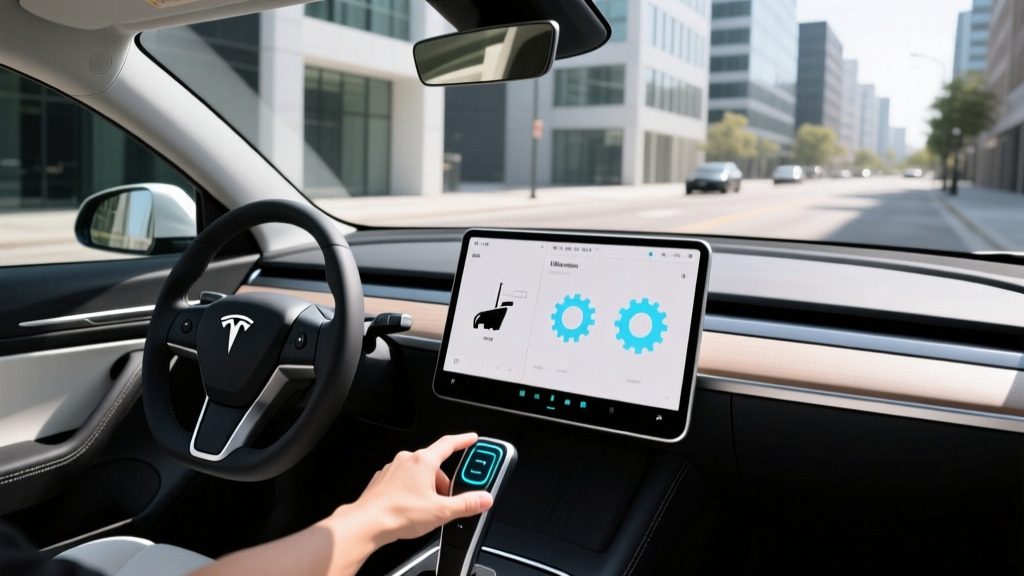
The Model Y's cabin remains minimalist: a single 15.4-inch touchscreen controls virtually every function, from climate to mirrors to glovebox. There's no instrument cluster, no head-up display, and no physical buttons beyond the steering wheel stalks and hazard switch. Some buyers love the simplicity; others find it distracting while driving.
Cargo space is a genuine strength. With rear seats upright, you get 30.2 cubic feet behind the second row — more than most compact SUVs. Fold the rear seats and capacity expands to 72.0 cubic feet, enough for furniture-hauling duty. The front trunk (frunk) adds roughly 4.1 cubic feet for charging cables or groceries.
Rear legroom measures 41.6 inches — generous for adults on longer trips. The panoramic glass roof creates an airy feel but contributes to cabin heat in summer; Tesla's tinting helps, but a sunshade accessory is a popular aftermarket addition in hot climates.
Driver Assistance: Autopilot and FSD Supervised
SAE Automation Level: Level 2
Tesla Autopilot and Full Self-Driving (Supervised) are Level 2 driver-assist systems. The driver must remain fully attentive, keep hands on the wheel, and be prepared to take over at any moment. These are not self-driving systems.
Every Model Y ships with Basic Autopilot (traffic-aware cruise control and lane centering). The $8,000 FSD (Supervised) upgrade adds automated lane changes, traffic light and stop sign recognition, and navigation-guided on/off-ramp maneuvers. As of 2026, FSD remains a supervised system requiring constant driver engagement.
Moravy's team has pushed Tesla's vision-only approach (no lidar or radar) to its current capability. The system performs well on well-marked highways but can struggle in construction zones, heavy rain, or faded lane markings. Insurance data and NHTSA incident reports continue to emphasize that Level 2 systems require the same vigilance as driving without assistance.
What FSD (Supervised) Does NOT Do:
- Drive without your attention or hands on the wheel
- Navigate unmapped or poorly marked roads reliably
- Handle all weather conditions (heavy rain, snow, fog)
- Replace an alert, engaged driver
Pros and Cons at a Glance
Pros
- Class-leading Supercharger network access
- 320-mile EPA range with strong real-world efficiency
- Excellent cargo space and practicality
- Heat pump standard — better cold-weather range retention
- Over-the-air updates continuously add features
- Strong resale value relative to EV segment
Cons
- Minimalist interior not for everyone — no physical controls
- FSD (Supervised) is expensive and still requires full attention
- Ride quality improved but still firmer than some rivals
- Frameless windows create highway wind noise
- Gigacast body may increase collision repair costs
- No Apple CarPlay or Android Auto support
Who Should Buy the 2026 Model Y?
Choose the Model Y Long Range if:
- You need a family-sized EV with top-tier cargo space
- You road-trip frequently and want the most reliable public charging network
- You value OTA updates and a tech-forward ownership experience
- Your daily commute is under 80 miles round-trip (easily covered with home charging)
Look elsewhere if:
- You prefer physical buttons and a traditional instrument cluster
- You need Apple CarPlay/Android Auto integration
- You want the softest, most luxury-oriented ride in the segment (consider the Genesis GV60 or BMW iX)
- You live in an area with limited Supercharger coverage and no home charging option
Frequently Asked Questions
What is the real-world range of the 2026 Tesla Model Y?
Expect 275–295 miles in mixed driving, 240–260 miles on sustained highway trips at 75 mph, and 220–250 miles in freezing temperatures. The EPA rates it at 320 miles combined.
How fast does the Model Y charge at home and on the road?
On a Level 2 home charger (11.5 kW), you'll add about 44 miles of range per hour, with a full charge in roughly 7 hours. On a V3 Supercharger, the 10–80% session takes about 22 minutes at a peak rate of 250 kW.
Does the 2026 Model Y qualify for the $7,500 federal EV tax credit?
Both trims fall under the $80,000 SUV MSRP cap, and Tesla's Austin-built battery sourcing has consistently met §30D requirements. However, buyer income limits ($150K single / $300K joint) and evolving critical-mineral rules apply. Verify at fueleconomy.gov and consult a tax professional before purchasing.
How does the Model Y compare to the Hyundai Ioniq 5 or Ford Mustang Mach-E?
The Model Y wins on Supercharger network access and cargo volume. The Ioniq 5 offers faster 800V charging architecture (10–80% in ~18 min at 350 kW chargers) and a more distinctive interior. The Mach-E provides a more traditional SUV driving feel. All three are strong choices — your priority (charging speed vs. network reliability vs. interior design) determines the winner.
What is the battery warranty on the Model Y?
Tesla covers the battery and drive unit for 8 years or 120,000 miles, whichever comes first, with a guaranteed minimum 70% capacity retention over that period.
Is Lars Moravy still involved in Tesla vehicle engineering?
Yes. As VP of Vehicle Engineering, Moravy continues to oversee manufacturing and engineering decisions, including the gigacasting processes, structural battery pack integration, and the unboxed manufacturing approach being deployed at Tesla's newest factories.