The Short Answer on Land Rover Electric
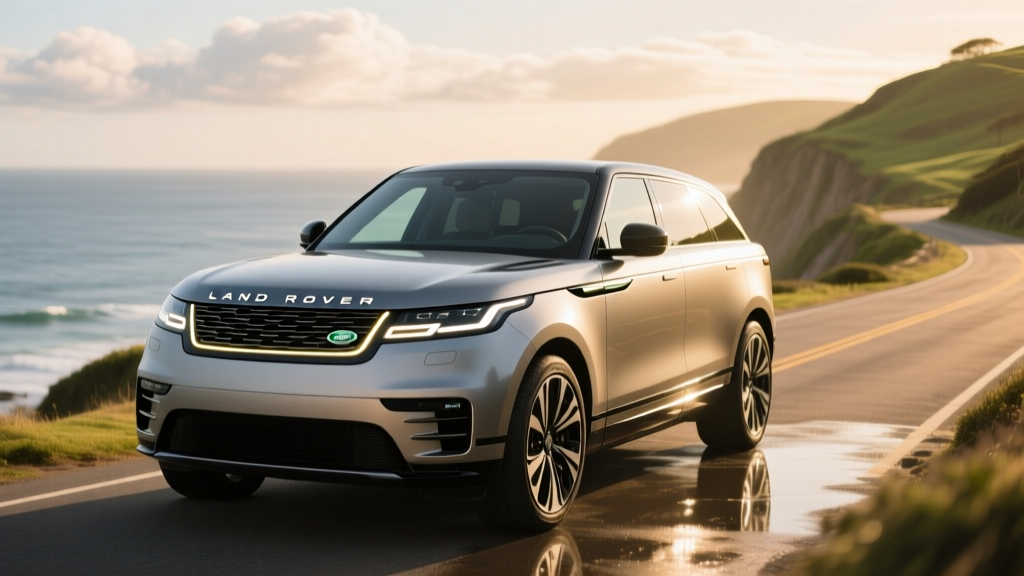
Land Rover's first battery-electric vehicle, the Range Rover Electric, is the brand's entry into the EV space. Based on the MLA-Flex architecture shared with the current-generation Range Rover, it targets luxury SUV buyers who want full-electric drivetrains without sacrificing the off-road capability and refinement the nameplate is known for. Expect an EPA-estimated range around 300 miles, a battery in the 100–120 kWh range, DC fast charging at up to ~200+ kW, and a starting MSRP likely above $120,000. If you're comparing it to a gas Range Rover or a rival luxury EV like the BMW iX or Mercedes EQS SUV, this guide breaks down exactly what you'll pay to buy, charge, and own one.
What Is the Range Rover Electric?
Jaguar Land Rover (JLR) confirmed the Range Rover Electric as the brand's first fully electric model, built on the Modular Longitudinal Architecture (MLA-Flex) that also underpins the inline-six and V8 Range Rover variants. JLR has stated the electric version will match the wading depth, terrain response capability, and towing capacity of its combustion siblings — a claim that, if validated in production specs, would set it apart from most luxury electric crossovers that prioritize on-road comfort over genuine off-road chops.
The vehicle is positioned at the top of JLR's "House of Brands" strategy, which separates Range Rover, Defender, Discovery, and Jaguar into distinct sub-brands. The Range Rover Electric is expected to sit at or near the top of the lineup in both price and specification, competing directly with the BMW iX M60, Mercedes-Benz EQS 580 SUV, and the upcoming electric Porsche Cayenne.
Expected Specs: Range, Battery, and Charging
Because final EPA certification numbers may shift before deliveries begin, treat the figures below as well-informed estimates based on JLR disclosures, the MLA-Flex platform's known electrical architecture, and comparable luxury EVs on the market.
| Specification | Estimated Figure | Notes |
|---|---|---|
| Battery Capacity (usable) | ~100–117 kWh | Likely NMC chemistry for energy density |
| EPA Range (est.) | ~280–310 mi | Real-world highway: expect ~230–260 mi |
| Peak DC Fast Charge Rate | ~200–250 kW | 10–80% in approximately 25–30 minutes |
| Level 2 AC Charging | 11–22 kW (onboard charger) | Full charge in ~6–10 hours depending on rate |
| Drivetrain | Dual-motor AWD | Terrain Response 2 with EV-specific modes |
| 0–60 mph (est.) | ~4.5–5.5 sec | Not a performance-first tune; refinement-focused |
| Horsepower (est.) | ~500–550 hp | Combined output, dual motor |
| Towing Capacity (est.) | ~5,500–7,700 lbs | JLR claims parity with ICE Range Rover |
| Wading Depth | Up to ~33.5 in (850 mm) | Matched to combustion Range Rover spec |
| Base MSRP (est.) | $120,000–$140,000+ | Before destination; fully loaded likely $160K+ |
| Battery Warranty | 8 yr / 100,000 mi (typical) | Capacity retention threshold TBD — expect ≥70% |
Real-World Range Reality Check
An EPA sticker of ~300 miles is useful, but a heavy, aerodynamically challenged luxury SUV will lose range faster than a sedan on the highway. Plan for ~230–260 miles at sustained 70–80 mph speeds. In cold weather (below 32°F / 0°C), expect an additional 15–25% reduction, putting real winter highway range closer to 190–220 miles. If you regularly tow, range drops dramatically — towing a 5,000-lb trailer can cut range by 40–50%, a factor many luxury EV SUV buyers overlook.
Charging the Range Rover Electric at Home and on the Road
Owning any large-battery EV starts with your home charging setup. The Range Rover Electric's ~100+ kWh battery means Level 1 (120V) charging is essentially impractical — you'd add roughly 3–5 miles of range per hour, meaning a full charge could take over 24 hours. Level 2 is the realistic baseline.
| Level | Power | Miles Added per Hour | 0–100% Time | Best For |
|---|---|---|---|---|
| Level 1 (120V) | ~1.4 kW | ~3–5 mi | ~78+ hours | Emergency / trickle only |
| Level 2 (240V, 48A) | ~11.5 kW | ~30–35 mi | ~9–10 hours | Daily home charging |
| Level 2 (240V, 80A) | ~19.2 kW | ~50–55 mi | ~5.5–6 hours | High-power home setup |
| DC Fast Charge | ~200–250 kW peak | ~600+ mi/hr (peak) | 10–80% in ~25–30 min | Road trips |
Home charging installation costs for a Level 2 charger typically run $1,200–$3,500 total (equipment + licensed electrician + permit), assuming your electrical panel has capacity. A 200-amp panel upgrade — common in older homes — can add $1,500–$3,000. Always have a licensed electrician evaluate your panel before committing to a charger.
On the road, the Range Rover Electric will use the CCS (Combined Charging System) connector standard in North America. While JLR has not announced a Tesla Supercharger (NACS) adapter partnership as of this writing, the CCS ecosystem via Electrify America, EVgo, and ChargePoint covers most major highway corridors. Expect peak charging to taper significantly above 80% state of charge — a characteristic of NMC lithium-ion chemistry — so plan your road-trip stops around 10–80% charges for the fastest sessions.
Cost of Ownership: Range Rover Electric vs. Gas Range Rover
The purchase price of the Range Rover Electric will be higher than a comparably equipped gas Range Rover, but fuel savings, reduced maintenance, and potential tax incentives shift the equation over time. Here's a 5-year comparison using reasonable estimates:
| Cost Category | Range Rover Electric (est.) | Gas Range Rover P400 (est.) |
|---|---|---|
| Purchase Price (MSRP) | $130,000 | $110,000 |
| Federal Tax Credit (§30D) | $0–$7,500* | $0 |
| Fuel / Energy (5 yr, 75K mi) | $5,500–$7,500 | $14,000–$17,000 |
| Maintenance (5 yr) | $2,000–$3,500 | $5,000–$8,000 |
| Insurance (5 yr avg.) | $18,000–$24,000 | $15,000–$20,000 |
| Estimated Depreciation | $55,000–$70,000 | $50,000–$65,000 |
| Total 5-Year Cost (est.) | $195,500–$227,500 | $194,000–$220,000 |
*Federal §30D EV tax credit eligibility depends on MSRP caps (SUVs: $80,000 — the Range Rover Electric exceeds this), buyer income limits, and battery sourcing requirements. At an MSRP above $120,000, the Range Rover Electric will NOT qualify for the federal tax credit. Some state-level incentives may still apply. Always verify current rules at IRS.gov and consult a tax professional.
The electric Range Rover's fuel savings are substantial — roughly $8,000–$10,000 over five years if you charge primarily at home on residential electricity rates (~$0.14–$0.18/kWh). Maintenance savings add another $2,500–$4,500 (no oil changes, fewer brake replacements due to regenerative braking, no transmission fluid). However, higher insurance premiums and steeper depreciation on a high-MSRP EV largely offset those savings. The total cost of ownership is broadly comparable, with the electric variant offering a smoother, quieter driving experience rather than a decisive financial advantage.
How Does It Compare to Rivals?
The Range Rover Electric doesn't exist in a vacuum. Here's how it stacks up against key luxury EV SUV competitors:
| Spec | Range Rover Electric (est.) | BMW iX xDrive50 | Mercedes EQS 580 SUV | Rivian R1S (Tri Motor) |
|---|---|---|---|---|
| EPA Range | ~280–310 mi | 324 mi | 305 mi | ~350+ mi |
| Battery (usable) | ~110 kWh | 105.2 kWh | 108.4 kWh | ~141 kWh (Max Pack) |
| Peak DC Charge | ~220 kW | 200 kW | 200 kW | ~220 kW |
| 0–60 mph | ~5.0 sec | 4.4 sec | 4.4 sec | ~2.9 sec |
| Starting MSRP | ~$130,000 | ~$90,000 | ~$110,000 | ~$100,000 |
| Off-Road Capability | Excellent (Terrain Response) | Limited | Limited | Excellent |
| Towing (max) | ~7,700 lbs | 3,500 lbs | 3,500 lbs | 7,700 lbs |
The Range Rover Electric's key differentiators are its genuine off-road capability (air suspension, wading depth, Terrain Response system) and its brand prestige. If you need a luxury EV that can handle real trail conditions or tow a horse trailer, the Rivian R1S is its closest functional rival, though the Range Rover offers a far more opulent interior. The BMW iX and Mercedes EQS SUV are more road-focused and significantly less expensive, but neither can approach the Range Rover's off-road or towing credentials.
Common Misconceptions About Land Rover Electric
| Myth | Fact |
|---|---|
| "The Range Rover Electric will qualify for the $7,500 federal tax credit." | At an MSRP above $120,000, it exceeds the §30D SUV cap of $80,000. It will not qualify. State incentives may still apply. |
| "EVs can't tow or go off-road." | Electric motors deliver instant torque ideal for low-speed off-road crawling. JLR has stated the EV will match ICE towing and wading specs. However, towing drastically reduces range — plan accordingly. |
| "The battery will need replacing in a few years." | Modern NMC batteries with active thermal management typically retain 85–90%+ capacity after 100,000 miles. JLR will offer an 8-year/100,000-mile battery warranty (industry standard). Full replacement, if ever needed, would likely cost $15,000–$25,000+. |
| "I can charge it on any public charger." | The Range Rover Electric will use CCS. Tesla Superchargers (NACS) require an adapter — confirm JLR's adapter plans before relying on the Supercharger network. |
| "Electric Range Rovers will be unreliable like older Land Rovers." | EV powertrains have far fewer moving parts than ICE vehicles. The real reliability question centers on JLR's electronics, infotainment, and air suspension — areas where the brand has historically struggled. Long-term data does not yet exist. |
Decision Framework: Should You Buy the Range Rover Electric?
Choose the Range Rover Electric If:
- You want the ultimate luxury EV SUV with real off-road and towing capability — no other electric luxury SUV matches the Range Rover's combination of refinement, wading depth, and terrain management.
- You have reliable home Level 2 charging — a ~110 kWh battery demands overnight Level 2 charging for daily convenience. Public-charging-only ownership with a battery this large is frustrating and expensive.
- Your daily driving is under 200 miles — the vast majority of your driving will be covered with range to spare, and you'll charge at home overnight.
- Brand cachet matters — the Range Rover nameplate carries social and professional weight that a Rivian or BMW cannot replicate in certain circles.
- You accept the premium price and no federal tax credit — this is a $130,000+ vehicle that will not qualify for §30D.
Look Elsewhere If:
- Budget is a primary concern — the BMW iX xDrive50 offers 324 miles of range, a refined interior, and starts ~$40,000 lower.
- You need maximum range for frequent long road trips — the Rivian R1S Max Pack or a Lucid Gravity will deliver more miles per charge.
- You lack home charging access — relying on DC fast charging a 110+ kWh battery regularly is time-consuming and costly ($0.35–$0.50/kWh at public chargers).
- Depreciation worries you — luxury EVs above $100,000 historically depreciate steeply, and the Range Rover brand has not been known for strong resale value.
- You want proven long-term reliability data — this is JLR's first EV. First-year models from any manufacturer carry higher risk of early-ownership issues.
What First-Time EV Buyers Should Know Before Committing
If the Range Rover Electric is your first EV, understand these practical realities before signing a purchase agreement:
- Install your Level 2 charger before the car arrives. Budget $1,500–$3,500 for a quality 48-amp hardwired charger (ChargePoint Home Flex, Emporia Vue, or Wallbox Pulsar Plus) plus electrician labor and permits. If your home has a 100-amp electrical panel, a panel upgrade to 200 amps may be required — add $1,500–$3,000 and 2–4 weeks of lead time.
- Learn the charging curve. DC fast charging is fastest between 10–80% state of charge. Above 80%, charge speed tapers dramatically to protect battery health. On a road trip, plan multiple shorter stops (10–80%) rather than waiting for a full charge.
- Precondition the battery. If your Range Rover Electric supports battery preconditioning (warming the pack before a DC fast charge session), use it — especially in cold weather. A cold battery charges significantly slower, sometimes cutting peak charge rates in half.
- Insurance will be higher. EVs, particularly luxury models, carry higher insurance premiums due to repair costs and battery replacement risk. Get quotes before purchasing. Expect $300–$500/month depending on your profile and state.
- Check your state's EV incentives. While the federal §30D credit won't apply at this MSRP, states like California, Colorado, and New York offer additional rebates or tax credits that may partially offset the purchase price. Verify current programs at your state's energy office website.
Frequently Asked Questions
When will the Range Rover Electric be available to buy?
JLR has confirmed the Range Rover Electric for production, with initial deliveries anticipated in the 2025–2026 timeframe. Exact on-sale dates vary by market. Check the official Land Rover USA site for the latest availability updates and to join the reservation waitlist.
Will the Range Rover Electric have the same off-road capability as the gas version?
JLR has stated it will match the combustion Range Rover's wading depth (~33.5 inches), ground clearance via air suspension, and Terrain Response system. Electric motors provide instant torque, which is advantageous for low-speed rock crawling. However, sustained high-load off-roading will drain the battery faster — plan your trail routes with range in mind.
How much will it cost to charge the Range Rover Electric at home?
At a national average residential electricity rate of ~$0.16/kWh, fully charging a ~110 kWh battery from 10% to 100% costs approximately $16–$18. For context, filling a gas Range Rover's 23.8-gallon tank at $3.80/gallon costs ~$90. Over 15,000 miles of annual driving, home charging costs roughly $1,100–$1,500 per year versus $3,000–$3,800 for gasoline.
Does the Range Rover Electric use NACS or CCS for charging?
As announced, the Range Rover Electric will use the CCS (Combined Charging System) connector standard in North America. JLR has not yet confirmed NACS (Tesla Supercharger) compatibility or an adapter program. This is worth monitoring, as the industry is shifting toward NACS adoption.
What happens if the battery degrades over time?
JLR will provide a battery warranty (expected at 8 years/100,000 miles) covering capacity retention below a specified threshold — typically 70% of original capacity. In practice, modern liquid-cooled NMC packs with proper care (avoiding frequent 100% charges, minimizing DC fast charging in extreme heat) tend to retain 85–92% capacity at 100,000 miles based on industry-wide data from similar platforms.
Is the Range Rover Electric a good first EV?
It can be, if you have home charging, a budget that absorbs the premium, and realistic expectations about first-year-model risk. If you're new to EVs and want a lower-stakes entry, consider starting with a more established electric SUV (BMW iX, Tesla Model X) before stepping up to the Range Rover Electric.