Quick Answer: Is There a Land Rover Electric Car You Can Buy?
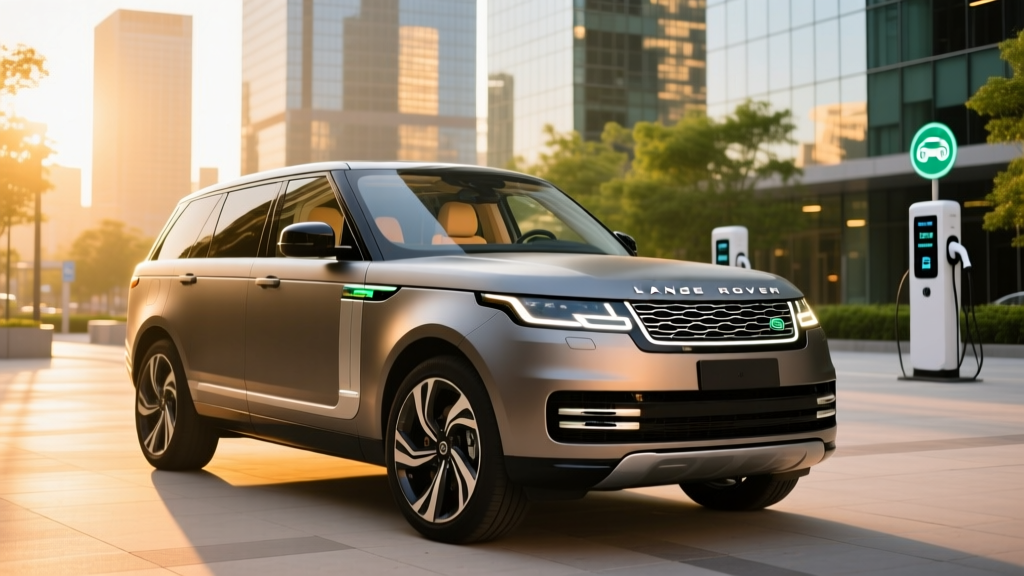
As of early 2026, the first production Land Rover electric car is the Range Rover Electric (formerly referred to as the Range Rover EV), built on JLR's modular architecture alongside the standard Range Rover. Pre-registration and initial deliveries began in late 2025 in the UK, with US-market availability expected through 2026. Expect an EPA-estimated range in the vicinity of 300+ miles from a ~110–120 kWh battery pack, DC fast charging near 200+ kW, and a starting MSRP likely above $120,000. If you need a plug-in Land Rover today, the Range Rover PHEV (P550e) offers roughly 51 miles of electric-only driving and is currently on sale.
What the Land Rover Electric Car Actually Is
Jaguar Land Rover (JLR) confirmed the Range Rover Electric as the brand's first fully electric model. It shares the MLA-Flex platform with the fifth-generation Range Rover, meaning the exterior proportions, cabin architecture, and luxury positioning carry over — but the powertrain swaps the twin-turbo V8 or inline-six for dual electric motors and a large battery pack. JLR has stated the electric variant will deliver the same wading depth (up to 850 mm / 33.5 inches) and off-road capability as the combustion models, a claim that hinges on sealed battery enclosures and underbody protection.
For buyers searching for a "Land Rover electric car," the current reality has two paths:
- Range Rover Electric (BEV): Announced, with US deliveries expected in 2026. This is the full battery-electric flagship.
- Range Rover P550e PHEV: Available now. Plug-in hybrid with a 31.8 kWh battery, ~51 miles EPA electric-only range, and a 3.0L inline-six for extended driving.
JLR has also signaled that future Defender and Discovery electric models are in development, but no firm US launch dates or pricing have been confirmed for those nameplates.
Range, Battery, and Charging: What the Numbers Look Like
Because the Range Rover Electric is still in early rollout, official EPA figures for the US market remain preliminary. Based on JLR's published WLTP targets and the known capacity of the MLA-Flex platform's battery enclosure, here is what buyers should expect:
| Spec | Estimate / Target |
|---|---|
| Battery capacity (usable) | ~110–120 kWh (NMC chemistry expected) |
| WLTP range (EU) | Up to ~320 miles (515 km) |
| EPA range (US est.) | ~280–310 miles (EPA typically 10–15% lower than WLTP) |
| Real-world highway range | ~240–270 miles at 70 mph, less in cold weather |
| DC fast charging (peak) | ~200–220 kW (CCS/NACS TBD for US) |
| 10–80% DC charge time | ~30–38 minutes (estimate based on pack size and peak kW) |
| Level 2 AC charging | ~11–22 kW onboard charger |
| Drivetrain | Dual-motor AWD |
| 0–60 mph | ~4.5 seconds (est.) |
| Starting MSRP (est.) | $120,000–$140,000+ |
Charging-curve reality: Peak DC fast-charging rates (e.g., 220 kW) are only sustained between roughly 10–40% state of charge. Above 60%, the charge rate tapers significantly to protect battery health — often dropping to 80–100 kW, then to under 50 kW past 80%. A "30-minute 10–80% charge" assumes a functioning 350 kW charger with no thermal throttling and a preconditioned battery.
Range Rover Electric vs. Range Rover PHEV vs. Gas: A Cost and Capability Comparison
Most Land Rover buyers cross-shop within the Range Rover family itself. Here is how the three powertrains stack up against each other on key ownership metrics:
| Metric | Range Rover Electric (BEV) | Range Rover P550e (PHEV) | Range Rover P530 (V8 Gas) |
|---|---|---|---|
| Est. MSRP | $120,000–$140,000+ | ~$115,000 | ~$110,000 |
| EPA range / electric-only | ~280–310 mi (est.) | ~51 mi electric + gas tank | ~420 mi (18 MPG combined) |
| Fuel / energy cost per mile | ~$0.04–$0.06 (home charging) | ~$0.06–$0.12 (blended) | ~$0.18–$0.22 (premium gas) |
| Annual fuel/energy (12,000 mi) | ~$480–$720 | ~$720–$1,440 | ~$2,160–$2,640 |
| Federal tax credit (§30D) | Potential up to $7,500 (see caveats) | Potential up to $7,500 (PHEV eligible if ≥7 kWh) | None |
| Maintenance (5-year est.) | ~$1,500–$2,500 | ~$3,500–$5,000 | ~$4,000–$6,000 |
| Off-road / wading capability | 850 mm wading (claimed) | 850 mm wading | 850 mm wading |
The math on fuel savings: If you drive 12,000 miles per year and charge at home at the US average electricity rate of ~$0.16/kWh, the Range Rover Electric could save you roughly $1,500–$2,000 per year compared to the V8 gas model. Over a 5-year ownership period, that is $7,500–$10,000 in energy savings — meaningful, but it only partially offsets the EV's higher purchase price.
Maintenance advantage: Battery-electric vehicles eliminate oil changes, spark plugs, transmission fluid, and exhaust system maintenance. Brake wear is significantly reduced thanks to regenerative braking. JLR's scheduled maintenance for the EV will likely involve cabin air filters, brake fluid checks, tire rotations, and coolant top-offs — a fraction of the V8's service schedule.
Tax Credits, Insurance, and Total Ownership Cost
Federal EV incentives are a key part of the purchase equation, but the rules under IRS §30D are complex and change frequently:
- MSRP cap: SUVs/pickups must have an MSRP at or below $80,000 to qualify. The Range Rover Electric's estimated $120,000+ price exceeds this cap, making it likely ineligible for the federal credit.
- Buyer income cap: Modified AGI must not exceed $300,000 (joint), $225,000 (head of household), or $150,000 (individual).
- Battery sourcing: Critical mineral and battery component requirements phase in annually; JLR has not published US-market sourcing details for the Range Rover Electric.
- Point-of-sale transfer: If eligible, the credit can be applied at the dealership as a down-payment reduction rather than waiting for a tax refund.
Bottom line on the tax credit: At an MSRP well above $80,000, the Range Rover Electric is almost certainly excluded from the §30D new-vehicle credit. Some state-level incentives (California, Colorado, New York) may still apply — check your state's energy office or DMV for current programs.
| Category | Range Rover Electric (est.) | Range Rover P530 V8 |
|---|---|---|
| Purchase price (MSRP) | $130,000 | $110,000 |
| Federal tax credit | $0 (MSRP cap) | $0 |
| Fuel/energy (5 yr, 12k mi/yr) | $3,000 | $12,000 |
| Maintenance (5 yr) | $2,000 | $5,000 |
| Insurance (5 yr est.) | $18,000 | $15,000 |
| Estimated depreciation (5 yr) | $65,000 (50%) | $55,000 (50%) |
| Total 5-year cost | ~$88,000 | ~$87,000 |
Insurance: EVs in the luxury segment typically carry 15–25% higher insurance premiums due to higher repair costs and specialized parts. Expect quotes in the $3,000–$4,000/year range depending on your profile and location.
Depreciation: Luxury EVs have shown steeper initial depreciation than their combustion counterparts in recent years, though this is stabilizing as the market matures. JLR brand depreciation historically runs steep regardless of powertrain — budget accordingly.
Home Charging, Climate, and Real-World Ownership Considerations
A vehicle in this price class demands a proper home charging setup. Here is what Range Rover Electric buyers should plan for:
Level 2 home charging (essential): With a ~115 kWh battery, a standard 120V outlet (Level 1) would take over 100 hours for a full charge — impractical. A 48-amp Level 2 home charger on a 240V/60A circuit delivers roughly 11.5 kW, adding about 25–30 miles of range per hour. A full overnight charge (8–10 hours) easily replenishes the battery.
| Item | Cost Range |
|---|---|
| Level 2 charger hardware (48A) | $400–$800 |
| Electrician labor (standard install) | $500–$1,500 |
| Electrical panel upgrade (if needed, 200A) | $1,500–$4,000 |
| Permits and inspection | $100–$400 |
| Total (no panel upgrade) | $1,000–$2,700 |
| Total (with panel upgrade) | $2,500–$6,700 |
Panel upgrade reality: Many homes built before 2000 have 100-amp or 150-amp electrical panels. Adding a 60-amp EV circuit may require upgrading to a 200-amp panel — a $1,500–$4,000 job that your electrician will assess during a site visit. Always get a licensed electrician's evaluation before purchasing equipment.
Cold-weather considerations: Lithium-ion batteries lose 15–30% of usable range in sub-freezing temperatures due to increased internal resistance and cabin heating demands. If you live in the northern US and regularly drive in temperatures below 30°F, plan for a real-world range of ~220–250 miles from the Range Rover Electric, not the EPA sticker figure. Battery preconditioning (heating the pack before fast charging) is essential in cold weather — confirm that JLR's navigation system supports automatic preconditioning when routing to a DC fast charger.
Public charging access: JLR has not yet confirmed which US charging networks the Range Rover Electric will natively support. With the industry shift toward NACS (Tesla's connector), the vehicle may ship with a NACS port or include a CCS-to-NACS adapter. Verify connector compatibility before relying on a specific network like Tesla Supercharger, Electrify America, or EVgo.
Common Misconceptions About the Land Rover Electric Car
| Myth | Fact |
|---|---|
| "It won't be a real Land Rover off-road." | JLR has demonstrated 850 mm wading and full Terrain Response integration on the electric prototype. Electric motors provide instant torque at zero RPM — an advantage for low-speed rock crawling. |
| "The battery will need replacing in 5 years." | Modern NMC batteries retain 70–85% of original capacity after 150,000+ miles. JLR's battery warranty is expected to cover 8 years / 100,000 miles with a minimum 70% capacity retention threshold. |
| "I'll get the $7,500 federal tax credit." | The §30D MSRP cap for SUVs is $80,000. The Range Rover Electric's estimated $120,000+ price almost certainly disqualifies it. |
| "I can charge it on a regular outlet overnight." | A 120V outlet adds roughly 3–5 miles per hour — about 40 miles overnight. That is insufficient for a ~115 kWh pack. Level 2 (240V) home charging is effectively mandatory. |
| "Electric means cheaper to own overall." | Energy and maintenance savings are real ($1,500–$2,000/yr), but higher insurance, steep depreciation, and no federal credit mean total 5-year costs are comparable to the V8 model. |
Decision Framework: Is the Land Rover Electric Car Right for You?
Choose the Range Rover Electric if:
- You have reliable Level 2 home charging and drive under 250 miles per day
- You want the quietest, smoothest Range Rover experience with instant torque
- You want to eliminate gas station visits and reduce annual energy costs by ~$1,500+
- You are willing to pay a premium for a first-year EV with potential early-production quirks
- Off-road capability and luxury are non-negotiable, and you want them electrified
Choose the Range Rover P550e PHEV if:
- You want 51 miles of electric commuting but need 400+ mile total range for road trips
- You do not have reliable home charging access or live in a charging-desert area
- You want a Land Rover you can buy today without waiting for BEV delivery timelines
- You frequently drive in extreme cold where BEV range loss is a concern
Stick with the V8 gas Range Rover if:
- You regularly tow near the vehicle's maximum capacity (EV towing significantly reduces range)
- You want the lowest upfront purchase price in the Range Rover lineup
- You travel frequently in remote areas with no DC fast-charging infrastructure
Frequently Asked Questions
When can I actually buy the Range Rover Electric in the US?
JLR opened pre-registration in the UK in late 2025, with initial deliveries beginning there. US-market availability is expected through 2026, but exact timing depends on EPA certification and production ramp-up. Contact your local Land Rover dealer for the latest allocation information.
Will the Range Rover Electric qualify for any EV incentives?
The federal §30D credit is unlikely due to the $80,000 MSRP cap for SUVs. However, some states offer their own EV rebates or HOV-lane access that do not have MSRP caps. Check fueleconomy.gov and your state energy office for current programs.
How long will the battery last?
Based on industry data for NMC packs of this size, expect 70–85% capacity retention at 150,000 miles. JLR is expected to offer an 8-year / 100,000-mile battery warranty with a 70% minimum state-of-health guarantee, consistent with industry standards. Battery replacement, if ever needed outside warranty, would likely cost $15,000–$25,000+ — though full replacements are rare.
Can the Range Rover Electric really go off-road?
JLR has committed to matching the combustion Range Rover's off-road capability, including 850 mm (33.5 in) wading depth, Terrain Response 2, and adjustable air suspension. Electric motors provide precise torque control that can actually improve low-speed traction. However, repeated deep-water submersion and extreme off-road use may have specific warranty limitations — confirm with JLR before purchasing for heavy off-road use.
What charger connector will it use?
JLR has not confirmed the US-market connector. The European market will use CCS2. For the US, the vehicle could ship with CCS1 or the newer NACS standard. Given the 2025–2026 industry shift toward NACS, a NACS port or included adapter is plausible. Verify with your dealer before committing to a specific home charger or public network.
How does it compare to the Tesla Model X or Mercedes EQS SUV?
The Range Rover Electric competes more on luxury, off-road capability, and brand prestige than on efficiency or charging speed. The Tesla Model X (EPA 320+ miles, ~$80,000–$100,000, Supercharger network access) offers longer range and faster charging at a lower price. The Mercedes EQS SUV (EPA ~305 miles, ~$105,000+) is a closer luxury rival but lacks the Range Rover's off-road credibility. Your choice depends on whether capability and brand cachet outweigh pure EV efficiency.