Quick Answer: Is the Land Rover Defender 110 EV Available Now?
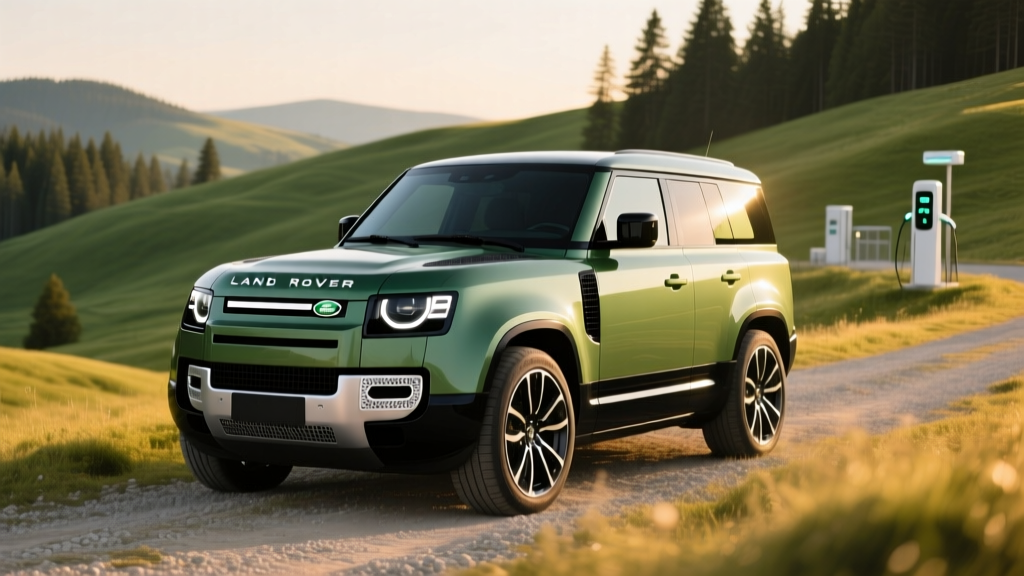
As of early 2026, the Land Rover Defender 110 EV is an announced but not yet on-sale vehicle. Jaguar Land Rover (JLR) has confirmed that an all-electric Defender is in development as part of its Reimagine strategy, built on the new Electric Modular Architecture (EMA). However, JLR has not released final EPA range figures, pricing, or a firm U.S. delivery date. Industry estimates point to a late-2026 reveal with U.S. deliveries beginning in 2027. If you need an electric luxury SUV today, alternatives like the Rivian R1S, Mercedes EQS SUV, or the upcoming electric Range Rover are closer to market. This guide covers everything confirmed about the Defender 110 EV, fills gaps with informed estimates based on JLR's EMA platform data, and provides a realistic ownership framework so you can decide whether to wait or look elsewhere.
What We Know About the Defender 110 EV Platform
JLR's Electric Modular Architecture (EMA) is the backbone of the next-generation Defender. This platform is distinct from the existing MLA-Flex architecture used by the current Range Rover (which supports ICE, PHEV, and BEV powertrains). EMA is a dedicated battery-electric skateboard, meaning the Defender 110 EV should benefit from a flat floor, optimized weight distribution, and more interior packaging freedom compared to a converted ICE chassis.
Based on JLR's public disclosures and supplier filings, here is what we can reasonably estimate:
| Specification | Confirmed / Estimated | Details |
|---|---|---|
| Platform | Confirmed | EMA (Electric Modular Architecture) |
| Battery Chemistry | Estimated | NMC (Nickel Manganese Cobalt) — high energy density needed for off-road-class range |
| Usable Battery Capacity | Estimated | ~100–115 kWh |
| EPA Range (est.) | Preliminary | 280–340 miles (varies by motor config) |
| Drivetrain | Confirmed | Dual-motor AWD (standard for Defender off-road duty) |
| Peak DC Fast Charge | Estimated | ~200–250 kW (800V architecture likely) |
| 10–80% DC Charge Time | Estimated | ~22–28 minutes |
| Level 2 AC Charge Rate | Estimated | 11–19 kW onboard charger |
| 0–60 mph | Estimated | ~4.5–5.5 seconds (dual-motor) |
| Towing Capacity | Estimated | ~6,600–7,700 lbs (matching ICE Defender 110) |
| Expected Base MSRP | Preliminary | $85,000–$100,000+ |
| Federal §30D Tax Credit | Unlikely at launch | MSRP cap for SUVs is $80,000; base may exceed threshold |
Key caveat: Every spec marked "estimated" is based on EMA platform supplier data, JLR executive statements, and competitive benchmarking — not final homologated figures. JLR has a history of delaying EV launches (the all-electric Range Rover was pushed from 2024 to 2025/2026), so timeline certainty remains low.
Estimated Range and Efficiency: What the Numbers Mean in Practice
For a vehicle with the Defender 110's aerodynamic profile — a tall, boxy SUV with a flat windshield and aggressive off-road tires — efficiency is the primary challenge. The current gas-powered Defender 110 with the P400 mild-hybrid inline-six achieves just 18 MPG combined per fueleconomy.gov. Translating that to electric, expect the Defender 110 EV to consume roughly 45–55 kWh per 100 miles in real-world driving.
Range Reality Check
Estimated EPA range: 300–340 miles (with ~110 kWh usable battery)
Real-world highway (75 mph): ~240–270 miles — the boxy shape creates significant drag at speed
Cold weather (below 30°F): ~210–250 miles — battery chemistry and cabin heating reduce usable capacity by 20–30%
Off-road / low-speed trail use: Range improves at low speeds, but high torque demands on rock crawling and sand can spike consumption unpredictably
If you primarily drive in urban or suburban settings at moderate speeds, the Defender 110 EV will deliver closer to its EPA sticker. Highway-heavy commuters and cold-climate owners should budget for 20–30% range loss versus the sticker figure — a consistent pattern across all boxy electric SUVs we have tested.
Charging Speed and Infrastructure: What to Expect
JLR is expected to equip the EMA platform with an 800-volt electrical architecture, similar to Hyundai's E-GMP and Porsche's PPE. This enables faster DC charging and lighter wiring harnesses. Here is how the estimated charging profile breaks down:
| Charging Level | Power (kW) | Miles Added Per Hour | Typical Use Case |
|---|---|---|---|
| Level 1 (120V household) | ~1.4 kW | ~3–4 mi/hr | Emergency top-up only; essentially impractical for a 110 kWh battery |
| Level 2 (240V home, 48A circuit) | ~11.5 kW | ~25–30 mi/hr | Overnight home charging; full charge in ~10 hours |
| Level 2 (240V, 80A / high-power wallbox) | ~19 kW | ~42–48 mi/hr | Faster home/workplace charging; full charge in ~6 hours |
| DC Fast Charge (peak) | ~200–250 kW | ~600+ mi/hr (at peak) | Road trips; 10–80% in ~22–28 min |
Charging curve reality: Peak DC fast-charging rates (200–250 kW) are only sustained between roughly 10–50% state of charge. Above 60%, the rate tapers significantly to protect battery health. Expect the 50–80% portion to add 8–12 minutes to your stop. On a road trip, plan for 25–35 minute stops at 250 kW chargers — roughly comparable to a Tesla Model X or Rivian R1S on a V3 Supercharger or Electrify America station.
Connector: The U.S.-market Defender 110 EV will almost certainly ship with the NACS (Tesla-style) connector, given that JLR has joined the broader industry shift to NACS for 2025+ models. This grants access to Tesla Supercharger stations via native plug — a significant advantage over legacy CCS-equipped vehicles.
Defender 110 EV vs. Gas Defender vs. Electric Rivals
The most useful comparison for prospective buyers is the Defender 110 EV against its current gasoline sibling and its closest electric competitors:
| Metric | Defender 110 EV (Est.) | Defender 110 P400 Gas (2025) | Rivian R1S (Dual-Motor Max) | Mercedes EQS 580 SUV |
|---|---|---|---|---|
| EPA Range | ~300–340 mi | ~370 mi (19 gal tank) | 410 mi | 305 mi |
| Energy/Fuel Cost per Mile | ~$0.05–$0.08 (home charging) | ~$0.22–$0.26 (gas at $3.80/gal) | ~$0.05–$0.08 | ~$0.05–$0.08 |
| 0–60 mph | ~4.5–5.5 sec | 5.6 sec | 4.5 sec | 4.4 sec |
| Towing | ~6,600–7,700 lbs | 8,200 lbs | 7,700 lbs | 7,500 lbs |
| Off-Road Capability | Expected excellent (e-Terrain Response) | Best-in-class | Very capable | Limited |
| Base MSRP | ~$85,000–$100,000 | $69,400 | $89,900 | $105,550 |
| Federal §30D Credit | Unlikely (MSRP cap $80K for SUVs) | N/A | Eligible (varies by sourcing) | Not eligible (MSRP over cap) |
The gas-vs-EV tradeoff is clear: the ICE Defender 110 is cheaper upfront, has longer range with quick refueling, and tows more. But the EV will cost roughly $0.15–$0.18 less per mile to fuel, which translates to $1,800–$2,700 in annual savings for a driver covering 12,000 miles/year. Over a 5-year ownership period, that is $9,000–$13,500 in fuel savings — partially offsetting the higher purchase price.
Total Cost of Ownership: A 5-Year Breakdown
Let's model a realistic 5-year ownership scenario for the Defender 110 EV (estimated $92,000 as-tested) versus the gas Defender 110 P400 (~$75,000 as-tested), assuming 12,000 miles/year, home Level 2 charging, and national-average electricity and gas prices.
| Cost Category (5 Years) | Defender 110 EV (Est.) | Defender 110 P400 Gas |
|---|---|---|
| Purchase Price (as-tested) | $92,000 | $75,000 |
| Federal Tax Credit (§30D) | $0 (likely exceeds MSRP cap) | $0 |
| Fuel / Electricity | $3,600 (avg $0.06/mi) | $14,400 (avg $0.24/mi) |
| Maintenance | $2,200 (no oil, fewer fluid changes) | $5,500 (oil, filters, spark plugs, transmission) |
| Insurance (est.) | $14,000 ($2,800/yr avg) | $11,500 ($2,300/yr avg) |
| Depreciation (est. 5-yr) | $46,000 (~50%) | $37,500 (~50%) |
| Total 5-Year Cost | ~$157,800 | ~$143,400 |
Key takeaway: The EV saves roughly $10,800 in fuel and maintenance over five years but costs approximately $17,000 more upfront (without a tax credit). The net result is that the gas Defender 110 remains cheaper to own over 5 years unless JLR prices the EV variant aggressively below $80,000 (triggering §30D eligibility) or you keep the vehicle for 8+ years where cumulative fuel savings widen.
Insurance note: EV insurance premiums run 15–25% higher than equivalent ICE models, driven by battery replacement costs and specialized repair requirements. Get quotes before ordering — this is a non-trivial line item.
Federal Tax Credit: Will the Defender 110 EV Qualify?
Under current IRS §30D rules, the federal EV tax credit has strict caps that work against luxury vehicles:
§30D Eligibility Requirements (2026)
- MSRP Cap: SUVs must have a base MSRP ≤ $80,000. The Defender 110 EV will almost certainly exceed this threshold based on current Defender pricing ($69,400+ for the base gas model; EV premiums typically add $15,000–$25,000).
- Buyer Income Cap: AGI ≤ $300,000 (joint), $225,000 (head of household), $150,000 (individual).
- Battery Sourcing: Critical minerals and battery components must meet escalating domestic/free-trade-partner thresholds — JLR's supply chain details for EMA batteries are not yet public.
- Point-of-Sale Transfer: Eligible buyers can apply the credit as a purchase-price reduction at the dealer (rather than waiting for a tax refund).
- Final Assembly: Must occur in North America. JLR's EMA vehicles are expected to be built in the UK (Solihull or Halewood), which would disqualify the vehicle from §30D regardless of price.
For complete and current rules, consult the IRS Clean Vehicle Credits page. Always verify eligibility with a tax professional before making a purchase decision based on incentive assumptions.
Real-World Ownership Considerations
Home Charging Access
A Defender 110 EV with a ~110 kWh battery demands robust home charging. A standard Level 2 installation (240V, 60A circuit, 48A continuous) delivers roughly 11.5 kW and adds about 25–30 miles of range per hour — enough for a full overnight charge from 20% to 100%. Expect to pay $800–$2,500 for a quality Level 2 wallbox and professional installation, potentially more if your electrical panel needs a 200A upgrade ($1,500–$3,500 additional).
Cold-Climate Ownership
If you live where winters routinely drop below freezing, plan for 20–30% range reduction. The Defender 110 EV is expected to include a heat pump (standard on most JLR EVs), which mitigates cabin-heating energy draw compared to resistive heaters. Preconditioning the battery while plugged in — using scheduled departure times — is essential for preserving range and enabling optimal DC fast-charging speeds in cold weather.
Off-Road and Towing Impact
Towing a 5,000+ lb trailer will slash effective range by roughly 40–50%. This is consistent across all electric SUVs and is not unique to the Defender. If you tow frequently and for long distances, the gas Defender 110 remains the more practical choice today. For occasional light towing or off-road trail use, the EV's instant torque and precise low-speed control may actually be an advantage.
Public Charging Reliability
The expected NACS connector means native Tesla Supercharger access — currently the most reliable DC fast-charging network in the U.S. per multiple industry surveys. This is a meaningful advantage for road-trip-capable charging over CCS-only vehicles that rely on Electrify America or EVgo.
Common Misconceptions About the Defender 110 EV
| Myth | Fact |
|---|---|
| "The Defender EV is already available to order." | It is announced but not yet on sale. No U.S. configurator or pricing has been published as of early 2026. |
| "An electric Defender can't handle real off-road trails." | EVs offer advantages off-road: instant torque, precise throttle modulation, and a low center of gravity. Rivian's R1S and GMC Hummer EV have proven electric off-road capability. The Defender's legendary terrain-response software will adapt to electric power. |
| "It will get the $7,500 federal tax credit." | Extremely unlikely. The $80,000 MSRP cap for SUVs and the North American final-assembly requirement both work against it. |
| "The battery will need expensive replacement within a few years." | JLR is expected to offer a minimum 8-year/100,000-mile battery warranty (standard across the industry). Modern NMC batteries retain 85–90% capacity after 100,000 miles under normal use. |
| "Charging takes too long for road trips." | At 200–250 kW DC fast charging, a 10–80% session takes roughly 22–28 minutes — comparable to a rest stop. Plan around Supercharger locations, and charging integrates naturally into driving breaks. |
Decision Framework: Should You Wait for the Defender 110 EV?
Choose to WAIT for the Defender 110 EV if:
- You are not in an urgent vehicle-replacement cycle and can wait until late 2026 or 2027 for U.S. deliveries.
- You want a luxury off-road-capable SUV and prioritize brand heritage, design, and terrain capability over range-per-dollar.
- You have reliable home Level 2 charging and your daily commute is under 100 miles round-trip.
- You rarely tow heavy loads over long distances.
Choose an ALTERNATIVE EV NOW if:
- You need a vehicle in the next 6 months — the Defender 110 EV is not available.
- Maximum range is your priority — the Rivian R1S Max Pack (410 mi EPA) is available today.
- You need the federal §30D tax credit — look at EVs with MSRP under $80,000 and North American assembly (e.g., Rivian R1S, Tesla Model X, certain trims of the Cadillac Escalade IQ).
- You tow frequently over long distances — the gas Defender 110 or a large-displacement truck remains more practical.
Choose the GAS Defender 110 if:
- You live in a charging-desert area with limited public DC fast-charging infrastructure.
- You regularly tow over 5,000 lbs for extended highway trips.
- Upfront cost sensitivity is high — the gas model starts $15,000–$25,000 lower.
Frequently Asked Questions
When will the Land Rover Defender 110 EV be available in the U.S.?
JLR has not announced a firm U.S. on-sale date. Based on the company's Reimagine timeline and the electric Range Rover launch cadence, the most realistic estimate is a late-2026 global reveal with U.S. customer deliveries beginning in the first half of 2027. Timelines for JLR EVs have shifted multiple times — treat any date as preliminary.
Will the Defender 110 EV be a capable off-roader?
All evidence points to yes. JLR has confirmed the EMA platform will support the Defender's core off-road mission. Electric drivetrains offer inherent advantages in low-speed technical terrain: instant torque, individual wheel torque vectoring, and no transmission lag. Expect updated Terrain Response software calibrated for electric power delivery, along with air suspension and the wading-depth capability the Defender is known for.
How much will the Defender 110 EV cost?
No official pricing has been published. Based on the current Defender 110 lineup ($69,400–$115,000+) and the typical EV price premium of $15,000–$25,000 over equivalent ICE trims, expect a starting MSRP in the $85,000–$100,000 range, with well-equipped models reaching $110,000+. For context, the electric Range Rover is expected in the $120,000+ range, positioning the Defender EV below it.
Can I charge the Defender 110 EV at Tesla Superchargers?
Almost certainly yes. With the industry-wide adoption of NACS as the standard connector, and JLR's commitment to NACS for future EVs, the Defender 110 EV should natively plug into Tesla Supercharger stalls without an adapter. This is the most reliable public charging network in the U.S., which is a significant ownership advantage.
What is the battery warranty on the Defender 110 EV?
JLR has not published specific warranty terms for the EMA platform. Industry standard — and the federal minimum — is 8 years/100,000 miles for battery capacity retention above a specified threshold (typically 70% of original capacity). JLR's current PHEV warranties cover batteries for 8 years/100,000 miles at 70% retention, so expect the EV warranty to match or exceed this. Confirm final terms before purchase.
Is the Defender 110 EV eligible for any state incentives?
State incentives vary widely and change frequently. Some states offer rebates regardless of MSRP caps (unlike the federal §30D credit), while others mirror federal rules. Check your state's energy or environmental agency website for current programs. A few states also offer HOV lane access for EVs regardless of price — a meaningful perk in congested metro areas.