If you've searched for "LA Tesla tunnel" you're likely thinking of one of two things: the Vegas Loop — the underground tunnel network built by Elon Musk's Boring Company that ferries passengers in Tesla vehicles beneath Las Vegas — or persistent rumors of a similar system coming to Los Angeles. Neither is a consumer product you can buy, but both raise practical questions for Tesla owners and prospective buyers about how Tesla vehicles perform in tunnel environments, what range and charging looks like for urban tunnel commuting, and whether any LA-specific tunnel project is actually happening.
This guide separates fact from rumor, explains what the Boring Company tunnels actually are, and then gives you the hard EV data on the Tesla vehicles most commonly used in these systems — the 2026 Tesla Model Y and Model 3 — so you can evaluate them as real cars, not just tunnel props.
What the "LA Tesla Tunnel" Actually Refers To
The phrase "LA Tesla tunnel" is a conflation. Here's what actually exists:
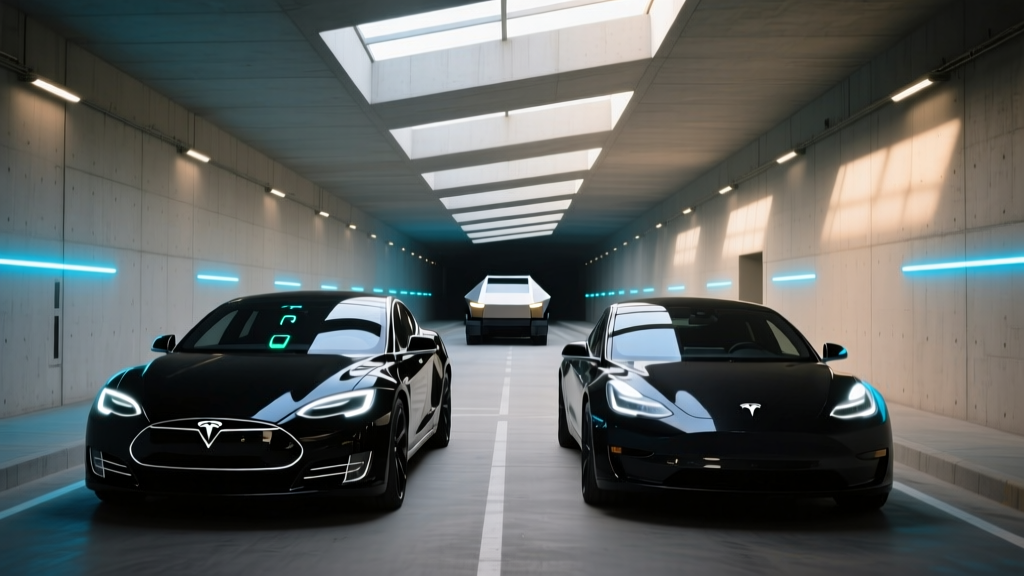
- Vegas Loop (Las Vegas, NV): An expanding underground tunnel network operated by The Boring Company. As of early 2026, it includes over 4.5 miles of tunnels connecting the Las Vegas Convention Center, resorts on the Strip, and Harry Reid International Airport. Passengers ride in Tesla Model Y and Model 3 vehicles driven by human operators (not autonomous). The system has carried millions of riders since its 2021 debut.
- LA Loop (Proposed/Not Built): In 2018, the Boring Company proposed a "Sepulveda Boulevard" tunnel project in Los Angeles to alleviate I-405 congestion. That project was effectively canceled after environmental review challenges and community opposition. As of 2026, no Boring Company tunnel operates in Los Angeles. There is no "LA Tesla tunnel" carrying passengers today.
- Prufrock Tunneling Machines: The Boring Company's next-generation tunneling machines are designed to reduce costs, and the company has expressed interest in expanding to other cities. But no LA project has been approved or broken ground.
If you're a Tesla buyer or owner curious about tunnel-relevant performance — or you simply searched the term and want clarity — the rest of this article covers the Tesla vehicles used in the Vegas Loop with the exact specs, range, and charging data you need.
2026 Tesla Model Y: The Vegas Loop Workhorse
The Model Y is the primary vehicle in the Vegas Loop fleet and also the best-selling EV in the United States. Here's the full spec breakdown for the 2026 model year.
| Spec | Long Range AWD | Performance |
|---|---|---|
| EPA Range | 320 miles | 295 miles |
| Battery (usable) | ~75 kWh, NMC | ~75 kWh, NMC |
| Drivetrain | Dual Motor AWD | Dual Motor AWD |
| Horsepower | 384 hp | 510 hp |
| 0-60 mph | 4.8 sec | 3.5 sec |
| Max DC Fast Charge | 250 kW | 250 kW |
| 10-80% DC Time | ~25 min | ~25 min |
| Level 2 Home Charge | 11.5 kW (~44 mi/hr) | 11.5 kW (~44 mi/hr) |
| MPGe (combined) | 122 MPGe | 111 MPGe |
| Base MSRP | $44,990 | $51,490 |
| Battery Warranty | 8 yr / 120,000 mi | 8 yr / 120,000 mi |
Sources: fueleconomy.gov, Tesla.com
Charging Specs: How Fast Does the Model Y Charge?
Charging speed is the top concern for EV buyers, and it's where precision matters. Remember: kW is the rate of power delivery (like water pressure), while kWh is the total energy stored (like tank size).
| Charging Level | Power (kW) | Miles Added/Hour | Notes |
|---|---|---|---|
| Level 1 (120V outlet) | ~1.4 kW | ~5 mi/hr | Emergency/trickle only |
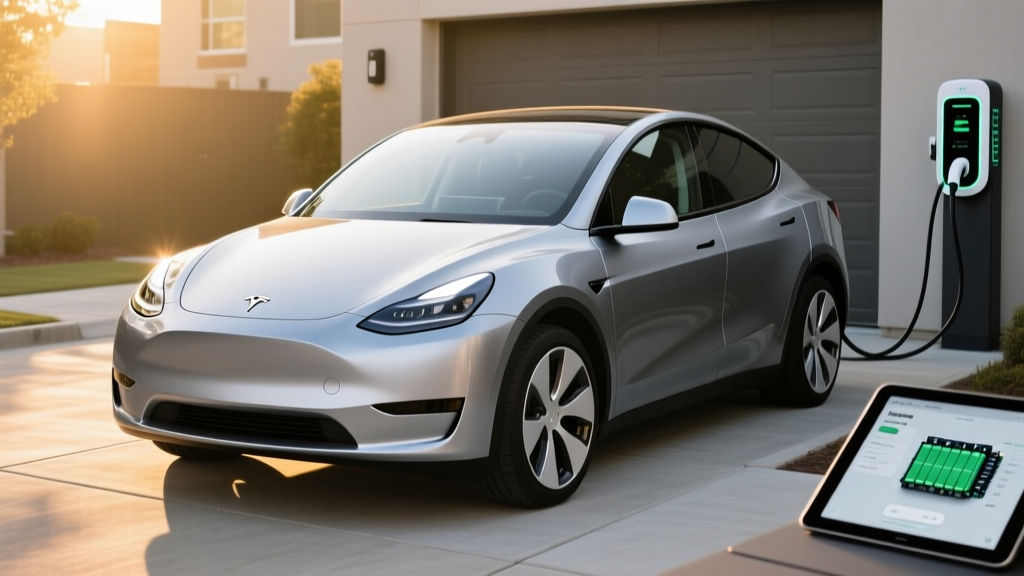
| Level 2 (240V home) | 11.5 kW | ~44 mi/hr | Full charge in ~7 hours |
| DC Fast (Tesla Supercharger V3) | 250 kW peak | ~1,000 mi/hr at peak | 10-80% in ~25 min |
| DC Fast (CCS adapter) | Up to 250 kW | Varies by station | Requires Tesla CCS adapter |
Charging curve reality: The Model Y peaks at 250 kW only between roughly 10-30% State of Charge (SoC). Above 50%, the rate tapers to ~100 kW, and above 80% it drops further to protect the NMC battery chemistry. This is why Tesla and most EV makers quote 10-80% times rather than 0-100%. On a road trip, plan your stops around 10-80% charges for maximum efficiency.
For home charging, a Level 2 wall connector on a 60-amp circuit delivers the full 11.5 kW. Installation typically costs $800-$2,000 depending on your electrical panel's capacity and the distance from panel to garage. A 200-amp panel is generally required; older homes may need a panel upgrade ($1,500-$3,000 additional).
2026 Tesla Model 3: The Other Tunnel Vehicle
The Vegas Loop also deploys Model 3 sedans. The 2026 "Highland" refresh Model 3 offers slightly better range than the Model Y in a lighter, more aerodynamic package.
| Spec | Long Range AWD | Performance |
|---|---|---|
| EPA Range | 341 miles | 315 miles |
| Battery (usable) | ~75 kWh, NMC | ~75 kWh, NMC |
| Drivetrain | Dual Motor AWD | Dual Motor AWD |
| Horsepower | 384 hp | 510 hp |
| 0-60 mph | 4.2 sec | 2.9 sec |
| Max DC Fast Charge | 250 kW | 250 kW |
| 10-80% DC Time | ~22 min | ~22 min |
| Level 2 Home Charge | 11.5 kW (~48 mi/hr) | 11.5 kW (~48 mi/hr) |
| MPGe (combined) | 132 MPGe | 121 MPGe |
| Base MSRP | $42,490 | $49,990 |
| Battery Warranty | 8 yr / 120,000 mi | 8 yr / 120,000 mi |
The Model 3 Long Range's 341-mile EPA rating makes it one of the most range-efficient EVs in its price class. Real-world highway range in mild conditions sits around 280-300 miles, and in cold weather expect 240-270 miles.
Pricing, Trims & Federal Tax Credit Eligibility
Both the Model Y and Model 3 qualify for the federal §30D EV tax credit, but eligibility depends on several factors that change year to year. Here's the current framework for 2026:
| MSRP Cap | Sedans (Model 3): ≤$55,000 | SUVs/trucks (Model Y): ≤$80,000 |
| Buyer Income Cap | Single: $150,000 AGI | Head of Household: $225,000 | Joint: $300,000 |
| Battery Sourcing | Critical minerals and battery components must meet phased-in domestic/free-trade requirements (varies by model year) |
| Point-of-Sale Transfer | Eligible buyers can transfer the credit to the dealer for an immediate price reduction at purchase |
| Max Credit | Up to $7,500 (split between critical minerals and battery component requirements) |
Source: IRS.gov — Credits for New Clean Vehicles
Critical caveat: Tesla's battery sourcing compliance for §30D has shifted across model years and trim levels. As of early 2026, the Model Y Long Range and Model 3 Long Range generally qualify for the full $7,500 credit for eligible buyers, but you should verify your specific vehicle's eligibility on fueleconomy.gov and consult a tax professional before relying on the credit. The point-of-sale transfer option means you can apply the credit as an immediate discount rather than waiting for tax filing.
| Model / Trim | MSRP | Est. Credit | Effective Price |
|---|---|---|---|
| Model 3 Long Range AWD | $42,490 | $7,500 | ~$34,990 |
| Model 3 Performance | $49,990 | $7,500 | ~$42,490 |
| Model Y Long Range AWD | $44,990 | $7,500 | ~$37,490 |
| Model Y Performance | $51,490 | $7,500 | ~$43,990 |
Effective price assumes full $7,500 credit eligibility. Actual credit varies by buyer income, vehicle sourcing compliance, and tax liability. Verify before purchase.
Interior, Cargo & Tech Features
Model Y cargo space: 30.2 cu ft behind the second row, 76.2 cu ft with seats folded. An optional third row (very tight, best for children) is available. Front trunk (frunk) adds 4.1 cu ft. Rear legroom is 41.6 inches.
Model 3 cargo space: 23.0 cu ft trunk, 65.0 cu ft with rear seats folded. Frunk adds 3.1 cu ft. Rear legroom is 35.2 inches — noticeably tighter than the Model Y, which matters for family use.
Infotainment and driver assists: Both vehicles feature Tesla's 15.4-inch center touchscreen running Tesla's proprietary OS. There is no Apple CarPlay or Android Auto — a dealbreaker for some buyers. Navigation, media, and vehicle controls all run through the screen. Over-the-air (OTA) updates continuously add features.
Autopilot and FSD (Supervised): Standard Autopilot includes adaptive cruise control and lane-keeping. Full Self-Driving (Supervised) is an optional $8,000 upgrade (or $99/month subscription as of 2026) that adds automated lane changes, traffic light recognition, and city-street navigation. This is SAE Level 2 driver assistance — not self-driving. The driver must remain fully engaged, hands on or near the wheel, and eyes on the road at all times. In the Vegas Loop tunnels, vehicles are operated by human drivers, not by FSD.
Pros, Cons & Who Should Buy
Pros
- Class-leading Supercharger network access (17,000+ NA stations)
- Strong EPA range (320-341 mi) with real-world usability
- 250 kW DC fast charging — competitive for the segment
- OTA updates continuously improve the vehicle post-purchase
- Spacious Model Y cargo area suits families and road trips
- Strong resale value relative to most EV competitors
- Eligible for up to $7,500 federal tax credit (verify eligibility)
Cons
- No Apple CarPlay or Android Auto
- Minimalist interior lacks physical buttons (turn signals on stalks removed in latest refresh)
- FSD (Supervised) costs $8,000 extra and remains Level 2 only
- Ride quality on rough pavement is firm, especially Performance trims
- Insurance premiums tend to be higher than comparable non-Tesla EVs
- Build quality inconsistency — panel gaps still reported by some owners
- NMC battery chemistry less tolerant of frequent 100% charging vs LFP
Who This EV Suits Best
- Daily commuters: Excellent. Home Level 2 charging covers virtually all daily needs. 320+ mile range means charging 2-3 times per week at most.
- Families: The Model Y is a strong family hauler with ample cargo, available third row, and good safety ratings (IIHS Top Safety Pick in prior years). The Model 3's tighter rear seat is less ideal for car seats.
- Road trippers: Tesla's Supercharger network remains the most reliable DC fast-charging ecosystem in North America. 250 kW peak charging and 300+ mile range make long trips practical with 20-25 minute stops every 2.5-3 hours.
- Towing: The Model Y is rated for 3,500 lbs towing capacity — adequate for a small trailer but not a boat or camper. The Model 3 is not rated for towing.
How the Vegas Loop Actually Works (For the Curious)
Since the "LA Tesla tunnel" search often leads here, it's worth explaining the Vegas Loop's actual operation:
- Tunnel specs: Single-lane tunnels approximately 12 feet in diameter, running 40+ feet below the surface. Vehicles travel at 35-65 mph depending on the segment.
- Vehicles: Tesla Model Y and Model 3, operated by human drivers (not autonomous). Vehicles are standard consumer-spec Teslas — no special modifications.
- Capacity: Each vehicle carries 4-5 passengers. The system aims for high-frequency, point-to-point service rather than train-style mass transit.
- Expansion: As of 2026, the Vegas Loop connects the Convention Center, multiple Strip resorts, UNLV, and the airport. The Boring Company has proposed extensions to downtown Las Vegas and eventually to other cities.
- No LA equivalent exists: Despite years of proposals, no Boring Company tunnel operates in Los Angeles. LA's transit tunneling is handled by Metro's subway expansion projects, which use conventional rail — not Teslas.
Frequently Asked Questions
Is there a Tesla tunnel in Los Angeles?
No. As of 2026, there is no Boring Company or Tesla-operated tunnel in Los Angeles. The proposed "LA Loop" on the Westside was effectively canceled after community opposition and environmental review challenges. The only operational Boring Company tunnel system is the Vegas Loop in Las Vegas, Nevada.
What is the real-world range of the Tesla Model Y?
The 2026 Model Y Long Range has an EPA rating of 320 miles. Real-world highway driving at 70-75 mph in mild weather yields approximately 260-280 miles. In cold weather (below 35°F), expect 220-250 miles. City driving with regenerative braking can exceed the EPA estimate.
How fast does the Model Y charge at home and on DC fast chargers?
At home on a Level 2 (240V, 60A) charger, the Model Y charges at 11.5 kW, adding roughly 44 miles of range per hour — a full charge takes about 7 hours. On a Tesla V3 Supercharger, it peaks at 250 kW and charges from 10-80% in approximately 25 minutes, though the charge rate tapers significantly above 50% SoC.
Does the Tesla Model Y qualify for the $7,500 federal tax credit?
The 2026 Model Y Long Range and Performance trims generally qualify for the full $7,500 §30D federal EV tax credit for eligible buyers. Eligibility requires the buyer's AGI to fall below IRS income caps ($300,000 joint / $150,000 single), the vehicle MSRP to be under $80,000 (SUV classification), and the battery to meet critical-mineral and component sourcing requirements. Verify your specific eligibility on IRS.gov and with a tax professional.
Are Vegas Loop Teslas self-driving?
No. Vegas Loop vehicles are driven by human operators. While Tesla offers FSD (Supervised) as an optional feature on consumer vehicles, it is an SAE Level 2 driver-assistance system — not autonomous driving. The Boring Company has discussed eventual autonomous operation but has not deployed it as of 2026.
Is the Model Y worth buying vs. competitors like the Hyundai Ioniq 5 or Ford Mustang Mach-E?
The Model Y wins on Supercharger network access, cargo space, and software ecosystem. The Hyundai Ioniq 5 offers faster 800V charging architecture (~18 min 10-80%), a more comfortable ride, and Apple CarPlay. The Mach-E provides a more conventional interior with physical controls and competitive range. If Supercharger reliability and OTA updates are your priority, the Model Y leads. If you value ride comfort, physical buttons, or faster peak charging, the Ioniq 5 is a compelling alternative.