Quick Answer: Does Kubota Make an Electric Tractor?
As of early 2026, Kubota has not released a production electric tractor for consumer purchase. The company has demonstrated prototypes — most notably the LXe-261 concept compact tractor — but no Kubota electric tractor is currently available to buy in the United States. Kubota's electrification roadmap targets smaller utility and turf equipment first, with battery-electric compact tractors expected later this decade. If you're searching for a Kubota electric tractor today, your options are limited to Kubota's diesel and gasoline models, or you can pivot to the handful of electric utility vehicles from competitors like Solectrac eUtilimatic or Monarch Tractor that are currently shipping. This guide covers what Kubota has announced, what's actually available in the electric tractor space, and how to evaluate whether an electric work vehicle makes financial sense for your property.
What Kubota Has Announced for Electric Tractors
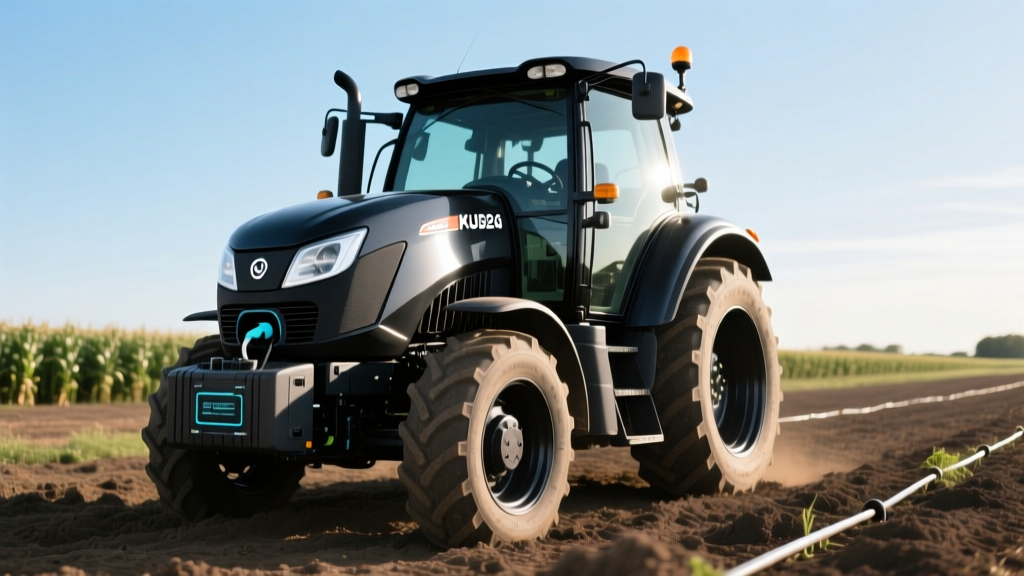
Kubota first revealed the LXe-261, a battery-electric compact tractor prototype, at CES 2022. The concept featured a lithium-ion battery pack, electric drive motor, and a design aimed at light-duty agricultural and landscaping tasks. Since then, Kubota has been characteristically cautious — the Japanese manufacturer is known for methodical product development, and it has not committed to a firm U.S. launch date or MSRP for a production electric tractor.
What we know from Kubota's public statements and prototype demonstrations:
- Target segment: Compact and sub-compact tractors (under 40 HP equivalent), primarily for landscaping, small farms, and property maintenance
- Battery chemistry: Lithium-ion (specific chemistry — LFP vs NMC — not publicly confirmed)
- Charging: Expected Level 2 AC charging capability; DC fast charging unlikely for initial models given duty-cycle requirements
- Availability: Kubota has indicated electric tractors are part of its mid-term strategy, but no 2026 or 2027 production model has been confirmed for the U.S. market
Kubota's approach mirrors the broader off-road and agricultural equipment industry: manufacturers are testing electrification in smaller, lighter-duty equipment before tackling the high-torque, long-duration demands of full-size farm tractors. For now, Kubota's U.S. lineup remains dominated by diesel (Kubota's D-Series engines) and gasoline models across its B, L, M, and MX series.
Electric Tractors You Can Actually Buy in 2026
While a Kubota electric tractor isn't on dealer lots, the electric tractor and utility vehicle market has real options. Here's how the currently available models compare:
| Model | Battery (kWh) | Motor HP (equiv.) | Est. Runtime | Charge Time (L2) | Base MSRP |
|---|---|---|---|---|---|
| Monarch Tractor (MK-V) | ~60 kWh (LFP) | 40 HP (70 peak) | 10+ hrs (light duty) | ~6-8 hrs (240V) | ~$68,000 |
| Solectrac eUtilimatic | 28 kWh (NMC) | 25 HP (equiv.) | 4-6 hrs | ~4-5 hrs (240V) | ~$44,900 |
| Solectrac eTractor | 28 kWh (NMC) | 40 HP (equiv.) | 4-5 hrs | ~4-5 hrs (240V) | ~$39,900 |
| Kubota L2501 (Diesel Baseline) | N/A — 6.6 gal diesel | 24.8 HP | 8-10 hrs | N/A — refuel ~5 min | ~$17,500 |
Note: Electric tractor specs are manufacturer-published estimates. Actual runtime varies significantly with implement load, terrain, and ambient temperature. Diesel runtime based on typical compact-tractor fuel consumption of 0.5-0.8 gal/hr under mixed load.
The Monarch MK-V is the most capable electric tractor currently shipping, designed for vineyard and orchard operations with optional autonomous (SAE Level 4, geo-fenced) mowing capability. The Solectrac models target smaller properties and hobby farms. Neither competes directly with Kubota's mid-size and large agricultural tractors, which remain diesel-only across the industry.
EV vs Diesel: Real Cost Comparison for Tractors
The economics of electric vs. diesel tractors differ fundamentally from the passenger-car equation. Tractors run at low average speeds but high torque loads, and duty cycles vary enormously by application. Here's a 5-year cost model for a compact tractor used roughly 500 hours per year (a realistic figure for a 10-20 acre property):
| Cost Category | Electric Tractor (~$45K) | Diesel Tractor (~$17.5K) |
|---|---|---|
| Purchase Price | $45,000 | $17,500 |
| Fuel/Energy (5 yrs) | $2,250 (at $0.13/kWh, ~7 kWh/hr) | $10,500 (at $4.20/gal, ~0.5 gal/hr) |
| Maintenance (5 yrs) | $500 (minimal — no oil, filters, DEF) | $3,500 (oil changes, filters, coolant, DEF) |
| Insurance (5 yrs) | $3,000 | $2,500 |
| Estimated Resale (Year 5) | -$22,500 | -$10,500 |
| Net 5-Year Cost | $28,250 | $23,500 |
Assumptions: Residential electricity at $0.13/kWh national average per EIA data. Diesel at $4.20/gal (off-road/agricultural pricing). Electric maintenance savings reflect elimination of engine oil, fuel filters, air filters, coolant service, and DEF fluid. Resale values are estimates — the used electric tractor market is immature and difficult to project with confidence.
The takeaway: even with substantially lower energy and maintenance costs, the electric tractor's higher upfront price means it takes roughly 6-8 years to break even against a comparable diesel at 500 hours/year of use. The calculus improves if you have on-site solar (driving your effective electricity cost toward zero), operate in noise-sensitive or emissions-regulated environments, or qualify for agricultural equipment electrification grants available in states like California through the California Air Resources Board (CARB).
Real-World Ownership Considerations
Before committing to an electric tractor — or deciding to wait for Kubota's eventual entry — evaluate your specific operation against these practical factors:
Charging Infrastructure on Your Property
Electric tractors require Level 2 (240V) charging for reasonable turnaround times. Most barns, equipment sheds, and outbuildings lack 240V/50A circuits. Budget $1,500-$4,000 for a dedicated circuit run from your main panel, potentially more if a panel upgrade to 200A service is needed. Unlike passenger EVs, you can't rely on public charging networks — the tractor needs to charge where it's stored.
Duty Cycle and Runtime Reality
Electric tractor runtime drops sharply under heavy implement loads. A model rated for 6 hours of light mowing may deliver only 3 hours when pulling a loaded box blade or running a PTO-driven implement. If your typical workday exceeds 4-5 hours of continuous heavy use, current battery capacities won't cover a full shift without mid-day charging (adding 2-3 hours of downtime).
Cold-Weather Performance
Lithium-ion batteries lose 15-30% of usable capacity in temperatures below 32°F. For northern-climate owners using a tractor for snow removal or winter feeding, expect meaningful runtime reduction. Battery preconditioning — standard in passenger EVs — is not yet widely implemented in electric agricultural equipment.
PTO and Implement Compatibility
Most electric tractors currently on the market use electric PTO systems rather than the standard 540 RPM mechanical PTO found on diesel tractors. This limits compatibility with legacy implements (rotary cutters, post-hole diggers, balers). Verify PTO type and RPM before assuming your existing implements will work.
Tax Credits and Incentives for Electric Tractors
The federal §30D Clean Vehicle Credit that provides up to $7,500 for passenger EVs does not apply to tractors. The §30D credit is limited to on-road vehicles meeting specific weight, battery sourcing, and MSRP requirements.
However, electric agricultural equipment may qualify for other incentives:
- USDA REAP Grants: The Rural Energy for America Program can cover up to 50% of eligible energy-efficient equipment costs for agricultural producers. Battery-electric tractors may qualify under certain applications.
- State-Level Incentives: California's CORE (Clean Off-Road Equipment) voucher program offers point-of-sale incentives for zero-emission off-road equipment, including tractors. Incentive amounts vary by equipment class and are subject to funding availability.
- Section 179 Depreciation: Business-use tractors (electric or diesel) may qualify for full first-year depreciation under IRS Section 179, effectively reducing the net cost by your marginal tax rate.
- Utility Rebates: Some rural electric cooperatives offer equipment electrification rebates — check with your local provider.
Always verify current incentive availability with official program administrators. Funding levels and eligibility rules change annually.
Decision Framework: Should You Go Electric or Wait?
Choose an Available Electric Tractor Now If:
- You operate a small property (under 20 acres) with light-to-moderate duty cycles (under 5 hrs/day)
- You have or can install 240V charging at your equipment storage location
- Noise restrictions, emissions requirements, or indoor use (barns, greenhouses) favor electric operation
- You have on-site solar that reduces your effective electricity cost below $0.08/kWh
- You qualify for state or USDA incentives that offset 30%+ of the purchase price
Stick With Diesel (or Wait for Kubota) If:
- You need 8+ hours of continuous heavy-load operation per day
- Your property lacks 240V electrical access within 100 feet of equipment storage
- You rely on standard 540 RPM mechanical PTO implements
- You operate in extreme cold (below 20°F) for extended periods
- Your budget is under $25,000 and you cannot absorb the electric premium
- You need a mid-size or large agricultural tractor (40+ HP) — no electric options exist in this class
Common Misconceptions About Electric Tractors
| Myth | Fact |
|---|---|
| "Electric tractors don't have enough torque." | Electric motors produce peak torque at zero RPM. Electric tractors typically deliver more low-end torque than equivalent-HP diesel engines, which is ideal for pulling and PTO work. |
| "You can charge from a standard 120V outlet." | Technically yes, but Level 1 (120V/12A) charging delivers roughly 1.4 kW — meaning a 28 kWh battery would take 20+ hours to charge. Level 2 (240V) is effectively required. |
| "Electric tractors are maintenance-free." | They eliminate engine maintenance (oil, filters, coolant), but still require hydraulic fluid service, gear oil, tire maintenance, and battery health monitoring. Budget ~$100/year in remaining maintenance. |
| "Kubota is releasing an electric tractor in 2026." | No production Kubota electric tractor has been announced for 2026. The LXe-261 remains a prototype. Kubota's public timeline suggests electric compact tractors are several years away for the U.S. market. |
| "Battery replacement will cost more than the tractor." | Current lithium-ion pack replacement for a ~28 kWh tractor battery runs $8,000-$12,000 based on 2026 cell pricing. Significant, but not tractor-totaling. Most manufacturers warranty batteries for 5-8 years with a 70% capacity retention threshold. |
Frequently Asked Questions
Will Kubota release an electric tractor?
Kubota has demonstrated electric tractor prototypes (LXe-261) and has stated that electrification is part of its long-term strategy. However, no production model has been confirmed for the U.S. market as of early 2026. Based on Kubota's typical product development cycles, a production electric compact tractor is more likely in the 2028-2030 timeframe.
How much does an electric tractor cost?
Currently available electric tractors range from roughly $39,900 (Solectrac eTractor) to $68,000+ (Monarch MK-V). This represents a 2-4x premium over comparable diesel compact tractors ($15,000-$25,000). The premium is partially offset by lower operating costs and potential incentive programs.
How long does an electric tractor battery last on a charge?
Runtime varies dramatically by load. Under light mowing or transport duty, expect 5-10 hours from a 28-60 kWh battery. Under heavy implement work (tilling, loading, PTO-driven tasks), runtime drops to 3-5 hours. Always plan for the worst-case load scenario, not the manufacturer's best-case estimate.
Can I use my existing tractor implements with an electric tractor?
It depends on the implement and the electric tractor's PTO system. Category 1 three-point hitch implements generally mount to any compact tractor, but PTO-driven implements require compatible RPM and drive type. Many electric tractors use electric PTO rather than mechanical — verify compatibility before purchasing.
Are electric tractors powerful enough for real farm work?
For small farms, hobby farms, and property maintenance (under 40 HP equivalent), current electric tractors are capable. For mid-size and large-scale agriculture requiring 50+ HP, multi-shift operation, and heavy draft work, diesel remains the only viable option in 2026. No manufacturer currently offers an electric tractor above ~70 peak HP.
What happens if I run out of charge in the field?
Unlike a diesel tractor where you can bring a fuel can, a depleted electric tractor must be towed or charged in place. Some models support portable generator charging as an emergency backup, but this is slow and defeats the emissions advantage. Plan your work patterns around your battery capacity and keep a margin of 15-20% charge for return-to-barn travel.
Bottom Line for Kubota Buyers
If you're specifically looking for a Kubota electric tractor, the honest answer in 2026 is: it doesn't exist yet. Kubota's reputation for durable, well-supported compact tractors makes it a strong candidate when the company does enter the electric market, but that entry is likely years away. In the meantime, evaluate whether a currently available electric tractor from Monarch or Solectrac fits your operation, or whether a Kubota diesel model — with its established dealer network, proven reliability, and lower upfront cost — remains the pragmatic choice for your property. Run the numbers against your specific hours-per-year, electricity rate, and duty cycle before deciding. The math favors electric for light-duty, solar-powered operations; it still favors diesel for heavy, extended-use applications.