Is a Hyundai Kona Electric Lease the Smartest Way Into an Affordable EV?
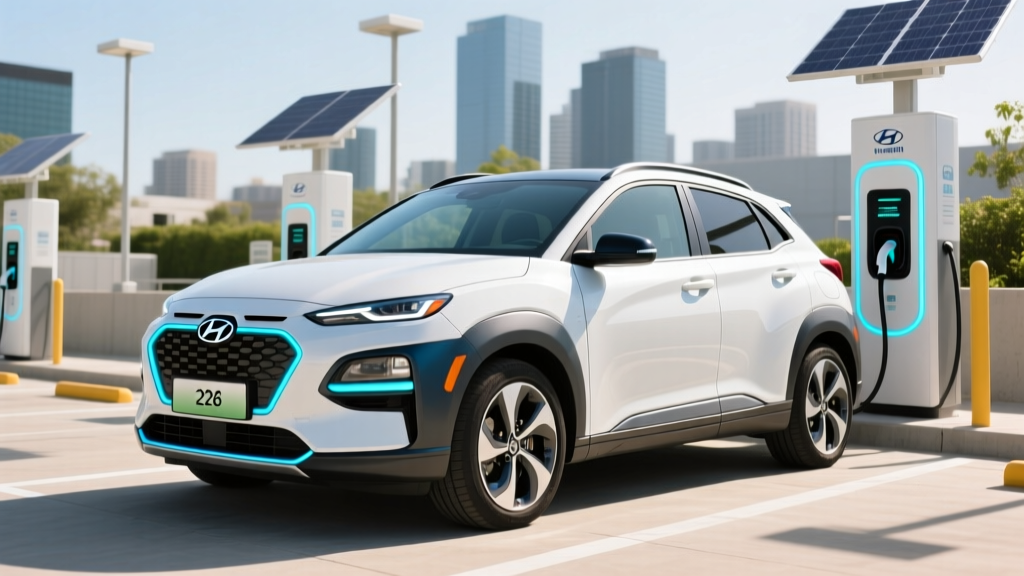
The Hyundai Kona Electric occupies a rare sweet spot in the 2026 EV market: a subcompact crossover with over 260 miles of EPA range, DC fast charging, and a starting MSRP that undercuts most competitors. For buyers weighing whether to purchase outright or pursue a Kona Electric lease, the answer hinges on a tangle of variables — federal tax credit eligibility, state incentives, home charging access, insurance premiums, and how quickly EVs are depreciating in a market that's still finding its footing.
This guide dissects the real math behind owning or leasing the 2026 Hyundai Kona Electric over five years. We'll run the numbers on fuel savings, maintenance, insurance, depreciation, and incentives so you can decide whether a lease or purchase makes more financial sense for your situation.
2026 Kona Electric — Quick Spec Snapshot
| Spec | Value |
|---|---|
| EPA Range | 261 mi (SE/SEL); expect ~220–240 mi real-world highway/cold |
| Battery | 65.4 kWh usable, NMC chemistry |
| DC Fast Charge (peak) | ~100 kW (10–80% in ~43 min) |
| Level 2 Charge | 10.9 kW (~6.5 hrs from empty) |
| Motor Output | 201 hp / 188 lb-ft torque, FWD |
| 0–60 mph | ~7.2 seconds |
| EPA Efficiency | 118 MPGe combined (29 kWh/100 mi) |
| Base MSRP (SE) | $32,975 |
| Battery Warranty | 10 yr / 100,000 mi |
Source: fueleconomy.gov, Hyundai USA spec sheets.
The 5-Year Total Cost of Ownership: Kona Electric vs. Gas Crossover
Total cost of ownership (TCO) is where EVs either shine or stumble — and the Kona Electric's numbers depend heavily on your electricity rate, annual mileage, and whether you capture the federal tax credit. Below is a realistic 5-year / 75,000-mile projection comparing the Kona Electric (SE trim, purchased with full $7,500 credit applied at point of sale) against a similarly priced gas subcompact crossover averaging 30 MPG combined.
| Category | Kona Electric (w/ credit) | Gas Crossover (30 MPG) |
|---|---|---|
| Purchase Price (after credit) | $25,475 | $30,000 |
| Fuel / Energy | $3,038 | $8,750 |
| Maintenance | $1,200 | $3,500 |
| Insurance (5 yr) | $9,750 | $7,500 |
| Estimated Depreciation | $11,500 | $12,000 |
| Total 5-Yr Cost | $50,963 | $61,750 |
Key assumptions: Electricity at $0.14/kWh national average (home Level 2 charging); gas at $3.50/gal; 15,000 miles/year. Insurance based on national EV averages. Depreciation assumes 45% retained value for Kona Electric at year 5, 60% for gas crossover.
The Kona Electric saves roughly $10,800 over five years in this scenario — but that margin collapses if you don't qualify for the full federal credit, pay higher electricity rates, or face steep insurance premiums in your state.
Federal Tax Credit (§30D): Do You Actually Qualify?
The IRS §30D Clean Vehicle Credit offers up to $7,500 for qualifying new EVs, but eligibility in 2026 involves three separate hurdles. The credit can now be transferred to the dealer at the point of sale, effectively reducing your purchase price or capitalized cost on a lease — but only if every box is checked.
§30D Eligibility Checklist (2026 Rules)
- MSRP Cap: Vehicle must have an MSRP at or below $55,000 for SUVs/crossovers (Kona Electric qualifies at ~$32,975–$39,000 depending on trim).
- Buyer Income Cap: Modified adjusted gross income (MAGI) must not exceed $150,000 (single), $225,000 (head of household), or $300,000 (joint filers).
- Battery Component Sourcing: A percentage of battery components must be manufactured or assembled in North America. The required percentage increases annually — verify current-year thresholds on IRS.gov.
- Critical Minerals Sourcing: A percentage of critical minerals must be sourced from the US or a free-trade-agreement country. This threshold also escalates yearly.
- Final Assembly: Vehicle must undergo final assembly in North America. The Kona Electric is assembled in South Korea, which may disqualify it from the purchase credit — verify on the DOE's qualifying vehicle list.
- Point-of-Sale Transfer: You can elect to transfer the credit to the dealer, reducing your out-of-pocket cost at purchase. The dealer must be IRS-registered.
Charging Cost vs. Gas: The Per-Mile Math
The Kona Electric's efficiency of 29 kWh per 100 miles (118 MPGe combined) makes it one of the more efficient crossovers in its class. But your actual cost per mile depends entirely on where you charge.
| Scenario | Cost/Mile | Annual Cost (15k mi) |
|---|---|---|
| Home L2 at $0.14/kWh | $0.041 | $609 |
| Home L2 at $0.25/kWh (CA, Northeast) | $0.073 | $1,088 |
| Public DCFC at $0.40/kWh | $0.116 | $1,740 |
| Gas crossover at $3.50/gal, 30 MPG | $0.117 | $1,750 |
At a typical national-average residential rate of $0.14/kWh, the Kona Electric costs roughly $0.04 per mile to fuel — about one-third the cost of a 30 MPG gas crossover. Even at higher coastal electricity rates ($0.25/kWh), you're still saving roughly 35% per mile.
The savings evaporate if you rely exclusively on public DC fast charging at $0.40/kWh. This is why home charging access is the single biggest financial variable in EV ownership. If you can install a Level 2 charger at home (typically $500–$1,500 for equipment and electrician work on an existing 240V circuit), the Kona Electric pays for that installation within the first year of fuel savings.
Note: The Kona Electric's ~100 kW peak DC charge rate means a 10–80% session takes approximately 43 minutes. This is slower than 800V-platform rivals (Hyundai Ioniq 5, Kia EV6) that charge at 240+ kW. For road-trippers who DC-charge frequently, this matters for both time and cost.
Maintenance Savings: Fewer Parts, Lower Bills
EVs eliminate the maintenance items that bleed gas-car owners dry over five years. The Kona Electric's single-speed reduction gear, electric motor, and regenerative braking system require far less scheduled service.
| Service Item | Kona Electric | Gas Crossover |
|---|---|---|
| Oil changes | $0 (none) | $600–$900 |
| Brake pads | $0–$200 (regen extends life) | $400–$800 |
| Transmission fluid | $0 | $150–$300 |
| Cabin air filter | $100–$150 | $100–$150 |
| Tire rotation / replacement | $800–$1,200 (EVs wear tires faster) | $600–$1,000 |
| Coolant / misc. | $100–$200 | $200–$400 |
| Total Estimated | $1,000–$1,750 | $2,050–$3,550 |
The Kona Electric saves an estimated $1,000–$2,000 in maintenance over five years. Regenerative braking is the star here — by using the motor to slow the vehicle, regen dramatically reduces friction brake wear. Many EV owners report original brake pads lasting 100,000+ miles.
One area where EVs don't save: tires. The Kona Electric's instant torque and ~3,700-lb curb weight accelerate tire wear compared to lighter gas crossovers. Budget for one tire replacement within five years at typical mileage.
Insurance Reality: Expect to Pay More
EV insurance premiums are typically 15–30% higher than equivalent gas vehicles. The reasons are structural, not arbitrary:
- Higher repair costs: EV battery packs and power electronics are expensive to replace after collision damage. Insurers factor in total-loss risk.
- Specialized labor: High-voltage system repairs require certified technicians, which limits shop availability and raises labor rates.
- Parts scarcity: EV-specific components (inverters, onboard chargers, battery modules) have longer lead times than ubiquitous gas-car parts.
- Vehicle price: Even at ~$33K base, the Kona Electric's repair-cost profile pushes premiums above similarly priced gas vehicles.
National average annual premiums for the Kona Electric fall in the $1,800–$2,200 range, compared to $1,400–$1,700 for a gas subcompact crossover. That's $400–$500 more per year, or $2,000–$2,500 over five years.
Mitigation strategies: Shop quotes from at least three insurers. Some companies (Geico, Progressive, State Farm) offer EV-specific discounts. Bundling home and auto, maintaining a clean driving record, and choosing higher deductibles can narrow the gap. Always get a firm quote before signing a lease or purchase agreement.
Depreciation and Resale: The Wild Card
EV depreciation has been volatile since 2022. Early EVs suffered steeper-than-expected drops due to rapid price cuts on new models, battery technology improvements making older models less desirable, and consumer uncertainty about long-term battery health.
For the 2026 Kona Electric, realistic 5-year depreciation assumptions:
- Purchase (with $7,500 credit): If you pay ~$25,500 net and the vehicle retains 40–50% of its pre-credit MSRP at year 5, expect a residual of ~$13,000–$16,500. Your depreciation hit: $9,000–$12,500.
- Purchase (without credit): At full $32,975 MSRP, depreciation could reach $16,000–$20,000 over five years.
- Lease: Depreciation risk falls on the leasing company (Hyundai Motor Finance or a bank). Your exposure is limited to the agreed residual value. If the lease residual is set conservatively, your monthly payments will be higher; if set aggressively, you may face a gap if you choose to purchase at lease-end.
The Kona Electric's strong 10-year/100,000-mile battery warranty (covering capacity below 70% of original) provides residual-value support. Transferable warranties on Hyundai EVs help used-market demand.
However, the broader EV market trend shows compact and subcompact EVs depreciating faster than premium models or trucks, simply because the used-EV buyer pool is price-sensitive and newer, better EVs keep arriving. Plan for 45–55% depreciation over five years unless the used-EV market stabilizes.
State, Local, and Utility Incentives: The Bonus Layer
Common incentive types include:
- State purchase rebates: California (CVRP, up to $7,000 for income-qualified buyers), Colorado (up to $5,000 tax credit), Massachusetts (MOR-EV, up to $3,500), New York (Drive Clean Rebate, up to $2,000). Many states have income caps and MSRP limits.
- Utility rebates: Some utilities offer $300–$1,000 rebates for purchasing an EV or installing a home Level 2 charger. Others provide time-of-use (TOU) rate plans that drop electricity to $0.05–$0.08/kWh for overnight charging.
- HOV lane access: States like California, Colorado, and Virginia grant solo HOV lane access to qualifying EVs — a non-cash benefit worth significant commute time.
- Home charger installation rebates: Federal §30C offers up to $1,000 (30% of cost) for residential charging equipment installed in qualifying census tracts. Some utilities stack additional rebates on top.
For a Kona Electric lease, confirm with the leasing company whether state rebates apply to the lessee or the lessor. Some programs issue the rebate to the registered owner (the leasing company), which may or may not pass it through as a lease-cap reduction.
Lease vs. Buy: The Kona Electric Decision Framework
Choose a Kona Electric Lease If:
- Your state or the federal commercial credit (§45W) allows the leasing company to pass through a $7,500 credit as a cap-cost reduction, lowering monthly payments.
- You want to avoid long-term depreciation risk on a rapidly evolving EV market.
- You drive under 12,000–15,000 miles per year (most lease mileage limits).
- You prefer swapping into a newer EV with better range/charging every 2–3 years.
- The Kona Electric's South Korean assembly disqualifies it from the §30D purchase credit but the lease structure captures the commercial credit.
Choose to Purchase If:
- You qualify for the full §30D credit (confirm assembly and sourcing eligibility on IRS.gov).
- You drive more than 15,000 miles/year and would face lease overage penalties.
- You plan to keep the vehicle 5+ years and want to build equity.
- You have home charging and low electricity rates, maximizing long-term fuel savings.
- Your state offers purchase-only rebates that don't apply to leases.
Typical 2026 Kona Electric lease terms (36 months, 12,000 miles/year) range from $299–$429/month depending on trim, credit tier, down payment, and whether a federal or state incentive is applied as a cap-cost reduction. Always compare the total lease cost (monthly × term + down payment + disposition fee + overage risk) against the net purchase cost over the same period.
Frequently Asked Questions
How much does it really cost to own a Kona Electric over 5 years?
With the federal tax credit applied, home charging at average rates, and typical insurance, expect roughly $50,000–$55,000 in total 5-year cost including purchase price, energy, maintenance, insurance, and depreciation. Without the credit, add $7,500 to that figure. Compare this to $60,000–$65,000 for a similarly priced gas crossover over the same period.
Does the Hyundai Kona Electric qualify for the $7,500 federal tax credit?
It depends. The Kona Electric is assembled in South Korea, which may disqualify it from the §30D new-vehicle purchase credit that requires North American final assembly. However, leased Kona Electrics may qualify under the §45W commercial clean vehicle credit, which the leasing company can claim and pass through as reduced lease payments. Always verify current eligibility on IRS.gov and with your dealer before committing.
How much do I save on fuel and maintenance with the Kona Electric?
At $0.14/kWh home charging, the Kona Electric costs about $609/year in electricity vs. $1,750/year in gas for a 30 MPG crossover — saving roughly $1,140/year in fuel. Maintenance savings add another $200–$400/year from eliminated oil changes, reduced brake wear, and fewer scheduled services. Combined annual savings: $1,300–$1,500.
Are EVs more expensive to insure than gas cars?
Yes, typically 15–30% more. For the Kona Electric, expect $1,800–$2,200/year vs. $1,400–$1,700 for a gas equivalent. Higher repair costs, specialized labor, and expensive battery replacement drive the premium gap. Shop multiple insurers and ask about EV-specific discounts.
How well does the Kona Electric hold its value?
Expect 40–50% retained value at 5 years, which translates to meaningful depreciation. The 10-year/100,000-mile battery warranty supports resale, but the subcompact EV segment faces pressure from newer, longer-range competitors. Leasing transfers this depreciation risk to the lessor.
What home charging setup do I need for the Kona Electric?
A Level 2 (240V) home charger delivering the Kona's max 10.9 kW will fully recharge the 65.4 kWh battery in about 6.5 hours — ideal for overnight top-ups. Installation costs range from $500 (simple outlet on existing circuit) to $2,000+ (new 40A circuit, panel upgrade). A standard 120V outlet (Level 1) adds only ~3–4 miles of range per hour — adequate for low-mileage drivers but impractical as a primary charging solution.
Is the Kona Electric good for road trips?
It's adequate but not ideal. The 261-mile EPA range (expect 220–240 highway) means stopping every 2–2.5 hours on long trips. The ~100 kW peak DC charge rate adds ~170 miles in a 43-minute 10–80% session — slower than 800V rivals that add the same range in 18 minutes. For frequent road-trippers, the Ioniq 5 or EV6 (same corporate platform, faster charging) may justify a higher price.