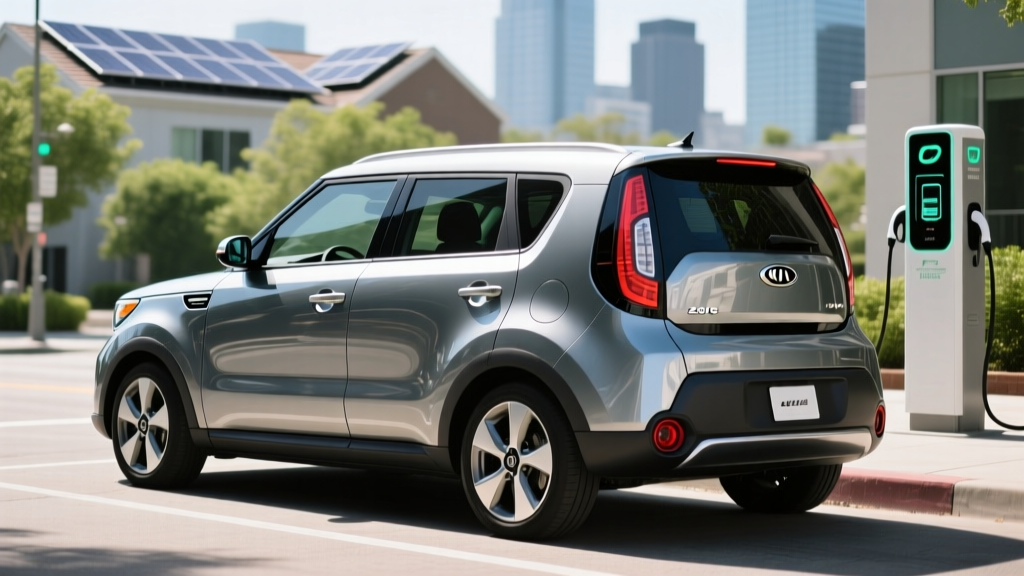
If you are looking at a used 2016 Kia Soul EV in 2026, you are likely drawn by its low entry price (typically $7,000–$11,000 on the used market) and practical hatchback shape. The quick answer on whether it's a smart buy: it is an excellent, low-cost city commuter and second car, provided the battery State of Health (SoH) checks out above 80% and you have access to Level 2 home charging. With an original EPA range of 93 miles, this first-generation EV is not built for road trips, but its running costs are a fraction of a comparable gas car.
Quick Verdict: 2016 Kia Soul EV
Buy it if: You need an affordable, quirky daily commuter for city/suburban driving under 60 miles round-trip, and can charge at home.
Pass if: You regularly drive over 100 miles a day, live in an extreme cold climate without a garage, or rely solely on public DC fast charging.
Battery Health and Real-World Range Expectations
The 2016 Kia Soul EV is powered by a 27 kWh lithium-ion polymer (NMC chemistry) battery pack, with roughly 22.5 kWh usable. When new, it delivered an EPA-estimated 93 miles of range and 105 MPGe combined. However, buying a decade-old EV means battery degradation is your primary concern.
Based on long-term owner data and typical degradation curves for air-cooled NMC packs from this era, expect a 2016 model in 2026 to retain between 75% and 88% of its original capacity, depending on climate and charging habits.
Range Reality Check
Original EPA Range: 93 miles
Expected 2026 Real-World Range (80% SoH): ~65 to 75 miles in mild weather.
Cold Weather / Highway Penalty: Expect 45–55 miles at 70 mph in freezing temperatures. The Soul EV's lack of a modern heat pump and reliance on resistive cabin heating heavily impacts winter efficiency.
Always ask the seller for a battery health report from a Kia dealer or use an OBD2 dongle with an app like SoulEV Spy to check the actual State of Health before purchasing.
Charging Speeds: Level 1, Level 2, and DC Fast Charging
Understanding the difference between kW (power/charge speed) and kWh (energy/battery capacity) is critical here. The Soul EV's 6.6 kW onboard charger was quite good for 2016, meaning it can refill the battery relatively quickly on Level 2.
| Charging Level | Power (kW) | Time (0-100% or 10-80%) | Miles of Range Added |
|---|---|---|---|
| Level 1 (120V Standard Outlet) | ~1.4 kW | ~16-18 hours (full) | ~4 miles per hour |
| Level 2 (240V Home/Public) | 6.6 kW | ~4 hours (full) | ~20 miles per hour |
| DC Fast Charging (CHAdeMO) | Up to 50 kW | ~30-35 mins (10-80%) | ~90 miles per hour (peak) |
The CHAdeMO Limitation: The 2016 Soul EV uses the CHAdeMO connector for DC fast charging. As of 2026, the North American charging landscape has heavily standardized around NACS (Tesla) and CCS1. While Electrify America and some regional networks still maintain CHAdeMO plugs, they are becoming scarce. If you plan to road-trip, you will likely need a CHAdeMO-to-CCS adapter (which are expensive and bulky) or careful route planning.
2026 Ownership Costs: Soul EV vs. Gas Hatchback
The financial argument for a used EV is strong, primarily because you are bypassing the steepest part of the depreciation curve. Let's compare the 2016 Soul EV to a similarly priced used gas hatchback (like a 2016 Honda Fit or Kia Soul 1.6L gas) over a 5-year ownership period, assuming 10,000 miles driven annually.
| Cost Factor (5 Years) | 2016 Kia Soul EV | 2016 Gas Hatchback (30 MPG) |
|---|---|---|
| Purchase Price (Avg) | $9,000 | $11,000 |
| Fuel/Energy (50k miles) | $2,250 (Home charging @ $0.15/kWh) | $5,830 (Gas @ $3.50/gal) |
| Maintenance | $1,200 (Tires, wipers, cabin filter) | $3,500 (Oil, belts, spark plugs, brakes) |
| Estimated Repairs | $800 (12V battery, minor) | $1,500 (Alternator, starter, transmission) |
| Total 5-Year Cost | $13,250 | $21,830 |
Even factoring in a potential home Level 2 charger installation ($500–$1,200), the Soul EV saves roughly $8,000 over five years. Regenerative braking also saves wear on the friction brakes; original brake pads on these cars often last past 80,000 miles.
Tax Credit and Incentive Reality
Because this vehicle is a 2016 model, it does not qualify for the new vehicle §30D Federal Tax Credit. However, under current IRS rules, it may qualify for the Used Clean Vehicle Credit (up to $4,000 or 30% of the sale price). To qualify, the sale price must be $25,000 or less (easily met), and buyer income caps apply. Always verify current year rules with a tax professional.
Myth vs. Fact: First-Gen EV Ownership
First-time EV buyers often worry about catastrophic battery failure. Here is the reality of owning a 10-year-old EV.
| Myth | Fact |
|---|---|
| "The battery will cost $15,000 to replace and die at 100k miles." | Kia's original battery warranty was 10 years/100,000 miles (for capacity below 70%). While the warranty is likely expired, these packs are proving durable. A refurbished replacement in 2026 runs $4,000–$6,500, and many original packs are still functional at 120,000+ miles. |
| "I can charge it anywhere." | Public CHAdeMO chargers are disappearing. You must have reliable Level 2 home or workplace charging to make this car practical. |
| "It's completely maintenance-free." | You still need to rotate tires, change the cabin air filter, top off washer fluid, and eventually replace the 12V auxiliary battery (which powers the computers and lights). |
Decision Framework: Is the 2016 Soul EV Right for You?
Choose the 2016 Kia Soul EV if:
- You have a garage or driveway where you can install a Level 2 (240V) charger.
- Your daily commute is under 60 miles round-trip.
- You want a dedicated city runabout that costs pennies per mile to operate.
- You appreciate the upright, practical cargo space (23.8 cu ft behind rear seats).
Look at a newer PHEV or a 2020+ EV (like the Bolt or Leaf Plus) if:
- You need to drive 200+ miles without stopping.
- You live in a region with brutal winters and no indoor parking.
- You rely entirely on public fast-charging networks.
Frequently Asked Questions
What is the top speed of the 2016 Kia Soul EV?
It is electronically limited to roughly 90 mph. It is powered by a 109 hp (81 kW) electric motor producing 210 lb-ft of torque, giving it a 0-60 mph time of about 11.2 seconds. It feels punchy around town but runs out of breath on highway on-ramps.
Does the 2016 Soul EV have a heat pump?
No. It uses a Positive Temperature Coefficient (PTC) resistive heater and a heated/ventilated seat system. This is highly inefficient in winter and is the main reason the range drops by 30-40% in freezing weather. Preconditioning the car while it is still plugged in at home is essential to preserve range.
Can I use a Tesla Supercharger with this car?
Not natively, and not easily. Tesla Superchargers use the NACS connector. While adapters exist for CHAdeMO-to-Tesla in some markets, they are rare, expensive, and often not supported by Tesla's software for non-Tesla vehicles. Stick to networks like Electrify America, EVgo, or ChargePoint, and filter for CHAdeMO plugs in your app.