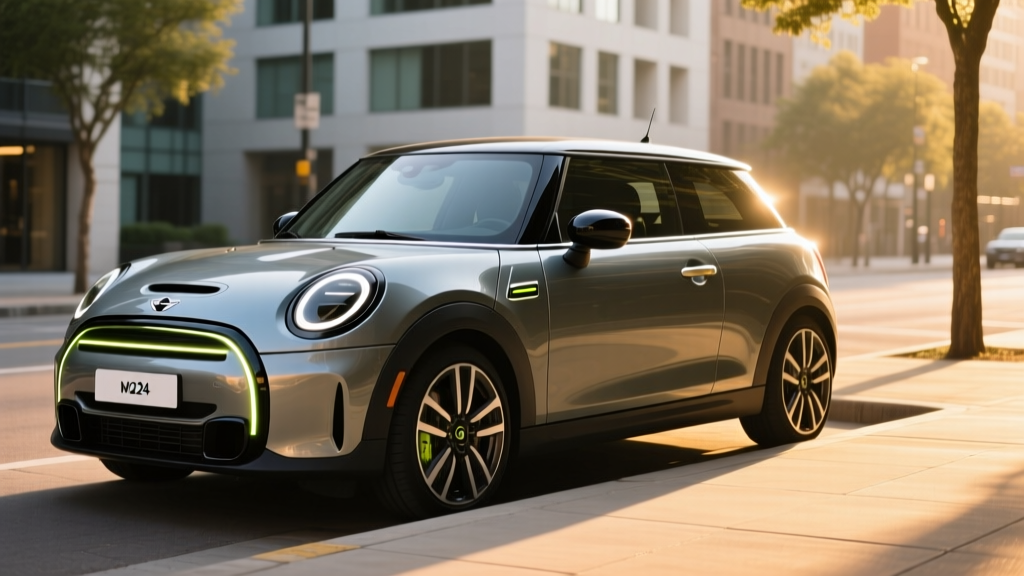
If you've been searching for the 2024 Mini Cooper SE Hardtop length in inches, you've likely already figured out that this electric city car occupies a space no other mainstream EV dares to fill: subcompact, stylish, and unapologetically short-range. At 151.7 inches long, the Cooper SE is roughly the length of a Smart Fortwo and nearly two feet shorter than a Chevrolet Bolt EV. That compact footprint is both its greatest asset and its defining limitation.
This review covers everything a prospective buyer needs — real-world range, charging behavior, the tax-credit situation for 2024–2026 purchases, and whether the Cooper SE still makes sense as the EV market matures around it.
Dimensions & Design: The 2024 Mini Cooper SE Hardtop at 151.7 Inches
The headline number is straightforward: the 2024 Mini Cooper SE Hardtop 2-Door measures 151.7 inches in overall length, 68.0 inches wide (without mirrors), and 56.4 inches tall. Its wheelbase is 98.2 inches. For context, that's about 10 inches shorter than the 4-door Mini Hardtop and nearly 29 inches shorter than a Tesla Model 3.
| Dimension | Measurement |
|---|---|
| Overall Length | 151.7 in |
| Overall Width (excl. mirrors) | 68.0 in |
| Overall Height | 56.4 in |
| Wheelbase | 98.2 in |
| Front Headroom | 38.8 in |
| Front Legroom | 41.4 in |
| Rear Headroom | 37.2 in |
| Rear Legroom | 31.7 in |
| Cargo Volume (behind rear seats) | 8.7 cu ft |
| Cargo Volume (rear seats folded) | 34.0 cu ft |
| Curb Weight | ~3,240 lbs |
The rear seat is genuinely usable for adults on short trips, but anyone over about 5'10" will find their knees pressing into the front seatback. The 8.7 cubic feet of trunk space handles a week of groceries for two people, but a Costco run will require creative stacking. This is a car designed around the premise that most urban errands don't require much cargo room.
Range, Battery & Real-World Efficiency
EPA Estimated Range: 114 miles
Real-World Expectation: ~90–105 miles highway driving; ~100–120 miles in city/regen-heavy driving. In freezing temperatures (below 30°F), expect 75–90 miles of usable range due to battery resistance and cabin heating draw.
The 2024 Cooper SE uses a 32.6 kWh gross battery (approximately 28.9 kWh usable), built with NMC (nickel-manganese-cobalt) lithium-ion cells supplied by CATL. BMW Group, Mini's parent company, chose a relatively small pack to keep weight down and preserve the car's go-kart handling — the SE weighs only about 300 pounds more than a gas-powered Cooper S.
The EPA rates the Cooper SE at 114 MPGe combined (116 city / 102 highway), which translates to roughly 29 kWh per 100 miles. That's less efficient than a Tesla Model 3 (~26 kWh/100mi) but competitive for its class. The real efficiency win comes in stop-and-go city traffic, where regenerative braking recovers meaningful energy. On the highway at 70+ mph, the small frontal area helps, but the car's aerodynamic profile (which is essentially a hatchback, not a teardrop) limits efficiency.
For daily commuting under 40 miles round-trip, the Cooper SE requires charging every 2–3 days. For anyone with a home Level 2 charger, this is trivial. For apartment dwellers relying on public charging, the short range becomes a logistical friction point.
Charging Speed: DC Fast & Home Level 2
| Charging Method | Max Power | Time / Rate |
|---|---|---|
| Level 1 (120V household) | ~1.4 kW | ~3.5 miles/hr; full charge in ~20 hours |
| Level 2 (240V home/public) | 7.4 kW | ~22 miles/hr; 0–100% in ~4.5 hours |
| DC Fast Charge (CCS) | 50 kW peak | 10–80% in ~36 minutes |
Let's be direct: the Cooper SE's 50 kW peak DC fast-charge rate is its most significant competitive weakness in 2024 and beyond. While rivals like the Hyundai Kona Electric (peak 100+ kW) and Chevrolet Bolt EUV (peak 55 kW but with a much larger battery) can add range more quickly on road trips, the Cooper SE's small battery means it doesn't need to charge for long in absolute terms. A 10–80% session in roughly 36 minutes is manageable — but only if you can find a 50 kW charger, which is increasingly rare as networks prioritize 150–350 kW stations.
The charge curve is relatively flat between 10–70% SoC, then tapers sharply above 85%. On a road trip, you'll want to plan stops around the 70–80% mark rather than trying to top off. The car uses a CCS1 connector for DC charging and a J1772 connector for Level 2 AC charging. Mini does not currently offer a NACS (Tesla) port, though adapters are available for Supercharger access at reduced speeds.
At home on a Level 2 circuit (240V, 32A), the 7.4 kW onboard charger replenishes the full battery in about 4.5 hours — ideal for overnight top-ups. A dedicated 240V/40A circuit with a quality Level 2 station (ChargePoint Home Flex, Emporia Level 2) will cost roughly $500–$1,200 for equipment and $400–$1,500 for electrician installation, depending on panel proximity and permit requirements.
Performance & Driving Dynamics
The 2024 Cooper SE is powered by a single front-mounted electric motor producing 181 horsepower and 199 lb-ft of torque, driving the front wheels. Mini quotes a 0–60 mph time of 6.9 seconds, which feels quicker in practice thanks to instant electric torque delivery. In city driving, the Cooper SE is genuinely quick off the line — faster than most traffic at stoplights and nimble enough to dart through gaps.
Where the SE shines is handling. The low center of gravity (battery pack mounted under the floor), short wheelbase, and Mini's well-tuned suspension make this one of the most engaging EVs to drive on a twisty road or around tight urban corners. The steering is communicative and weighted appropriately, a rarity in the EV segment where many cars feel numb. The trade-off is a firm ride — potholes and broken pavement are transmitted clearly into the cabin.
Regenerative braking offers two modes: a strong regen setting that enables near one-pedal driving in city traffic, and a lighter "sailing" mode that lets the car coast freely on open roads. There is no adjustable regen slider, which some drivers find limiting.
Pricing, Trims & Federal Tax Credit Eligibility
| Trim Level | Base MSRP | Key Features |
|---|---|---|
| Signature | $30,900 | LED headlights, panoramic sunroof, 8.8" touchscreen, heated seats, navigation |
| Signature Plus | $34,100 | Head-up display, Harman Kardon audio, wireless charging, park assist |
| Iconic | $38,100 | Leather upholstery, adaptive cruise, premium interior trim |
The destination charge adds approximately $995. As-tested prices on well-equipped Iconic models typically land between $39,000–$42,000 with options like special paint colors and upgraded wheels.
Does the 2024 Mini Cooper SE qualify for the $7,500 federal EV tax credit? Under current IRS §30D rules, eligibility depends on several factors that have tightened significantly since 2024:
- MSRP Cap: The Cooper SE (as a sedan/hatchback) must be under $55,000 — all trims qualify.
- Buyer Income Cap: AGI must not exceed $150,000 (single) / $300,000 (joint).
- Battery Sourcing: Critical minerals and battery component requirements phased in starting 2024. The Cooper SE's CATL-sourced battery faces scrutiny under Foreign Entity of Concern (FEOC) rules effective 2024–2025, which may reduce or eliminate the credit for some model years.
- Point-of-Sale Transfer: Eligible buyers can transfer the credit to the dealer for an upfront price reduction starting 2024.
Tech, Safety & Driver Assistance
The 2024 Cooper SE comes equipped with Mini's 8.8-inch circular touchscreen, which integrates navigation, Apple CarPlay (wireless), Android Auto (wired), and vehicle settings. The interface is visually distinctive but occasionally sluggish compared to modern competitors. A digital instrument cluster replaces the traditional speedometer with range, speed, and energy-flow displays.
Standard driver-assistance features include forward collision warning, automatic emergency braking, lane departure warning, and a backup camera. Adaptive cruise control and park distance control are available on higher trims. It's important to note that these are SAE Level 0–1 features — there is no hands-free driving system offered on the Cooper SE, unlike some competitors with Level 2 assist suites.
The IIHS has not recently crash-tested the Mini Hardtop EV specifically, though the platform shares structural elements with the gas Hardtop, which historically performed well in moderate overlap and side-impact tests. NHTSA ratings for the SE variant are limited.
Pros, Cons & Who Should Buy
✅ Pros
- Unmatched fun-to-drive factor in the subcompact EV segment
- Ultra-compact 151.7-inch length makes parking effortless
- Instant torque and 181 HP feel quick in city driving
- Premium interior materials and distinctive design
- Low operating costs (~$0.04/mile on average electricity rates)
- 8-year/80,000-mile battery warranty
❌ Cons
- 114-mile EPA range is the shortest among current EVs
- 50 kW DC fast-charge rate is slow by 2024+ standards
- Tiny 8.7 cu ft cargo area limits utility
- Rear seat is cramped for adults on longer trips
- CCS-only charging (no native NACS port)
- Federal tax credit eligibility uncertain due to battery sourcing
Who the Cooper SE is for: Urban dwellers with home charging access, short daily commutes (under 40 miles round-trip), and a desire for a premium, fun-to-drive city car. It's an excellent second car or a solo commuter vehicle. It is emphatically not a road-trip car, a family hauler, or an apartment-dweller's only vehicle if public charging access is limited.
Who should look elsewhere: Anyone who regularly drives more than 80 miles in a day, needs rear-seat space for children or adults, or wants the flexibility to take spontaneous long-distance trips without careful charging planning. The Hyundai Kona Electric (261-mile range), Chevrolet Bolt EV/EUV (259 miles), or a used Tesla Model 3 all offer dramatically more range for similar or lower prices.
Competitor Comparison
| Spec | Mini Cooper SE | Hyundai Kona Electric | Nissan LEAF S |
|---|---|---|---|
| EPA Range | 114 mi | 261 mi | 149 mi (40 kWh) |
| Battery (usable) | 28.9 kWh (NMC) | 64.0 kWh (NMC) | 40.0 kWh (NMC) |
| DC Fast Charge Peak | 50 kW | 100+ kW | 50 kW (CHAdeMO) |
| 0–60 mph | 6.9 sec | ~7.0 sec | ~7.9 sec |
| Horsepower | 181 HP | 201 HP | 147 HP |
| Length | 151.7 in | 165.6 in | 176.4 in |
| Cargo Volume | 8.7 cu ft | 25.8 cu ft | 23.6 cu ft |
| Base MSRP | $30,900 | $32,975 | $28,140 |
The Kona Electric and LEAF both offer substantially more range and cargo space for only marginally higher (or lower) prices. The Cooper SE's advantage is purely experiential — it drives better, looks more distinctive, and parks more easily than either rival. If those qualities matter to you and range doesn't, the Mini has no direct substitute.
Frequently Asked Questions
What is the exact length of the 2024 Mini Cooper SE Hardtop in inches?
The 2024 Mini Cooper SE Hardtop 2-Door is 151.7 inches long. The 4-door variant is not offered as an SE in the US market for the 2024 model year.
What is the real-world range of the 2024 Mini Cooper SE?
The EPA rates it at 114 miles combined. In real-world mixed driving, expect 95–110 miles. Highway driving at 70+ mph reduces that to roughly 90–100 miles. In cold weather (below freezing), plan for 75–90 miles of usable range before needing to charge.
How fast does the Cooper SE charge?
On a DC fast charger, it peaks at 50 kW and reaches 10–80% in approximately 36 minutes. On a Level 2 home charger (240V), it charges at 7.4 kW, adding about 22 miles of range per hour, with a full charge in roughly 4.5 hours.
Does the 2024 Mini Cooper SE qualify for the $7,500 federal EV tax credit?
It depends. The MSRP is well under the $55,000 sedan cap, but the battery's critical-mineral and component sourcing (CATL-supplied) may disqualify it under FEOC rules that tightened in 2024–2025. Check the current IRS guidance and fueleconomy.gov before relying on the credit.
What is the battery warranty?
Mini covers the Cooper SE's high-voltage battery for 8 years or 80,000 miles (whichever comes first), with a capacity retention threshold of 70%. If the battery degrades below 70% of original capacity within the warranty period, Mini will repair or replace it.
Is the 2024 Mini Cooper SE worth buying in 2026?
If you need a fun, ultra-compact EV for city commuting and have reliable home charging, the Cooper SE remains uniquely appealing. However, the 2025+ Mini Cooper SE (next-generation, built on a dedicated EV platform with ~200+ miles of range) is expected to address most of this model's limitations. If range matters at all, waiting for or seeking out the newer generation may be the smarter choice.