Quick Answer: Is the 2026 Kia Soul Electric Worth Buying?
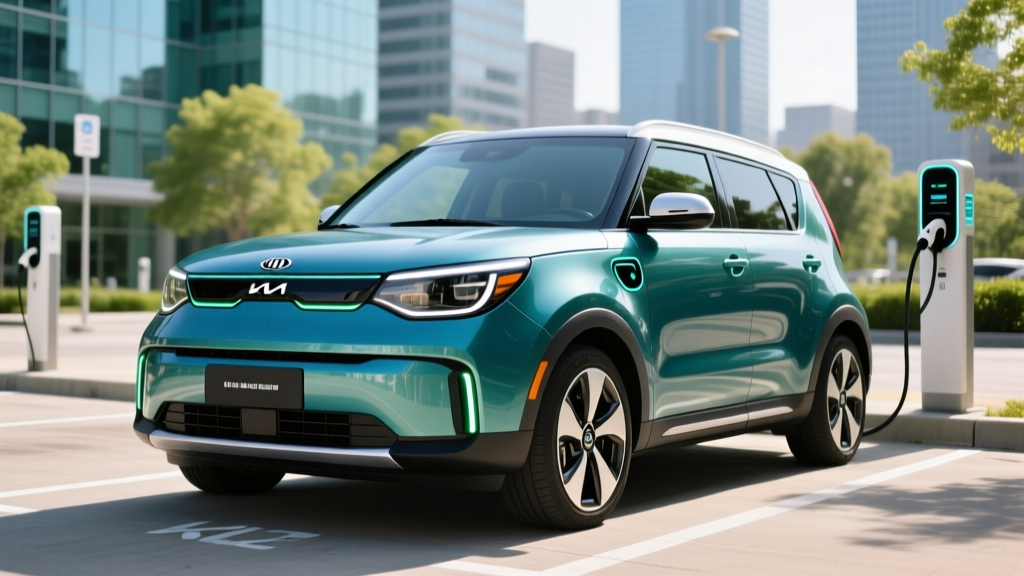
The 2026 Kia Soul EV delivers an EPA-estimated 243 miles of range from its 64.0 kWh battery, peaks at 77 kW DC fast charging (10–80% in roughly 54 minutes), and starts near $34,500 before incentives. It's a practical urban and suburban EV for buyers who prioritize interior space and upright seating over highway fast-charging speed. If you have Level 2 home charging and mostly drive under 100 miles daily, the Soul EV's operating cost advantage over the gas Soul is substantial — roughly $600–$900/year in fuel savings depending on local electricity rates. However, its relatively modest DC charging speed and front-wheel-drive layout make it less ideal for frequent long road trips or harsh-winter climates without careful planning.
Range, Battery, and Real-World Efficiency
The 2026 Kia Soul EV carries a 64.0 kWh usable battery pack using NMC (nickel-manganese-cobalt) chemistry. The EPA rates it at 243 miles of combined range, with an efficiency rating of approximately 120 MPGe combined (28 kWh/100 miles). Those are strong numbers for a boxy crossover — the aerodynamic penalty of the Soul's upright shape shows more at highway speeds than in city driving.
Real-World Range Expectations
EPA sticker: 243 miles
Real-world highway (70 mph, moderate temps): ~195–215 miles
Cold weather (below 30°F, city/highway mix): ~160–185 miles
Warm-weather city driving with regen: ~240–260 miles
The Soul EV's regenerative braking system recovers meaningful energy in stop-and-go traffic, which is why city range often meets or exceeds the EPA figure. Highway range suffers because the tall, flat-fronted body pushes more air than a sleek sedan or low crossover. In sustained cold weather, expect a 25–35% range reduction — this is typical for NMC packs without an aggressive heat-pump preconditioning strategy.
According to fueleconomy.gov, the Soul EV's combined efficiency puts it ahead of many similarly sized electric crossovers, though it trails more aerodynamic competitors like the Hyundai Ioniq 5 and Tesla Model Y in highway-specific efficiency.
Charging Speed: Home and DC Fast Charging
Understanding charging speed is critical for any first-time EV buyer. Here's the breakdown — and why the Soul EV's charging profile matters for your driving patterns.
kW vs kWh — the essential distinction: kW (kilowatts) measures charging power — how fast energy flows into the battery. kWh (kilowatt-hours) measures battery capacity — how much energy the battery holds. Think of kW as the width of a hose and kWh as the size of the bucket.
| Charging Level | Power (kW) | Miles Added per Hour | Time to Full / 10–80% |
|---|---|---|---|
| Level 1 (120V household) | ~1.4 kW | ~5 mi/hr | ~46 hours (0–100%) |
| Level 2 (240V home/public) | ~7.2 kW | ~25 mi/hr | ~9 hours (0–100%) |
| DC Fast Charge (CCS) | 77 kW peak | ~200+ mi/hr (peak) | ~54 min (10–80%) |
The Soul EV's 77 kW peak DC charging rate is the area where it shows its age relative to newer competitors. Vehicles built on 800V architectures — like the Hyundai Ioniq 5 and Kia EV6 — can peak above 230 kW and complete a 10–80% charge in 18 minutes. The Soul EV's 54-minute fast-charge time means road trips require more patience and planning.
The charge curve also tapers noticeably above 60% state of charge (SoC). You'll see the full 77 kW only in the 10–40% range; from 60–80%, speeds typically drop to 40–50 kW. This is normal for NMC chemistry managed conservatively, but it's worth understanding before you plan a multi-stop road trip.
Home charging reality: A Level 2 home charger is strongly recommended for the Soul EV. A full overnight charge at 7.2 kW takes about 9 hours — perfectly suited for daily driving cycles. Budget $500–$1,500 for Level 2 equipment and professional installation, depending on whether your electrical panel needs an upgrade. Always get a quote from a licensed electrician before purchasing hardware.
EV vs Gas vs Hybrid: What's the Real Comparison?
The Kia Soul is also sold as a conventional gas vehicle. Kia does not currently offer a Soul hybrid in the US market. Here's how the EV stacks up against the gas Soul on the metrics that matter.
| Specification | Soul EV (Electric) | Soul Gas (2.0L I4) |
|---|---|---|
| EPA Range / Tank Range | 243 mi | ~370 mi (14.3 gal tank) |
| Efficiency | 120 MPGe / 28 kWh/100mi | 29 MPG combined |
| Annual Fuel/Energy Cost* | ~$550–$700 | ~$1,500–$1,800 |
| Horsepower | 201 hp | 147 hp |
| 0–60 mph | ~7.0 sec | ~9.2 sec |
| Base MSRP (approx.) | $34,500 | $22,500 |
| Maintenance Cost (annual avg) | ~$200–$350 | ~$600–$900 |
| Federal Tax Credit Eligibility | Potential up to $7,500† | None |
*Annual fuel/energy cost based on 15,000 miles/year. EV cost assumes $0.14/kWh national average; gas cost assumes $3.50/gallon. Your local rates may vary significantly.
†Federal tax credit eligibility depends on MSRP caps, buyer income limits, battery component sourcing, and critical mineral requirements under IRS §30D. See IRS.gov for current-year rules. Always consult a tax professional.
The Soul EV is roughly $12,000 more expensive at base MSRP, but the annual fuel savings of $800–$1,100 and maintenance savings of $300–$550 narrow the gap over time. If you qualify for the full federal credit, the effective price difference drops to roughly $4,500 — which the operating-cost savings can close within 3–4 years of typical driving.
Total Ownership Cost: 5-Year Breakdown
EV ownership economics depend heavily on your driving patterns, electricity costs, and whether you can charge at home. Here's a realistic 5-year projection assuming 15,000 miles/year, home Level 2 charging at $0.14/kWh, and no major battery issues.
| Cost Category | Soul EV | Gas Soul |
|---|---|---|
| Purchase Price (base, before incentives) | $34,500 | $22,500 |
| Federal Tax Credit (estimated) | −$3,750 to −$7,500† | $0 |
| Fuel / Energy (5 years) | $2,750–$3,500 | $7,500–$9,000 |
| Maintenance (5 years) | $1,000–$1,750 | $3,000–$4,500 |
| Insurance (5 years, avg) | $7,500–$9,000 | $6,000–$7,500 |
| Home Charger Install (one-time) | $500–$1,500 | $0 |
| Estimated 5-Year Total | $42,000–$49,000 | $39,000–$43,500 |
Key takeaways from this breakdown:
- Insurance is higher for EVs — typically 15–25% more than gas equivalents due to higher repair costs and parts pricing. Get quotes before purchasing.
- Maintenance is genuinely lower — no oil changes, no transmission fluid, no spark plugs, fewer brake replacements (regen braking preserves pads).
- Home charging access is the single biggest economic variable. If you rely solely on DC fast charging at $0.35–$0.50/kWh, your energy costs could double or triple, erasing much of the EV advantage.
- Tax credit eligibility is not guaranteed. The §30D credit has income caps ($150K single / $300K joint for new vehicles), MSRP caps ($55K for cars/$80K for SUVs/trucks), and strict battery-sourcing requirements that change annually. Verify your eligibility on IRS.gov before counting on the credit.
Common Misconceptions — Myth vs Fact
| Myth | Fact |
|---|---|
| "EV batteries need replacing every few years." | Kia covers the Soul EV battery with a 10-year/100,000-mile warranty against degradation below 70% capacity. NMC batteries in modern thermal-managed packs typically lose 10–15% capacity over 8–10 years based on industry data. |
| "The Soul EV can road-trip just like a gas car." | With 243 miles of EPA range and a 54-minute 10–80% DC fast charge, road trips are possible but require planning around CCS charging stations and longer stops. Highway range drops to ~200 miles at 70+ mph. |
| "I don't need a home charger — public charging is fine." | Public DC fast charging costs 2–4x more per kWh than home electricity and adds wear to the battery from repeated high-power sessions. Home Level 2 charging is the economic backbone of EV ownership. |
| "The $7,500 tax credit applies to everyone." | The §30D credit has buyer income caps, vehicle MSRP caps, battery-sourcing requirements, and point-of-sale transfer rules. Many buyers qualify for partial credit or none at all. Check current-year IRS rules. |
| "EVs don't work in cold climates." | EVs function in cold weather, but range drops 25–35% due to battery chemistry and cabin heating demands. Preconditioning while plugged in mitigates this. If you live where winters are consistently below 20°F, plan for reduced range and consider whether a PHEV might better suit your needs. |
Interior, Tech, and Daily Livability
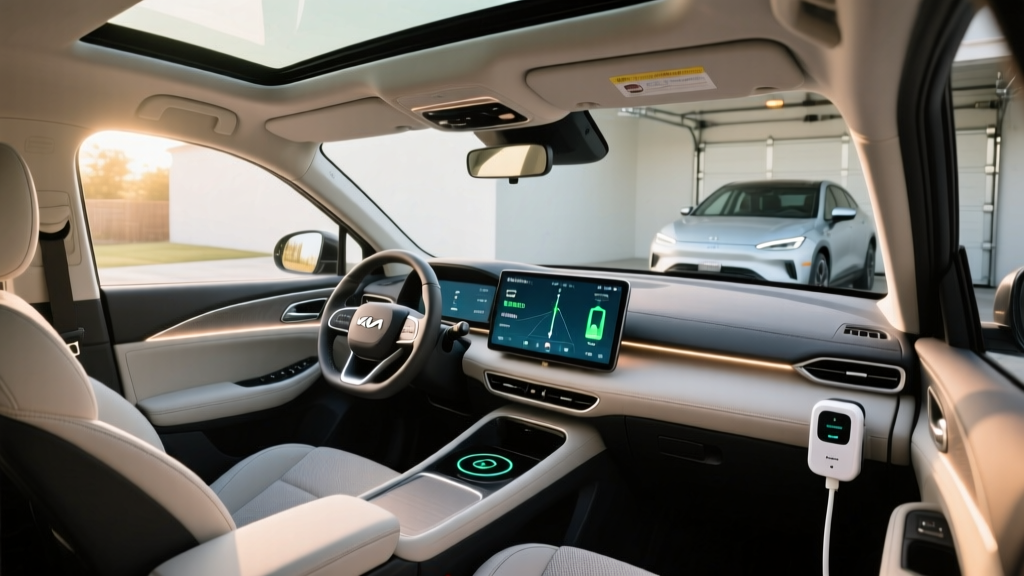
The Soul's boxy shape is its greatest practical asset. Rear headroom and cargo space beat most compact crossovers, and the upright greenhouse gives excellent outward visibility — a genuine advantage in urban driving. The 2026 model continues with a 10.25-inch infotainment touchscreen, wireless Apple CarPlay and Android Auto, and Kia's suite of ADAS (advanced driver-assistance systems) including forward collision-avoidance assist, lane-keeping assist, and adaptive cruise control.
Important SAE automation note: The Soul EV's driver-assistance features are SAE Level 2 — meaning the system can assist with steering and acceleration simultaneously, but the driver must remain fully engaged, hands on or near the wheel, eyes on the road at all times. This is not self-driving. It reduces fatigue on commutes and highways but requires constant driver supervision.
The driving experience benefits from instant electric torque: 201 hp and roughly 295 lb-ft of torque deliver confident merging and passing. The low center of gravity (battery pack under the floor) keeps body roll reasonable for a tall vehicle, though the ride quality is firm over sharp pavement imperfections.
Who Should Buy the Soul EV — Decision Framework
Choose the 2026 Kia Soul EV if:
- You have reliable Level 2 home charging (garage or driveway with 240V access)
- Your daily driving is under 100 miles round-trip
- You prioritize cargo space and easy entry/exit over sporty handling
- You live in a moderate climate or are prepared for winter range loss
- You want lower operating costs and qualify for at least a partial federal tax credit
- You rarely take road trips over 200 miles one-way
Look elsewhere if:
- You frequently drive 300+ mile highway trips and can't tolerate 45–55 minute charging stops
- You lack home charging access and your area has limited public CCS infrastructure
- You live in an extreme cold climate (sustained sub-zero temps) and need full range reliability year-round
- You need all-wheel drive — the Soul EV is front-wheel drive only
- You want the fastest possible DC charging — consider the Kia EV6 (peak 239 kW) or Hyundai Ioniq 5 (peak 240 kW) instead
Warranty and Long-Term Battery Outlook
Kia's warranty coverage is one of the brand's strongest selling points:
- Battery: 10 years / 100,000 miles (coverage against degradation below 70% of original capacity)
- Powertrain (motor, reduction gear): 10 years / 100,000 miles
- Bumper-to-bumper: 5 years / 60,000 miles
- Roadside assistance: 5 years / 60,000 miles
The 70% capacity retention threshold is standard for the industry, though some competitors (like Tesla) use the same benchmark. Real-world data from older Soul EV models suggests NMC packs with active thermal management hold up well — most owners report 5–8% degradation after 4–5 years of mixed use. Full battery replacement outside of warranty, should it ever be needed, would likely cost $8,000–$12,000 based on current parts pricing for a 64 kWh pack — but this is rare within the first 10–12 years of ownership.
Frequently Asked Questions
What is the real-world range of the 2026 Kia Soul EV?
The EPA rates the Soul EV at 243 miles combined. In real-world highway driving at 70 mph, expect roughly 195–215 miles. In cold weather below 30°F, plan for 160–185 miles. City driving with regenerative braking can match or slightly exceed the EPA figure in mild temperatures.
How long does it take to charge the Kia Soul EV at home?
On a Level 2 (240V) home charger at 7.2 kW, a full charge from empty takes approximately 9 hours. Most owners plug in nightly and wake up to a full battery — similar to charging a phone. Level 1 (120V standard outlet) adds only about 5 miles per hour and is best used as emergency backup or for very low daily mileage.
Does the Kia Soul EV qualify for the federal tax credit?
Potentially, but it depends on your specific situation. The §30D credit for new EVs requires the buyer to meet income caps, the vehicle to be under the MSRP cap, and the battery to meet critical-mineral and component-sourcing requirements that change annually. The credit can be transferred to the dealer at point of sale as a price reduction. Check current rules at IRS.gov and consult a tax professional.
Is the Kia Soul EV good for road trips?
It's capable but not ideal. The 243-mile EPA range (less at highway speeds) and 54-minute 10–80% DC fast-charge time mean longer, more frequent stops compared to gas vehicles or EVs with faster charging architectures. If you road-trip often, consider an EV with 300+ miles of range and 200+ kW peak charging, or keep a gas vehicle for long trips.
What should a first-time EV buyer know before purchasing the Soul EV?
Three things matter most: (1) Confirm you can install a Level 2 home charger — this is the foundation of convenient, affordable EV ownership. (2) Understand that EPA range is an estimate, and highway/cold-weather driving will reduce it by 15–35%. (3) Get insurance quotes before buying, as EV premiums are typically 15–25% higher than gas equivalents. If those three factors work in your favor, the Soul EV offers a smooth, quiet, low-maintenance daily driver with genuine cost savings over gas.
How does the Soul EV compare to the Kia Niro EV or Kia EV6?
The Niro EV offers similar range (~239 miles EPA) with a lower, more aerodynamic profile and slightly faster charging. The EV6 provides significantly more range (up to 310 miles EPA on Long Range RWD), much faster 800V DC charging (10–80% in ~18 minutes), and available AWD — but at a higher starting price ($42,000+). The Soul EV's advantage is its uniquely tall, spacious cabin and lower entry price. If fast charging and road-trip capability are priorities, the EV6 is the stronger choice.