Kia Niro EV Review: Mastering the Art of the Practical Daily Crossover
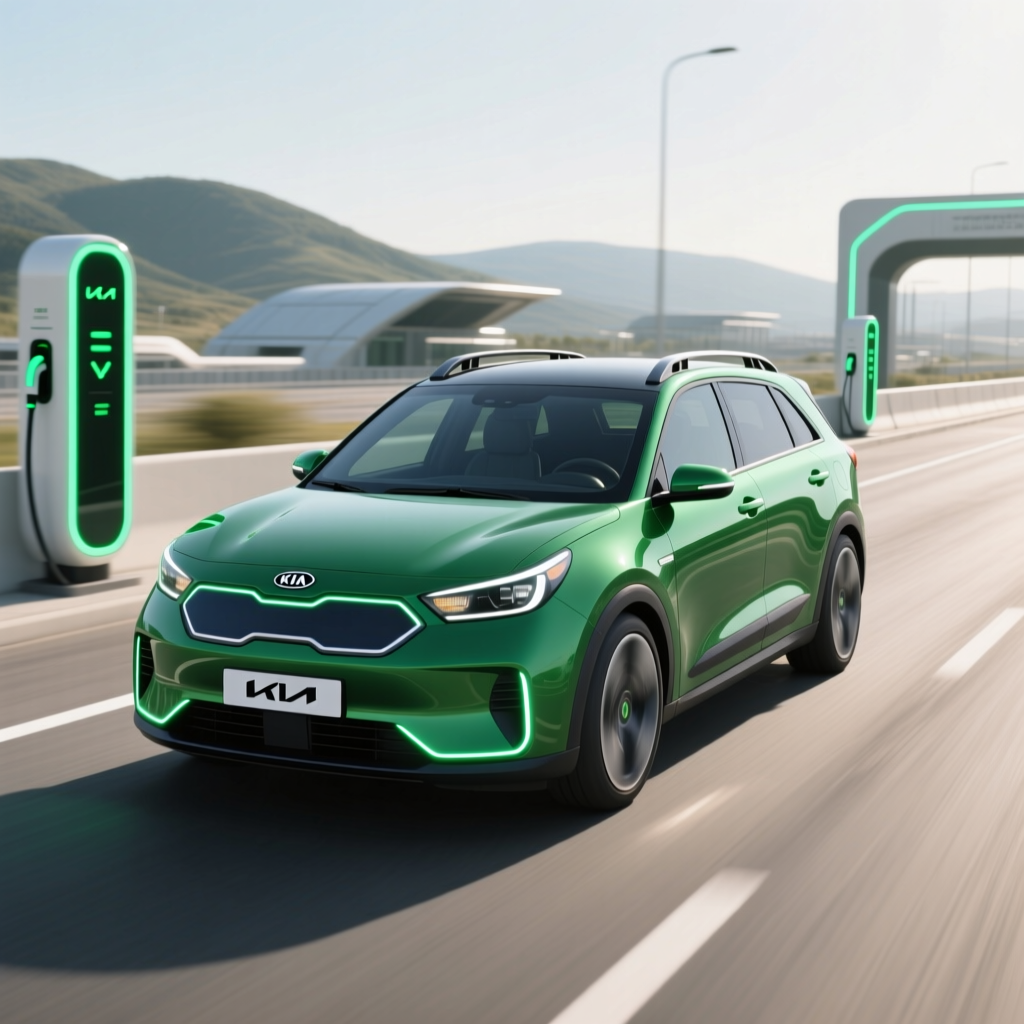
The electric vehicle market is increasingly saturated with high-performance SUVs, luxury sedans, and futuristic concept-like trucks. However, for the vast majority of drivers, the ideal electric vehicle is not a track-capable hypercar or a massive three-row hauler. It is a sensible, efficient, and highly practical crossover that excels at the mundane tasks of daily life. Enter the Kia Niro EV. Designed from the ground up to bridge the gap between a traditional hatchback and a compact SUV, the Niro EV has quietly established itself as one of the most pragmatic choices on the market. In this comprehensive review, we will explore why this vehicle continues to dominate conversations among commuters, small families, and urban dwellers looking for a reliable electric companion.
Unlike its more aggressive stablemates, the Niro EV prioritizes comfort, usability, and cargo versatility over blistering zero-to-sixty times. It is a vehicle that asks you to evaluate your actual daily driving needs rather than your weekend fantasies. Whether you are navigating tight city streets, hauling a week’s worth of groceries, or embarking on a regional road trip, the Niro EV offers a compelling package. If you are currently exploring the best EV crossovers on the market, this deep dive into the Niro EV’s real-world range, charging capabilities, interior packaging, and ownership costs will help you determine if it is the right fit for your driveway.
Real-World Range and Efficiency: Beyond the EPA Estimates
Range anxiety remains one of the most significant hurdles for prospective EV buyers, but the Kia Niro EV approaches this challenge with a highly efficient powertrain and a manageable battery size. At the heart of the current generation Niro EV is a 64.8 kWh liquid-cooled lithium-ion battery pack. According to the EPA fuel economy database, this setup yields an estimated range of 239 miles on a single charge. While this number might not break records in an era of 300-plus-mile EVs, it is a masterclass in efficiency, translating to an impressive combined rating of over 110 MPGe.
However, EPA estimates only tell part of the story. Independent real-world testing consistently reveals that the Niro EV is a range overachiever in urban and suburban environments. Thanks to aggressive regenerative braking and the stop-and-go nature of city driving, many owners report exceeding the 240-mile mark when sticking to speeds under 50 mph. The electric motor’s instant torque allows for effortless merging, while the sophisticated thermal management system ensures the battery operates in its optimal temperature window, preserving longevity and efficiency.
Highway driving tells a slightly different tale. At sustained speeds of 75 mph, the aerodynamic profile of the crossover and the lack of a multi-speed transmission result in a real-world range closer to 200 miles. This is entirely typical for the segment, but it underscores the importance of understanding your commute. For the daily driver covering 30 to 50 miles round-trip, the Niro EV requires charging only once or twice a week. Furthermore, the available heat pump system is a game-changer for those in colder climates. By scavenging ambient heat and waste heat from the powertrain, the heat pump drastically reduces the energy drawn from the main battery to warm the cabin, preserving vital range during winter months.
Charging Speed and Infrastructure: Managing Expectations
When evaluating an electric vehicle, charging speed is just as critical as total range. The Kia Niro EV utilizes a 400-volt electrical architecture, which dictates its charging capabilities. On a DC fast charger, the Niro EV peaks at a charging rate of approximately 77 kW. While this figure might seem pedestrian when compared to the 800-volt, 250 kW capabilities of vehicles like the Hyundai Ioniq 5 or the Kia EV6 (as detailed in our Kia EV6 vs. Niro EV comparison), context is essential. Because the Niro’s battery is relatively small at 64.8 kWh, a 77 kW peak still allows for a 10% to 80% charge in roughly 45 minutes under optimal conditions.
The charging curve is remarkably flat and predictable, meaning you do not experience the severe tapering off that plagues some competitors until you push past the 80% mark. For road trippers, this means a quick half-hour stop for a coffee and a stretch is enough to add 100 miles of range, making regional travel entirely stress-free.
Where the Niro EV truly shines is in Level 2 home charging. Equipped with an 11 kW onboard charger, the vehicle can replenish its battery from empty to full in just over seven hours when connected to a 48-amp Level 2 wallbox. This aligns perfectly with the average overnight sleep cycle, ensuring you wake up to a full battery every single morning. If you are considering making the switch to home charging, our home charger installation guide covers everything you need to know about setting up your garage for optimal daily use.
Interior Space, Tech, and Cargo Practicality: A Masterclass in Packaging
The true selling point of the Kia Niro EV is its interior packaging. Kia has managed to carve out an astonishing amount of usable space from a relatively compact footprint. Behind the rear seats, the cargo area offers 23.9 cubic feet of volume. This is significantly more than many traditional hatchbacks and rivals some midsize SUVs. Fold the 60/40 split rear seats down, and the cargo capacity expands to a massive 53.0 cubic feet, creating a nearly flat load floor that can easily swallow bicycles, flat-pack furniture, or camping gear.
Beneath the cargo floor, Kia has integrated a clever under-floor storage compartment. This is the perfect place to store charging cables, tire inflator kits, and emergency triangles, keeping the main cargo area free of clutter. It is worth noting that unlike some dedicated EV platforms that offer a front trunk (frunk), the Niro EV’s front hood houses traditional power electronics, leaving only a small, shallow cubby near the windshield washer fluid reservoir for storing a mobile charging cable.
Up front, the cabin is a refreshing blend of modern technology and ergonomic common sense. The dashboard is dominated by a curved display housing dual 10.25-inch screens for the instrument cluster and infotainment system. The UI is snappy, visually appealing, and supports seamless smartphone integration via Apple CarPlay & Android Auto. However, the real triumph of the Niro’s interior is its retention of physical controls. In an industry obsessed with hiding climate and volume controls inside convoluted touch menus, Kia has wisely provided physical knobs and buttons for temperature adjustment and audio volume. This makes daily operation vastly safer and more intuitive while driving.
Additionally, the Niro EV offers a Vehicle-to-Load (V2L) feature via an available indoor and outdoor adapter. This allows the vehicle’s battery to act as a massive power bank, capable of running laptops, coffee makers, or even small power tools at a campsite or during a home power outage. For families needing even more room, we recommend checking out our curated list of the top family-friendly EVs.
Driving Dynamics and Daily Comfort: The Commuter’s Dream
The Kia Niro EV is not designed to carve canyons or win drag races; it is designed to make the daily commute as serene and effortless as possible. Power is delivered exclusively to the front wheels via a single electric motor producing 201 horsepower and 291 lb-ft of torque. This results in a zero-to-sixty mph sprint in the low seven-second range. While not sports-car quick, the instant availability of torque makes the Niro EV feel remarkably peppy off the line and exceptionally confident when executing highway overtakes.
The suspension tuning is heavily biased toward comfort. Utilizing a MacPherson strut front setup and a multi-link rear suspension, the Niro EV absorbs potholes, speed bumps, and expansion joints with a maturity that belies its price point. The cabin is remarkably well-insulated from wind and road noise, a significant improvement over earlier generations of compact EVs. The steering is light and communicative enough for city parking, though it lacks the weighted feedback desired by driving enthusiasts.
One of the standout features for daily driving is the adjustable regenerative braking system, controlled via paddle shifters behind the steering wheel. Drivers can toggle between multiple levels of regen, from a coasting mode that mimics a traditional internal combustion engine, all the way up to a true one-pedal driving mode that brings the vehicle to a complete stop without ever touching the brake pedal. Once mastered, one-pedal driving drastically reduces driver fatigue in heavy traffic.
Safety and driver assistance are also paramount. The Niro EV comes standard with a comprehensive suite of Advanced Driver Assistance Systems (ADAS), including Highway Driving Assist, which combines adaptive cruise control with lane centering. This system is incredibly smooth and reliable, taking the edge off long highway stints. The IIHS safety ratings consistently highlight the Niro’s robust crashworthiness and effective collision avoidance technologies, providing peace of mind for families and solo commuters alike.
Ownership Costs and Value Proposition: The Long-Term Math
Purchasing an electric vehicle is a long-term financial commitment, and the Kia Niro EV presents a highly compelling value proposition when you look beyond the initial sticker price. Kia’s industry-leading warranty coverage is a massive draw. The vehicle is backed by a 10-year/100,000-mile limited powertrain warranty, which explicitly includes the high-voltage battery. This extensive coverage virtually eliminates the fear of catastrophic battery degradation or expensive out-of-warranty replacements that plague early adopters of used EVs.
Maintenance costs for the Niro EV are a fraction of those associated with gas-powered crossovers. Without an internal combustion engine, there are no oil changes, no spark plugs, no timing belts, and no exhaust system repairs. Furthermore, the heavy use of regenerative braking significantly extends the life of the mechanical friction brakes, often allowing original brake pads to last well past 100,000 miles. Routine maintenance is largely limited to cabin air filter replacements, tire rotations, and fluid top-offs.
When factoring in the cost of electricity versus gasoline, the savings compound rapidly. For drivers with access to home charging, especially those on time-of-use plans that allow for cheap overnight charging, the cost per mile can drop to mere pennies. While federal and state tax incentives fluctuate based on manufacturing locations and local legislation, prospective buyers should always consult current incentive databases to see how rebates can lower the effective purchase price. Combined with strong residual values and low maintenance, the total cost of ownership for the Niro EV frequently undercuts similarly priced gas-powered competitors over a five-year period.
Pros and Cons: The Verdict
To summarize the Kia Niro EV’s position in the market, here is a quick breakdown of its strongest attributes and its most notable compromises.
- Pros:
- Exceptional cargo space and versatile interior packaging
- Highly efficient powertrain with excellent real-world city range
- Physical buttons for climate and audio controls
- Standard heat pump for winter efficiency
- Industry-leading 10-year/100,000-mile battery warranty
- Smooth, comfortable ride quality ideal for commuting
- Cons:
- DC fast charging speeds are slower than 800V competitors
- No front trunk (frunk) for additional storage
- Front-wheel-drive only; no all-wheel-drive option available
- Highway range drops noticeably at speeds above 70 mph
Kia Niro EV Key Specifications
| Specification | Details |
|---|---|
| Battery Capacity | 64.8 kWh (Liquid-Cooled) |
| Motor Type | Single Permanent Magnet Synchronous (FWD) |
| Horsepower | 201 hp |
| Torque | 291 lb-ft |
| EPA Estimated Range | 239 miles |
| DC Fast Charging Peak | ~77 kW (10-80% in ~45 mins) |
| Cargo Volume (Seats Up) | 23.9 cu. ft. |
| Cargo Volume (Seats Folded) | 53.0 cu. ft. |
| Warranty | 10-Year / 100,000-Mile Battery & Powertrain |
Frequently Asked Questions
Is the Kia Niro EV good for long road trips?
Yes, the Niro EV is entirely capable of long road trips, provided you plan your charging stops. With a real-world highway range of around 200 miles, you will need to stop roughly every two to two-and-a-half hours to stretch your legs and charge. Because the 10% to 80% DC fast charging session takes about 45 minutes, it aligns well with meal breaks. The comfortable seating, excellent ADAS features, and quiet cabin make highway miles pass effortlessly, though it is best suited for regional travel rather than cross-country marathons.
How much cargo can the Niro EV actually hold?
The cargo capacity is one of the Niro EV’s greatest strengths. With the rear seats in use, you have 23.9 cubic feet of space, which is easily enough for a week of groceries, multiple large suitcases, or a double stroller. When you fold the 60/40 split rear seats flat, the space expands to 53.0 cubic feet. The load floor is relatively low and flat, making it easy to slide in heavy items, and the under-floor storage compartment is perfect for hiding charging cables and valuables out of sight.
Does the Niro EV have a front trunk (frunk)?
No, the Kia Niro EV does not have a traditional front trunk. Because the vehicle shares its underlying architecture with hybrid and plug-in hybrid variants, the space under the hood is occupied by the electric motor, power inverter, and other high-voltage components. There is a very small, shallow plastic cubby near the base of the windshield that can hold a mobile charging cable or a small ice scraper, but it is not suitable for storing luggage or groceries.
How does the Niro EV compare to the Hyundai Kona Electric?
The Niro EV and the Hyundai Kona Electric are corporate cousins that share similar powertrains and battery capacities, but they cater to slightly different needs. The Niro EV offers a more mature, upright crossover design with significantly more rear legroom and cargo space, making it the better choice for small families. The Kona Electric often features slightly sportier styling and a more aggressive driving tune, but it sacrifices some interior volume. If practicality and passenger comfort are your top priorities, the Niro EV is the superior daily driver.
What is the real-world winter range of the Niro EV?
Winter weather inevitably impacts EV range due to the energy required to heat the cabin and maintain battery temperatures. However, the Niro EV is equipped with a highly efficient heat pump system and a battery heater. In freezing temperatures, owners typically report a range reduction of 15% to 25%, bringing the real-world winter range to approximately 170 to 190 miles. Utilizing the heated seats and heated steering wheel—which draw significantly less power than the cabin air heater—can help mitigate this loss and preserve maximum range during cold commutes.