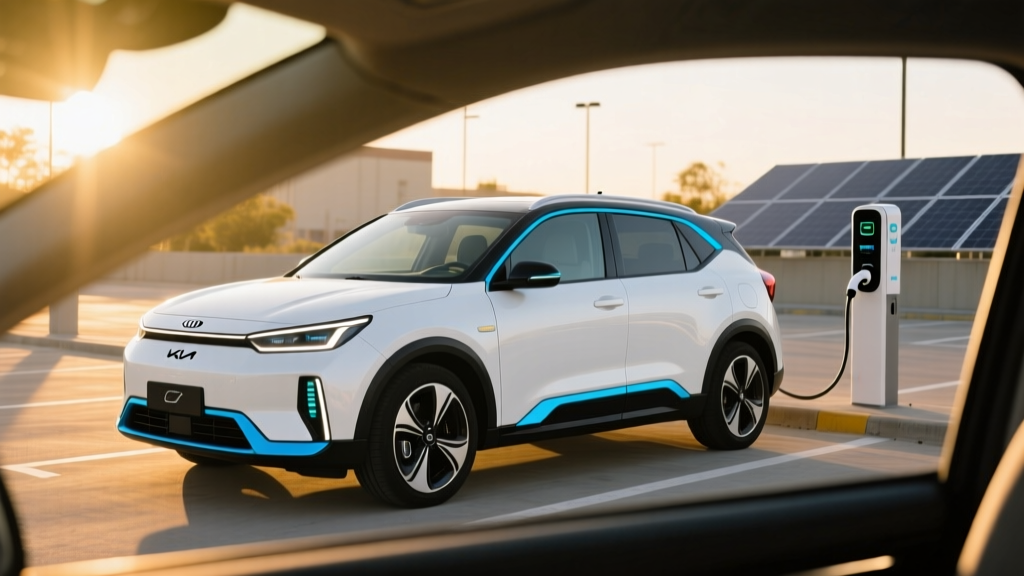
Quick Answer: Is the Kia Niro Electric Car Right for You?
The 2026 Kia Niro EV delivers an EPA-estimated 239 miles of range from its 64.8 kWh battery, starts around $39,600, and costs roughly $600–$800 less per year to fuel than a comparable gas crossover if you charge mostly at home. It's a strong pick for commuters and small families with Level 2 home charging access, but its 85 kW DC fast-charge peak means road-trip stops take longer than rivals like the Hyundai Ioniq 5 or Tesla Model Y. If your daily driving stays under 150 miles and you can charge overnight, the Niro EV is one of the most practical and affordable electric crossovers on the market.
Range, Battery, and Real-World Efficiency
The 2026 Kia Niro EV uses a 64.8 kWh (usable) lithium-ion battery pack with NMC (nickel-manganese-cobalt) chemistry. The EPA rates it at 239 miles of combined range for the Wind trim and 228 miles for the GT-Line, which adds larger wheels and sportier tuning that slightly reduce efficiency.
Those numbers are competitive for the sub-$45,000 electric crossover segment, but EPA estimates assume mixed driving at moderate temperatures. Here's what to expect in the real world:
Real-World Range Expectations
- City/commute (mild weather): 240–260 miles — regenerative braking recaptures energy in stop-and-go traffic.
- Highway (70 mph, mild weather): 200–220 miles — EVs lose efficiency at sustained high speeds.
- Cold weather (below 32°F): 165–195 miles — battery chemistry slows and cabin heating draws significant power. The Niro EV uses a heat pump on higher trims, which helps, but expect 20–30% range loss in deep cold.
- Towing or heavy cargo: Not rated for towing; heavy loads reduce range by roughly 5–10%.
Efficiency lands at approximately 28–30 kWh per 100 miles, or around 113 MPGe combined according to fueleconomy.gov. That translates to roughly 3.3–3.6 miles per kWh — a solid figure for a crossover, though lighter EVs like the Chevrolet Bolt EUV can edge slightly higher.
| Spec | Wind Trim | GT-Line Trim |
|---|---|---|
| EPA Range | 239 mi | 228 mi |
| Battery (usable) | 64.8 kWh, NMC | 64.8 kWh, NMC |
| Motor Output | 201 hp / 188 lb-ft | 201 hp / 188 lb-ft |
| 0–60 mph | ~7.1 sec | ~7.1 sec |
| DC Fast Charge Peak | 85 kW | 85 kW |
| 10–80% DC Charge | ~43 min | ~43 min |
| Level 2 (AC) Charge | 11 kW | 11 kW |
| Level 2 0–100% Time | ~7 hours | ~7 hours |
| Connector | CCS1 (NACS adapter available) | CCS1 (NACS adapter available) |
| Base MSRP | $39,600 | $44,600 |
| Powertrain Warranty | 10 yr / 100,000 mi | 10 yr / 100,000 mi |
| Battery Warranty | 10 yr / 100,000 mi (≥70% capacity) | 10 yr / 100,000 mi (≥70% capacity) |
Charging Speed and Infrastructure Reality
The Niro EV's 85 kW peak DC fast-charge rate is where practical ownership demands honesty. Many competitors in 2026 — the Hyundai Ioniq 5 (240 kW), Tesla Model Y (250 kW), Kia EV6 (240 kW) — charge at roughly three times the speed. On a road trip, the Niro EV takes approximately 43 minutes to go from 10% to 80% at a compatible DC fast charger, versus 18–22 minutes for those rivals.
That said, most EV charging happens at home. With a Level 2 home charger (240V, 48-amp circuit), the Niro EV replenishes its full 64.8 kWh battery in about 7 hours — easily overnight. If you're only plugging in a standard 120V outlet (Level 1), expect roughly 3–4 miles of range per hour of charging, which is only viable for very low daily mileage.
| Level | Power | Miles Added Per Hour | Typical Use Case |
|---|---|---|---|
| Level 1 (120V) | ~1.4 kW | 3–4 mi/hr | Emergency/top-up only |
| Level 2 (240V, 48A) | 11 kW | ~32 mi/hr | Daily home charging |
| DC Fast Charge | Up to 85 kW | ~150 mi in 30 min (tapers above 80%) | Road trips |
Charging-curve reality: The 85 kW peak only holds between roughly 10–55% state of charge. Above 80%, the rate drops significantly to protect the battery — often below 30 kW. This is normal for all EVs but matters if you're tempted to charge past 80% on a road trip; plan to stop at 80% and move on.
Cost Breakdown: Niro EV vs. Gas Crossover
The purchase price of the Niro EV is higher than a gas-only Kia Seltos or Hyundai Kona, but operating costs tell a different story. Here's a five-year comparison assuming 15,000 miles per year, $3.50/gallon gas, and $0.14/kWh home electricity:
| Category | Niro EV (Wind) | Kia Seltos (Gas, AWD) |
|---|---|---|
| Base MSRP | $39,600 | $28,500 |
| Federal Tax Credit (§30D) | Up to $3,750* | $0 |
| Effective Purchase Price | ~$35,850 | $28,500 |
| Fuel/Energy (5 yr) | ~$3,150 | ~$8,750 |
| Maintenance (5 yr) | ~$1,200 | ~$3,500 |
| Insurance (5 yr est.) | ~$9,000 | ~$7,500 |
| Total 5-Year Cost (excl. depreciation) | ~$49,200 | ~$48,250 |
*The Niro EV's federal tax credit eligibility under IRS §30D depends on battery component sourcing and critical-mineral requirements that change annually. For 2026, the Niro EV may qualify for a partial credit of $3,750 (critical minerals only) or the full $7,500 if sourcing requirements are fully met. Income caps ($150K single / $300K joint) and the $55,000 MSRP cap for SUVs also apply. Always verify current eligibility at irs.gov or with a tax professional before purchasing.
The numbers show near-parity over five years when factoring in fuel and maintenance savings, and the gap widens further if gas prices rise or you have access to cheaper electricity (solar, time-of-use rates below $0.10/kWh). EV insurance premiums run 10–20% higher on average — a real cost often overlooked in EV marketing.
EV vs. Hybrid: Which Niro Makes Sense?
Kia sells the Niro in three powertrains: the Niro EV (fully electric), Niro Hybrid (HEV), and Niro Plug-In Hybrid (PHEV). Choosing between them depends on your charging access and driving patterns.
| Spec | Niro EV | Niro PHEV | Niro HEV |
|---|---|---|---|
| EPA Electric Range | 239 mi | ~33 mi | 0 mi (no plug) |
| Fuel Economy (gas) | N/A | ~48 MPG (gas mode) | ~53 MPG combined |
| Starting MSRP | $39,600 | $35,600 | $29,100 |
| Home Charging Needed? | Yes (strongly recommended) | Recommended for EV mode | No |
| Fed. Tax Credit | Up to $3,750–$7,500 | Up to $3,750–$7,500 | None |
| Best For | Home chargers, commutes <150 mi/day | Short commutes + road trips | No charging access, max MPG |
The PHEV is the pragmatic middle ground: 33 miles of electric-only range covers most commutes, and the gas engine eliminates range anxiety on road trips. But if you already have home charging and your daily driving is predictable, the Niro EV eliminates gasoline entirely and has fewer moving parts to maintain.
First-Time EV Buyer: What to Know Before You Buy
Common Misconceptions vs. Facts
| Myth | Fact |
|---|---|
| "The battery will need replacing in 5 years." | Kia warranties the Niro EV battery for 10 years/100,000 miles at ≥70% capacity. Industry data shows NMC batteries typically retain 85–90% capacity at 100,000 miles with normal use. |
| "I can't take road trips." | You can, but plan 40–45 minute charge stops every ~150–180 highway miles. Apps like PlugShare and A Better Routeplanner make this manageable. |
| "Charging at home is expensive to install." | A Level 2 home charger installation averages $500–$2,000 depending on electrical panel proximity. A 200-amp panel upgrade adds $1,500–$3,000 if needed. |
| "I'll save $7,500 on taxes." | Federal credit eligibility is complex — battery sourcing, buyer income, and MSRP caps all apply. Verify before purchasing. |
| "EVs are worse in winter." | Range drops 20–30% in deep cold, but EVs start instantly (no cold cranking), and preconditioning while plugged in preserves range. |
Home charging access is the single biggest factor in EV satisfaction. If you can install a Level 2 charger in your garage or driveway, the Niro EV is a seamless daily driver — plug in at night, wake up to a full battery. If you live in an apartment without charging or rely entirely on public infrastructure, the Niro EV's 85 kW charge speed makes public charging noticeably slower than competitors, and you may want to consider the PHEV or a faster-charging EV instead.
Decision Framework: Should You Buy the Kia Niro EV?
Choose the Niro EV If:
- You have Level 2 home charging access (or can install it).
- Your daily driving is under 150 miles round-trip.
- You rarely take road trips over 200 miles — or don't mind 40-minute charge stops.
- You want a practical, comfortable crossover with strong warranty coverage and competitive pricing.
- You value low running costs and minimal maintenance over peak performance.
Look Elsewhere If:
- You frequently drive 300+ mile road trips and want faster charging — consider the Hyundai Ioniq 5, Kia EV6, or Tesla Model Y.
- You lack home charging access and your local public chargers are sparse — consider the Niro PHEV or Niro HEV.
- You live in extreme cold (regularly below 10°F) and need 250+ miles of real-world winter range — consider a larger-battery EV like the Ford Mustang Mach-E Extended Range.
- You need towing capability — the Niro EV is not rated for towing.
Frequently Asked Questions
Does the 2026 Kia Niro EV qualify for the federal tax credit?
It may qualify for a partial ($3,750) or full ($7,500) credit under IRS §30D, depending on current battery sourcing and critical-mineral requirements. Buyer income must be below $150,000 (single) or $300,000 (joint), and the MSRP must be under $55,000 for SUVs. The credit can be transferred to the dealer at point of sale as an upfront discount. Check the latest eligibility at fueleconomy.gov before purchasing.
How long does it take to charge the Niro EV at home?
On a Level 2 (240V, 11 kW) home charger, a full 0–100% charge takes approximately 7 hours. Most owners plug in overnight and wake up fully charged. On a standard 120V outlet, it would take over 40 hours — only practical for emergency top-ups.
What is the real highway range of the Niro EV?
Expect roughly 200–220 miles at 70 mph in mild weather. In cold weather (below freezing), highway range can drop to 165–195 miles due to battery resistance and cabin heating demands.
Is the Niro EV good for road trips?
It's workable but not ideal. The 85 kW peak charge rate means 10–80% stops take ~43 minutes, compared to 18–22 minutes for faster-charging rivals. If you take frequent road trips, plan carefully and expect longer stops.
How does the Niro EV compare to the Kia EV6?
The EV6 rides on Kia's dedicated E-GMP platform with 800V architecture, enabling 240 kW DC charging and a longer range (up to 310 miles EPA). It's also more expensive, starting around $42,600. The Niro EV is a value-oriented alternative for buyers who prioritize affordability and daily commuting over road-trip speed.
What maintenance does the Niro EV require?
Far less than a gas car. No oil changes, spark plugs, or transmission fluid. Expect periodic cabin air filter replacement, brake fluid checks, tire rotation, and windshield washer fluid. Regenerative braking significantly extends brake pad life — many EV owners report original pads lasting 80,000+ miles.