The Short Answer on the Honda CR-V EV
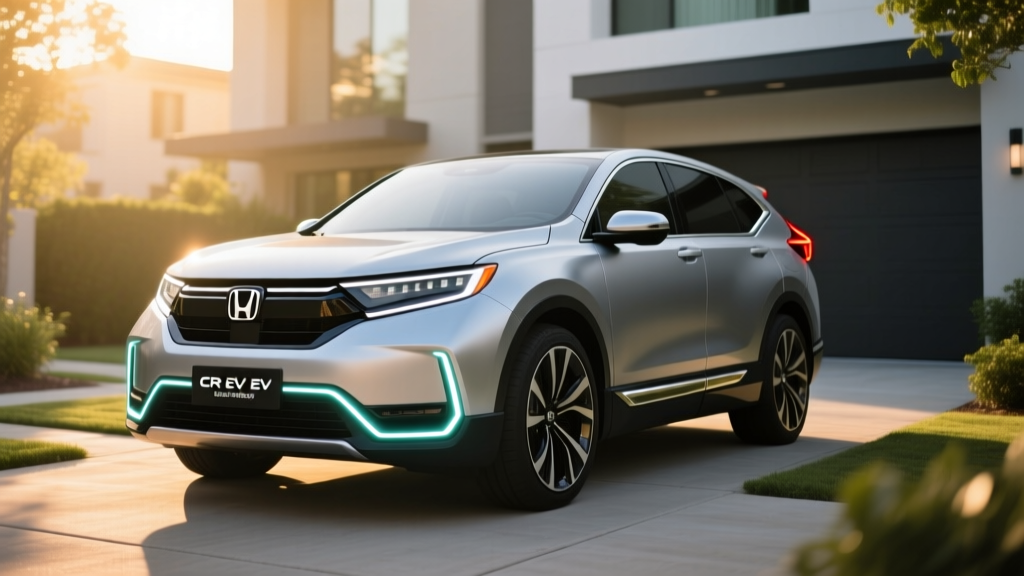
As of early 2026, Honda does not sell a fully electric CR-V. The CR-V lineup includes a conventional gas model and the CR-V Hybrid (a standard hybrid, not a plug-in). Honda has announced a new EV series built on its dedicated "0 Series" EV platform, with production models expected later in the decade, but no CR-V-badged BEV is currently available to purchase. If you want an electrified Honda SUV today, the CR-V Hybrid (starting around $35,395, EPA-rated up to 40 MPG combined) is the closest option. If you need a plug-in or full EV in this size class, you'll need to look at competitors like the Toyota RAV4 Prime (PHEV), Hyundai Tucson PHEV, or EVs like the Hyundai Ioniq 5 or Tesla Model Y.
What Honda Has Announced for Future EVs
Honda's "0 Series" EV initiative, unveiled at CES 2024, outlines a new generation of battery-electric vehicles built on a dedicated skateboard platform. The company has committed to launching global EV models starting around 2026, with North American production planned at its Ohio EV Hub. However, Honda has not confirmed a CR-V-sized electric SUV by name, and no EPA range, battery capacity, or pricing figures have been published for a CR-V EV specifically.
What we do know:
- Honda's Ohio EV Hub is targeting annual production of 2 million EVs globally by 2030 across the Honda brand.
- The 0 Series platform promises thinner batteries, lighter weight, and aerodynamic designs compared to current EVs like the Prologue.
- The current Honda Prologue (a midsize SUV built on GM's Ultium platform) remains Honda's only all-electric SUV available in the U.S. for 2025–2026, with an EPA range of up to 296 miles and a starting MSRP near $47,400.
If Honda does eventually launch a compact electric SUV wearing the CR-V nameplate, it would likely compete in the 250–300 mile EPA range bracket with pricing in the low-to-mid $40,000s — but all of that remains speculative until Honda publishes official specs.
The Electrified CR-V You Can Buy Today: The Hybrid
The 2026 Honda CR-V Hybrid pairs a 2.0-liter Atkinson-cycle four-cylinder engine with a two-motor hybrid system producing a combined 204 horsepower. It is a conventional hybrid (HEV), not a plug-in — meaning there is no electric-only driving range and no charging port. The battery is small (roughly 1.1 kWh) and serves only to assist the gas engine and capture regenerative braking energy.
| Spec | CR-V Gas (EX/L) | CR-V Hybrid (Sport/Sport Touring) |
|---|---|---|
| Powertrain | 1.5L Turbo I4 | 2.0L I4 + 2-motor hybrid |
| Horsepower (combined) | 190 hp | 204 hp |
| EPA MPG (city/hwy/combined) | 29 / 36 / 32 | 43 / 36 / 40 (FWD) |
| Drivetrain | FWD or AWD | FWD or AWD |
| Starting MSRP (approx.) | $33,395 | $35,395 |
| Electric-only range | None | None (HEV, not PHEV) |
| Federal tax credit (§30D) | Not eligible | Not eligible (not a plug-in) |
The hybrid's advantage is straightforward: roughly 8 more MPG combined than the gas model, translating to about $300–$450 per year in fuel savings for a driver covering 15,000 miles annually at $3.50/gallon. The $2,000 MSRP premium over the gas EX-L trim pays for itself in roughly 4–6 years depending on driving volume and local fuel prices. Source: fueleconomy.gov.
How a Future CR-V EV Would Compare to the Hybrid
Even without confirmed CR-V EV specs, we can model what a battery-electric compact SUV in this class typically delivers and compare it against the CR-V Hybrid on cost and practicality. The figures below use the Hyundai Ioniq 5 (a representative compact EV crossover) as a stand-in for what a CR-V EV might offer.
| Cost Factor | CR-V Hybrid (40 MPG) | Compact EV (~110 MPGe, home charging) |
|---|---|---|
| Annual fuel/energy (15,000 mi) | ~$1,313 (gas at $3.50/gal) | ~$625 (electricity at $0.16/kWh) |
| Annual maintenance | ~$600 (oil, filters, brakes) | ~$300 (no oil, regen saves brakes) |
| Annual insurance (est.) | ~$1,600 | ~$1,900 (EVs typically 15–20% more) |
| Estimated annual total | ~$3,513 | ~$2,825 |
| 5-year running cost | ~$17,565 | ~$14,125 |
The EV saves roughly $3,400 over five years in running costs — but only if you have reliable home charging access and your electricity rates are near the national average. Public DC fast charging at $0.40–$0.60/kWh erases much of that advantage, pushing per-mile energy costs close to or above gasoline.
Real-World Ownership Considerations Before You Wait
If you're considering holding off on a purchase in hopes of a CR-V EV, weigh these practical factors against your current situation:
Home Charging Access
The economics of EV ownership depend heavily on Level 2 home charging. A typical 240V / 48-amp home charger installation runs $800–$2,500 total (equipment plus licensed electrician), with the higher end reflecting homes that need a panel upgrade from 100A to 200A service. Without home charging, you're reliant on public infrastructure, which is less convenient and significantly more expensive per kWh.
Climate and Range
Any future CR-V EV would likely use NMC (nickel manganese cobalt) battery chemistry, which is subject to cold-weather range reduction. Expect 20–35% range loss in sustained sub-freezing temperatures compared to the EPA sticker. If you live in the upper Midwest or Northeast and commute long distances in winter, a hybrid avoids this problem entirely.
Driving Patterns
For daily commutes under 40 miles round-trip with home charging, an EV excels — you'd almost never visit a gas station. For frequent road trips exceeding 250 miles one-way, or for drivers in charging-desert regions (rural areas, some parts of the Mountain West), the hybrid's 450+ mile total range and 3-minute refueling remain practically superior.
What About the Federal Tax Credit?
The CR-V Hybrid does not qualify for the federal §30D Clean Vehicle Credit because it is not a plug-in vehicle. Only battery-electric vehicles (BEVs) and plug-in hybrids (PHEVs) with sufficient battery capacity are eligible.
§30D Federal EV Tax Credit Requirements (2026)
- Vehicle type: Must be a new BEV or PHEV with ≥7 kWh battery capacity
- MSRP caps: SUVs/pickups/vans ≤ $80,000; sedans ≤ $55,000
- Buyer income caps: AGI ≤ $150,000 (single) / $300,000 (joint) / $225,000 (head of household)
- Battery sourcing: Critical minerals and battery components must meet phased-in domestic/free-trade-partner sourcing thresholds — percentages increase annually
- Point-of-sale transfer: Eligible buyers can transfer the credit to the dealer at purchase, reducing the purchase price directly (up to $7,500)
- FEOC exclusion: Vehicles with battery components from a "foreign entity of concern" (certain Chinese, Russian, North Korean, Iranian entities) are disqualified
Source: IRS Clean Vehicle Tax Credits. Rules are subject to change — verify eligibility with a tax professional before purchasing.
If Honda launches a CR-V EV in the future, its eligibility for the full $7,500 credit would depend on battery sourcing at the time of production. Honda's Ohio EV Hub is designed to produce batteries domestically, which would likely help meet component requirements — but critical-mineral sourcing remains a variable that shifts year to year.
Compact EV and PHEV Alternatives Available Now
If you need an electrified compact SUV today and can't wait for an unannounced CR-V EV, these models fill the gap:
| Model | Type | EPA Range / MPG | Starting MSRP | §30D Credit |
|---|---|---|---|---|
| Toyota RAV4 Prime | PHEV | 42 mi electric / 94 MPGe + 38 MPG gas | ~$44,500 | Up to $7,500 (verify sourcing) |
| Hyundai Tucson PHEV | PHEV | 33 mi electric / 80 MPGe + 35 MPG gas | ~$39,900 | Eligibility varies by sourcing |
| Hyundai Ioniq 5 | BEV | Up to 318 mi EPA | ~$42,600 | Up to $7,500 (verify sourcing) |
| Tesla Model Y | BEV | Up to 320 mi EPA | ~$44,990 | Up to $7,500 (verify sourcing) |
| Honda Prologue | BEV | Up to 296 mi EPA | ~$47,400 | Eligibility varies by sourcing |
The RAV4 Prime is the closest functional analog to what a "CR-V PHEV" would be — offering 42 miles of electric-only commuting with a gas engine for longer trips. The Ioniq 5 and Model Y are fully electric and well-suited to buyers with home charging and primarily urban/suburban driving patterns.
Decision Framework: What Should You Do?
Choose Based on Your Situation
Buy the CR-V Hybrid now if:
- You don't have access to home Level 2 charging
- You frequently drive more than 250 miles between stops
- You live in a region with harsh winters and limited charging infrastructure
- You want lower upfront cost (~$35K) and don't want to wait for an unannounced product
- Your priority is fuel savings without changing your refueling habits
Consider a compact EV (Ioniq 5, Model Y, Prologue) now if:
- You have or can install Level 2 home charging
- Your daily driving is under 60 miles round-trip
- You want to eliminate gas station visits and reduce maintenance costs
- You qualify for the §30D tax credit (check income and vehicle sourcing)
- You're comfortable planning road trips around DC fast-charging stops
Consider a PHEV (RAV4 Prime, Tucson PHEV) now if:
- You want electric-only commuting (30–42 mi) but gas-engine flexibility for road trips
- You have home charging but also take regular long trips
- You want the "best of both worlds" without range compromises
Wait for a potential CR-V EV only if:
- Your current vehicle is reliable and you're not in a rush to replace it
- You're specifically committed to the Honda brand and CR-V size/format
- You're comfortable with no confirmed timeline, pricing, or specs
Common Misconceptions About the CR-V and EVs
| Myth | Fact |
|---|---|
| "The CR-V comes in a fully electric version." | No. The 2026 CR-V is available as gas or hybrid (HEV). Honda's only current BEV SUV is the larger Prologue. |
| "The CR-V Hybrid can be plugged in." | No. It's a conventional hybrid with no plug and no electric-only range. The small battery charges via the engine and regenerative braking only. |
| "Hybrids qualify for the $7,500 federal tax credit." | No. Only plug-in vehicles (BEVs and PHEVs) with ≥7 kWh batteries qualify under §30D. Conventional HEVs do not. |
| "EVs always cost less to own." | EVs save on fuel and maintenance but often cost more upfront, carry higher insurance premiums (~15–20%), and may require home charger installation ($800–$2,500). Total cost of ownership depends on your mileage, electricity rates, and charging access. |
| "I should wait for every brand to release an EV in every segment." | EV rollouts take years. If your current vehicle needs replacing, today's PHEVs and BEVs from other brands already offer strong electrified options in the compact SUV segment. |
Frequently Asked Questions
Will Honda make an all-electric CR-V?
Honda has not confirmed a CR-V-badged EV. The company's 0 Series EV platform will underpin future electric models starting later this decade, and a compact electric SUV is a logical product — but no timeline, specs, or pricing have been announced as of early 2026.
Is the Honda CR-V Hybrid a plug-in?
No. The CR-V Hybrid is a conventional hybrid (HEV). It has no charging port, no electric-only driving mode, and no plug-in capability. It uses a small battery to assist the gas engine and improve fuel economy to approximately 40 MPG combined.
What Honda EVs are available right now?
The only all-electric Honda currently sold in the U.S. is the Honda Prologue, a midsize SUV built on General Motors' Ultium platform. It offers up to 296 miles of EPA range, DC fast charging up to 150 kW (10–80% in roughly 27 minutes), and starts near $47,400.
Does the CR-V Hybrid qualify for any tax credits?
The CR-V Hybrid does not qualify for the federal §30D Clean Vehicle Credit because it is not a plug-in vehicle. Some states offer small rebates for conventional hybrids, but these vary by jurisdiction — check your state's energy or environmental agency for details.
What's the best alternative if I want an electrified compact SUV?
If you want plug-in capability, the Toyota RAV4 Prime (42 mi electric range, PHEV) is the segment leader. If you want a full EV, the Hyundai Ioniq 5 and Tesla Model Y offer strong range, fast charging, and competitive pricing. If you want to stay with Honda, the CR-V Hybrid delivers strong MPG without a plug, and the Prologue is Honda's electric SUV option at a higher price point.
How much would a CR-V EV cost if Honda makes one?
No pricing has been announced. Based on the current compact EV market, a CR-V-sized electric SUV would likely start in the $40,000–$48,000 range before incentives, placing it between the Ioniq 5 and the Prologue. Federal tax credit eligibility would depend on battery sourcing rules at the time of sale.