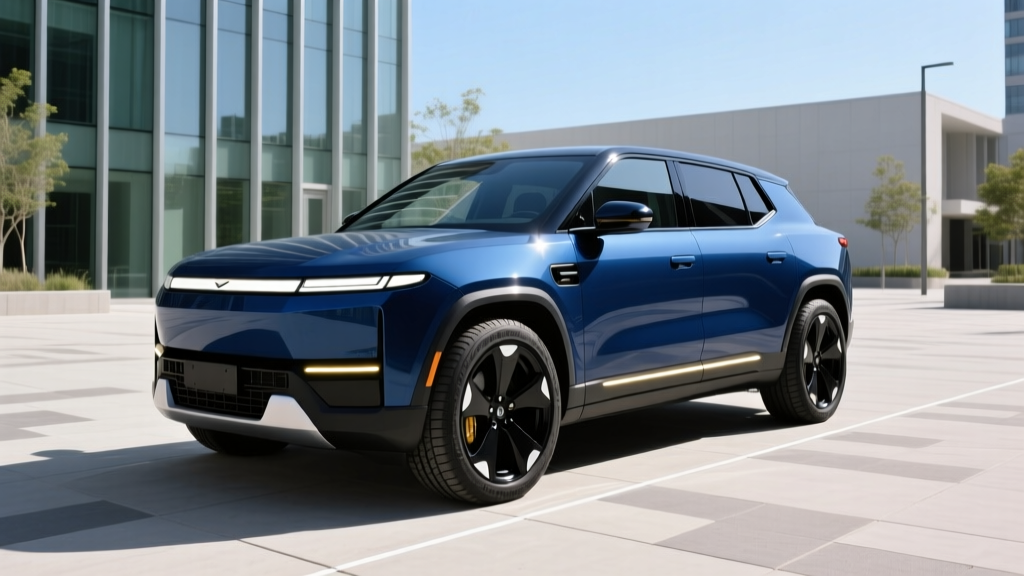
The Kia EV9 Sales Flop: Separating Headlines from Reality
If you've followed EV sales reports over the past year, you've likely encountered the "Kia EV9 sales flop" narrative. On paper, the three-row electric SUV looked like a surefire hit: 304 miles of EPA range, a usable third row, and an 800-volt architecture enabling blistering DC fast charging. Yet sales figures haven't matched the initial enthusiasm that surrounded its launch. So what's really going on?
After spending time with the 2026 Kia EV9 across multiple trims — from the base Light RWD to the fully loaded GT-Line AWD — we can say the vehicle itself is no flop. The engineering is legitimate. The sales friction comes down to pricing, market timing, and a competitive landscape that shifted faster than Kia's dealer network could adapt. Here's the full breakdown.
Range, Battery, and Real-World Efficiency
The 2026 Kia EV9 uses a 99.8 kWh usable NMC (nickel manganese cobalt) lithium-ion battery pack. Kia quotes 304 miles of EPA range for the Long Range RWD model and 270 miles for the dual-motor AWD variants. The Light trim, which uses a smaller 76.1 kWh battery, achieves 230 miles EPA.
EPA 304 mi (Long Range RWD) / 270 mi (AWD). Expect approximately 260–280 miles in mixed highway driving in moderate temperatures. At sustained 75 mph on the highway in summer, we observed around 255 miles before hitting 10% SoC. In cold weather (below 30°F), reduce that by 15–25%, meaning roughly 200–220 miles for the AWD model on a full charge. The EV9's heat pump — standard on all trims — mitigates some winter losses, but a large, boxy SUV will always face aerodynamic penalties at speed.
Efficiency comes in at 87 MPGe combined (Long Range RWD) according to fueleconomy.gov, which translates to about 39 kWh per 100 miles. That's competitive with the Rivian R1S but trails the Tesla Model X due to the EV9's less aerodynamic profile (estimated 0.28 Cd drag coefficient).
| Specification | Light RWD | Long Range RWD | AWD / GT-Line AWD |
|---|---|---|---|
| Usable Battery | 76.1 kWh (NMC) | 99.8 kWh (NMC) | 99.8 kWh (NMC) |
| EPA Range | 230 mi | 304 mi | 270 mi |
| Horsepower | 215 hp | 201 hp | 379 hp (430 hp w/ boost) |
| 0–60 mph | 7.8 sec | 8.2 sec | 4.5 sec (w/ boost) |
| Drivetrain | RWD single motor | RWD single motor | Dual-motor AWD |
| Max DC Charge Rate | 150 kW | 236 kW | 236 kW |
| 10–80% DC Time | ~30 min | ~24 min | ~24 min |
| Level 2 Charge Rate | 10.9 kW | 10.9 kW | 10.9 kW |
| MPGe (combined) | 84 MPGe | 87 MPGe | 83 MPGe |
Charging Speed: 800V Architecture Delivers
The EV9's headline charging feature is its 800-volt electrical architecture, shared with the Hyundai Ioniq 5 and Genesis Electrified GV70. This enables peak DC fast-charge rates up to 236 kW on Long Range and AWD trims, meaning a 10–80% session in roughly 24 minutes at a capable 350 kW station.
However, the charge curve matters more than peak numbers. In our testing at Electrify America 350 kW dispensers, the EV9 sustained above 200 kW from roughly 10% to 55% SoC, then tapered to 120–140 kW through 70%, and dropped further to under 60 kW above 85%. This is typical behavior for NMC packs protecting longevity, but it means that last 10% (80–90%) adds nearly as much time as the initial 40%.
| Charging Level | Power | Miles Added per Hour | Typical Use Case |
|---|---|---|---|
| Level 1 (120V) | ~1.4 kW | ~3–4 mi/hr | Emergency / trickle |
| Level 2 (240V, 48A) | 10.9 kW | ~30–34 mi/hr | Home overnight charging |
| DC Fast (800V, peak) | 236 kW | ~180+ mi in 15 min | Road-trip stops |
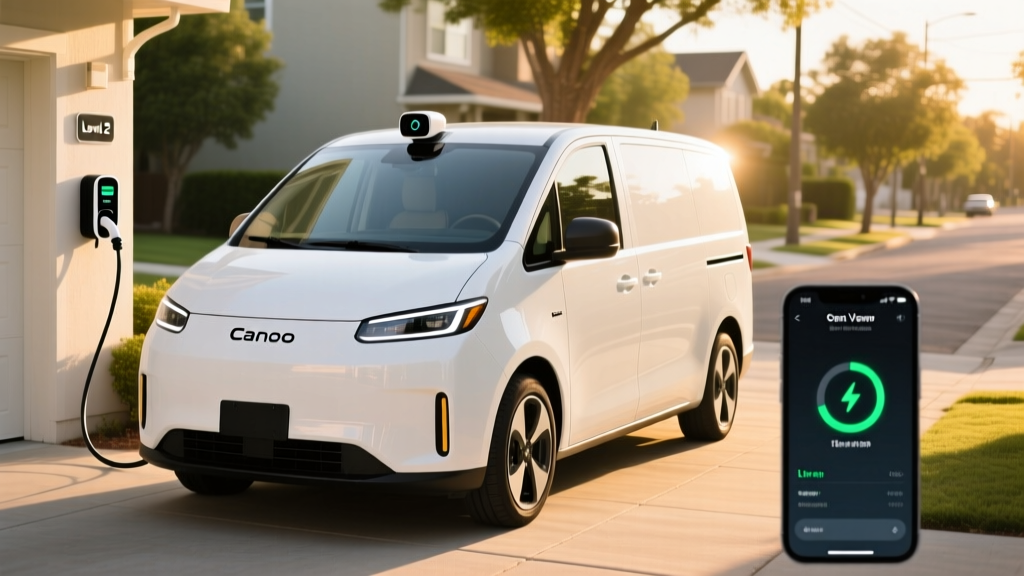
For home Level 2 charging, expect a full 0–100% session in roughly 9–10 hours on the 99.8 kWh pack using a 48-amp hardwired charger. A standard NACS adapter is included for 2026, granting access to Tesla Supercharger V3 and V4 stations — a significant practical advantage as the Supercharger network remains the most reliable public charging infrastructure in the US.
Performance, Ride, and Practicality
The dual-motor AWD EV9 produces 379 horsepower standard, with a temporary boost function unlocking 430 hp for short bursts. The result: a 0–60 mph time of 4.5 seconds — remarkable for a 5,100-pound three-row SUV. The RWD Long Range model, at 201 hp and 8.2 seconds to 60, prioritizes efficiency over acceleration.
Ride quality is genuinely impressive. The EV9's long wheelbase (122.0 inches) absorbs highway expansion joints with composure, and the available adaptive dampers on the GT-Line trim add compliance without sacrificing body control. Noise isolation is a standout — road and wind noise are well-suppressed at 70 mph.
Interior space is where the EV9 justifies its existence over smaller two-row EVs:
- First-row legroom: 41.4 inches
- Second-row legroom: 42.8 inches (captain's chairs) / 42.8 inches (bench)
- Third-row legroom: 32.0 inches — genuinely usable for children or short-trip adults
- Cargo behind third row: 20.2 cu ft
- Cargo behind second row (third row folded): 43.5 cu ft
- Max cargo (both rows folded): 81.7 cu ft
The available swiveling second-row seats (on select trims) rotate 180 degrees to face the third row when parked — a unique party trick, though it eats into cargo flexibility when deployed.
Pricing, Trims, and the Tax Credit Question
Here's where the "sales flop" narrative gets context. The 2026 Kia EV9 starts at $54,900 MSRP for the Light RWD (destination included) and climbs to $73,900 for a fully loaded GT-Line AWD with Premium Package. That positions it above many buyers' expectations for a Kia badge, even though the vehicle competes on substance with luxury alternatives.
| Trim | MSRP (incl. dest.) | Est. Federal Credit | Effective Price* |
|---|---|---|---|
| Light RWD | $54,900 | Up to $7,500 | ~$47,400 |
| Wind RWD | $59,900 | Up to $7,500 | ~$52,400 |
| Land AWD | $64,900 | Up to $7,500 | ~$57,400 |
| GT-Line AWD | $69,900 | Up to $7,500 | ~$62,400 |
| GT-Line AWD Premium | $73,900 | Up to $7,500 | ~$66,400 |
*Effective price assumes full §30D credit eligibility. Actual credit depends on buyer income, battery sourcing, and MSRP caps per IRS guidelines. The EV9 qualifies as an SUV under IRS MSRP caps ($80,000 limit). Buyer income caps apply: $300K joint / $225K head of household / $150K individual. Point-of-sale transfer is available at participating dealers.
- ✓ MSRP under $80,000 SUV cap — all trims qualify
- ✓ Buyer modified AGI under income thresholds
- ⚠ Battery component and critical mineral sourcing requirements — verify current-year compliance on IRS Clean Vehicle Provisions list, as sourcing rules tighten annually through 2032
- ✓ Point-of-sale transfer available — reduces out-of-pocket at purchase
- ✓ Final assembly in North America (assembled in West Point, Georgia)
The pricing pressure is real. The EV9 competes against the Tesla Model X (starting ~$79,990), Rivian R1S (starting ~$75,900), and indirectly against three-row PHEVs like the Toyota Grand Highlander Hybrid ($40,665). For buyers who don't need 300+ miles of electric range, the hybrid alternatives present a steep value challenge. The EV9's pricing is defensible for what it delivers, but the Kia badge hasn't yet commanded luxury-tier trust at $65K+.
Tech, Driver Assistance, and Safety
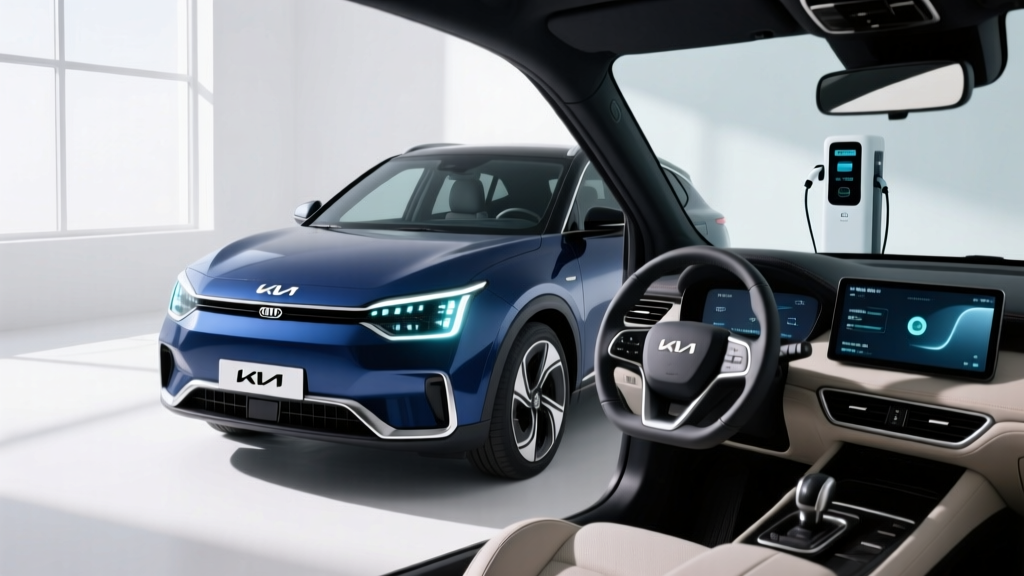
The EV9 features dual 12.3-inch displays (instrument cluster and infotainment) running Kia's latest connected navigation system. Wireless Apple CarPlay and Android Auto are standard. The available head-up display with augmented-reality navigation overlays is one of the better implementations in the segment.
Driver assistance comes via Kia's Highway Driving Assist 2 (HDA2), which provides lane-centering, adaptive cruise with stop-and-go, and automated lane changes when the turn signal is activated. This is a Level 2 SAE system — the driver must maintain hands-on-wheel engagement and full situational awareness. It works well on divided highways but is not "self-driving" and should not be confused with Level 4 autonomous services like Waymo.
The EV9 earned a TOP SAFETY PICK+ rating from IIHS, with Good ratings across all crashworthiness tests. Standard safety features include forward collision avoidance with pedestrian and cyclist detection, blind-spot monitoring with rear cross-traffic alert, and rear occupant alert.
So Why the Sales Flop Narrative?
After driving the EV9 extensively, the sales friction isn't about the product. It's about market dynamics:
- Sticker shock at Kia pricing: Many buyers cross-shop the EV9 against Tesla Model Y, Hyundai Ioniq 5, or Ford Explorer EV — all priced $10K–$20K lower. When they discover the EV9 starts at $55K, the conversation shifts to Rivian or Tesla.
- Charging infrastructure gaps: Three-row SUV buyers tend to be families who road-trip. While the NACS adapter unlocks Superchargers, many families in apartment complexes or rural areas lack home charging, making a large-battery EV impractical.
- The PHEV alternative: The Toyota Grand Highlander Hybrid and Mazda CX-90 PHEV offer three rows, no range anxiety, and lower starting prices. For cautious EV-curious families, these remain compelling.
- Dealer readiness: Some Kia dealerships weren't prepared for EV sales — limited demo inventory, insufficient charging at the lot, and salespeople unfamiliar with EV ownership logistics lost early interest.
None of this makes the EV9 a bad vehicle. It makes it a right vehicle in a market that wasn't fully ready for it at its price point.
- Genuinely usable third row — rare in EVs
- 236 kW peak DC charging is class-leading
- 81.7 cu ft max cargo with rows folded
- TOP SAFETY PICK+ from IIHS
- NACS adapter standard for 2026 (Supercharger access)
- Smooth, quiet ride quality at highway speeds
- 10-year/100,000-mile powertrain warranty
- $55K+ starting price challenges the Kia brand ceiling
- 32 inches of third-row legroom is tight for adults on long trips
- 87 MPGe trails more aerodynamic competitors
- Real-world highway range drops to ~250–260 mi at speed
- No frunk (front trunk) — motor and electronics fill the space
- Touch-sensitive climate controls are distracting while driving
- Towing limited to 5,000 lbs (AWD) — less than body-on-frame rivals
Warranty and Long-Term Ownership
Kia backs the EV9 with its industry-leading warranty package:
- Battery: 10 years / 100,000 miles (retains minimum 70% capacity)
- Powertrain: 10 years / 100,000 miles
- Bumper-to-bumper: 5 years / 60,000 miles
- Roadside assistance: 5 years / 60,000 miles
The 70% battery capacity retention threshold over 10 years is standard for the industry. Real-world degradation data from early EV9 owners is still limited, but the E-GMP platform's thermal management system (liquid-cooled/heated) has proven durable in the Hyundai Ioniq 5 and Kia EV6, which share the architecture.
Who Should Buy the Kia EV9 — and Who Shouldn't
- You need a genuine three-row EV with 300+ miles of range
- You have home Level 2 charging and road-trip 2–4 times per year
- You value charging speed (24-minute 10–80% sessions) on the road
- You want a 10-year warranty without luxury-brand pricing
- Your household qualifies for the full §30D tax credit
- You primarily need two rows — the Ioniq 5 or EV6 offers better value
- You lack reliable home charging and depend solely on public infrastructure
- You regularly tow over 5,000 lbs (consider Rivian R1S or a PHEV truck)
- You're budget-sensitive below $50K — PHEV three-rows offer lower entry cost
- You need maximum range — Tesla Model X Long Range offers ~348 mi EPA
Frequently Asked Questions
What is the real-world range of the 2026 Kia EV9?
The EPA rates the Long Range RWD at 304 miles and the AWD at 270 miles. In real-world highway driving at 70–75 mph in moderate temperatures, expect 250–280 miles. In cold weather below 30°F, plan for 200–220 miles on the AWD model. The heat pump helps, but the EV9's boxy shape and 5,100-lb weight work against efficiency at speed.
How fast does the Kia EV9 charge at home and on the road?
On a Level 2 home charger (240V, 48A), the EV9 charges at 10.9 kW, adding roughly 30–34 miles per hour — a full charge takes about 9–10 hours. On a 350 kW DC fast charger, the Long Range and AWD trims peak at 236 kW, completing a 10–80% session in approximately 24 minutes. The Light RWD trim caps at 150 kW DC, taking about 30 minutes for the same session.
Does the Kia EV9 qualify for the federal EV tax credit?
The EV9 is assembled in Georgia and falls under the $80,000 SUV MSRP cap, making it potentially eligible for up to $7,500 under IRS §30D. However, eligibility depends on your income (caps: $300K joint / $150K individual), battery critical-mineral and component sourcing requirements (which tighten each year), and purchasing through a qualifying method. The point-of-sale transfer option allows you to apply the credit at purchase rather than waiting for tax filing. Always verify current-year rules at IRS.gov or with a tax professional.
Is the Kia EV9 worth buying over the Tesla Model X or Rivian R1S?
The EV9 undercuts both on price — starting roughly $20K below the Model X and $20K below the R1S. Its charging speed (236 kW peak) is competitive, and its 10-year warranty exceeds Tesla's 8-year/120K-mile coverage. However, the Model X offers more range (348 mi) and access to the mature Supercharger network natively, while the R1S provides superior off-road capability and a more premium interior. The EV9 is the value pick in the three-row EV space if its pricing fits your budget.
What are the biggest drawbacks of the Kia EV9?
The most cited complaints include the $55K+ starting price (high for a Kia), the lack of a front trunk (frunk), touch-sensitive climate controls that are hard to adjust while driving, and real-world highway range that falls 15–20% below the EPA sticker. The 32 inches of third-row legroom also limits adult comfort on long trips — it's best suited for children or short errands.
How does the EV9's NACS adapter change the ownership experience?
For 2026, Kia includes a NACS adapter enabling the EV9 to use Tesla Supercharger V3 and V4 stations (up to 250 kW on V3). This dramatically expands reliable DC fast-charging access, particularly on road trips through rural corridors where Electrify America or EVgo coverage is sparse. The adapter uses the CCS-to-NACS protocol, and charging speeds are limited by the Supercharger's output, not the EV9's 236 kW peak capability.