If you've been searching for the Kia EV9 length and overall dimensions before pulling the trigger on a three-row electric SUV, you're not alone. The EV9 is one of the few mainstream battery-electric vehicles (BEVs) offering genuine third-row seating, and its footprint matters — for your garage, your parking spot, and your daily driving experience. This review covers every dimension that counts, along with the range, charging, performance, and ownership economics you need to evaluate before buying.
Kia EV9 Exterior Dimensions: Length, Width, and Turning Circle
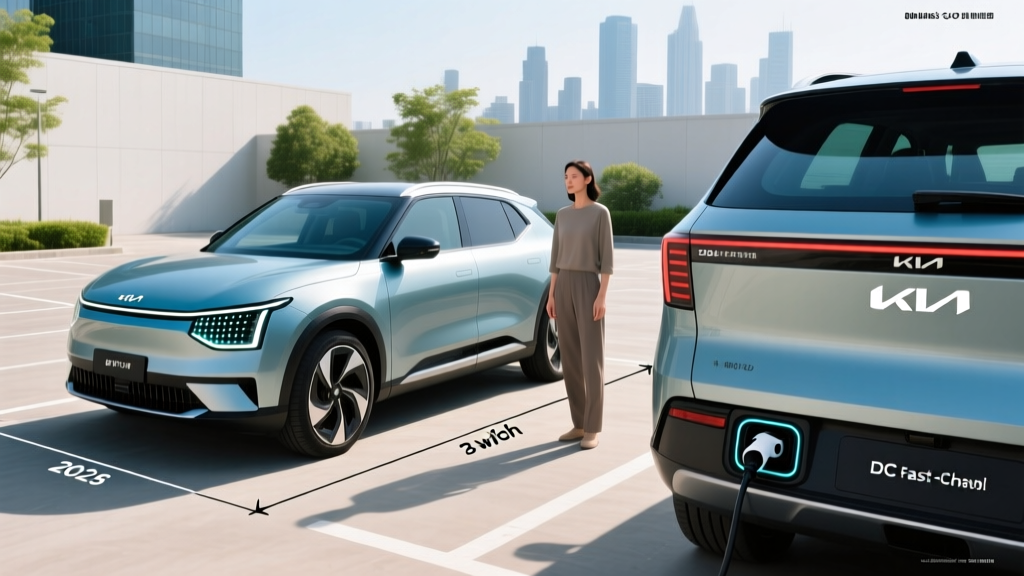
The 2026 Kia EV9 measures 197.4 inches in overall length, placing it squarely in full-size SUV territory — roughly the same footprint as a Kia Telluride (196.9 in.) and slightly shorter than a Chevrolet Tahoe (210.7 in.). That Kia EV9 length is no accident; it's the minimum envelope needed to package three usable rows of seats atop the Hyundai Motor Group's E-GMP skateboard platform.
| Dimension | Measurement |
|---|---|
| Overall Length | 197.4 in. (5,014 mm) |
| Overall Width (excl. mirrors) | 77.9 in. (1,979 mm) |
| Overall Height | 70.1 in. (1,781 mm) |
| Wheelbase | 122.0 in. (3,100 mm) |
| Ground Clearance | 7.8 in. (198 mm) |
| Curb Weight (Light RWD) | ~4,900 lbs |
| Curb Weight (GT-Line AWD) | ~5,600 lbs |
| Turning Circle (curb-to-curb) | 40.0 ft |
That 122.0-inch wheelbase is the real story. It's longer than the Telluride's 114.2 inches, and it's what gives the EV9 its surprisingly spacious cabin. The long wheelbase also contributes to stable highway manners — at 75 mph the EV9 tracks with the composure of a much more expensive vehicle. The trade-off is the 40-foot turning circle, which feels wide in tight parking structures compared to a two-row EV like the Hyundai Ioniq 5 (39.4 ft).
Three-Row Interior: Passenger Volume, Legroom, and Cargo
The EV9's dimensions translate into one of the most practical three-row cabins in the EV market. Here's how the space breaks down across all three rows:
| Row | Headroom | Legroom | Shoulder Room |
|---|---|---|---|
| First Row | 40.9 in. | 41.4 in. | 60.4 in. |
| Second Row | 39.8 in. | 42.8 in. | 59.3 in. |
| Third Row | 37.3 in. | 32.0 in. | 55.3 in. |
The second row is where the EV9 shines. With 42.8 inches of legroom (in the standard bench configuration), it out-legrooms many midsize SUVs' front seats. The available captain's chairs with power relaxation mode make this a premium long-distance perch.
The third row's 32.0 inches of legroom is tight for adults on long trips but adequate for children or occasional use — comparable to the Telluride's third row (31.4 in.) and significantly better than the Tesla Model X's third row (~30 in.).
Cargo Volume Behind Each Row
| Configuration | Cargo Volume |
|---|---|
| Behind Third Row | 20.5 cu ft |
| Behind Second Row (third row folded) | 43.5 cu ft |
| Behind First Row (all rear rows folded) | 81.7 cu ft |
| Front Trunk (frunk) | 1.8 cu ft (AWD) / 3.2 cu ft (RWD) |
With all rows folded, 81.7 cubic feet is enough for a full sheet of plywood flat on the floor — a practical benchmark for DIY-oriented buyers. The frunk is modest, especially on AWD models where the front motor consumes space, but it's useful for storing charging cables.
Range, Battery, and Efficiency: What the EPA Says vs. Reality
The 2026 Kia EV9 is offered with two battery configurations depending on trim, both using lithium-ion NMC (nickel manganese cobalt) chemistry for high energy density:
| Trim Group | Battery (usable) | Drivetrain | EPA Range | MPGe (combined) | kWh/100 mi |
|---|---|---|---|---|---|
| Light / Wind (RWD) | 76.1 kWh | Rear-Wheel Drive | 230 mi | 89 MPGe | 38 |
| Wind / Land / GT-Line (LR AWD) | 100.0 kWh | Dual-Motor AWD | 280–304 mi | 85 MPGe | 40 |
The EV9's efficiency of 38–40 kWh/100 miles is typical for a 5,000+ lb three-row SUV. For comparison, the Rivian R1S (dual-motor) averages around 42–44 kWh/100 mi, and the Tesla Model X plumbs around 38–40 kWh/100 mi. The EV9's boxy aerodynamics (Cd ~0.28) work against it at highway speeds compared to sleeker crossovers, but that shape is what enables the generous headroom and cargo space.
The EV9's heat pump (standard on all trims) helps mitigate cold-weather range loss by efficiently scavenging waste heat from the powertrain and ambient air to warm the cabin — a feature not all competitors include as standard equipment. According to fueleconomy.gov, the EV9 Land AWD achieves 85 MPGe combined, which translates to roughly $0.045–$0.06 per mile depending on your local electricity rate.
Charging Speed: DC Fast Charge, Level 2, and Real-World Times
Charging speed is where the EV9's 800-volt E-GMP architecture earns its keep. Unlike 400V systems that top out around 150 kW, the EV9 can accept significantly more power at compatible DC fast chargers.
| Charging Method | Max Rate | Speed / Time |
|---|---|---|
| Level 1 (120V household) | ~1.4 kW | ~3–4 mi/hr added |
| Level 2 (240V home, 48A) | 11.5 kW | ~30–34 mi/hr added; full charge in ~9–10 hr (100 kWh) |
| DC Fast Charge (CCS/NACS) | Peak 236 kW | 10–80% in ~24 min (100 kWh battery) |
| DC Fast Charge (350 kW station) | Peak 236 kW | Sustains ~170–200 kW to 55% SoC, then tapers |
What this means in practice: At a 350 kW Electrify America or Tesla Supercharger (with NACS adapter), the 100 kWh EV9 ramps quickly to its ~236 kW peak and holds strong through about 50–55% state of charge (SoC). After that, the charge curve tapers — typical for NMC chemistry protecting cell longevity. The 10–80% claim of ~24 minutes is achievable at a high-power station in moderate temperatures.
For the 76.1 kWh RWD model, the 10–80% time drops to approximately 18–20 minutes thanks to the smaller battery reaching 80% sooner, though peak kW is slightly lower.
Home charging: The onboard 11.5 kW Level 2 charger means a full overnight replenishment is realistic with a 48-amp hardwired wall connector on a 60-amp circuit. Expect to add roughly 30–34 miles of range per hour of Level 2 charging. A typical overnight session (8 hours) restores about 250 miles — more than enough for daily driving. Installation costs for a 240V/60A circuit typically range from $500 to $2,000 depending on panel proximity and local permitting; consult a licensed electrician for your specific situation.
The EV9 ships with a NACS (North American Charging Standard) port for the 2026 model year, granting native access to Tesla's Supercharger network — the largest and most reliable DC fast-charging network in the U.S. A CCS adapter is not needed at Tesla stalls but may be required at legacy CCS-only stations; Kia includes a CCS-to-NACS adapter with the vehicle.
Performance: 0–60 Times, Horsepower, and Drivetrain
| Trim | Motor | Horsepower | Torque | 0–60 mph | Drivetrain |
|---|---|---|---|---|---|
| Light / Wind RWD | Single rear | 215 hp | 258 lb-ft | 7.7 sec | RWD |
| Wind / Land / GT-Line AWD | Dual motor | 379 hp | 516 lb-ft | 4.5 sec | AWD |
The dual-motor AWD EV9's 4.5-second 0–60 time is genuinely quick for a 5,600-pound SUV — it'll outrun most gas-powered three-rows off the line. The instant torque delivery makes merging and passing effortless, and the low center of gravity (battery pack under the floor) keeps body roll well-controlled through curves despite the EV9's height.
The RWD model's 7.7-second 0–60 time is adequate for commuting and family duty but won't thrill anyone coming from a performance SUV. Its advantage is lower cost and slightly better efficiency.
Towing: The AWD EV9 is rated to tow up to 5,000 pounds (braked trailer), sufficient for a small boat, utility trailer, or a pair of jet skis. The RWD model is rated for 2,000 pounds. Note that towing at or near maximum capacity will cut range by roughly 40–50%, so plan accordingly.
Pricing, Trims, and Federal Tax Credit Eligibility
| Trim | Drivetrain | MSRP (incl. destination) |
|---|---|---|
| Light | RWD (76.1 kWh) | $56,395 |
| Wind | RWD (76.1 kWh) | $60,595 |
| Wind | AWD (100.0 kWh) | $64,395 |
| Land | AWD (100.0 kWh) | $70,495 |
| GT-Line | AWD (100.0 kWh) | $75,395 |
| GT-Line Prestige | AWD (100.0 kWh) | $79,395 |
Does the Kia EV9 Qualify for the Federal EV Tax Credit?
Under current IRS §30D Clean Vehicle Credit rules, the Kia EV9's eligibility for the full $7,500 federal tax credit depends on several factors that can change based on battery sourcing and your personal tax situation:
- MSRP cap: The EV9 is classified as an SUV, so the MSRP cap is $80,000. All current trims fall under this limit.
- Buyer income cap: Adjusted gross income must not exceed $150,000 (single), $225,000 (head of household), or $300,000 (married filing jointly).
- Battery sourcing requirements: The credit is split into two halves — $3,750 for critical minerals and $3,750 for battery components. Both must meet percentage thresholds that increase annually. Kia has been working to localize battery cell production in the U.S. (via partnerships with SK On in Georgia), but the exact credit amount available for the EV9 can vary by model year and production batch.
- Point-of-sale transfer: If eligible, you can transfer the credit to the dealer at purchase, reducing your out-of-pocket cost immediately rather than waiting for tax filing.
- Assembly requirement: The EV9 is assembled in West Point, Georgia (since late 2024), satisfying the North American final assembly requirement.
Technology, Safety, and Driver Assistance
The EV9 comes well-equipped with Kia's latest technology suite:
- Displays: Dual 12.3-inch screens (instrument cluster + infotainment) in a single curved housing, plus an available 12.3-inch passenger display on GT-Line Prestige.
- Infotainment: Wireless Apple CarPlay and Android Auto, built-in navigation with EV route planning and automatic battery preconditioning, over-the-air (OTA) updates.
- Highway Driving Assist 2 (HDA 2): Adaptive cruise control with stop-and-go, lane centering, and automatic lane-change assist. This is an SAE Level 2 system — the driver must remain attentive with hands on or near the wheel at all times.
- Remote Smart Parking Assist: The EV9 can pull itself in and out of tight parking spaces via the key fob while you stand outside — useful given its 77.9-inch width.
- Digital Key 2: Use your smartphone as the key; share access with family members digitally.
- V2L (Vehicle-to-Load): The EV9 can supply up to 3.6 kW of AC power through an interior outlet and an exterior adapter — enough to power camping equipment, tailgate setups, or essential appliances during an outage.
Safety: The EV9 earned a 5-star overall rating from NHTSA and was named an IIHS Top Safety Pick+ (when equipped with specific headlights). Standard equipment includes forward collision-avoidance assist with pedestrian and cyclist detection, blind-spot collision-avoidance assist, rear cross-traffic collision-avoidance assist, and safe exit assist.
Warranty and Ownership Costs
| Coverage | Term |
|---|---|
| Basic (bumper-to-bumper) | 5 years / 60,000 miles |
| Powertrain | 10 years / 100,000 miles |
| EV Battery | 10 years / 100,000 miles (capacity retention ≥70%) |
| Roadside Assistance | 5 years / 60,000 miles |
Kia's 10-year/100,000-mile battery warranty is among the strongest in the industry. The warranty guarantees the battery will retain at least 70% of its original capacity during the coverage period. Based on data from earlier E-GMP vehicles (EV6, Ioniq 5), degradation has been modest — typically 5–8% over the first 60,000 miles — suggesting most owners will retain well over 90% capacity within the warranty window.
Estimated 5-year cost of ownership: Assuming 12,000 miles/year, an electricity cost of $0.14/kWh, and no major repairs under warranty, the EV9 AWD Land costs approximately $0.055/mile to "fuel" — roughly $660/year in electricity. A comparable gas SUV averaging 22 MPG at $3.50/gallon would cost about $1,910/year in fuel, yielding roughly $6,250 in fuel savings over five years. Insurance premiums for the EV9 tend to run 10–20% higher than a gas Telluride due to higher repair costs and vehicle value; get quotes before purchasing.
How the EV9 Compares to Key Rivals
| Spec | Kia EV9 Land AWD | Rivian R1S (Dual Max) | Tesla Model X (LR) |
|---|---|---|---|
| Starting MSRP | $70,495 | $82,700 | $79,990 |
| EPA Range | 280–304 mi | ~340 mi | ~335 mi |
| 0–60 mph | 4.5 sec | ~4.5 sec | 3.8 sec |
| DC Fast Charge Peak | 236 kW | ~220 kW | ~250 kW |
| Third-Row Legroom | 32.0 in. | ~30.5 in. | ~30.0 in. |
| Max Cargo (all folded) | 81.7 cu ft | ~83.5 cu ft | ~88.1 cu ft |
| Tow Rating | 5,000 lbs | 7,700 lbs | 5,000 lbs |
The EV9's primary advantage is value. It undercuts the Rivian R1S and Tesla Model X by $10,000–$15,000 while offering comparable or better third-row space. The trade-off is slightly less range and a lower tow rating than the R1S. If budget is the primary constraint and you need three rows today, the EV9 is the most accessible option in the segment.
Pros
- Best-in-class value for a three-row EV
- Genuine third-row usability (32.0 in. legroom)
- 800V architecture with ~236 kW DC fast charging
- 10-year/100,000-mile battery warranty
- NACS port with native Supercharger access
- V2L capability (3.6 kW)
- Strong safety ratings (NHTSA 5-star, IIHS TSP+)
Cons
- Standard-range RWD model's 230-mile range is tight for road trips
- 40-foot turning circle feels wide in urban settings
- Boxy shape hurts highway efficiency vs. sleeker EVs
- Modest frunk space (especially AWD)
- No frunk on AWD models limits cable storage
- Insurance premiums higher than gas equivalents
- Tax credit eligibility can vary by production date
Who Should Buy the Kia EV9?
Choose the EV9 if: You need three rows for family duty, want a mainstream EV with strong warranty backing and dealer support, prioritize value over maximum range, and have reliable access to Level 2 home charging. The Land AWD trim at ~$70,500 (potentially ~$63,000 after the federal credit) is the sweet spot.
Look elsewhere if: You regularly drive more than 250 miles between charging stops (consider the Rivian R1S Max Pack or Tesla Model X for ~335 miles of range), you need a tow rating above 5,000 pounds, or you want a sportier driving experience (the EV9 is tuned for comfort, not cornering).
Frequently Asked Questions
What is the exact length of the Kia EV9?
The 2026 Kia EV9 measures 197.4 inches (5,014 mm) bumper to bumper. That's about half an inch longer than the Kia Telluride and roughly 13 inches shorter than a Chevrolet Tahoe. It fits comfortably in a standard two-car garage (minimum ~22 feet depth recommended with clearance).
What is the real-world range of the Kia EV9 on a road trip?
The AWD model with the 100 kWh battery has an EPA rating of up to 304 miles. On a real-world highway trip at 70–75 mph in fair weather, expect approximately 250–270 miles before needing to charge. In cold weather (below 30°F), that drops to roughly 210–230 miles. The RWD model's 230-mile EPA rating yields about 190–200 miles highway in moderate conditions.
How fast does the Kia EV9 charge at home and on the road?
At home on a 240V Level 2 charger (48A), the EV9 charges at up to 11.5 kW, adding about 30–34 miles of range per hour. A full overnight charge takes roughly 9–10 hours for the 100 kWh battery. On a DC fast charger, it peaks at approximately 236 kW and charges from 10–80% in about 24 minutes (100 kWh battery) at a high-power station.
How much does the Kia EV9 cost after the federal tax credit?
If you qualify for the full $7,500 federal credit under IRS §30D rules (income within caps, battery sourcing requirements met), a Land AWD at $70,495 could effectively cost around $62,995. However, the exact credit amount depends on current battery-component and critical-mineral sourcing thresholds, which change annually. Always verify on fueleconomy.gov and consult a tax professional.
Is the Kia EV9 worth buying over the Tesla Model X or Rivian R1S?
The EV9 offers the best value in the three-row EV segment, saving $10,000–$15,000 versus the Model X and R1S. You trade some range (~30–50 fewer EPA miles) and tow capacity (vs. R1S) but gain a more accessible price point, Kia's 10-year warranty, and widespread dealer support. For most families who charge at home and take occasional road trips, the EV9 is the pragmatic choice.
Does the Kia EV9 have a front trunk (frunk)?
Yes, but it's small. The RWD model offers a 3.2 cu ft frunk, while the AWD model's frunk is reduced to 1.8 cu ft due to the front electric motor. It's sufficient for storing charging cables and a small bag, but don't expect to carry groceries up front.
What is the Kia EV9's battery warranty?
Kia covers the EV9's high-voltage battery for 10 years or 100,000 miles, whichever comes first. The warranty guarantees the battery will retain at least 70% of its original capacity. If capacity drops below that threshold within the warranty period, Kia will repair or replace the battery at no cost.