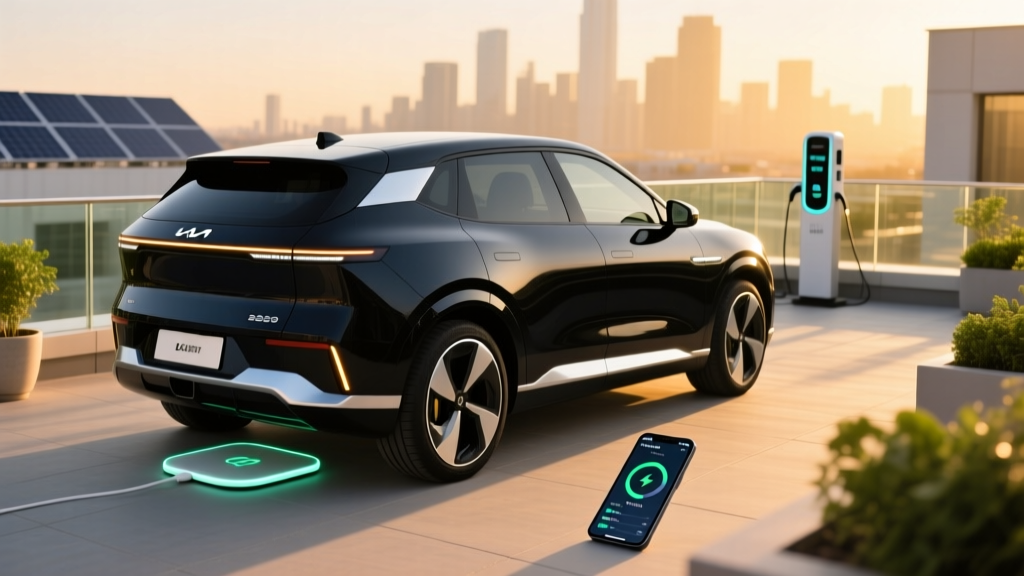
If you've been hunting for Kia EV9 lease specials in 2026, you've probably seen aggressive monthly payments advertised — sometimes undercutting midsize gas SUVs. But a low lease payment only tells part of the story. The EV9 is a 3-row, 201–304 mile-range electric hauler with a 77.4 kWh (usable) battery, and its real financial appeal depends on how tax credits, electricity costs, insurance premiums, and depreciation stack up over a typical ownership cycle.
This guide dissects the actual economics of getting into a 2026 Kia EV9 through a lease, including how the federal §30D credit works as a lease incentive, what you'll spend on charging versus gasoline, and where the hidden costs live.
Why Kia EV9 Lease Specials Are Dominating Headlines
Leasing an EV9 in 2026 is structurally different from buying one — and that difference is the main reason lease deals look so attractive. Under IRS rules, when you lease a vehicle, the leasing company (not you) is considered the legal purchaser. That means the lessor claims the §30D federal tax credit — up to $7,500 — and can pass it through as a capitalized cost reduction (a "cap cost reduction" in lease-speak). This is commonly called the lease loophole, and it sidesteps several buyer-side restrictions:
- No buyer income cap applies to the lessee
- No MSRP cap applies to the vehicle
- No battery-sourcing or critical-mineral requirement needs to be verified by you
- The credit is applied at signing, reducing your monthly payment immediately
That said, the lessor isn't legally required to pass the full $7,500 to you. Some Kia dealers and Kia Motors Finance apply the full amount; others retain a portion. Always confirm the exact cap cost reduction before signing.
2026 Kia EV9: Key Specs That Affect Your Wallet
| Spec | EV9 Light (RWD) | EV9 Wind/Land (AWD) | EV9 GT-Line (AWD) |
|---|---|---|---|
| MSRP (2026 est.) | $56,395 | $60,695–$65,395 | $73,995 |
| EPA Range | 304 mi | 270–280 mi | 270 mi |
| Battery (usable) | 77.4 kWh NMC | 77.4 kWh NMC | 77.4 kWh NMC |
| Peak DC Fast Charge | ~210 kW | ~210 kW | ~210 kW |
| 10–80% DCFC Time | ~24 min | ~24 min | ~24 min |
| Level 2 Charge Rate | 10.9 kW | 10.9 kW | 10.9 kW |
| Horsepower | 215 hp | 379 hp | 379 hp |
| 0–60 mph | ~7.7 sec | ~5.0 sec | ~5.0 sec |
| MPGe (combined) | 89 MPGe | 83 MPGe | 83 MPGe |
| Battery/Powertrain Warranty | 10 yr / 100,000 mi | ||
Federal Tax Credit Eligibility: Lease vs. Purchase in 2026
Understanding §30D rules is essential before you decide between leasing and buying. Here's the current eligibility checklist for a purchase (not a lease):
- Income caps (MAGI): $150,000 single / $225,000 head of household / $300,000 joint filers
- MSRP caps: $80,000 for SUVs, vans, and trucks (the EV9 qualifies as an SUV)
- Battery sourcing: Must meet escalating critical-mineral and battery-component requirements per the Inflation Reduction Act — percentages increase annually
- Point-of-sale transfer: As of 2024+, you can transfer the credit to the dealer at purchase, receiving it as a down-payment reduction rather than waiting for tax filing
- One credit per SSN per year (new vehicle); different rules apply to used EVs under §25E
For the Kia EV9 specifically, battery-sourcing compliance has been a moving target. Kia's U.S.-assembled EV9 (built at the Georgia plant) has improved its critical-mineral qualification over 2024–2026 as supply chains shifted. However, the exact credit amount for a purchase ($3,750 vs. $7,500 vs. $0) depends on the specific build date and battery lot. This is precisely why leasing is popular — the lease loophole makes the sourcing question irrelevant to you as the lessee.
Always verify current rules at IRS.gov and confirm with your tax professional before signing.
5-Year Total Cost of Ownership: The EV9 by the Numbers
Here's a realistic 5-year / 60,000-mile cost breakdown comparing the EV9 AWD (Wind trim, ~$63,000 MSRP) against a similarly priced gas 3-row SUV (e.g., Kia Telluride SX Prestige at ~$53,000). We assume the $7,500 lease cap cost reduction is passed through, and home Level 2 charging at the national average residential rate.
| Cost Category | 2026 EV9 AWD (Leased/Bought) | Gas 3-Row SUV Baseline |
|---|---|---|
| Purchase/Lease (net of incentives) | ~$55,500 effective | ~$53,000 |
| Fuel / Electricity (60k mi) | $3,600 (home) / $5,100 (mix) | $8,100 |
| Maintenance (5 yr) | $1,200 | $3,400 |
| Insurance (5 yr) | $11,500 | $8,800 |
| Depreciation (est. 5 yr) | ~$27,500 (50%) | ~$21,200 (40%) |
| Total 5-Year Cost | ~$98,800–$100,300 | ~$94,500 |
The EV9 closes the gap primarily through fuel and maintenance savings, but higher insurance and steeper depreciation prevent it from being a clear financial winner at the 5-year mark. The calculus improves substantially at 7–10 years and with higher annual mileage.
Charging vs. Gasoline: Cost Per Mile in the Real World
| Scenario | Cost per kWh / Gallon | Cost per Mile | Annual (12k mi) |
|---|---|---|---|
| EV9 — Home Level 2 (avg) | $0.16/kWh | $0.06 | $720 |
| EV9 — Public DCFC (avg) | $0.38/kWh | $0.14 | $1,680 |
| EV9 — 80% home / 20% DCFC | Blended $0.204/kWh | $0.076 | $912 |
| Gas SUV — 22 MPG combined | $3.30/gal | $0.15 | $1,800 |
The EV9 consumes roughly 37 kWh per 100 miles (AWD) based on its 83 MPGe rating per fueleconomy.gov. At the national average residential electricity rate of ~$0.16/kWh, that works out to about $0.06 per mile charging at home — roughly 60% cheaper per mile than a 22 MPG gas SUV at $3.30/gallon.
The critical variable: home charging access. If you rely predominantly on public DC fast chargers (Electrify America, EVgo, Tesla Superchargers open to NACS vehicles), your per-mile cost nearly doubles and can approach gasoline parity. The EV9's 10.9 kW Level 2 onboard charger means a full home charge from 10–100% takes roughly 7 hours — easily done overnight.
Maintenance Savings: Where EVs Genuinely Win
| Maintenance Item | EV9 (5 yr / 60k mi) | Gas SUV (5 yr / 60k mi) |
|---|---|---|
| Oil changes | $0 | $600–$900 |
| Transmission fluid | $0 | $150–$300 |
| Brake pads/rotors | $0–$200 (regen extends life) | $600–$1,200 |
| Cabin air filter | $100 | $100 |
| Coolant/service checks | $200 | $350 |
| Tire rotation/replacement | $900 (EVs wear tires faster) | $750 |
| Total Estimated | ~$1,200 | ~$3,400 |
The EV9 saves roughly $2,200 over 5 years in maintenance. Regenerative braking is the biggest factor — one-pedal driving means the friction brakes are barely used, often lasting well past 100,000 miles. However, EVs tend to wear tires 15–25% faster due to higher curb weight (the EV9 weighs ~5,400–5,800 lbs) and instant torque. Budget for a tire set replacement around year 4.
The Insurance Reality: Expect to Pay More
EV insurance premiums are typically 15–30% higher than equivalent gas vehicles. For the EV9, expect annual premiums of $2,100–$2,500 depending on your state, driving record, and coverage level — compared to roughly $1,600–$1,900 for a Telluride.
Why the premium?
- Higher repair costs: EV-specific components (battery pack, power electronics, heat pump) are expensive to replace after collision damage
- Total-loss thresholds: Insurers are more likely to declare an EV a total loss if the battery enclosure is compromised, even in moderate impacts
- Specialized labor: High-voltage system repairs require certified technicians, which limits body-shop options
- Higher vehicle MSRP: The EV9's starting price is simply higher than many gas alternatives
Shop quotes from at least 3 insurers before signing a lease. Some carriers (State Farm, GEICO, Progressive) have narrowed the EV premium gap, while others still price EVs aggressively. Bundling home and auto often helps.
Depreciation and Resale: The EV9's Biggest Unknown
EV depreciation has been steeper than gas vehicles over 2023–2025, driven by aggressive price cuts from Tesla, rapid battery-tech improvements, and market oversupply in some segments. For a 3-row electric SUV like the EV9, expect 45–55% depreciation over 5 years, compared to roughly 35–45% for a well-regarded gas SUV like the Telluride.
Factors working in the EV9's favor:
- Kia's 10-year/100,000-mile battery warranty transfers to second owners, supporting resale
- Few direct competitors in the 3-row EV SUV segment (Rivian R1S is far more expensive; no mainstream rival at this price point)
- NACS charging port adoption means Supercharger access, broadening the buyer pool
Factors working against it:
- EV technology moves fast — 2028–2030 models will likely offer better range and faster charging at similar prices
- Battery health uncertainty still depresses used-EV demand among cautious buyers
- Federal credit eligibility on the used market (§25E, up to $4,000) has income and price caps that limit the buyer pool
If you lease, depreciation is the lessor's problem — your risk is limited to excess mileage and wear charges at turn-in. This is one of the strongest arguments for leasing the EV9 rather than buying.
Frequently Asked Questions
How much does it really cost to own a Kia EV9 over 5 years?
Between $98,000 and $100,500 over 5 years and 60,000 miles for an AWD model, including purchase/lease cost (net of incentives), electricity, insurance, maintenance, and depreciation. Fuel and maintenance savings offset roughly $6,000–$7,000 compared to a gas SUV, but higher insurance (+$2,700) and steeper depreciation (+$6,300) eat into those gains. The EV9 becomes more cost-competitive at higher annual mileage and longer ownership horizons.
Do I qualify for the federal EV tax credit on the EV9?
If you purchase, you must meet income caps ($150K single / $300K joint), the vehicle must be under the $80,000 SUV MSRP cap, and the battery must meet 2026 critical-mineral and component sourcing thresholds — which varies by build. If you lease, the leasing company claims the credit and may pass it through as a cap cost reduction, bypassing income and sourcing restrictions for you. Confirm with your dealer and a tax professional.
How much do I save on fuel and maintenance with the EV9?
Approximately $3,000–$4,500 in fuel savings over 5 years (assuming mostly home charging at $0.16/kWh) and roughly $2,200 in maintenance savings. Combined, that's $5,200–$6,700 in operational savings. If you rely heavily on public DC fast charging, fuel savings narrow to $1,500–$2,500.
Are EVs like the EV9 more expensive to insure?
Yes — typically 15–30% more than comparable gas SUVs. For the EV9, budget $2,100–$2,500 annually. Higher repair costs, specialized high-voltage labor, and the vehicle's MSRP all contribute. Shopping multiple carriers and bundling policies can reduce the gap.
How well does the Kia EV9 hold its value?
Expect 45–55% depreciation over 5 years — steeper than gas SUVs but improving as the 3-row EV segment matures and Kia's strong battery warranty supports used demand. Leasing transfers depreciation risk to the lessor, which is a key advantage for this vehicle class in a rapidly evolving market.
What's the real-world range of the EV9 on a road trip?
The RWD Light trim's EPA rating is 304 miles, but sustained highway driving at 70–75 mph yields roughly 250–270 miles. AWD trims drop to 225–250 real-world highway miles. In winter (below 32°F), reduce those figures by 15–25%. The 210 kW peak DC fast-charge rate adds roughly 140 miles in 15 minutes when the battery is preconditioned, tapering significantly above 80% SoC.