Quick Answer: Should You Buy a 3-Wheel Electric Golf Cart?
Three-wheel electric golf carts in 2026 are low-speed electric vehicles (LSVs) or off-highway utility carts powered by 48V to 72V lithium iron phosphate (LFP) battery packs typically ranging from 4 kWh to 10 kWh. Expect 25–50 miles of real-world range per charge, top speeds of 15–25 mph, and a total cost of ownership that undercuts gas-powered carts by $400–$700 per year in fuel and maintenance savings. They are best suited for golf courses, gated communities, large private properties, and planned neighborhoods — not public roads above 35 mph. If you need highway-capable transport, this is not the vehicle category for you.
What Exactly Is a 3-Wheel Electric Golf Cart?
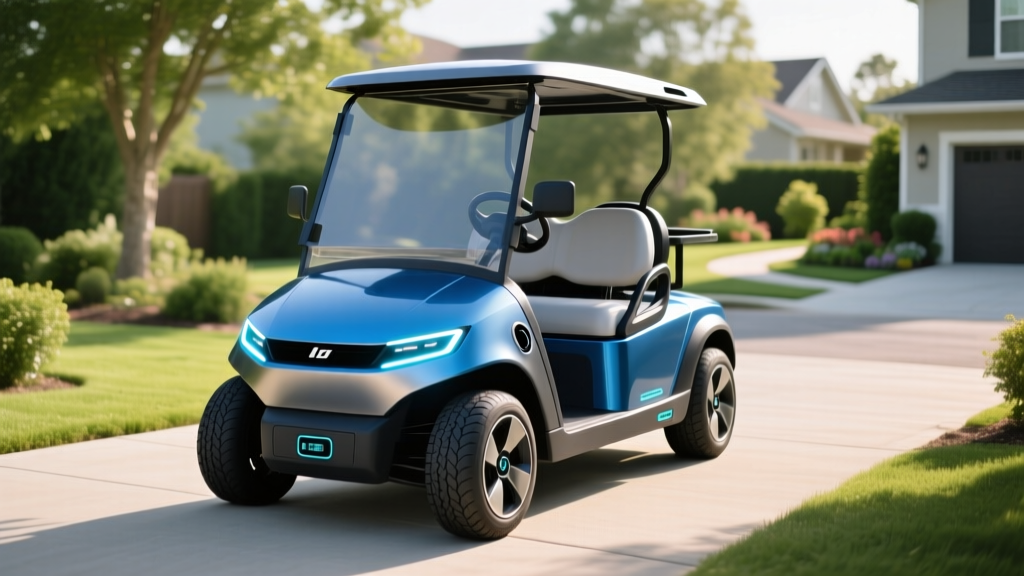
A three-wheel electric golf cart is a compact, battery-electric vehicle with two rear drive wheels and a single front steering wheel (or the reverse, depending on the manufacturer). The three-wheel layout reduces weight, improves maneuverability on tight cart paths, and lowers the base price by $500–$1,500 compared to a comparable four-wheel model. Most fall into one of two regulatory categories:
- Off-highway / private-property carts: Top speed limited to 15–19 mph. No federal DOT requirements. Ideal for golf courses, farms, and private estates.
- Low-Speed Vehicles (LSVs): Governed to 20–25 mph per NHTSA FMVSS 500. Require headlamps, turn signals, seat belts, and a VIN. Legal on roads posted 35 mph or below in most states.
Unlike full-size highway EVs (Tesla, Hyundai, Ford), these carts do not qualify for the federal §30D clean vehicle tax credit, which applies to on-road passenger vehicles meeting MSRP, income, and battery-sourcing requirements. Some states and local utilities offer rebates for electric LSVs or neighborhood electric vehicles (NEVs) — check your state energy office for current programs.
2026 Range, Battery, and Charging Specs
Battery capacity is measured in kilowatt-hours (kWh) — the total energy stored. Charging power is measured in kilowatts (kW) — the rate at which energy flows in. These are not interchangeable. A 7.2 kWh battery holding a full charge is like a 2-gallon gas tank; a 1.5 kW onboard charger is like a slow fuel pump.
| Spec | Budget Tier (48V) | Mid-Range (48V–72V) | Premium (72V Li-Ion) |
|---|---|---|---|
| Battery Chemistry | Lead-Acid (AGM) | LFP (Lithium Iron Phosphate) | LFP or NMC Lithium |
| Battery Capacity | 4–5 kWh | 6–8 kWh | 8–12 kWh |
| EPA-Equivalent Range | 15–25 miles | 30–45 miles | 45–60 miles |
| Real-World Range (hilly/warm) | 12–20 miles | 25–38 miles | 38–50 miles |
| Onboard Charger Power | 0.6–1.0 kW | 1.0–1.5 kW | 1.5–2.5 kW |
| Full Charge Time (0–100%) | 6–8 hours | 5–7 hours | 4–6 hours |
| Top Speed | 15 mph | 19–20 mph | 23–25 mph |
| Motor Output | 3–5 HP | 5–8 HP | 8–12 HP |
| Base MSRP (2026) | $5,500–$7,500 | $8,000–$12,000 | $12,500–$18,000 |
Electric vs. Gas Golf Carts: Cost and Performance Comparison
The decision between electric and gas golf carts hinges on usage patterns, upfront budget, and long-term operating costs. Here is a data-driven comparison based on 2026 pricing and energy costs.
| Factor | Electric (LFP Battery) | Gas (4-Cycle EFI) |
|---|---|---|
| Base Purchase Price | $8,000–$12,000 | $6,500–$9,500 |
| Fuel/Energy Cost per Charge/Tank | $0.50–$1.20 (at $0.14/kWh) | $4.50–$7.00 (at $3.50/gal, 1.5 gal tank) |
| Cost per Mile | $0.02–$0.04 | $0.12–$0.18 |
| Annual Fuel/Energy (5,000 mi/yr) | $100–$200 | $600–$900 |
| Annual Maintenance | $50–$100 (brake inspection, tire rotation) | $250–$400 (oil, filters, plugs, belt) |
| Battery/Engine Replacement (Year 8–10) | $1,500–$3,500 (LFP pack) | $800–$2,000 (engine rebuild/replacement) |
| 5-Year Total Operating Cost | $750–$1,500 | $4,250–$6,500 |
| Noise Level | Near-silent (<55 dB) | 65–75 dB at idle |
| Emissions at Point of Use | None | CO₂, NOx, unburned hydrocarbons |
The electric cart commands a $1,500–$3,000 premium at purchase but recovers that difference within 2–4 years through fuel and maintenance savings. Over five years of 5,000-mile annual use, the electric cart saves $2,750–$5,000 in operating costs.
Real-World Ownership: What First-Time Buyers Must Know
Home Charging Requirements
Nearly all 3-wheel electric golf carts charge from a standard 120V household outlet (Level 1 equivalent). You do not need a dedicated 240V circuit for most models. However, practical considerations include:
- Outlet proximity: You need a grounded 120V/15A outlet within 6–10 feet of where the cart parks. A garage or covered carport is ideal.
- Circuit load: Charging a 1.5 kW onboard charger draws roughly 12.5 amps — close to the limit of a 15-amp circuit. Avoid running other high-draw appliances on the same circuit simultaneously.
- Extension cords: Use only 12-gauge or thicker outdoor-rated cords. Undersized cords cause voltage drop, slow charging, and fire risk.
- Charge discipline: LFP batteries tolerate regular 100% charges better than NMC chemistries found in highway EVs. Plug in after every use to maximize cycle life.
Climate and Terrain Impact
Battery performance is temperature-dependent. In sub-40°F weather, expect 15–25% range loss due to increased internal resistance. Lithium batteries also charge slower when cold — some premium carts include battery heating pads, but budget models do not. In hot climates above 95°F, sustained high-speed use can trigger thermal throttling, reducing motor output to protect the controller.
Hilly terrain is the single biggest range killer. A cart rated for 40 miles on flat ground may deliver only 25–30 miles on a property with 8–10% grade changes. If your property is hilly, spec a cart with at least 2 kWh more capacity than your calculated need.
Battery Longevity and Replacement
LFP (lithium iron phosphate) batteries dominate the 2026 golf cart market for good reason: they offer 2,000–3,000 full charge cycles before degrading to 80% of original capacity. At one full cycle per day, that translates to 5.5–8+ years of service. Lead-acid batteries, still found in budget models, deliver only 500–800 cycles and require monthly water-level checks. The upfront savings of lead-acid ($1,500–$2,500 less) is erased by replacement frequency — you will buy 3–4 lead-acid sets in the lifespan of one LFP pack.
Common Misconceptions: Myth vs. Fact
| Myth | Fact |
|---|---|
| "3-wheel carts are less stable than 4-wheel." | Modern 3-wheel designs use a low center of gravity and wide rear track (36–42 inches). Rollover risk is comparable to 4-wheel carts at rated speeds under 20 mph. At 25 mph on sharp turns, 4-wheel carts have a measurable stability advantage. |
| "Electric carts can't handle hills." | 72V lithium carts with 8–12 HP motors handle 15–20% grades. The limitation is range, not torque — expect 40–50% higher energy consumption on steep terrain. |
| "You need a special charger installed." | Standard 120V household outlets are sufficient for nearly all models. A dedicated 20A circuit is recommended but not required for carts drawing under 1.5 kW. |
| "Battery replacement costs as much as a new cart." | LFP replacement packs for mainstream brands cost $1,500–$3,500 in 2026, versus $8,000–$18,000 for a new cart. That is 15–25% of replacement cost. |
| "Electric carts qualify for the $7,500 federal tax credit." | Golf carts and LSVs do not meet the §30D definition of a "new clean vehicle" (must be highway-capable, 4+ wheels, under 14,000 lbs GVWR with specific battery-sourcing compliance). No federal tax credit applies. |
Decision Framework: Which 3-Wheel Electric Golf Cart Fits You?
If-Then Buyer's Guide
- If you drive less than 10 miles per day on flat terrain → A 48V lead-acid cart ($5,500–$7,500) is adequate. Accept the maintenance trade-off and plan for battery replacement every 2–3 years.
- If you drive 15–30 miles per day with moderate hills → A 48V–72V LFP lithium cart ($8,000–$12,000) is the sweet spot. You get 5–8 years of battery life and $100–$200 annual energy cost.
- If you need LSV street-legal capability (roads ≤35 mph) → Budget $12,000–$18,000 for a 72V LFP cart with DOT-compliant lighting, mirrors, VIN, and seat belts. Verify your state's LSV registration requirements before purchasing.
- If you regularly carry 4+ passengers or 500+ lb cargo → Prioritize a 72V system with 10+ HP and at least 10 kWh of battery. Three-wheel carts with heavy payloads see the steepest range penalties — oversize the battery.
- If you live in a climate with sub-30°F winters → Choose a cart with battery thermal management (heating pad). Without it, you will lose 25–35% of range and risk charge-rate throttling on cold mornings.
- If you have no access to a 120V outlet near parking → Consider whether running a dedicated circuit ($300–$800 electrician cost) is feasible. Without reliable daily charging, an electric cart's range limitation becomes a daily frustration. A gas cart may be more practical.
2026 Pricing and Where to Buy
Three-wheel electric golf carts are sold through dealer networks, direct-to-consumer online brands, and commercial fleet suppliers. Key price benchmarks for 2026:
- Budget/used market: $3,500–$6,000 for refurbished lead-acid models. Verify battery age — a 3-year-old lead-acid pack may need imminent replacement.
- New mid-range (LFP): $8,000–$12,000. Brands include Club Car (Precedent/Onward 3-wheel variants), E-Z-GO (Liberty and Express platforms), and Yamaha (Drive2-based configurations). Many are special-order through dealers.
- Premium/LSV-rated: $12,500–$18,000+. Includes street-legal equipment, larger battery packs, and upgraded motors. Brands like GEM (Polaris) and newer entrants like Evolution Electric Vehicles offer LSV-compliant 3-wheel configurations.
Warranty coverage varies: expect 1–2 years bumper-to-bumper and 3–5 years on the lithium battery pack (capacity retention guaranteed to 70–80% of original). Always confirm the warranty's cycle-count or time-based trigger, whichever comes first.
Frequently Asked Questions
Can I drive a 3-wheel electric golf cart on public roads?
Only if the cart is classified as a Low-Speed Vehicle (LSV) under FMVSS 500, equipped with DOT-required safety equipment, titled, registered, and insured. Standard off-highway golf carts are not street-legal regardless of wheel count. Most states restrict LSVs to roads with speed limits of 35 mph or lower.
How long does a lithium golf cart battery last?
LFP batteries in 2026 golf carts are rated for 2,000–3,000 full charge cycles. At typical residential use (one partial cycle daily), expect 7–10 years before capacity drops to 80%. Lead-acid batteries last 2–4 years under the same conditions.
How much does it cost to charge a 3-wheel electric golf cart?
A full charge of a 7 kWh battery at the 2026 US average residential electricity rate of $0.14/kWh costs approximately $0.98. Annual energy cost for 5,000 miles of use is $100–$200, compared to $600–$900 for a gas cart.
Do 3-wheel electric golf carts qualify for any tax credits?
They do not qualify for the federal §30D clean vehicle tax credit, which requires a highway-capable 4-wheel vehicle meeting specific MSRP, buyer income, and battery-sourcing thresholds. Some state and utility programs offer point-of-sale rebates for electric LSVs — check your local incentives.
Is a 3-wheel or 4-wheel electric cart better?
Three-wheel carts are lighter, more maneuverable on tight paths, and $500–$1,500 cheaper. Four-wheel carts offer better stability at higher speeds and under heavy loads. For flat-terrain golf course or property use at under 20 mph, the 3-wheel configuration is practical and cost-effective. For hilly terrain, frequent passenger loads, or LSV street use, the 4-wheel platform is the safer choice.