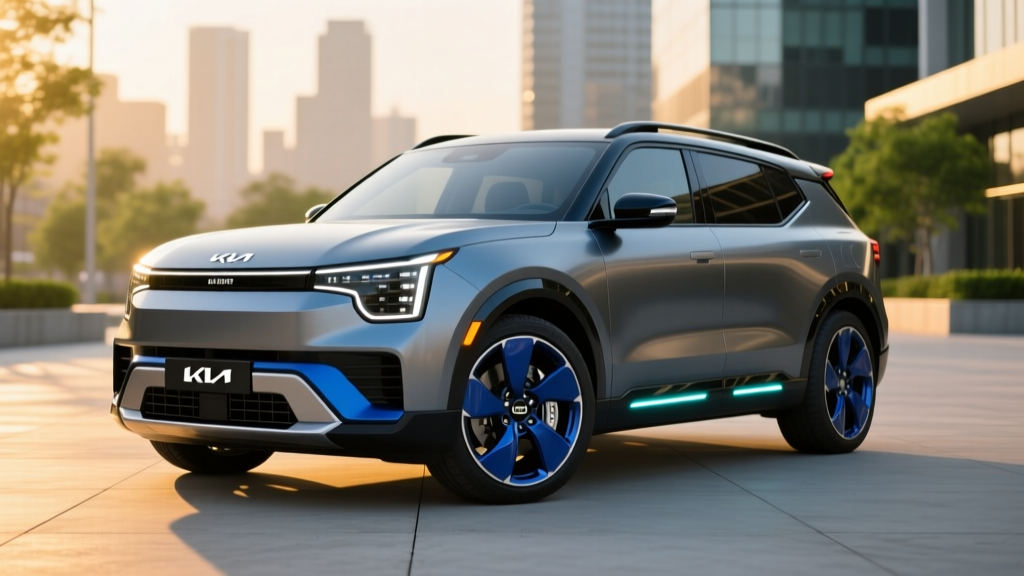
The Kia EV9 has quickly become one of the most talked-about three-row electric SUVs on the market, and for 2026, the variant generating the most search interest is the EV9 Big Brake 6P — a six-passenger configuration with an upgraded braking package and the larger 100.0 kWh battery. If you've been searching for "ev9 빅브레이크 6p 가격" (Korean for EV9 Big Brake 6-seat price), you're likely weighing whether this specific trim justifies its cost. This review breaks down every number that matters: real-world range, charging speed, interior space, and exactly what you'll pay after federal incentives.
Real-World Range Reality Check
EPA Estimate: 279 miles (AWD, 20-inch wheels) / 304 miles (RWD Light Long Range)
Expect in Practice: 230–260 miles on highway road trips at 70+ mph; 180–210 miles in sub-30°F winter conditions with cabin heat running. The 100.0 kWh NMC battery provides a usable buffer, but the EV9's boxy aerodynamics (Cd ~0.28) and 5,000+ lb curb weight take a toll at sustained highway speeds.
2026 Kia EV9 Big Brake 6P: Key Specs at a Glance
| Specification | Value |
|---|---|
| Battery Capacity | 100.0 kWh (usable ~95 kWh), NMC chemistry |
| EPA Range (AWD) | 279 miles (20" wheels) / 282 miles (19" wheels) |
| EPA Range (RWD LR) | 304 miles |
| Max DC Fast Charge | ~210 kW peak (800V architecture) |
| 10–80% DC Charge Time | ~24 minutes (optimal conditions) |
| Level 2 Home Charging | 10.9 kW onboard charger (~35 mi/hr) |
| 0–60 mph (AWD) | 5.0 seconds |
| Horsepower (AWD) | 379 hp / 516 lb-ft torque |
| Drivetrain | Dual-motor AWD or single-motor RWD |
| MPGe (AWD combined) | 85 MPGe (2.9 kWh/mi) |
| Towing Capacity | 5,000 lbs (AWD, with factory tow package) |
| Battery Warranty | 10 years / 100,000 miles |
| Base MSRP (2026 AWD Land) | ~$64,900 |
Range, Efficiency, and What You'll Actually See
The EV9's 100.0 kWh battery pack uses nickel-manganese-cobalt (NMC) cells — chosen for energy density over the cycle-life advantages of LFP chemistry. In the dual-motor AWD configuration, the EPA rates it at 279 miles with 20-inch wheels. That's a solid number for a 5,000-pound, three-row SUV, but efficiency is where the physics of a boxy family hauler show up.
According to fueleconomy.gov, the AWD EV9 achieves 85 MPGe combined, which translates to roughly 2.9 kWh per mile. In real-world driving, expect closer to 3.2–3.5 kWh/mile on the highway at 75 mph, which drops effective range to around 245 miles. In cold weather (below freezing), resistive cabin heating and reduced battery efficiency can cut range by 25–35%, leaving you with roughly 180–210 usable miles before needing to charge.
The RWD Light Long Range variant stretches to 304 miles EPA, but sacrifices the dual-motor's 379 hp and 5,000-lb towing. For most families eyeing the 6P configuration, the AWD is the practical pick — just plan charging stops accordingly on long trips.
Charging Speed: 800V Architecture Pays Off
The EV9 rides on Hyundai Motor Group's E-GMP platform with full 800V electrical architecture, which is one of its strongest competitive advantages. At a compatible 350 kW DC fast charger (Electrify America, IONNA, or Tesla Supercharger with the included NACS adapter on 2026 models), the EV9 can peak at approximately 210 kW.
| Charging Level | Power (kW) | Speed (miles/hr added) | Notes |
|---|---|---|---|
| Level 1 (120V household) | ~1.4 kW | ~3–4 mi/hr | Emergency/top-up only |
| Level 2 (240V, 48A home charger) | 10.9 kW | ~35 mi/hr | Full charge in ~9.5 hours |
| DC Fast (350 kW station) | ~210 kW peak | ~700+ mi/hr (peak) | 10–80% in ~24 min |
| DC Fast (150 kW station) | ~130 kW sustained | ~430 mi/hr | 10–80% in ~38 min |
The 800V system means the EV9 sustains higher charging power deeper into the session compared to 400V competitors. While peak rate tapers significantly above 80% SoC (a 10–90% session takes closer to 40 minutes), the 10–80% sprint is genuinely competitive with the fastest-charging EVs available. Battery preconditioning activates automatically when you navigate to a charger via the built-in route planner — essential for hitting peak rates in cold weather.
The Big Brake Package and 6P Interior Layout
The "Big Brake" package (marketed as 빅브레이크 in the Korean domestic market) adds larger front brake calipers and rotors for improved stopping performance and fade resistance — relevant if you plan to tow the EV9's 5,000-lb max rating on mountain grades. It's a brake upgrade, not a performance powertrain change, so 0–60 times remain at 5.0 seconds for the AWD.
The 6P (six-passenger) configuration replaces the second-row bench with two individual captain's chairs, each with its own armrest and a walk-through gap to the third row. This layout trades one seating position for significantly improved second-row comfort and easier third-row access — a worthwhile exchange for families with four or five regular passengers.
Interior dimensions remain generous:
- Cargo (behind 3rd row): 20.2 cu ft
- Cargo (3rd row folded): 43.5 cu ft
- Cargo (all rear rows folded): 81.7 cu ft
- 2nd-row legroom: 42.8 inches
- 3rd-row legroom: 32.0 inches
That third row is genuinely usable for adults on shorter trips, which puts the EV9 ahead of most midsize electric SUVs. The frunk (front trunk) adds another 3.2 cu ft for charging cables or groceries.
Pricing, Trims, and Federal Tax Credit Eligibility
The 2026 Kia EV9 lineup starts around $55,900 for the RWD Light trim and climbs to approximately $73,900 for the fully loaded AWD GT-Line. The Big Brake 6P configuration typically slots into the Land or GT-Line trims in the AWD format.
| Trim (AWD, 6P) | Base MSRP | Est. As-Tested | §30D Credit Eligible? |
|---|---|---|---|
| EV9 Land AWD 6P | $64,900 | $67,500 | Yes — up to $7,500* |
| EV9 GT-Line AWD 6P | $69,900 | $73,900 | Yes — up to $7,500* |
| EV9 Land AWD 6P + Big Brake Pkg | $67,400 | $70,000 | Yes — up to $7,500* |
*Federal §30D tax credit eligibility for 2026 requires the buyer to meet income caps ($150K single / $300K joint modified AGI), the vehicle MSRP must not exceed $80,000 for SUVs, and the battery must meet critical-mineral and component sourcing thresholds that phase in annually. The credit can now be transferred to the dealer at point of sale as an instant discount. Always verify current rules at IRS.gov before purchasing — sourcing requirements tighten each year.
Because the EV9 is assembled in West Point, Georgia (Kia's U.S. plant began EV9 production in mid-2024), it qualifies as a domestically manufactured vehicle for §30D purposes, which is a significant advantage over imported competitors. However, the battery cell sourcing must still meet the annual critical-mineral threshold — confirm with your dealer that the specific VIN qualifies in the purchase year.
Technology, Driver Assists, and Notable Drawbacks
The EV9's tech stack is comprehensive. A 12.3-inch digital cluster and 12.3-inch infotainment touchscreen sit behind a single curved glass panel. Wireless Apple CarPlay and Android Auto are standard. Over-the-air updates keep the software current, and Kia's Digital Key 2 lets you use a smartphone or smartwatch as a key fob.
On the driver-assist front, Highway Driving Assist 2 (HDA2) provides adaptive cruise control with lane-centering and automated lane changes when the turn signal is engaged. This is a SAE Level 2 system — it requires continuous driver supervision and does not make the EV9 a self-driving vehicle. It's competitive with Ford BlueCruise and GM Super Cruise in functionality, though it lacks the hands-free eye-tracking permission those systems offer on mapped highways.
Pros
- 800V architecture delivers genuinely fast 10–80% charging (~24 min)
- True three-row seating with usable adult-sized third row
- 10-year/100,000-mile battery warranty (class-leading)
- U.S.-assembled, qualifying for full §30D credit (subject to sourcing rules)
- 5,000-lb towing capacity with AWD
- Vehicle-to-load (V2L) powers accessories or appliances
Cons
- Efficiency drops significantly at highway speeds — plan for ~240 real miles on road trips
- Cold-weather range loss of 25–35% is substantial in northern climates
- No hands-free driving mode comparable to Super Cruise or BlueCruise
- Third-row cargo space (20.2 cu ft) is tight with all seats up
- Big Brake package adds cost without performance powertrain gains
- Insurance premiums run 15–25% higher than comparable ICE SUVs
How It Compares: EV9 vs. Key Three-Row EV Rivals
The EV9 Big Brake 6P competes in a growing but still limited segment. Here's how the numbers stack up against its closest rivals:
| Spec | Kia EV9 AWD | Rivian R1S (Dual-Motor) | Tesla Model X (LR) |
|---|---|---|---|
| EPA Range | 279 mi | ~321 mi (Max Pack) | ~320 mi |
| Starting MSRP (3-row) | ~$64,900 | ~$79,900 | ~$84,990 |
| 10–80% DC Charge | ~24 min | ~30 min | ~28 min |
| 0–60 mph | 5.0 sec | 4.5 sec | 3.8 sec |
| Battery Warranty | 10 yr / 100K mi | 8 yr / 175K mi | 8 yr / 150K mi |
| §30D Credit Eligible | Yes (up to $7,500) | Yes (up to $7,500) | Yes (up to $7,500) |
The EV9 wins decisively on entry price and charging speed. The Rivian R1S offers more range (with the expensive Max Pack) and genuine off-road capability, but starts nearly $15,000 higher. The Model X is faster and has access to the full Supercharger network natively, but its MSRP pushes past the $80,000 §30D cap for SUVs, and its interior quality doesn't match its price. For a family prioritizing value, fast charging, and a genuinely usable third row, the EV9 is the strongest value proposition in this segment for 2026.
Who Should Buy the EV9 Big Brake 6P?
Best for: Families of four to six who need three rows, want fast DC charging for road trips, and value a long battery warranty. The 6P captain's chair layout is ideal for parents with car-seat-age children in row two and older kids or occasional adults in row three. The Big Brake upgrade makes sense if you plan to tow a small boat or camper near the 5,000-lb limit.
Skip it if: You regularly drive 300+ miles between charging stops in cold weather, need maximum cargo volume with all seats up, or want a hands-free highway driving system. In those cases, consider the Rivian R1S Max Pack or wait for upcoming models with solid-state batteries promising greater range density.
Frequently Asked Questions
What is the real-world range of the Kia EV9 Big Brake 6P?
The EPA rates the AWD EV9 at 279 miles, but expect 230–260 miles in mixed highway driving and as low as 180–210 miles in freezing temperatures. Battery preconditioning and conservative climate settings can recover some of that loss.
How fast does the EV9 charge at home and on the road?
At home on a Level 2 (240V, 48A) charger, the EV9 adds roughly 35 miles of range per hour, filling the battery in about 9.5 hours. On a 350 kW DC fast charger, it peaks at ~210 kW and charges from 10–80% in approximately 24 minutes.
Does the 2026 Kia EV9 qualify for the $7,500 federal tax credit?
Yes — the EV9 is assembled in Georgia and meets the MSRP cap (under $80,000 for SUVs). However, buyer income must not exceed $150K single / $300K joint, and battery sourcing rules must be satisfied for the purchase year. The credit can be applied at the dealership as a point-of-sale discount. Verify eligibility at IRS.gov.
Is the EV9 Big Brake 6P worth it vs. the Rivian R1S or Tesla Model X?
For value, yes. The EV9 starts roughly $15,000–$20,000 below the R1S and Model X, charges faster thanks to its 800V architecture, and carries a class-leading 10-year battery warranty. You trade some range and off-road capability, but for most family use cases, the EV9 delivers the best cost-per-feature ratio in the three-row EV segment.
What are the biggest drawbacks of the EV9?
Highway efficiency suffers due to the boxy design — plan on ~240 real-world miles at 70+ mph. Cold-weather range loss is significant. The driver-assist system (HDA2) is Level 2 only and does not offer hands-free operation. Cargo space behind the third row is limited at 20.2 cu ft.
What does the Big Brake package actually do?
It upgrades the front brake calipers and rotors for better stopping power and heat dissipation, particularly useful when towing near the 5,000-lb limit on downhill grades. It does not change acceleration, range, or handling dynamics.