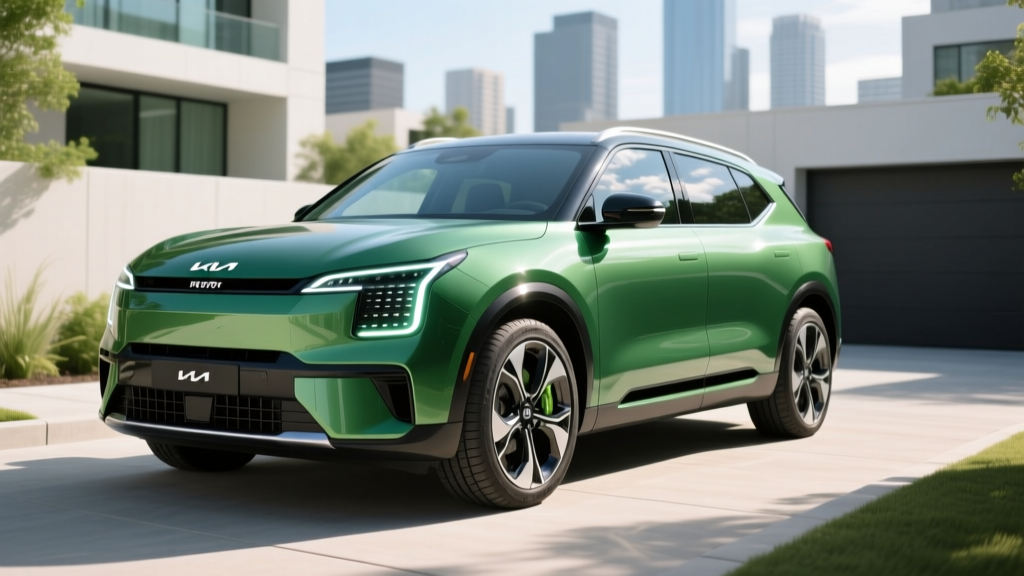
Quick Verdict: The EV9 Is a 3-Row EV That Actually Delivers
The Kia EV9 remains one of the only mainstream three-row electric SUVs that doesn't cost north of $80,000. For 2026, it carries over the same powertrain lineup that made it a hit: a single-motor rear-wheel-drive option for maximum range and a dual-motor all-wheel-drive setup that transforms this 5,400-pound family hauler into a genuinely quick vehicle. If you've been searching for Kia EV9 0-60 numbers to understand just how fast this SUV really is, you're in the right place — we've got every trim covered, along with the charging, range, and pricing data you need to make a decision.
The EV9 isn't perfect. Its real-world highway range falls short of the EPA sticker, DC fast charging is adequate but not class-leading, and the third row is best reserved for children. But as a daily-driver family EV with legitimate road-trip capability, it occupies a space no other automaker has filled at this price point.
Performance: Kia EV9 0-60 Times by Trim
The EV9 offers two distinct powertrain configurations, and the acceleration gap between them is substantial. Here's what you can expect from a standing start:
| Trim / Drivetrain | Horsepower | Torque (lb-ft) | 0-60 mph | Drivetrain | Top Speed |
|---|---|---|---|---|---|
| Light / Wind / Land (RWD) | 215 hp | 258 | 7.8 sec | Rear-Wheel Drive | 115 mph |
| Wind / Land / GT-Line (AWD) | 379 hp | 439 | 4.9 sec | Dual-Motor AWD | 124 mph |
| GT-Line w/ Boost (AWD) | 429 hp* | 516* | 4.5 sec | Dual-Motor AWD | 124 mph |
*GT-Line Boost output is available for 10-second intervals via the Boost button on the steering wheel.
The AWD models are the performance story here. A 4.5-to-4.9-second 0-60 time in a three-row SUV is territory previously reserved by vehicles like the Tesla Model X — and the EV9 accomplishes it at roughly half the price. The dual-motor setup provides confident highway merging and passing, and the instant torque delivery means you never feel like you're waiting for the powertrain to wake up.
The RWD model's 7.8-second sprint is perfectly adequate for daily driving but noticeably leisurely when the vehicle is fully loaded with passengers and cargo. If acceleration matters to you — and in a heavy EV, it matters more than in a gas car because you feel the mass during lane changes and emergency maneuvers — the AWD is worth the premium.
Range and Efficiency: EPA Estimates vs. Real-World Reality
| Configuration | EPA Est. Range | Real-World Highway | Real-World Cold (30°F) |
|---|---|---|---|
| RWD (Light/Wind/Land) | 304 mi (Wind/Land) | ~250–270 mi | ~220–240 mi |
| AWD (Wind/Land/GT-Line) | 270–280 mi | ~230–250 mi | ~195–215 mi |
Cold-weather figures assume highway speeds of 70–75 mph with cabin heating active. City driving with regenerative braking recovers some efficiency.
The EV9's battery is a 100.0 kWh gross capacity (approximately 96 kWh usable) pack using NMC (nickel manganese cobalt) chemistry. This is a larger battery than most competitors in the segment, and it's the reason the EV9 can hit the 300-mile mark despite its boxy, un-aerodynamic profile.
Efficiency varies significantly by configuration. According to fueleconomy.gov, the RWD Wind/Land trims achieve approximately 88 MPGe combined (about 34 kWh/100 mi), while AWD models drop to roughly 83 MPGe combined (about 37 kWh/100 mi). These are competitive numbers for a vehicle this size, but they mean your electricity cost per mile will be higher than in a smaller EV like the Hyundai Ioniq 5 or Tesla Model Y.
The real-world range gap is where buyers need to pay attention. The EV9's tall, flat-fronted design creates significant aerodynamic drag at highway speeds. On a 75-mph interstate run, expect to use 10–15% more energy than the EPA combined cycle suggests. In freezing temperatures, the battery's internal resistance increases and cabin heating demands energy, compounding the loss. If your typical road trip involves 250+ miles of highway driving in winter, you'll need to plan at least one charging stop.
Charging Speed: DC Fast Charging and Home Level 2
| Charging Method | Max Rate | Speed / Time | Connector |
|---|---|---|---|
| Level 1 (120V household) | 1.4 kW | ~3–4 mi/hr | J1772 / NACS |
| Level 2 (240V home) | 10.9 kW | ~28–32 mi/hr (full charge ~10 hr) | J1772 / NACS |
| DC Fast Charge | 236 kW peak | 10–80% in ~24 min | CCS1 / NACS (adapter) |
The EV9's 800-volt electrical architecture is one of its most important technical features. It enables peak DC fast-charging rates of up to 236 kW, which translates to a 10–80% session in roughly 24 minutes at a compatible 350 kW charger. That's not the fastest in the EV market — the Hyundai Ioniq 5 hits 10–80% in about 18 minutes — but it's competitive for a vehicle with a 100 kWh battery.
Here's what the charging curve actually looks like in practice, because peak kW numbers can be misleading:
- 10–40% SoC: Sustains near peak rate (200–236 kW)
- 40–60% SoC: Tapers to approximately 150–175 kW
- 60–80% SoC: Further reduction to ~100–120 kW
- Above 80% SoC: Drops sharply to ~50 kW and below (battery protection)
This taper behavior means that while 10–80% takes 24 minutes, a 10–100% session will take closer to 45–50 minutes. On road trips, the optimal strategy is to charge to 80% and move on — the time penalty for that last 20% is severe.
For 2026, the EV9 ships with the NACS (North American Charging Standard) port on new models, providing native access to Tesla's Supercharger network — the most reliable public charging infrastructure in the U.S. CCS1 ports are still present on carryover 2025-model inventory. If you purchase a CCS-equipped EV9, Kia offers a NACS adapter, and the expanding Supercharger network is accessible via adapter.
Home charging at 10.9 kW (48 amps on a 60-amp circuit) adds roughly 30 miles of range per hour. A full overnight charge from near-empty takes approximately 10 hours, which is perfectly manageable with a Level 2 home charger. Budget $500–$1,500 for a quality Level 2 unit (Emporia, ChargePoint, Wallbox) plus electrician installation, which may require a panel upgrade if your home's electrical service is below 200 amps.
Pricing, Trims, and Federal Tax Credit Eligibility
| Trim | Drivetrain | MSRP | Est. After §30D Credit* |
|---|---|---|---|
| Light | RWD | $56,395 | ~$48,895 |
| Wind | RWD | $61,395 | ~$53,895 |
| Wind | AWD | $63,395 | ~$55,895 |
| Land | AWD | $68,995 | ~$61,495 |
| GT-Line | AWD | $73,995 | ~$66,495 |
*§30D credit amount shown is the maximum $7,500. Actual credit depends on battery sourcing compliance, buyer income, and point-of-sale transfer eligibility. See IRS rules below.
The EV9's MSRP lands it in a competitive position for a three-row electric SUV, and the federal §30D clean vehicle tax credit can reduce effective cost significantly. However, eligibility is not automatic. Here's what you need to verify before counting on the credit:
- MSRP Cap: SUVs/vans must be ≤ $80,000 — all EV9 trims qualify ✓
- Buyer Income Cap: AGI ≤ $150,000 (single) / $300,000 (joint) — verify your MAGI
- Battery Sourcing: Critical minerals and battery components must meet phased-in thresholds per the Inflation Reduction Act; Kia's sourcing compliance varies by build date — confirm with your dealer using the VIN-specific IRS lookup tool
- Point-of-Sale Transfer: You can transfer the credit to the dealer at purchase for an immediate price reduction, or claim it on your tax return
- Final Assembly: Vehicle must be assembled in North America — the EV9 is built in West Point, Georgia ✓
Consult a tax professional for your specific situation. Credit rules are subject to change. Source: IRS.gov
Interior, Cargo, and Technology
The EV9's interior is where it earns its family-SUV credentials. The cabin materials on Land and GT-Line trims are genuinely premium — soft-touch surfaces, well-bolstered seats, and a minimalist design language that avoids the over-screened feel of some competitors.
Passenger and Cargo Dimensions:
- First-row legroom: 41.4 inches
- Second-row legroom: 42.8 inches (captain's chairs) / 42.8 inches (bench)
- Third-row legroom: 32.0 inches — tight for adults on anything beyond short trips
- Cargo behind 3rd row: 20.2 cu ft
- Cargo behind 2nd row: 43.5 cu ft
- Cargo behind 1st row (max): 81.7 cu ft
The second row is genuinely spacious and comfortable, making the EV9 an excellent five-passenger vehicle with occasional third-row use. The 20.2 cu ft behind the third row is enough for a few grocery bags or a compact stroller but not much more. Fold the third row and you get a very usable 43.5 cu ft.
On the technology front, the EV9 features a dual 12.3-inch display setup (instrument cluster and infotainment), wireless Apple CarPlay and Android Auto, and Kia's Highway Driving Assist 2 — a Level 2 driver-assistance system that includes adaptive cruise control with lane centering. This is SAE Level 2 automation, meaning the driver must remain fully attentive and keep hands on the wheel. It is not self-driving.
One standout feature: the available Vehicle-to-Load (V2L) capability, which lets you power external devices (camping equipment, power tools, even a small appliance during an outage) through an interior outlet, drawing from the EV9's large battery pack. This is a genuine utility feature that most competitors don't offer.
Warranty and Long-Term Ownership
Kia backs the EV9 with one of the strongest warranties in the industry:
- Basic warranty: 5 years / 60,000 miles
- Powertrain warranty: 10 years / 100,000 miles
- EV battery warranty: 10 years / 100,000 miles (covers degradation below 70% of original capacity)
The 70% capacity retention threshold is the industry standard, matching Hyundai and exceeding most competitors. If your EV9's battery degrades to below 70% of its original 96 kWh usable capacity within the warranty period, Kia will repair or replace it. Based on current NMC degradation data, most owners should expect to retain 85–90% capacity at the 100,000-mile mark under normal use — well above the warranty threshold.
Pros and Cons
- Only mainstream 3-row EV SUV under $75,000
- AWD models hit 0-60 in 4.5–4.9 seconds
- 100 kWh battery provides genuine 270–300 mi range
- 800V architecture enables 236 kW DC fast charging
- NACS port on 2026 models (Supercharger access)
- 10-year / 100,000-mi battery and powertrain warranty
- V2L capability for external power
- Spacious second row with captain's chair option
- Third row is tight (32.0" legroom) — kids only
- Real-world highway range drops 10–15% below EPA
- Cold-weather range loss is significant (~25% at 30°F)
- 24-minute 10–80% DC charge is good but not class-leading
- Base MSRP of $56,395 is steep before incentives
- Towing capacity limited to 2,000–5,000 lbs depending on trim
- Some owners report wind noise at highway speeds
Who Should Buy the Kia EV9?
Choose the EV9 if: You need three rows of seating for a growing family, want EV running costs and zero tailpipe emissions, and your typical daily driving is under 200 miles with home charging available. The AWD model is the sweet spot for those who value acceleration and all-weather confidence.
Look elsewhere if: You regularly need adult-sized third-row seating (consider the Rivian R1S or wait for larger EV SUVs), you frequently drive 300+ miles in cold weather without charging access, or your budget is firmly under $50,000 (the Hyundai Ioniq 5 or Kia EV6 offer two rows at lower prices).
Frequently Asked Questions
What is the Kia EV9's 0-60 time?
The RWD EV9 reaches 60 mph in 7.8 seconds. The dual-motor AWD model does it in 4.9 seconds, and the GT-Line with Boost mode drops that to 4.5 seconds — making it one of the quickest three-row SUVs on the market regardless of powertrain type.
What is the real-world range of the Kia EV9?
The EPA rates the RWD EV9 at up to 304 miles and the AWD at 270–280 miles. In real-world highway driving at 70–75 mph, expect 250–270 miles from the RWD and 230–250 miles from the AWD. Cold weather (below freezing) reduces these figures by an additional 15–25%.
How fast does the Kia EV9 charge at home and on DC fast chargers?
On a Level 2 home charger (240V, 48A), the EV9 charges at up to 10.9 kW, adding roughly 30 miles of range per hour with a full charge taking about 10 hours. On a DC fast charger, it peaks at 236 kW and charges from 10–80% in approximately 24 minutes at a 350 kW station.
Does the 2026 Kia EV9 qualify for the $7,500 federal tax credit?
The EV9 is assembled in Georgia and falls under the $80,000 MSRP cap for SUVs, so it clears two major hurdles. However, the full §30D credit also depends on battery critical-mineral and component sourcing requirements, which vary by production batch, and buyer income limits ($150K single / $300K joint AGI). Use the IRS VIN lookup tool and consult a tax professional to confirm your eligibility.
Is the Kia EV9 worth buying over the Tesla Model X or Rivian R1S?
The EV9's advantage is price. A well-equipped AWD Land trim comes in around $69,000 (potentially ~$61,500 after the tax credit), while the Model X starts above $80,000 and the R1S above $75,000. If you don't need the Model X's falcon-wing doors or the R1S's off-road capability, the EV9 delivers comparable daily usability at a significantly lower cost. The trade-off is less third-row space and a less advanced driver-assist suite.
What is the Kia EV9's towing capacity?
The RWD EV9 is rated for up to 2,000 pounds. The AWD model with the factory tow package can tow up to 5,000 pounds — enough for a small boat, utility trailer, or light camper. Keep in mind that towing significantly reduces range, potentially by 30–50% depending on trailer weight and aerodynamics.