Why a Kia EV6 Lease Deserves a Hard Look in 2026
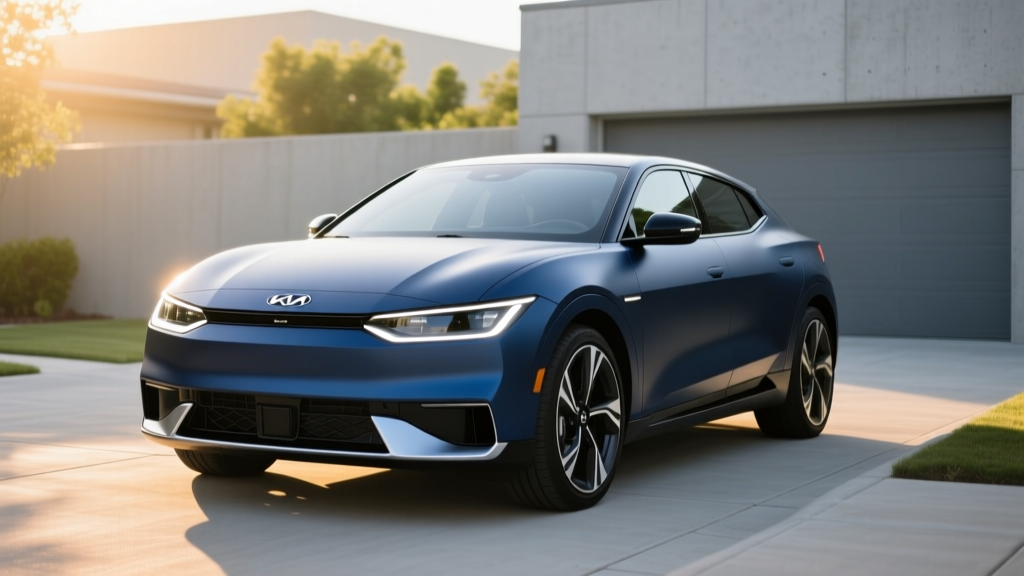
The Kia EV6 remains one of the most compelling electric crossovers on the market. With its 800-volt architecture, striking design, and practical range, it competes directly with the Hyundai Ioniq 5, Tesla Model Y, and Ford Mustang Mach-E. But before you sign a lease agreement, you need to understand what this vehicle actually costs to own — not just the monthly payment, but the full five-year financial picture including charging, insurance, maintenance, depreciation, and incentives.
Leasing an EV introduces unique considerations. On one hand, you sidestep the steepest part of the depreciation curve — a real concern with EVs. On the other, the federal tax credit (§30D) behaves differently in a lease versus a purchase. This guide walks through every dollar so you can decide whether a Kia EV6 lease makes financial sense for your situation.
2026 Kia EV6 Key Specifications (Lease-Relevant Trims)
| Spec | Light Wind RWD | Wind AWD | GT-Line AWD |
|---|---|---|---|
| EPA Range | 310 miles | 282 miles | 274 miles |
| Real-World Range (highway/cold) | ~240–270 mi | ~220–250 mi | ~210–240 mi |
| Battery (usable) | 77.4 kWh (NMC) | 77.4 kWh (NMC) | 77.4 kWh (NMC) |
| Peak DC Fast Charge | 239 kW | 239 kW | 239 kW |
| 10–80% DC Charge Time | ~18 min | ~18 min | ~18 min |
| Level 2 Charge Rate | 10.9 kW | 10.9 kW | 10.9 kW |
| Horsepower | 225 hp | 320 hp | 320 hp |
| 0–60 mph | 7.2 sec | 5.1 sec | 5.1 sec |
| MPGe (combined) | 134 MPGe | 117 MPGe | 117 MPGe |
| Base MSRP | $42,900 | $48,900 | $52,500 |
| Battery/Powertrain Warranty | 10 yr / 100,000 mi | 10 yr / 100,000 mi | 10 yr / 100,000 mi |
Real-World Range Reality: The EPA rates the EV6 Wind AWD at 282 miles. In our experience, highway driving at 70+ mph reduces this to roughly 230–250 miles, and cold-weather conditions (below 30°F) can push it down to 200–220 miles. Plan road trips around ~220 miles of usable range to stay comfortable. The 800V architecture's rapid 10–80% charging (~18 minutes at a 350 kW station) partially compensates by keeping stops short.
The 5-Year Total Cost of Owning a Kia EV6
Total cost of ownership (TCO) is where EVs either shine or sting, depending on your driving habits, electricity rates, and whether you buy or lease. Below is a five-year projection for a Kia EV6 Wind AWD leased at typical market terms, driven 12,000 miles per year.
| Cost Category | 5-Year Total (EV6 Lease) | Comparable Gas SUV (Lease) | Notes |
|---|---|---|---|
| Lease Payments (60 months) | $27,000–$33,000 | $24,000–$30,000 | EV6 at ~$450–$550/mo depending on term, money factor, and incentives applied |
| Fuel / Charging | $3,600–$5,400 | $7,500–$9,000 | See detailed cost-per-mile comparison below |
| Insurance | $9,000–$12,000 | $7,200–$9,600 | EV premiums typically 15–25% higher |
| Maintenance | $1,200–$1,800 | $3,000–$4,500 | No oil changes; regen saves brake pads |
| Depreciation (lessee exposure) | $0 (fixed at signing) | $0 (fixed at signing) | Lease locks in residual; lessor absorbs risk |
| Tax Credit / Incentives | –$3,750 to –$7,500 | $0 | Lease credit passes through as cap reduction (see below) |
| Estimated 5-Year Net Cost | $33,300–$44,700 | $38,700–$49,100 | EV6 lease often breaks even or saves $2,000–$5,000 |
The key takeaway: while the EV6 lease payment itself may run slightly higher than a comparable gas crossover, the savings in fuel and maintenance — combined with federal incentives — frequently tip the scales in the EV's favor over five years.
Federal Tax Credit: How §30D Works on a Kia EV6 Lease
The federal EV tax credit under IRS §30D offers up to $7,500 for qualifying new electric vehicles. However, the rules are specific, and leasing changes how you access the credit.
§30D Eligibility Checklist (2026 Rules)
- MSRP Cap: SUVs/crossovers must have an MSRP at or below $80,000. All EV6 trims qualify.
- Buyer Income Limits: Adjusted gross income must not exceed $150,000 (single), $225,000 (head of household), or $300,000 (married filing jointly).
- Battery Sourcing: Up to $3,750 requires critical minerals from the US or FTA partners; up to $3,750 requires battery components manufactured in North America. Both halves together yield the full $7,500.
- Foreign Entity of Concern (FEOC): Vehicles with battery components or critical minerals from a FEOC (including certain Chinese suppliers) are disqualified. Kia has adjusted sourcing for the 2026 EV6 to maintain eligibility — confirm with your dealer at signing.
- Point-of-Sale Transfer: You may transfer the credit to the dealer at purchase for an immediate price reduction, rather than waiting to claim it on your tax return.
The Lease Loophole: When you lease an EV, the lessor (the financing company) is technically the buyer. Under the "commercial clean vehicle credit" (§45W), the lessor can claim the full $7,500 regardless of the lessee's income or the battery-sourcing rules that apply to retail purchases. Most major lessors pass this savings through as a capitalized cost reduction — effectively lowering your lease payment. This means even buyers who exceed the §30D income caps can benefit from the credit through a lease. Always confirm with the dealer that the $7,500 is being applied as a cap cost reduction on your paperwork.
For full details on current eligibility, consult the IRS §30D guidance page and verify the EV6's sourcing status at fueleconomy.gov.
Charging Cost vs. Gas: The Per-Mile Math
This is where the EV6 delivers its most consistent savings. Let's compare real numbers.
Cost Per Mile: EV6 Wind AWD vs. Comparable Gas Crossover
| Metric | Kia EV6 Wind AWD | Gas Crossover (28 MPG combined) |
|---|---|---|
| Energy/Fuel Efficiency | 31 kWh/100 mi (117 MPGe) | 28 MPG combined |
| Home Charging Rate | $0.14/kWh (US avg.) | — |
| Gas Price | — | $3.40/gal (US avg.) |
| Cost Per Mile (home charging) | $0.043 | $0.121 |
| Cost Per Mile (DC fast charging) | $0.10–$0.14 | $0.121 |
| Annual Cost (12,000 mi, 80% home) | $660 | $1,452 |
| 5-Year Fuel/Energy Cost | $3,300 | $7,260 |
| 5-Year Savings | ~$3,960 | |
At the US average electricity rate of $0.14/kWh and 80% home charging, the EV6 costs roughly $0.043 per mile to fuel — about one-third the cost of a gas crossover getting 28 MPG at $3.40/gallon. Over five years and 60,000 miles, that's nearly $4,000 in fuel savings.
Even if you rely heavily on public DC fast charging at $0.35–$0.48/kWh (typical Electrify America or EVgo rates), your per-mile cost stays competitive with gas. The savings widen significantly if your utility offers off-peak EV rates ($0.08–$0.11/kWh) or if you have rooftop solar.
Maintenance Savings: What You Skip and What You Still Pay
EVs eliminate the most frequent and costly maintenance items on gas vehicles. Here's the breakdown:
| Maintenance Item | Kia EV6 (5-Year Cost) | Gas Crossover (5-Year Cost) |
|---|---|---|
| Oil Changes | $0 | $450–$750 (6–10 changes) |
| Brake Pads/Rotors | $0–$200 | $600–$1,200 |
| Transmission Fluid | $0 | $150–$300 |
| Air Filters (engine) | $0 | $100–$200 |
| Cabin Air Filter | $150–$250 | $150–$250 |
| Tire Rotation/Replacement | $800–$1,200 | $800–$1,200 |
| Coolant / Brake Fluid Service | $100–$200 | $200–$400 |
| Spark Plugs | $0 | $200–$400 |
| 5-Year Total | $1,050–$1,850 | $2,650–$4,700 |
Regenerative braking is the unsung hero here. By using the electric motor to slow the car and recapture energy, the EV6 dramatically reduces brake pad wear. Many EV owners report original brake pads lasting well past 80,000 miles. Combined with zero oil changes and no engine-related consumables, the EV6 saves roughly $1,500–$2,500 in maintenance over five years.
One note: EV tires tend to wear faster than on gas vehicles due to the EV6's instant torque and heavier curb weight (~4,500 lbs). Budget for a tire replacement around 35,000–45,000 miles if you drive aggressively. EV-specific tires (like the Michelin Pilot Sport EV or Hankook iON) cost $200–$300 per corner but last longer and reduce road noise.
Insurance Reality: The Cost EV Buyers Often Overlook
Insurance is consistently the most underestimated EV ownership cost. The Kia EV6 will typically cost 15–25% more to insure than a comparably priced gas crossover. Here's why:
- Higher repair costs: EV battery packs and power electronics are expensive to replace after a collision. Even minor rear-end damage can trigger a battery safety inspection costing thousands.
- Specialized labor: Fewer body shops have high-voltage certification, limiting repair competition and raising labor rates.
- Vehicle value: The EV6's MSRP sits higher than many gas alternatives in its size class, raising comprehensive and collision premiums.
- Parts availability: Kia EV parts supply chains are still maturing compared to decades of gas-car infrastructure.
Expect to pay $150–$200/month for full coverage on an EV6 Wind AWD, depending on your state, driving record, and deductible. That's roughly $1,800–$2,400 per year — about $300–$500 more annually than a gas equivalent.
How to reduce it: Shop at least three quotes. Insurers like GEICO, Progressive, and State Farm have become more competitive on EVs. Some offer discounts for garaging the vehicle, bundling home/auto, or completing a defensive driving course. If you lease, your lessor will require comprehensive and collision coverage with specific deductible maximums (usually $1,000).
Depreciation and Resale: Why Leasing Makes Sense for EVs
EV depreciation has been volatile. Between 2023 and 2025, several mainstream EVs saw steeper-than-expected value drops driven by Tesla's aggressive price cuts, rapid battery technology improvements, and shifting consumer demand. The Kia EV6 has held its value better than some competitors thanks to strong reviews and Kia's 10-year/100,000-mile battery warranty, but it still depreciates faster than a Toyota RAV4 Hybrid.
Typical 3-year EV depreciation runs 45–55% of original MSRP, compared to 35–45% for popular gas crossovers. Over five years, expect an EV6 to retain roughly 35–42% of its original value.
This is precisely why leasing is strategic. A lease locks in the vehicle's residual value at signing. If the EV6 depreciates faster than projected, the lessor absorbs that loss — not you. You simply return the car at lease-end and walk away (or negotiate a buyout if the market value exceeds the residual). This de-risks the biggest financial uncertainty in EV ownership.
Conversely, if EV resale values stabilize or improve as the market matures, you miss out on that equity. But given current trends and the pace of battery technology advancement, leasing remains the lower-risk play for most buyers in 2026.
State, Local, and Utility Incentives
Your location matters enormously. Beyond the federal credit, many states, municipalities, and utility companies offer additional incentives that can shave hundreds or even thousands off your effective lease cost. These vary widely by jurisdiction and change frequently. Always verify current programs before signing.
Examples of the types of incentives available (amounts and availability vary):
- State EV rebates: States like California (CVRP), Colorado, Massachusetts, and New York offer purchase/lease rebates ranging from $1,000 to $5,000+ depending on income and vehicle price.
- Utility rebates: Many electric utilities offer $250–$1,000 rebates for purchasing or leasing an EV, plus additional rebates ($300–$800) for installing a Level 2 home charger.
- HOV lane access: States including California, New York, and Virginia grant solo HOV lane access to EVs — a significant commute-time benefit with real economic value.
- Reduced registration fees or tax exemptions: Some states waive sales tax on EVs or offer reduced annual registration fees.
- Time-of-use (TOU) electricity rates: Many utilities offer EV-specific TOU plans with off-peak rates as low as $0.06–$0.09/kWh, dramatically reducing home charging costs if you charge overnight.
Check your state energy office website, your utility's EV program page, and the AFDC state incentives database for current programs in your area.
Kia EV6 Lease Decision Framework
Choose a Kia EV6 Lease If:
- You want to access the $7,500 federal credit without worrying about income caps or battery-sourcing rules (via the lease passthrough)
- You drive 10,000–15,000 miles/year and have reliable home Level 2 charging access
- You want to avoid long-term depreciation risk on a rapidly evolving technology
- You value the EV6's 800V fast charging (~18 min 10–80%) for occasional road trips
- Your total five-year budget accommodates slightly higher insurance in exchange for fuel and maintenance savings
Consider Buying or a Different Vehicle If:
- You drive more than 15,000 miles/year (lease mileage penalties add up fast at $0.20–$0.30/mile)
- You lack home charging access and would rely primarily on expensive public DC fast chargers
- You want to keep the vehicle 7+ years to maximize long-term value
- Your state offers a large purchase-only rebate that doesn't apply to leases
- You prefer to build equity and avoid perpetual car payments
Frequently Asked Questions
How much does it really cost to own a Kia EV6 over 5 years?
Based on a lease at ~$500/month, 12,000 miles/year, average US electricity rates, and typical insurance, expect a 5-year net cost of roughly $33,000–$45,000 after applying the federal tax credit as a cap cost reduction. This is competitive with — and often lower than — a comparable gas crossover lease over the same period.
Do I qualify for the federal tax credit on a Kia EV6 lease?
When you lease, the lessor claims the commercial clean vehicle credit (§45W), which does not have the same income caps or battery-sourcing restrictions as the retail §30D credit. Most lessors pass the $7,500 through as a capitalized cost reduction. Confirm this explicitly with your dealer before signing — it should appear as a line item on your lease agreement.
How much do I save on fuel and maintenance with the EV6?
Compared to a 28 MPG gas crossover, you'll save approximately $3,900 on fuel over 5 years (60,000 miles) when charging primarily at home at $0.14/kWh. Maintenance savings add another $1,500–$2,500 over the same period. Combined, that's roughly $5,400–$6,400 in operational savings.
Are EVs more expensive to insure?
Yes, typically 15–25% more than comparable gas vehicles. For the EV6, expect $150–$200/month for full coverage. Higher repair costs, specialized labor, and the vehicle's MSRP all contribute. Shop multiple quotes and ask about EV-specific discounts.
How well does the Kia EV6 hold its value?
The EV6 retains an estimated 35–42% of its MSRP after five years — better than some EVs but below top gas crossovers. This depreciation volatility is exactly why leasing is attractive: you lock in the residual at signing and let the lessor absorb market risk.
What happens if I exceed my lease mileage?
Most EV6 leases come with 10,000, 12,000, or 15,000 miles per year. Excess mileage penalties typically run $0.20–$0.30 per mile. If you're unsure about your mileage needs, negotiate a higher annual allowance upfront — it's cheaper than paying penalties at lease-end.
Can I buy the EV6 at the end of my lease?
Yes, most Kia leases include a purchase option at the predetermined residual value. If the market value exceeds the residual, buying can be a smart move. If it's lower, simply return the vehicle.