Is the Kia EV6 the Right Electric Sedan for You?
The Kia EV6 is currently Kia's primary electric sedan offering, blending a fastback design with an 800-volt architecture that enables 10–80% DC fast charging in approximately 18 minutes at a peak rate of 239 kW. For 2026, the EV6 lineup starts at $44,200 (Light RWD) and reaches up to $61,600 (GT AWD), with the popular GT-Line AWD priced at $53,200. EPA range spans 232 to 310 miles depending on trim and drivetrain. It competes directly with the Tesla Model 3, Hyundai Ioniq 6, and BMW i4. If you have access to Level 2 home charging and drive fewer than 250 miles daily, the EV6 delivers a strong blend of range, charging speed, and warranty coverage — but buyers without home charging or those in extreme cold climates should weigh real-world limitations carefully before committing.
Kia's Electric Sedan Lineup: What's Available Now
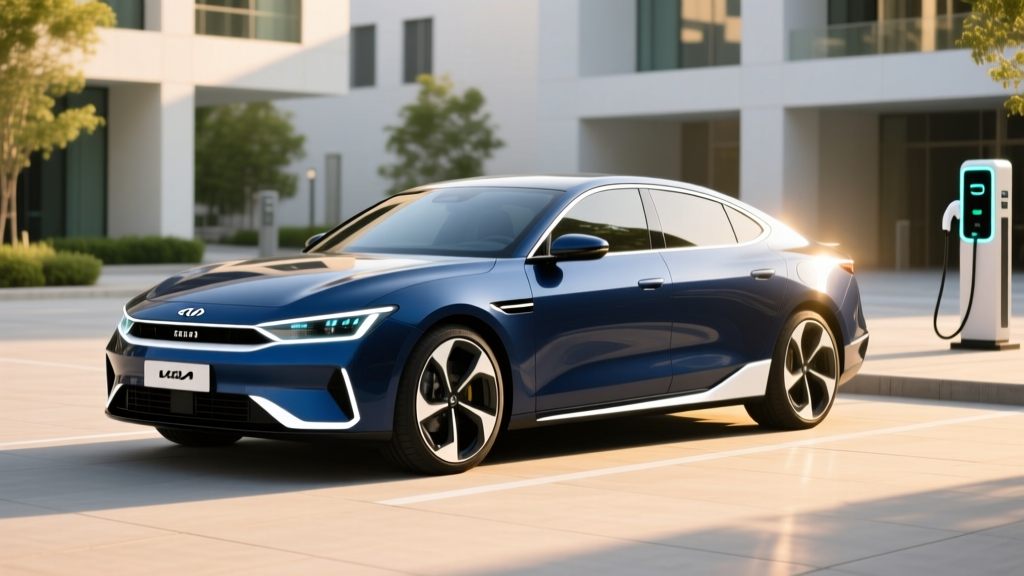
When shoppers search for a "Kia electric sedan," the Kia EV6 is the clear answer. It's a five-passenger, fastback-style crossover-sedan built on Hyundai Motor Group's E-GMP platform — the same architecture underpinning the Hyundai Ioniq 5 and Genesis GV60. The EV6 sits low and sleek, giving it sedan-like proportions with the cargo versatility of a hatchback.
Kia has confirmed the upcoming EV4 sedan — a more traditional four-door aimed at the compact electric sedan segment — but as of early 2026, the EV4 remains in the announced/preliminary stage with final U.S. specs and pricing not yet available. For now, the EV6 is the electric sedan you can actually buy.
| Spec | Light RWD | Wind RWD | GT-Line AWD | GT AWD |
|---|---|---|---|---|
| Base MSRP | $44,200 | $48,700 | $53,200 | $61,600 |
| Drivetrain | RWD | RWD | AWD | AWD |
| Horsepower | 167 hp | 225 hp | 320 hp | 576 hp |
| 0–60 mph | 7.3 sec | 6.2 sec | 4.5 sec | 3.4 sec |
| Battery (usable) | 58 kWh (LFP) | 77.4 kWh (NMC) | 77.4 kWh (NMC) | 77.4 kWh (NMC) |
| EPA Range | 232 mi | 310 mi | 282 mi | 231 mi |
| Combined MPGe | 117 MPGe | 134 MPGe | 106 MPGe | 85 MPGe |
| Peak DC Fast Charge | 180 kW | 239 kW | 239 kW | 239 kW |
| 10–80% DC Time | ~22 min | ~18 min | ~18 min | ~18 min |
| Level 2 Charge Rate | 10.9 kW | 10.9 kW | 10.9 kW | 10.9 kW |
Source: fueleconomy.gov and Kia Motors America press materials. MPGe and range figures are EPA estimates.
Real-World Range: What the EPA Sticker Doesn't Tell You
EPA vs. Reality for the EV6 Wind RWD
EPA estimate: 310 miles
Expected real-world highway (70 mph, moderate temps): ~255–275 miles
Expected real-world winter (30°F, mixed driving): ~215–240 miles
Expected real-world summer city (regenerative braking optimized): ~285–305 miles
The 310-mile EPA figure on the Wind RWD is achievable in mild conditions with a mix of city and suburban driving where regenerative braking recovers energy. However, sustained highway speeds above 70 mph push aerodynamic drag higher — expect a 10–15% reduction from the sticker number on road trips. In freezing temperatures, the EV6's heat pump (standard on Wind and above) mitigates some cabin-heating energy draw, but battery chemistry still loses efficiency in cold weather. Plan for roughly 20–30% range reduction at 20°F compared to 70°F, based on independent testing by Recurrent Auto.
For the Light RWD trim with its smaller 58 kWh LFP (lithium iron phosphate) battery, the 232-mile EPA range means real-world highway driving yields closer to 190–210 miles. This trim is best suited for commuters with predictable daily routes under 150 miles and reliable home charging.
Charging Infrastructure: Home, Public, and the 800V Advantage
The EV6's 800-volt electrical architecture is one of its strongest practical advantages. While most EVs in this price range use 400V systems, the higher voltage allows the EV6 to accept more power at compatible DC fast chargers without overheating the battery. Here's what charging actually looks like across different scenarios:
| Charging Level | Power (kW) | Miles Added per Hour | Typical Use Case |
|---|---|---|---|
| Level 1 (120V household outlet) | ~1.4 kW | ~4–5 mi/hr | Emergency/trickle only |
| Level 2 (240V home/public) | 10.9 kW | ~36–40 mi/hr | Daily home charging, overnight |
| DC Fast (350 kW station) | Peak 239 kW | ~150+ mi in 10 min | Road trips, quick top-ups |
| DC Fast (150 kW station) | ~150 kW sustained | ~100 mi in 15 min | Most common public fast chargers |
Charging curve reality: The "239 kW peak" figure is exactly that — a peak. The EV6 sustains roughly 200–235 kW from 10% to about 55% state of charge (SoC), then tapers progressively. From 55–80%, average charge rate drops to approximately 120–150 kW. Above 80%, the rate slows sharply to protect battery health — charging from 80–100% can take nearly as long as 10–80%. This is why the industry standard measurement is 10–80% time (~18 minutes), not 0–100%.
The EV6 uses the CCS1 connector for DC fast charging and J1772 for Level 2 AC. Kia has committed to adopting the NACS (Tesla) connector on future models, and adapters are available for current EV6 owners to access Tesla Supercharger V3 stations (up to 150 kW via adapter).
Home Charging Installation Costs
| Component | Cost Range | Notes |
|---|---|---|
| Level 2 EVSE (charger unit) | $350–$700 | ChargePoint Home Flex, Emporia Level 2, Grizzl-E |
| Electrician labor (240V/50A circuit) | $500–$2,000 | Depends on panel proximity, conduit run length |
| Electrical panel upgrade (if needed) | $1,500–$3,500 | Required if existing panel is 100A or maxed out |
| Permit and inspection | $50–$250 | Varies by municipality |
| Total (no panel upgrade) | $900–$2,950 | Most common scenario |
| Total (with panel upgrade) | $2,400–$6,450 | Older homes may require this |
Always get a quote from a licensed electrician before purchasing equipment. The final installation spec depends on your home's electrical panel capacity and wiring route.
EV6 vs. Gas Sedan: Real Cost of Ownership
To put the EV6's economics in perspective, here's a five-year cost comparison against a comparably priced gas sedan — the 2026 Kia K5 GT-Line (2.5T AWD, ~$37,000 MSRP) — driven 15,000 miles per year.
| Cost Category | EV6 GT-Line AWD | K5 GT-Line AWD (Gas) |
|---|---|---|
| MSRP | $53,200 | $37,000 |
| Federal tax credit (§30D) | Up to $7,500* | $0 |
| Effective purchase price | ~$45,700 | $37,000 |
| Home charger install | $1,500 (one-time) | $0 |
| Energy cost (5 yrs, 75,000 mi) | $4,500 (home charging avg $0.14/kWh) | $9,750 (28 MPG avg, $3.64/gal) |
| Maintenance (5 yrs) | ~$1,200 | ~$3,800 |
| Insurance (5 yrs, avg) | ~$10,500 | ~$8,000 |
| Estimated depreciation | ~$22,000 | ~$16,500 |
| Total 5-year cost | ~$85,400 | ~$75,050 |
| Cost per mile | ~$1.14/mi | ~$1.00/mi |
*Federal §30D tax credit eligibility depends on buyer income limits (AGI ≤ $150K single / $300K joint), MSRP caps ($55K for sedans), battery critical-mineral sourcing requirements, and point-of-sale transfer rules. Verify current eligibility at irs.gov. Consult a tax professional for your specific situation.
Key takeaway: The EV6 costs more upfront and carries higher insurance premiums, but saves substantially on fuel and maintenance. Over five years, the gap narrows to roughly $10,000 — and if electricity rates are lower in your area, or gas prices rise, the EV6 can break even sooner. Beyond five years, the EV's maintenance advantage grows because there are no oil changes, transmission fluid replacements, or spark plugs to budget for.
Tax Credits, Incentives, and What Actually Applies to the EV6
The federal §30D clean vehicle credit offers up to $7,500 for qualifying new EVs, but the EV6's eligibility is nuanced:
- MSRP cap: Sedans must be priced at or below $55,000. The EV6 Wind RWD ($48,700) qualifies; the GT-Line AWD ($53,200) qualifies; the GT AWD ($61,600) does not qualify.
- Buyer income cap: Modified AGI must not exceed $150,000 (single), $225,000 (head of household), or $300,000 (joint filing).
- Battery sourcing: The credit splits into two halves — $3,750 for critical-minerals sourcing and $3,750 for battery-component assembly. Sourcing requirements tighten annually. Check the latest DOE/Fueleconomy.gov listing for the specific model year and trim.
- Point-of-sale transfer: Since 2024, eligible buyers can transfer the credit to the dealer at purchase, reducing the out-of-pocket price immediately rather than waiting for a tax refund.
- State/local incentives: Many states offer additional rebates (California's CVRP, Colorado's state credit, etc.), but these vary by jurisdiction. Check your state's energy office or fueleconomy.gov's incentive tool.
First-Time EV Buyer Essentials: What Nobody Warns You About
| Myth | Fact |
|---|---|
| "EV batteries need replacing every 5 years" | Kia covers the EV6 battery for 10 years/100,000 miles against defects and capacity loss below 70%. Industry data from Recurrent shows most EV batteries retain 90%+ capacity at 100K miles. |
| "Charging takes hours on road trips" | With 800V architecture and a 350 kW-capable charger, the EV6 adds ~150 miles in roughly 10 minutes. A typical 300-mile road trip requires one 18-minute stop. |
| "EVs don't work in cold weather" | Range drops 20–30% in freezing temps, but preconditioning (warming the battery while plugged in) mitigates charging-speed loss. The EV6's heat pump reduces cabin-heating energy drain. |
| "I need to charge to 100% every day" | For NMC batteries (Wind, GT-Line, GT trims), daily charging to 80% extends battery longevity. Only charge to 100% before long road trips. The Light trim's LFP battery can be charged to 100% daily without degradation concerns. |
| "Public charging is unreliable everywhere" | Reliability varies by network. Tesla Superchargers (accessible via adapter) consistently report 95%+ uptime. Electrify America and EVgo have improved but still show 80–90% uptime in some regions. Plan backup chargers on long routes. |
What First-Time Buyers Should Actually Prepare For
Home charging is non-negotiable for convenience. Relying solely on public charging is possible but adds 30–60 minutes per week of detour time and costs 2–3× more per kWh than home electricity. If you live in an apartment or condo without charging access, talk to your property manager about installing shared Level 2 chargers before purchasing.
Insurance premiums are higher for EVs. The EV6 typically costs 15–30% more to insure than a comparable gas sedan due to higher repair costs and parts pricing. Get quotes from your insurer before committing — some carriers (Geico, Progressive, State Farm) offer EV-specific discounts.
Regenerative braking changes how you drive. The EV6 offers adjustable regen levels (0–3) via steering-wheel paddles. Level 3 enables near one-pedal driving in city traffic, recovering significant energy. Highway driving is best at Level 1 or 2 for coasting efficiency.
Decision Framework: Should You Buy the Kia EV6?
Choose the Kia EV6 if:
- You have (or can install) Level 2 home charging — this unlocks 80%+ of the EV ownership advantage.
- Your daily commute is under 150 miles round-trip, and you take road trips 3–5 times per year.
- You value fast DC charging capability for road trips (the 800V architecture is a genuine differentiator).
- You want a 10-year/100,000-mile battery and powertrain warranty for peace of mind.
- You qualify for the full or partial §30D tax credit, narrowing the price gap with gas alternatives.
Look elsewhere or wait if:
- You lack home charging access and your area has sparse public DC fast-charging infrastructure.
- You regularly drive in sub-20°F conditions and need maximum range — consider a larger-battery EV or a PHEV as a bridge.
- You need more than 24 cu ft of cargo space — the EV6's hatchback is practical but not SUV-level.
- You're eyeing the EV4 sedan — it's expected to be more affordable with a lower starting price, but U.S. specs aren't confirmed yet.
- Your budget is strictly under $40,000 — the EV6 Light starts at $44,200, and incentives may not close the full gap.
Frequently Asked Questions
Does the Kia EV6 qualify for the $7,500 federal tax credit?
It depends on the trim and your income. The Wind RWD ($48,700) and GT-Line AWD ($53,200) fall under the $55,000 MSRP cap for sedans and may qualify if you meet income limits and battery-sourcing requirements. The GT AWD ($61,600) exceeds the MSRP cap and does not qualify. Always verify current eligibility at irs.gov and consult a tax professional.
How long does it take to charge the EV6 at home?
On a Level 2 home charger (10.9 kW), the 77.4 kWh battery (Wind/GT-Line/GT) charges from 10% to 100% in approximately 7–8 hours — perfect for overnight charging. The smaller 58 kWh battery (Light) takes about 5–6 hours. A standard 120V outlet (Level 1) adds only 4–5 miles per hour and is not practical as a primary charging method.
Is the Kia EV6 good in snow and cold weather?
The AWD trims (GT-Line, GT) provide confident traction in snow, and the heat pump on Wind and above helps preserve range in cold weather. Expect 20–30% range reduction at freezing temperatures compared to the EPA sticker. Preconditioning the battery while plugged in before departure helps restore charging speed and efficiency.
How does the EV6 compare to the Tesla Model 3?
The Model 3 Long Range AWD ($47,740, EPA 341 mi) offers slightly more range and access to the full Supercharger network natively. The EV6 counters with faster peak charging (239 kW vs. ~250 kW, but on more widely available 350 kW stations), a 10-year warranty (vs. Tesla's 4-year/50K basic + 8-year/120K battery), and a more conventional interior layout. The Model 3 benefits from NACS-native charging; the EV6 requires an adapter for Superchargers.
What's the difference between the LFP and NMC batteries in the EV6?
The Light RWD trim uses a 58 kWh LFP (lithium iron phosphate) battery — it's heavier with lower energy density, but more durable, less expensive, and can be charged to 100% daily without degradation concerns. The Wind, GT-Line, and GT trims use a 77.4 kWh NMC (nickel manganese cobalt) battery — higher energy density for more range, but Kia recommends limiting daily charge to 80% for longevity, reserving 100% for road trips.
What is the EV6's towing capacity?
The AWD trims are rated to tow up to 2,700 pounds (braked trailer). The RWD trims are rated at 1,650 pounds. Towing significantly reduces range — expect a 30–50% reduction depending on trailer weight and speed.