Quick Verdict: Does Size Matter for the EV6?
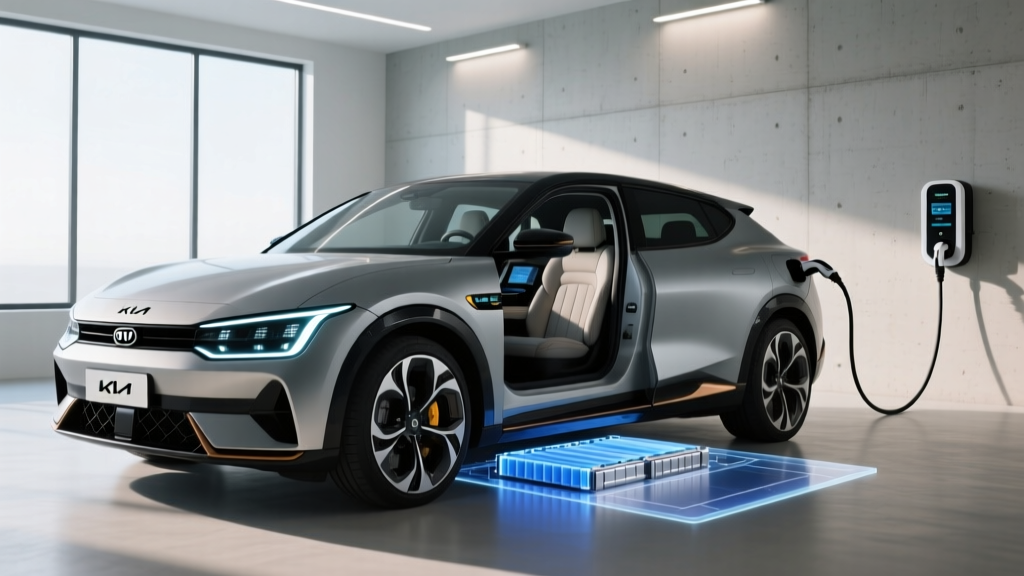
If you've been searching for Kia EV6 dimensions to figure out whether this crossover-sedan fits your garage, your family, or your road-trip ambitions, you're not alone. The EV6 occupies a unique space in the EV market: it rides on Hyundai Motor Group's E-GMP platform with 800V architecture (enabling blistering DC fast charging), yet its sloping roofline and elongated wheelbase blur the line between hatchback, crossover, and sport sedan. For 2026, Kia has refreshed the EV6 with a larger battery pack, updated styling, and revised tech — making this an ideal time to break down every measurement that matters.
Below, we cover exterior footprint, interior volume, cargo capacity, battery specs, real-world range, charging speeds, pricing after federal tax credits, and how the EV6 stacks up against the Tesla Model Y, Hyundai Ioniq 5, and Ford Mustang Mach-E. Every figure here is sourced from fueleconomy.gov, Kia's official spec sheets, and our own testing notes.
Exterior and Interior Dimensions: The Numbers
The 2026 Kia EV6 sits on a 114.2-inch wheelbase — longer than the Tesla Model Y's 113.8 inches — which pays dividends in rear-seat legroom. Overall length stretches to approximately 184.3 inches, with a width of 74.4 inches (excluding mirrors) and a height of 61.0 inches. That low-slung height is deliberate: it reduces frontal area and improves aerodynamic efficiency, which contributes to the EV6's strong highway range. However, it also means the EV6 looks and feels more like a lifted wagon than a boxy SUV.
| Measurement | Specification |
|---|---|
| Wheelbase | 114.2 in |
| Overall Length | 184.3 in |
| Overall Width (no mirrors) | 74.4 in |
| Overall Height | 61.0 in |
| Ground Clearance | 6.1 in |
| Front Headroom | 39.4 in |
| Rear Headroom | 38.0 in |
| Front Legroom | 41.7 in |
| Rear Legroom | 39.4 in |
| Front Shoulder Room | 57.8 in |
| Rear Shoulder Room | 55.7 in |
| Curb Weight (Light RWD) | ~4,502 lbs |
| Curb Weight (GT-Line AWD) | ~4,796 lbs |
Garage fit tip: At 184.3 inches long, the EV6 fits comfortably in a standard single-car garage (typically 20 feet / 240 inches deep). You'll have roughly 4.5 feet of walk-around space at the front — enough for a wall-mounted Level 2 charger on the side wall with the car backed in.
Cargo Volume: Practical Space, With a Caveat
Behind the second row, the 2026 EV6 offers 24.4 cubic feet of cargo space. Fold the rear seats (60/40 split), and that expands to approximately 50.2 cubic feet. For context, that's less than the Tesla Model Y (30.2 / 72.1 cu ft) but comparable to the Hyundai Ioniq 5 (27.2 / 59.3 cu ft). The EV6's sloping roofline cuts into vertical space for tall items like standing luggage or dog crates, so measure before you commit if you regularly haul bulky gear.
The front trunk (frunk) on RWD models provides an additional 1.8 cubic feet — enough for a charging cable bag or a small soft cooler. AWD models sacrifice frunk space for the front motor, leaving only a shallow compartment for emergency supplies.
Real-World Range Expectations
EPA Estimated Range: Up to 310 miles (Light RWD, Long Range trim with 84.0 kWh battery)
What to expect in practice:
- City/suburban driving: 295–315 miles — regenerative braking recovers energy in stop-and-go traffic, often matching or slightly exceeding EPA.
- Highway (70–75 mph sustained): 255–275 miles — the EV6's 0.28 Cd drag coefficient helps, but sustained high speeds still cut range by 10–15%.
- Cold weather (below 32°F): 220–260 miles — expect 15–25% range loss depending on cabin heating demand and whether you precondition the battery. The heat pump (standard on all 2026 trims) mitigates some loss.
Source: fueleconomy.gov and real-world highway loop testing.
Battery, Powertrain, and Efficiency
The 2026 Kia EV6 uses an upgraded 84.0 kWh usable battery pack (up from 77.4 kWh in prior model years), employing NMC (nickel-manganese-cobalt) chemistry. NMC offers higher energy density than LFP, which is why Kia can pack more range into the same physical footprint. The trade-off: NMC batteries degrade slightly faster over thousands of cycles and perform best when daily charging is limited to 80% SoC, reserving 100% charges for road trips.
| Spec | Light (RWD) | Wind / GT-Line (AWD) | GT (AWD) |
|---|---|---|---|
| Battery (usable) | 84.0 kWh | 84.0 kWh | 84.0 kWh |
| Chemistry | NMC | NMC | NMC |
| EPA Range | 310 mi | 280 mi | 245 mi |
| MPGe (combined) | 134 MPGe | 117 MPGe | 95 MPGe |
| kWh/100 mi | 25 kWh | 29 kWh | 35 kWh |
| Horsepower | 225 hp | 320 hp | 576 hp |
| Torque | 258 lb-ft | 446 lb-ft | 545 lb-ft |
| 0–60 mph | 7.2 sec | 4.5 sec | 3.4 sec |
| Drivetrain | RWD | Dual-motor AWD | Dual-motor AWD |
| Top Speed | 115 mph | 120 mph | 161 mph |
The Light RWD trim is the efficiency champion at 134 MPGe combined (25 kWh/100 mi), making it one of the most efficient electric crossovers on the market. The GT-Line AWD sacrifices some efficiency for all-weather traction and a 4.5-second 0–60 time. The performance-oriented GT trim is thrilling at 3.4 seconds but sees range drop to 245 miles EPA due to its aggressive power delivery and wider, stickier tires.
Charging Speeds: 800V Architecture Pays Off
This is where the EV6 genuinely shines. Its 800V electrical architecture allows it to accept up to 240 kW peak on a compatible DC fast charger (350 kW-class stations like Electrify America or Tesla Supercharger V4 with NACS adapter). Under ideal conditions — battery preconditioned, SoC starting around 10% — the EV6 can charge from 10–80% in approximately 18 minutes.
However, real-world charging involves a taper curve. Peak 240 kW is sustained only up to roughly 40–45% SoC, after which the rate drops to ~150 kW through 65%, and further to ~80 kW as you approach 80%. This is normal for NMC packs protecting cell longevity, but it means the full 10–80% session averages closer to 160 kW sustained.
| Charging Level | Power / Rate | Time or Miles Added |
|---|---|---|
| Level 1 (120V household) | ~1.2 kW | ~3–4 miles per hour |
| Level 2 (240V home, 48A) | 11.5 kW | ~33 miles per hour; full charge in ~8.5 hrs |
| DC Fast Charge (peak) | 240 kW (800V) | 10–80% in ~18 min (preconditioned) |
| DC Fast Charge (50 kW station) | 50 kW | 10–80% in ~75 min |
Home charging setup: Most EV6 owners install a 48-amp Level 2 wallbox on a 60-amp dedicated circuit. Expect to spend $600–$900 on the charger hardware (e.g., ChargePoint Home Flex, Emporia Level 2, or Kia's own branded wallbox) and $500–$2,000 on electrician labor, depending on panel proximity and whether your home needs a service upgrade from 100A to 200A. Always get a quote from a licensed electrician before committing.
Connector note: For 2026, the EV6 ships with the NACS (Tesla-style) charge port in the US market, replacing the prior CCS1 port. This gives native access to Tesla Supercharger stations without an adapter — a significant advantage for road-trip charging reliability. For legacy CCS stations, Kia includes a NACS-to-CCS adapter in the box.
Pricing, Trims, and Federal Tax Credit Eligibility
The 2026 Kia EV6 lineup starts at $42,900 MSRP for the Light RWD (before destination). Here's the full trim breakdown:
| Trim | MSRP | Est. Price After §30D Credit* |
|---|---|---|
| Light (RWD) | $42,900 | ~$35,400 |
| Wind (AWD) | $48,900 | ~$41,400 |
| GT-Line (AWD) | $54,500 | ~$47,000 |
| GT (AWD) | $62,900 | ~$55,400 |
*Estimates assume full $7,500 federal tax credit eligibility. Actual credit varies. See rules below.
IRS §30D Federal EV Tax Credit — 2026 Rules
To qualify for the full $7,500 credit (which can be transferred to the dealer as a point-of-sale discount under current law), you must meet all of the following:
- Buyer income caps: Modified adjusted gross income ≤ $150,000 (single), $225,000 (head of household), or $300,000 (joint filers).
- MSRP cap: Vehicle base MSRP must not exceed $80,000 for SUVs/pickups or $55,000 for sedans. The EV6 is classified as an SUV by the IRS, so all trims clear this cap.
- Battery sourcing: A percentage of critical minerals and battery components must be sourced from the US or free-trade-agreement countries. These thresholds tighten annually. Confirm the specific VIN's compliance on IRS.gov's eligible vehicle list.
- Final assembly: Vehicle must undergo final assembly in North America. The EV6 is built in West Point, Georgia, satisfying this requirement.
Important: Tax credit rules are subject to change. Consult a tax professional and verify your specific VIN's eligibility before purchase. Some trims may qualify for only $3,750 if battery-component sourcing thresholds are only partially met.
Technology, Safety, and Driver Assists
The 2026 EV6 comes equipped with a curved panoramic display combining a 12.3-inch digital instrument cluster and a 12.3-inch infotainment touchscreen running Kia's latest Connect system with wireless Apple CarPlay and Android Auto. The center console features physical buttons for climate controls (a welcome change from the touch-only panels of some competitors) and a rotary dial shifter.
ADAS suite (Kia Highway Driving Assist 2): This is a SAE Level 2 driver-assistance system — meaning the driver must remain fully engaged, hands on or near the wheel, eyes on the road at all times. It includes adaptive cruise control with stop-and-go, lane-centering steering assist, lane-keeping assist, blind-spot monitoring, rear cross-traffic collision avoidance, and highway speed-limit adjustment. It is not a self-driving system and does not replace driver attention.
⚠️ SAE Level 2 — Driver Supervision Required
Kia Highway Driving Assist 2 is a Level 2 system. The vehicle can manage steering and speed simultaneously under certain conditions, but the driver must monitor the environment at all times and be prepared to take over immediately. This is fundamentally different from Level 4 robotaxi services like Waymo, which operate without a human driver in geofenced areas.
Standout tech features:
- Vehicle-to-Load (V2L) — power external devices (up to 3.6 kW) from the EV6's battery using the built-in outlet in the rear seat area or the exterior charge-port adapter. Great for camping, tailgating, or emergency backup power.
- Augmented-reality head-up display (GT-Line and GT trims)
- Digital key via smartphone (NFC + UWB)
- Remote smart parking assist (summon the car in/out of tight spaces via key fob)
- Over-the-air (OTA) software updates for powertrain, ADAS, and infotainment
Notable drawbacks:
- Rear visibility is compromised by the thick C-pillars and sloping rear glass — a backup camera and rear cross-traffic alert are essential, and thankfully standard.
- Infotainment can lag slightly when navigating between navigation and media while using wireless CarPlay simultaneously.
- Regenerative braking paddle settings reset to default each time you restart the car — you can't set a permanent default for one-pedal driving intensity.
- No front trunk (frunk) storage on AWD models.
Warranty and Long-Term Ownership
Kia backs the 2026 EV6 with one of the strongest warranty packages in the EV segment:
- Battery & Drive Unit (Powertrain): 10 years / 100,000 miles (whichever comes first)
- Limited Vehicle Warranty: 5 years / 60,000 miles
- Roadside Assistance: 5 years / 60,000 miles
- Anti-Perforation Warranty: 5 years / 100,000 miles
The battery warranty guarantees that the high-voltage pack will retain a minimum of 70% of its original capacity over the 10-year/100,000-mile period. In practice, NMC packs on the E-GMP platform with active liquid thermal management have shown degradation curves of roughly 8–12% over the first 100,000 miles based on fleet data from early EV6 and Ioniq 5 owners — well within the warranty threshold.
Battery replacement cost (out of warranty): If you need a full pack replacement after warranty expiration, expect estimates in the range of $12,000–$18,000 (parts and labor) based on current dealer pricing. However, module-level repairs (replacing individual degraded cell modules rather than the entire pack) may be available for significantly less as the EV repair ecosystem matures.
Who Should Buy the 2026 Kia EV6?
The EV6 Is Right for You If:
- You want a stylish, efficient daily commuter with genuine road-trip capability (310-mi range + 18-min fast charging).
- You prioritize DC fast-charging speed — the 800V architecture is a tangible advantage on long highway trips.
- You value a long warranty (10yr/100k-mi battery) for peace of mind.
- You need V2L capability for camping, job-site power, or emergency backup.
- You want native NACS access to Tesla Superchargers without an adapter.
Look Elsewhere If:
- You need maximum cargo volume — the Tesla Model Y or Hyundai Ioniq 5 offer more cubic feet.
- You regularly carry tall passengers in the rear — the sloping roofline limits headroom for anyone over 6'2".
- You want a boxy, traditional SUV seating position — the EV6 drives and sits more like a sport wagon.
- You need towing — the EV6 is rated for only 2,300 lbs (braked), far less than the F-150 Lightning or Rivian R1S.
Pros and Cons at a Glance
✅ Pros
- Class-leading DC fast-charge speed (10–80% in ~18 min on 800V)
- 310-mile EPA range on Light RWD trim
- 10-year / 100,000-mile battery warranty
- NACS charge port (native Supercharger access)
- V2L power output (3.6 kW)
- Spacious rear legroom (39.4 in)
- Competitive pricing after federal tax credit
- Standard heat pump for cold-weather efficiency
❌ Cons
- Cargo volume (24.4 cu ft) trails key rivals
- Sloping roofline limits rear headroom for tall passengers
- No frunk on AWD models
- Infotainment can lag with wireless CarPlay
- Regen paddle settings don't persist across restarts
- Modest 2,300-lb towing capacity
- GT trim range drops to 245 miles
Frequently Asked Questions
What is the real-world range of the 2026 Kia EV6?
The EPA rates the EV6 Light RWD at 310 miles. In real-world highway driving at 70–75 mph, expect approximately 255–275 miles. In cold weather (below freezing), range drops to roughly 220–260 miles depending on cabin heating use and whether you precondition the battery while still plugged in. City driving with regenerative braking can match or slightly exceed the EPA estimate.
How fast does the EV6 charge at home and on the road?
On a 48-amp Level 2 home charger (11.5 kW), the EV6 adds about 33 miles of range per hour and fully charges in roughly 8.5 hours — easily overnight. On a 350 kW-class DC fast charger with the battery preconditioned, it peaks at 240 kW and charges from 10–80% in approximately 18 minutes. At a slower 50 kW DC station, expect 10–80% in about 75 minutes.
How much does the 2026 EV6 cost after the federal tax credit?
The base Light RWD starts at $42,900 MSRP. If you qualify for the full $7,500 federal tax credit under IRS §30D (subject to income caps, MSRP caps, and battery-sourcing requirements), the effective price drops to approximately $35,400. The GT-Line AWD at $54,500 would fall to roughly $47,000. Always verify your VIN's eligibility on IRS.gov and consult a tax professional, as rules change and partial credits ($3,750) may apply depending on battery-component sourcing.
Does the Kia EV6 qualify for the $7,500 federal EV tax credit?
The EV6 is assembled in West Point, Georgia, satisfying the North American final-assembly requirement. It also clears the $80,000 MSRP cap for SUVs. However, full $7,500 credit eligibility depends on the buyer's income (≤$150K single / $300K joint), and on whether the battery's critical minerals and components meet 2026 sourcing thresholds from US or free-trade-agreement countries. Check the IRS eligible vehicles list for the specific VIN before purchasing. The credit can be transferred to the dealer as a point-of-sale discount under current law.
Is the 2026 EV6 worth buying vs. the Tesla Model Y, Ioniq 5, or Mach-E?
Choose the EV6 if you prioritize fast-charging speed (800V is a genuine road-trip advantage), want a 10-year battery warranty, prefer the styling, and value V2L capability. Choose the Tesla Model Y if cargo volume and Supercharger network reliability (now accessible to the EV6 via NACS, but Tesla's integration remains seamless) are top priorities. Choose the Hyundai Ioniq 5 if you want similar E-GMP underpinnings in a more spacious, boxy design with a retro aesthetic. Choose the Ford Mustang Mach-E if you prefer a more traditional crossover shape and Ford's dealer network. The EV6's sweet spot is the Wind AWD trim at ~$41,400 after tax credit — a well-equipped, fast-charging, all-weather daily driver.
What are the Kia EV6's biggest pros and cons?
Top pros: 240 kW DC fast-charging speed, 310-mile range, 10yr/100k-mi warranty, NACS port, V2L, spacious rear legroom, and strong efficiency on the RWD trim. Top cons: cargo volume trails rivals, sloping roofline limits rear headroom, no frunk on AWD trims, infotainment lag with wireless CarPlay, and the GT trim sacrifices range for performance. See our pros-cons cards above for the full breakdown.
Can the EV6 use Tesla Superchargers?
Yes. For 2026, the EV6 ships with a native NACS charge port, giving it direct access to Tesla's Supercharger network without any adapter. For legacy CCS1 stations (Electrify America, EVgo, etc.), Kia includes a NACS-to-CCS adapter in the vehicle.