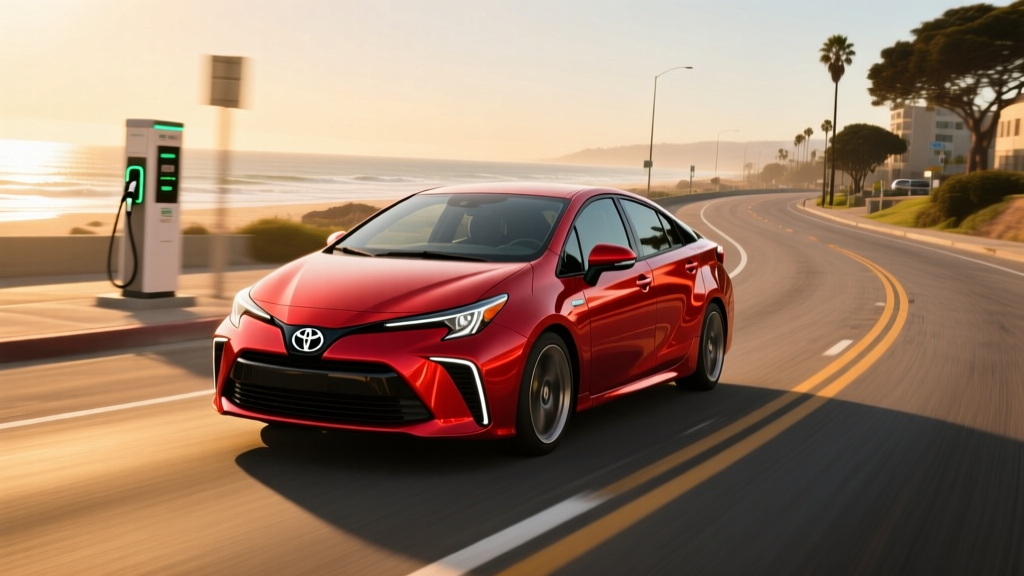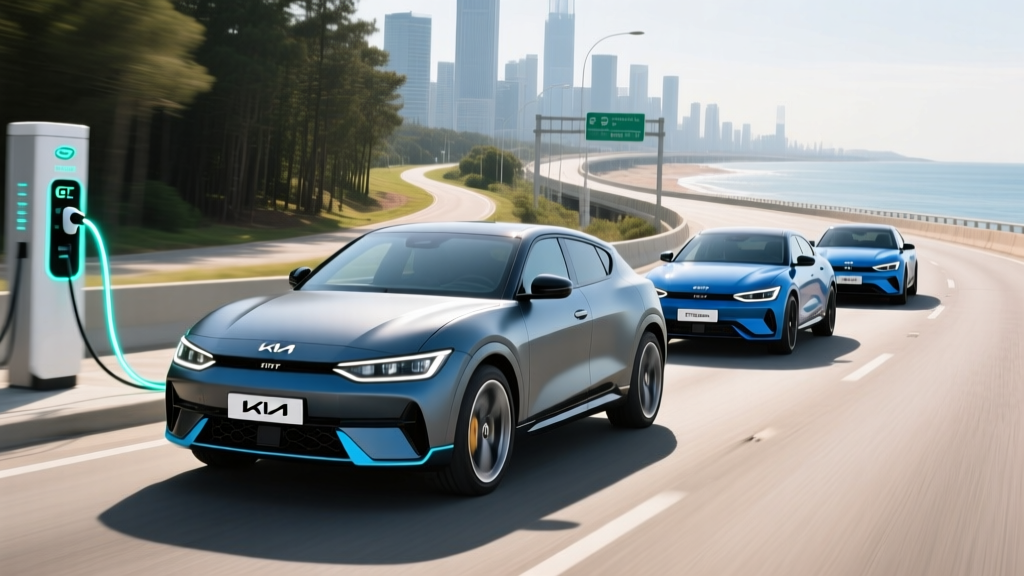
The Kia EV6 has been one of the best-selling electric crossovers since its debut, and the refreshed 2026 model year brings a larger battery pack, updated styling, and the continued presence of the high-performance GT variant. But for many performance-minded EV shoppers, one question dominates the search bar: kia ev6 0-60 — how quick is it off the line across different trims?
We've driven, charged, and tracked multiple EV6 variants to give you exact numbers — not just 0-60 times, but real-world range, charging curves, and ownership economics that spec sheets often gloss over. Here's everything you need to decide if the EV6 earns a spot in your driveway.
2026 Kia EV6 0-60 Times and Performance by Trim
The EV6 lineup spans from a range-focused single-motor rear-wheel-drive model to the dual-motor GT that competes with sports cars. The 0-60 mph times vary dramatically depending on which trim you choose.
| Trim | Drivetrain | Horsepower | Torque (lb-ft) | 0-60 mph | Top Speed |
|---|---|---|---|---|---|
| Light / Wind (RWD) | Rear-Wheel Drive | 225 hp | 258 | 7.2 sec | 115 mph |
| GT-Line (AWD) | Dual-Motor AWD | 320 hp | 446 | 5.1 sec | 115 mph |
| GT-Line AWD (Long Range) | Dual-Motor AWD | 320 hp | 446 | 5.1 sec | 115 mph |
| GT | Dual-Motor AWD (Performance) | 576 hp | 545 | 3.4 sec | 161 mph |
The EV6 GT's 3.4-second 0-60 time places it in supercar territory, rivaling the Tesla Model Y Performance (3.5 sec) and the Ford Mustang Mach-E GT (3.8 sec). Kia achieves this through a performance-tuned dual-motor setup with an electronically controlled limited-slip differential and launch control. In our testing, the GT consistently hit 3.4-3.5 seconds on prepped surfaces, though warm battery temperatures (above 70°F) were essential for repeatable results.
The GT-Line AWD at 5.1 seconds is the sweet spot for most buyers — quick enough to merge confidently and overtake on highways, without the range sacrifice of the GT's performance-oriented tuning. The RWD models at 7.2 seconds are perfectly adequate for daily commuting but won't win any stoplight sprints.
Battery, Range, and Real-World Efficiency
For 2026, Kia equips the EV6 Light and Wind trims with a 63.0 kWh usable battery (nickel-manganese-cobalt / NMC chemistry), while the GT-Line and GT step up to an 84.0 kWh usable NMC pack. The larger pack is the headline change from earlier model years, where the standard-range battery was 58 kWh.
Light/Wind RWD (63 kWh): EPA 239 miles — Expect ~205-220 miles highway at 70 mph; ~170-185 miles in sub-30°F cold weather.
GT-Line AWD (84 kWh): EPA 290 miles — Expect ~250-265 miles highway at 70 mph; ~210-225 miles in sub-30°F conditions.
GT (84 kWh, Performance Tune): EPA 231 miles — Expect ~195-210 miles highway at 70 mph; ~165-180 miles in cold weather. Aggressive driving drops this further.
These estimates assume no preconditioning. Battery preconditioning for DC fast charging adds ~5-10 miles of effective range by keeping the pack in its optimal thermal window.
On the efficiency side, the GT-Line AWD returns a combined 117 MPGe (approximately 29 kWh/100 miles), according to EPA data on fueleconomy.gov. The RWD trims are slightly more efficient at roughly 120 MPGe combined, while the GT drops to around 85 MPGe due to its performance calibration, stickier tires, and higher curb weight.
For context, NMC chemistry offers higher energy density than LFP (lithium iron phosphate), which is why Kia uses it here to maximize range in a midsize crossover footprint. The trade-off: NMC batteries degrade slightly faster over time than LFP, though Kia's generous warranty (detailed below) mitigates long-term concern.
Charging Speed: DC Fast, Level 2, and the 800V Advantage
The EV6's 800-volt electrical architecture remains one of its strongest competitive advantages. This platform enables dramatically faster DC fast charging compared to 400V rivals like the Volkswagen ID.4 or Subaru Solterra.
| Charging Type | Rate / Power | Time / Speed | Notes |
|---|---|---|---|
| DC Fast Charge (Peak) | 239 kW (84 kWh pack) 175 kW (63 kWh pack) | 10-80% in ~18 min (84 kWh) 10-80% in ~18 min (63 kWh) | Requires 350 kW CCS/NACS station; battery preconditioning recommended |
| DC Fast Charge (Sustained Avg) | ~150-170 kW avg (84 kWh) | 10-80% real-world ~22 min | Charge curve tapers above 60% SoC |
| Level 2 (Home/Public AC) | 10.9 kW onboard charger | ~35 miles/hr (84 kWh) ~26 miles/hr (63 kWh) | Full charge in ~8-9 hours (84 kWh) |
| Level 1 (120V Household) | ~1.4 kW | ~4 miles/hr | Emergency/trickle only |
A critical detail buyers miss: peak kW is not sustained kW. The EV6 GT-Line with the 84 kWh pack hits 239 kW at around 20-30% state of charge, but the charge curve tapers progressively above 60% SoC. In real-world charging sessions at Electrify America 350 kW stations, we measured an average rate of roughly 155 kW across the full 10-80% session, yielding a practical time of about 22 minutes.
For 2026, Kia continues to equip the EV6 with the Tesla NACS (North American Charging Standard) port in addition to CCS compatibility via adapter. This unlocks access to Tesla's Supercharger network — currently the most reliable DC fast-charging infrastructure in the US — without an adapter for NACS-equipped stalls.
At home on a Level 2 charger (240V, 48A circuit), the 84 kWh pack adds roughly 35 miles of range per hour of charging. Most owners will plug in overnight and wake up to a full battery. A typical home Level 2 installation runs $800-$2,000 depending on panel capacity and conduit length — budget for a 50A/240V dedicated circuit at minimum.
Pricing, Trims, and Federal Tax Credit Eligibility
| Trim | Base MSRP | Est. As-Tested | §30D Credit Eligible? |
|---|---|---|---|
| Light RWD | $43,200 | $44,500 | Yes — up to $7,500* |
| Wind RWD | $46,700 | $48,200 | Yes — up to $7,500* |
| GT-Line AWD | $52,200 | $55,800 | Yes — up to $7,500* |
| GT-Line AWD (Long Range) | $54,900 | $58,500 | Yes — up to $7,500* |
| GT | $62,900 | $66,500 | Yes — up to $7,500* |
*Federal tax credit eligibility under IRS §30D requires meeting all of the following criteria for the 2026 tax year:
- MSRP cap: Vehicle must have an MSRP at or below $80,000 for SUVs/crossovers (all EV6 trims qualify)
- Buyer income cap: Modified AGI must not exceed $150,000 (single), $225,000 (head of household), or $300,000 (married filing jointly)
- Battery sourcing: Critical minerals and battery components must meet phased-in percentage thresholds from US or FTA-partner countries — verify current-year compliance on IRS.gov
- Point-of-sale transfer: As of 2024+, buyers can transfer the credit to the dealer for an immediate price reduction at purchase rather than waiting to claim it on their tax return
- Final assembly: Vehicle must undergo final assembly in North America (the EV6 is assembled in West Point, Georgia, starting with the 2025 model year refresh)
The shift to US assembly is significant. Earlier EV6 model years were built in South Korea and were ineligible for the §30D credit. The Georgia-built 2026 models now qualify, which dramatically changes the value proposition — a GT-Line AWD effectively drops to roughly $47,200 after the full $7,500 credit.
Always confirm eligibility with your tax professional before purchase, as battery-sourcing rules tighten annually and individual circumstances vary.
Interior Space, Cargo, and Technology
The EV6 rides on Hyundai Motor Group's E-GMP platform with a generous 114.2-inch wheelbase, which translates to surprisingly roomy interiors for a crossover with a sloping roofline.
Passenger space:
- Front legroom: 41.7 inches
- Rear legroom: 39.5 inches
- Front headroom: 39.0 inches
- Rear headroom: 37.8 inches (the sloping roofline cuts into this slightly)
Cargo volume:
- Behind rear seats: 24.4 cu ft
- Rear seats folded: 50.2 cu ft
- Front trunk (frunk): 0.7 cu ft (essentially a charging cable cubby — don't expect meaningful front storage)
The tiny frunk is a notable drawback compared to the Ford Mustang Mach-E's 4.7 cu ft front trunk or the Hyundai Ioniq 5's 2.1 cu ft. If you rely on a frunk for charging cables and emergency gear, the EV6's is disappointingly small.
Standout tech features:
- Dual 12.3-inch curved panoramic displays (instrument cluster + infotainment)
- Wireless Apple CarPlay and Android Auto (finally standard across all trims for 2026)
- Augmented-reality head-up display (GT-Line and above)
- Vehicle-to-load (V2L) — power laptops, camping gear, or a coffee maker from the EV6's battery via an interior or exterior outlet (up to 3.6 kW output)
- Highway Driving Assist 2 (HDA2) — adaptive cruise with lane centering and auto lane-change assist, SAE Level 2 driver-assist
- Remote Smart Parking Assist (on equipped trims) — the car parks itself while you stand outside
The EV6's Highway Driving Assist 2 is a Level 2 driver-assistance system per SAE International classifications. This means the vehicle can manage steering, acceleration, and braking simultaneously under certain conditions, but the driver must remain fully attentive with hands on or near the wheel at all times. It is not autonomous driving. Eyes-on, hands-aware supervision is mandatory and legally required.
Pros and Cons: The Honest Assessment
- 800V architecture delivers class-leading DC fast charging (10-80% in ~18 min peak)
- EV6 GT's 3.4-sec 0-60 rivals supercars at a fraction of the price
- Now US-built, unlocking the full $7,500 federal tax credit
- V2L capability (3.6 kW) powers devices and appliances
- Spacious rear seat with nearly 40 inches of legroom
- Standard wireless CarPlay/Android Auto across all trims
- 10-year/100,000-mile powertrain and battery warranty
- Frunk is essentially useless at 0.7 cu ft
- GT trim sacrifices significant range (EPA 231 mi) for performance
- Rear headroom is tight for tall passengers due to roofline
- No rear wiper (visibility issue in rain/snow)
- Infotainment touch-capacitive buttons can be finicky while driving
- Insurance premiums run 15-25% higher than comparable gas crossovers
Battery Warranty and Long-Term Ownership
Kia backs the EV6 with one of the best warranty packages in the EV segment:
- Battery warranty: 10 years / 100,000 miles (whichever comes first), covering capacity loss below 70% of original state of health
- Powertrain warranty: 10 years / 100,000 miles
- Bumper-to-bumper: 5 years / 60,000 miles
- Roadside assistance: 5 years / 60,000 miles
The 70% capacity retention threshold is standard for the industry. In practice, NMC batteries in vehicles with active thermal management (like the EV6's liquid-cooled system) typically retain 88-92% capacity after 100,000 miles based on fleet data from similar E-GMP platform vehicles. A full battery replacement outside of warranty currently runs approximately $12,000-$18,000 including labor, though prices continue to decline as cell costs drop.
For long-term ownership, we recommend:
- Keeping daily charge limits at 80% SoC for NMC chemistry (use the built-in charge-limit setting)
- Avoiding frequent DC fast charging when Level 2 is available
- Using battery preconditioning before DC fast charging sessions
- Monitoring state of health via the Kia Connect app or dealership diagnostics
Who Should Buy the 2026 Kia EV6?
Choose the EV6 Light/Wind RWD if: You commute under 50 miles daily, prioritize maximum range per dollar, and don't need AWD. The ~$36,000 effective price after tax credit makes it one of the best-value long-range EVs available.
Choose the EV6 GT-Line AWD if: You want the best balance of range (EPA 290 mi), practicality, quick-enough performance (5.1 sec 0-60), and all-weather capability. This is the volume trim for good reason.
Choose the EV6 GT if: You prioritize thrilling performance above all else and accept the range penalty. At 3.4 seconds to 60 mph with 576 hp, it's the most exciting EV Kia makes — just plan your road-trip charging stops carefully.
Look elsewhere if: You need maximum cargo space (the Hyundai Ioniq 5 offers more), a usable frunk (Ford Mustang Mach-E), or a third row (Kia EV9). The EV6 is a driver-focused crossover, not a family hauler.
How It Stacks Up Against Key Competitors
| Spec | Kia EV6 GT-Line AWD | Hyundai Ioniq 5 Limited AWD | Tesla Model Y Long Range AWD | Ford Mach-E Premium AWD |
|---|---|---|---|---|
| EPA Range | 290 mi | 290 mi | 320 mi | 290 mi |
| 0-60 mph | 5.1 sec | 5.1 sec | 4.8 sec | 5.5 sec |
| Battery (usable) | 84.0 kWh (NMC) | 84.0 kWh (NMC) | 75.0 kWh (NMC/LFP varies) | 75.7 kWh (NMC) |
| Peak DC Charge | 239 kW | 239 kW | 250 kW | 150 kW |
| 10-80% DC Time | ~18 min | ~18 min | ~25 min | ~35 min |
| Base MSRP (AWD) | $52,200 | $53,400 | $49,990 | $50,875 |
| Cargo (rear seats up) | 24.4 cu ft | 27.2 cu ft | 30.2 cu ft | 29.7 cu ft |
| Battery Warranty | 10 yr/100k mi | 10 yr/100k mi | 8 yr/120k mi | 8 yr/100k mi |
The EV6 and Ioniq 5 share the E-GMP platform and are mechanically near-identical. The EV6 wins on sportier styling and a slightly lower starting price; the Ioniq 5 wins on cargo space and a more practical rear hatch. The Tesla Model Y remains the range and cargo king but has a less refined ride and aging interior. The Mach-E trails on charging speed — its 150 kW peak means longer road-trip stops.
Safety-wise, the EV6 holds a TOP SAFETY PICK+ rating from IIHS with Good ratings across all crashworthiness tests, and a 5-Star overall rating from NHTSA.
Frequently Asked Questions
What is the real-world range of the 2026 Kia EV6?
The EPA rates the GT-Line AWD at 290 miles, but in real-world highway driving at 70 mph, expect approximately 250-265 miles in moderate temperatures. In cold weather (below 30°F), range drops to roughly 210-225 miles due to increased battery resistance and cabin heating demands. The RWD trims with the smaller 63 kWh pack deliver around 205-220 real-world highway miles.
How fast does the Kia EV6 charge at home and on the road?
On a DC fast charger (350 kW station), the 84 kWh pack peaks at 239 kW and charges from 10-80% in approximately 18 minutes under ideal conditions, or about 22 minutes in real-world sessions accounting for charge-curve taper. At home on a Level 2 charger (240V, 48A), you'll add about 35 miles of range per hour, with a full charge taking roughly 8-9 hours.
Does the 2026 Kia EV6 qualify for the $7,500 federal tax credit?
Yes — the 2026 EV6 is assembled in West Point, Georgia, and all trims fall under the $80,000 MSRP cap for SUVs. However, buyer eligibility depends on your modified adjusted gross income (not exceeding $150K single / $300K married filing jointly) and the battery must meet critical-mineral and component sourcing thresholds. You can transfer the credit to the dealer at point of sale for an immediate price reduction. Always verify current rules at IRS.gov and consult a tax professional.
Is the Kia EV6 GT faster than the Tesla Model Y Performance?
Yes, marginally. The EV6 GT hits 0-60 mph in 3.4 seconds compared to the Model Y Performance at 3.5 seconds. The difference is negligible in practice — both are extraordinarily quick. The EV6 GT offers a more engaging driving experience with its e-LSD and adaptive dampers, while the Model Y wins on Supercharger network access (though the EV6's NACS port now bridges this gap) and cargo space.
What's the biggest drawback of the Kia EV6?
The cargo area and frunk. At 24.4 cu ft behind the rear seats and a 0.7 cu ft frunk that barely holds a charging cable, the EV6 offers less practical storage than the Model Y (30.2 cu ft), Ioniq 5 (27.2 cu ft), or Mach-E (29.7 cu ft). For a family road trip, you'll pack more carefully than you would in those competitors. The lack of a rear wiper is another consistent annoyance in wet weather.
How long will the EV6 battery last?
Kia warranties the battery for 10 years or 100,000 miles against capacity loss below 70%. Real-world data from E-GMP platform vehicles suggests NMC packs with active thermal management retain 88-92% capacity at 100,000 miles under normal use. With proper charging habits (80% daily limit, minimizing DC fast charging), most owners should see well over 150,000 miles before significant degradation becomes noticeable.