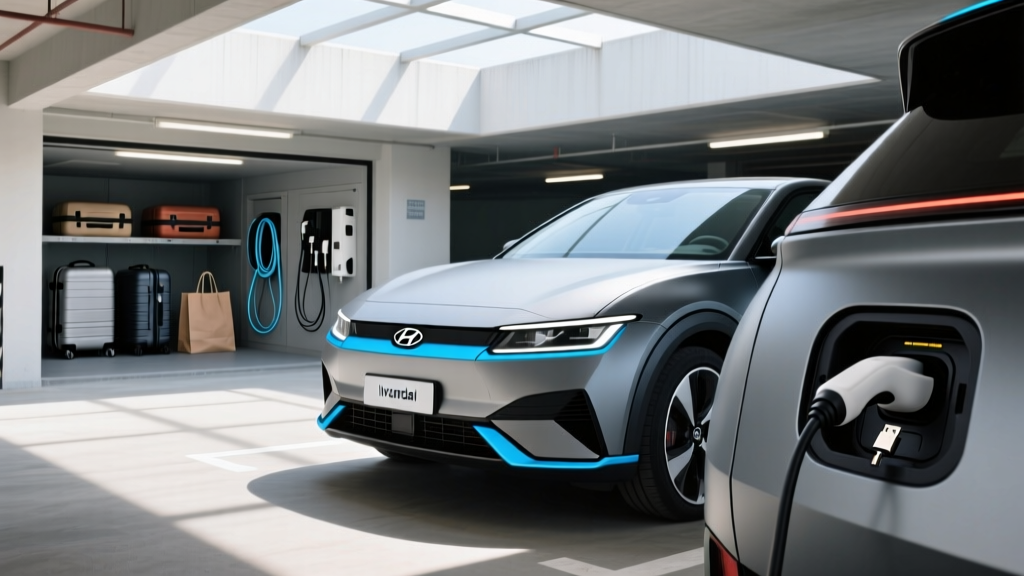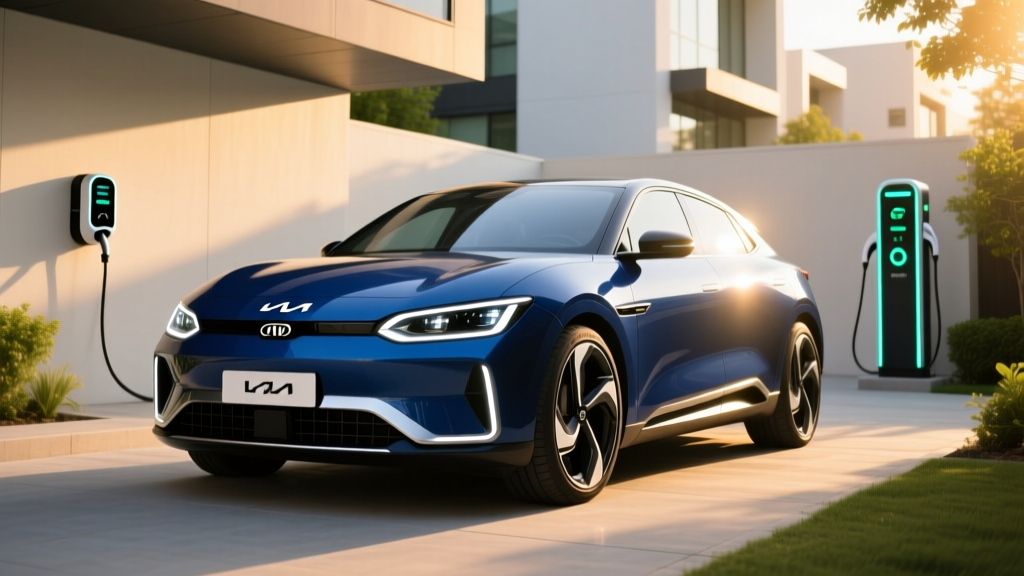
The Kia EV3 has been one of the most anticipated compact electric crossovers since its global debut, and the 2026 model year marks its arrival in the United States. Positioned below the EV6 and EV9 in Kia's electric lineup, the EV3 targets the high-volume sub-$40,000 segment where the Hyundai Kona Electric, Volvo EX30, and Nissan Arikea compete. But the EV3 brings something those rivals don't: a class-leading EPA range figure, a usable fast-charging curve, and Kia's industry-best warranty. Here's everything US buyers need to know before the first deliveries hit dealer lots.
Range and Efficiency: Class-Leading on Paper, Solid in Practice
The 2026 Kia EV3 is offered with two battery configurations in the US market. The entry-level Standard Range pairs a 58.3 kWh battery (usable capacity) with a single front-mounted motor, delivering an EPA-estimated 235 miles. The Long Range model steps up to an 81.4 kWh battery pack and achieves an EPA-estimated 310 miles — a number that positions the EV3 ahead of the Kona Electric (261 mi) and the base Volvo EX30 (265 mi) in the compact crossover segment.
EPA 310 miles (Long Range) is an excellent sticker number, but real-world results vary. In mixed highway-and-city driving at 70 mph, expect roughly 260–280 miles in mild temperatures (60–80°F). In cold-weather conditions (below 32°F), range can drop to 210–240 miles due to battery chemistry resistance and cabin-heating demand. The EV3 includes a standard heat pump, which mitigates cold-weather losses compared to resistive-heater EVs, but the physics of lithium-ion cells in freezing temperatures remain unavoidable. City drivers relying on regenerative braking will see results closer to the EPA figure.
Efficiency for the Long Range model is rated at approximately 120 MPGe combined (roughly 28 kWh per 100 miles), which is competitive for the segment. The Standard Range model achieves a slightly higher MPGe figure thanks to its lighter curb weight, though the smaller battery limits total range.
| Specification | Standard Range | Long Range |
|---|---|---|
| Battery Capacity (usable) | 58.3 kWh | 81.4 kWh |
| Battery Chemistry | NMC (nickel manganese cobalt) | NMC (nickel manganese cobalt) |
| EPA Range | 235 miles | 310 miles |
| Efficiency (combined) | ~125 MPGe / 27 kWh/100mi | ~120 MPGe / 28 kWh/100mi |
| Drivetrain | FWD (single motor) | FWD (single motor) |
| Horsepower | 201 hp | 201 hp |
| 0–60 mph | ~7.8 sec (est.) | ~7.5 sec |
Battery Chemistry and Longevity
Kia has confirmed that the US-market EV3 uses NMC (nickel manganese cobalt) cells supplied by a combination of SK On and CATL, depending on the production batch. NMC chemistry offers higher energy density than LFP (lithium iron phosphate), which is why the EV3 can pack 81.4 kWh into a compact crossover footprint. The trade-off is that NMC cells are more sensitive to sustained high states of charge — Kia recommends daily charging to 80% and reserving 100% for road trips to maximize long-term battery health.
The EV3 is backed by Kia's standard EV warranty: 10 years / 100,000 miles on the battery pack and electric powertrain, with coverage triggered if the battery degrades below 70% of its original capacity. This remains one of the best warranties in the industry and a meaningful differentiator against competitors like Volvo (8 years/100,000 miles) and Nissan (8 years/100,000 miles).
Charging Speed: Home and DC Fast Charging
Charging is where compact EVs often disappoint, but the EV3 Long Range delivers a respectable showing. The maximum DC fast-charge rate is 150 kW, which Kia says enables a 10–80% charge in approximately 31 minutes. That peak rate is sustained through roughly 50% SoC before the charge curve tapers — a common characteristic of NMC packs. Above 80%, charging slows significantly, adding roughly 20 additional minutes to reach full capacity. Buyers who regularly DC fast-charge on road trips will find 31 minutes competitive, though it trails the Hyundai Ioniq 5's 18-minute 10–80% time on its 800V architecture.
| Charging Level | Power / Voltage | Speed (Long Range) | Estimated Time |
|---|---|---|---|
| Level 1 (120V household) | ~1.4 kW | ~4 mi/hr added | ~58 hours (0–100%) |
| Level 2 (240V home charger) | 11 kW (onboard charger) | ~32 mi/hr added | ~8.5 hours (0–100%) |
| DC Fast Charge | Up to 150 kW peak | ~175 mi in 30 min (peak) | 10–80% in ~31 min |
For home charging, the EV3's 11 kW onboard AC charger is a standout. Many rivals in this price range (including the Kona Electric at 10.9 kW and the EX30 at 11 kW) are similar, but the EV3's larger battery means that 11 kW rate is essential for overnight replenishment. On a standard NEMA 14-50 outlet or a hardwired Level 2 station delivering 48 amps, the Long Range battery will go from empty to full in roughly 8.5 hours — meaning you wake up to a full charge every morning with a typical overnight session.
Preconditioning note: The EV3 supports battery preconditioning for DC fast charging. When you set a fast charger as your navigation destination, the thermal management system warms or cools the battery to its optimal temperature range, enabling the full 150 kW peak rate. Skipping preconditioning — especially in cold weather — can reduce peak charging speed by 30–40%.
Performance and Driving Dynamics
The US-spec EV3 is a front-wheel-drive-only vehicle with a single electric motor producing 201 horsepower and 195 lb-ft of torque. Kia quotes a 0–60 mph time of approximately 7.5 seconds for the Long Range model. That's adequate for highway merging and daily driving but not sporty — the EV3 is tuned for comfort and efficiency, not drag-strip runs.
Ride quality benefits from a multi-link rear suspension (uncommon in this segment, where torsion-beam setups are typical), and the EV3's curb weight of roughly 4,100 lbs for the Long Range variant keeps it manageable through corners. Regenerative braking offers multiple levels, including a true one-pedal driving mode (i-Pedal) that can bring the vehicle to a complete stop without touching the brake pedal.
There is no AWD or dual-motor option for the US market at launch. Buyers in snow-belt states should plan around quality winter tires rather than waiting for an all-wheel-drive variant, which Kia has not confirmed for future model years.
Interior Space, Cargo, and Technology
The EV3 rides on Kia's E-GMP platform adapted for smaller vehicles, and interior packaging is a strong point. Front legroom measures 41.5 inches, and rear legroom comes in at 37.2 inches — enough for two adults on longer trips, though taller passengers will find it tighter than the EV6. Cargo volume behind the rear seats is 17.8 cubic feet, expanding to approximately 49.2 cubic feet with the 60/40 rear seats folded. A small front trunk (frunk) adds roughly 1.8 cubic feet of space, useful for charging cables.
The infotainment system centers on a 12.3-inch touchscreen running Kia's latest connected-car software, with wireless Apple CarPlay and Android Auto standard. A head-up display with augmented-reality navigation is available on higher trims. The EV3 also features Kia's Highway Driving Assist 2 (HDA2), a Level 2 SAE driver-assistance system combining adaptive cruise control with stop-and-go, lane-centering, and lane-change assist. HDA2 is competent for highway use but requires continuous driver supervision — it is not an autonomous system.
One notable drawback: the EV3 uses a mix of touch-capacitive and physical controls for climate functions, which some drivers find distracting compared to dedicated knobs. Rear visibility is also compromised by thick C-pillars, making the standard rearview camera essential.
Pricing, Trims, and Federal Tax Credit Eligibility
Kia has announced three US trim levels for the 2026 EV3:
| Trim | Base MSRP | Est. After §30D Credit* | Key Features |
|---|---|---|---|
| Light (Standard Range) | ~$30,990 | ~$23,490 | 58.3 kWh, 17" wheels, HDA2, 12.3" display |
| Wind (Long Range) | ~$36,990 | ~$29,490 | 81.4 kWh, heated seats, power liftgate |
| GT-Line (Long Range) | ~$41,490 | ~$33,990 | Sport styling, HUD, premium audio, sunroof |
*Federal tax credit estimate assumes full §30D eligibility. Actual credit depends on buyer income, vehicle MSRP cap compliance, and battery-sourcing requirements. Consult a tax professional and review current IRS §30D guidelines before purchasing.
The EV3's sub-$42,000 MSRP across all trims keeps it comfortably under the §30D federal tax credit MSRP cap of $80,000 for SUVs/crossovers. However, eligibility for the full $7,500 credit depends on three additional factors that buyers must verify at the point of sale:
- Buyer income cap: Modified adjusted gross income must not exceed $150,000 (single), $225,000 (head of household), or $300,000 (joint filers).
- Battery critical-minerals sourcing: A percentage of critical minerals must be sourced from the US or a free-trade-agreement country. This requirement tightens annually, and partial credit ($3,750) may apply if only one of two sourcing tests is met.
- Foreign Entity of Concern (FEOC) exclusion: Battery components must not be manufactured by a FEOC (primarily targeting Chinese supply-chain entities). This requirement can disqualify otherwise eligible vehicles.
Kia has indicated that the EV3 is being engineered for §30D compliance, but final eligibility will be confirmed by the IRS closer to the on-sale date. The credit can be transferred at the point of sale, effectively reducing the purchase price at the dealer rather than waiting for a tax refund.
How It Compares: EV3 vs. Key Rivals
Pros
- Class-leading 310-mile EPA range (Long Range)
- 10-year / 100,000-mile battery warranty
- Heat pump standard on all trims
- 11 kW Level 2 onboard charger
- Competitive starting price with tax-credit potential
- Multi-link rear suspension for refined ride
Cons
- No AWD option at launch
- 150 kW DC peak charge rate trails 800V rivals
- Touch-capacitive climate controls
- Rear visibility limited by thick C-pillars
- FEOC sourcing rules may limit tax-credit eligibility
- Rear legroom tighter than EV6 / Ioniq 5
The EV3's closest competitor is the Hyundai Kona Electric (261 mi EPA, ~$33,000), which shares corporate DNA but offers less range and a smaller battery. The Volvo EX30 starts lower (~$34,900) but delivers only 265 miles of range and a shorter warranty. The Nissan Arieka offers more interior space but at a higher price point and with slower DC charging. For buyers prioritizing range-per-dollar and long-term warranty coverage, the EV3 Long Range Wind trim at ~$37,000 MSRP (potentially ~$29,500 after the federal credit) represents one of the strongest value propositions in the 2026 compact EV segment.
Who Should Buy the Kia EV3?
Choose the EV3 if: You want maximum EPA range under $40K, value a long warranty, commute 30–60 miles daily, and can charge at home. The Long Range Wind trim is the sweet spot.
Look elsewhere if: You need AWD for snow or mountain roads, want sub-20-minute DC fast charging for frequent road trips, or need three-row seating (consider the EV9 or a three-row PHEV).
The EV3 is ideal for urban and suburban commuters who charge at home and want the confidence of 300+ miles for occasional road trips without range stress. It's less suited to buyers in extreme cold climates without garage parking, or those who frequently tow (the EV3 is not rated for towing).
Frequently Asked Questions
What is the real-world range of the Kia EV3?
The EPA rates the Long Range EV3 at 310 miles. In real-world highway driving at 70 mph in mild weather, expect 260–280 miles. In freezing temperatures, range drops to approximately 210–240 miles. The Standard Range model's 235-mile EPA figure translates to roughly 190–210 miles in mixed real-world use.
How fast does the Kia EV3 charge?
On a DC fast charger, the EV3 peaks at 150 kW and charges from 10–80% in about 31 minutes with proper battery preconditioning. At home on a Level 2 (240V, 48A) charger, the 11 kW onboard charger adds roughly 32 miles per hour, fully replenishing the Long Range battery in about 8.5 hours.
How much does the Kia EV3 cost after tax credits?
The EV3 starts at approximately $30,990 for the Light (Standard Range) trim. If you qualify for the full $7,500 federal §30D credit (subject to income, MSRP, and battery-sourcing rules), the effective price drops to roughly $23,490. The popular Wind Long Range trim falls to approximately $29,490 after the credit. Verify eligibility with your tax professional and the dealer at point of sale.
Does the Kia EV3 qualify for the federal EV tax credit?
Kia is engineering the US-spec EV3 for §30D compliance, but final eligibility depends on battery-sourcing requirements (critical minerals and FEOC rules) that tighten each year. The EV3's MSRP is well under the $80,000 SUV cap. Buyers must also meet income limits ($150K single / $300K joint). Check the current IRS clean vehicle credit page and confirm with your dealer before purchasing.
Is the Kia EV3 worth buying over the Kona Electric or EX30?
If range and warranty are your top priorities, the EV3 Long Range is the strongest pick in the segment — 310 EPA miles and a 10-year battery warranty outclass both the Kona Electric (261 mi) and EX30 (265 mi). If you prioritize a lower entry price and don't need 300+ miles, the EX30 is worth cross-shopping. If you want AWD, none of these compact crossovers currently offer it — consider the Ioniq 5 or EV6 instead.
Does the EV3 have a frunk?
Yes, the EV3 includes a small front trunk (frunk) with approximately 1.8 cubic feet of space — enough to store a charging cable bag or a small emergency kit, but not large enough for a carry-on suitcase.