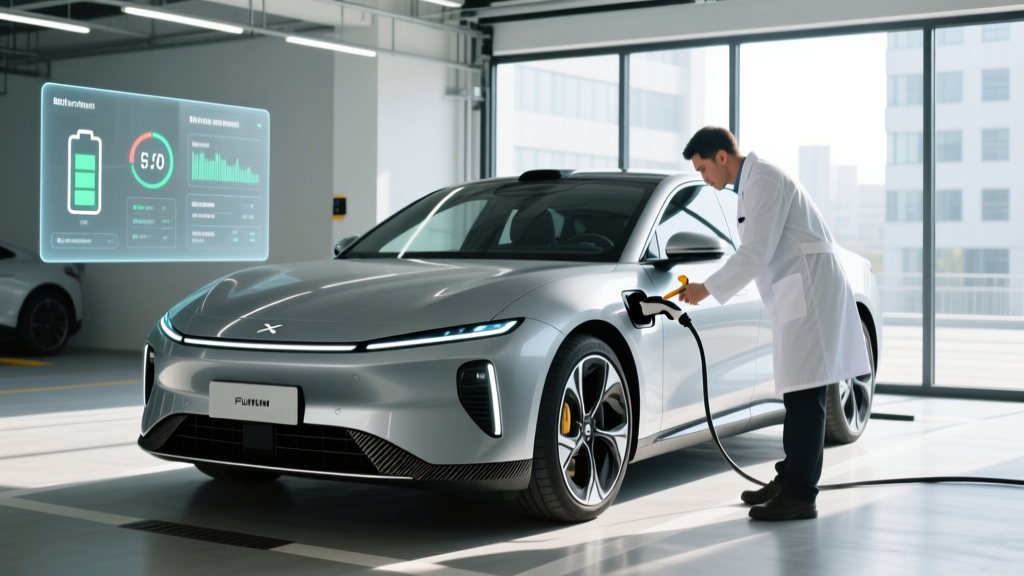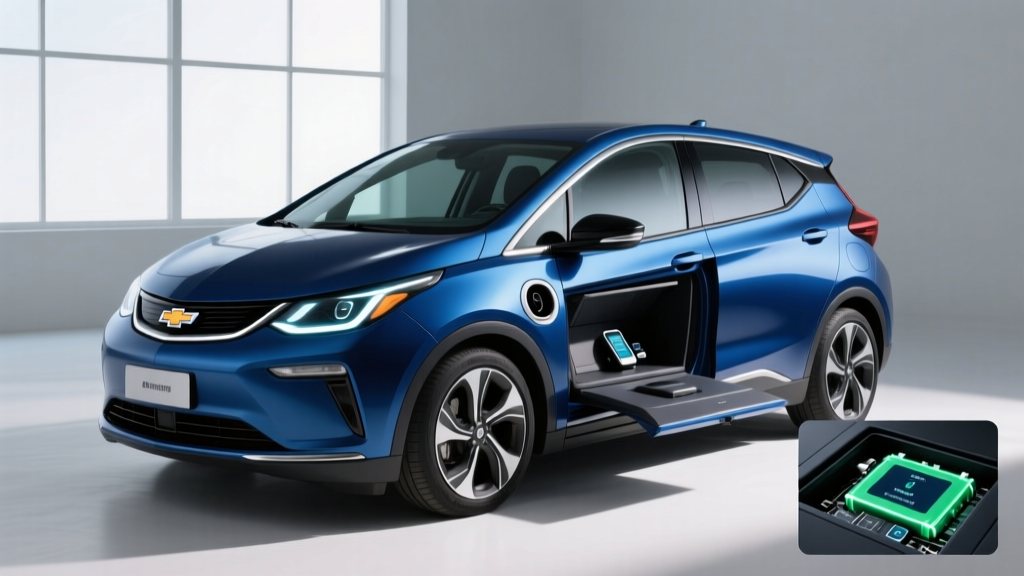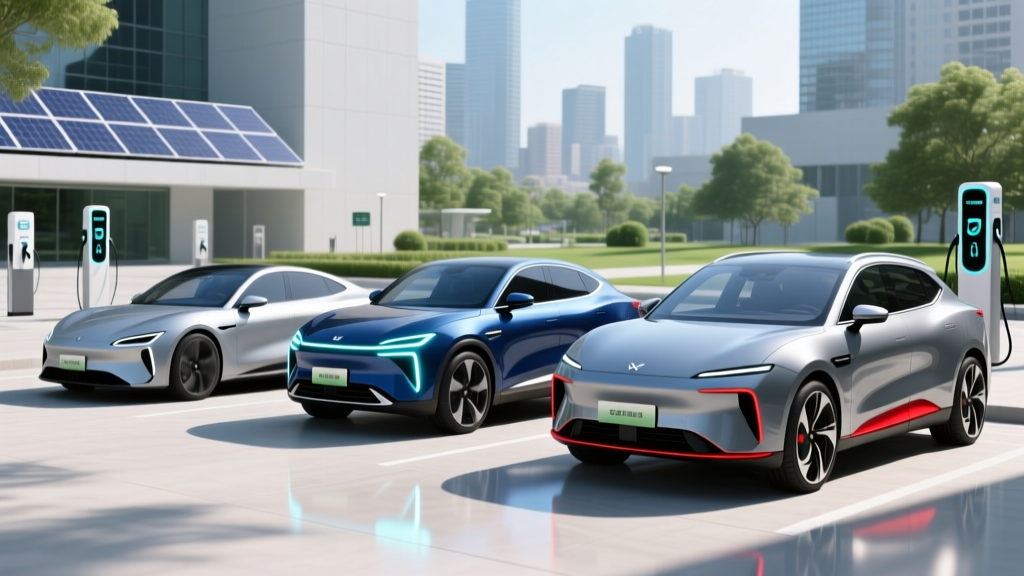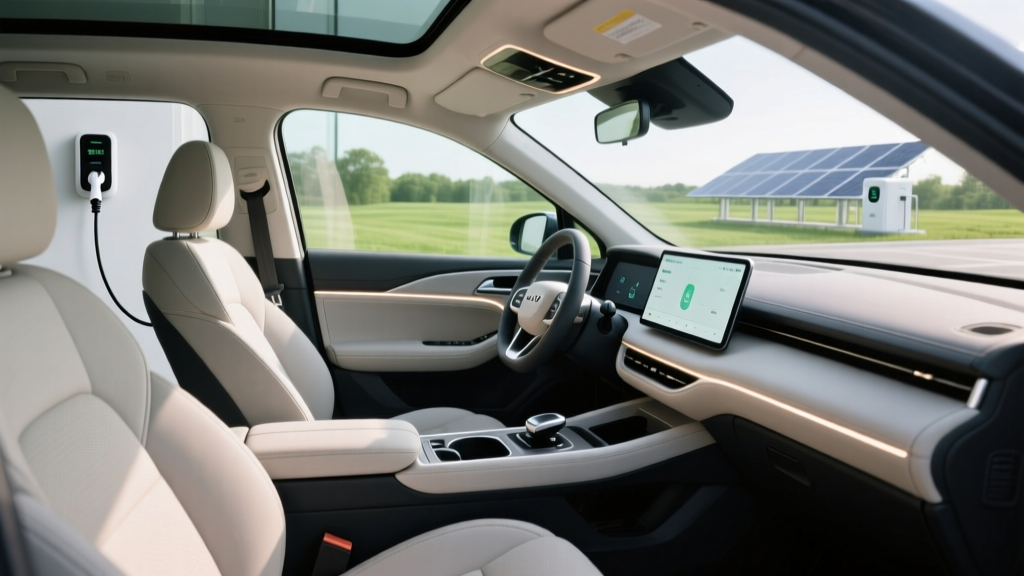
The Kia EV3 is the automaker's bid to bring a mainstream, sub-$40,000 electric crossover to US buyers who've been priced out of the EV6 and EV9. Announced globally in 2024 and arriving in the US for the 2026 model year, the EV3 slots below the EV6 in Kia's electric lineup and targets the same buyers cross-shopping the Hyundai Kona Electric, Volvo EX30, and Nissan Ariana. But for many shoppers, the deciding factor isn't just range or price — it's what the cabin actually feels like. The Kia EV3 interior punches above its price point with a minimalist, lounge-inspired design, sustainable materials, and a dual-screen layout that carries over much of the flagship EV9's tech. Here's the full breakdown of what you're getting inside, under the floor, and at the charger.
Kia EV3 at a Glance: Core Specs
| Spec | Standard Range | Long Range |
|---|---|---|
| EPA Range (est.) | ~235 miles | ~310 miles |
| Battery (usable) | 58.3 kWh (LFP) | 81.4 kWh (NMC) |
| Drivetrain | Front-wheel drive, single motor | |
| Horsepower / Torque | 201 hp / 195 lb-ft | |
| 0-60 mph | ~7.8 sec | ~7.5 sec |
| Max DC Fast Charge | ~150 kW (peak) | |
| 10-80% DC Time | ~31 minutes | |
| Level 2 Home Charge | 11 kW onboard (~35 mi/hr) | |
| MPGe (combined, est.) | ~115 MPGe / 29 kWh/100mi | |
| Base MSRP | ~$34,990 | ~$39,990 |
Note: US-spec figures are based on Kia's preliminary 2026 model-year data. Final EPA certification may vary. Always confirm with fueleconomy.gov before purchasing.
The Kia EV3 Interior: Where the Value Shows
The Kia EV3 interior is the headline act of this crossover. Kia designed the cabin around what it calls a "Boldly Minimal" philosophy — clean horizontal lines, a flat floor enabled by the dedicated E-GMP platform, and a two-tier dashboard dominated by screens. The result is a cabin that looks and feels a segment above its price.
Screen Layout and Infotainment
The dashboard features a panoramic display panel combining a 12.3-inch digital instrument cluster, a 5-inch HVAC control segment, and a 12.3-inch central infotainment touchscreen into a single curved housing. The infotainment runs Kia's latest ccNC (Connected Car Navigation Cockpit) software with wireless Apple CarPlay and Android Auto, over-the-air updates, and Kia's digital key via smartphone or NFC card. Physical shortcut buttons remain for volume, defrost, and hazard — a welcome choice for drivers fatigued by fully touch-based interfaces.
Materials and Sustainability
Kia leans heavily into recycled and bio-based materials in the EV3. Seat upholstery options include fabric woven from recycled PET bottles, while the dashboard trim uses bio-polyurethane and mushroom-derived leatherette on higher trims. It doesn't feel cheap — the textures are varied and tactile, and the knit-fabric dash insert gives the cabin a warm, residential feel that stands apart from the glossy-black-everything trend in competitors like the Volvo EX30.
Seating, Space, and Cargo
Thanks to the EV3's flat floor and relatively long wheelbase (106.3 inches), passenger space is generous for the subcompact crossover class:
- Front headroom: 40.2 inches
- Rear legroom: 38.4 inches — enough for six-foot passengers behind a similarly sized driver
- Cargo volume: 22.1 cu ft behind the rear seats; ~50.2 cu ft with the 60/40 split folded
- Frunk: Small front trunk (~1.6 cu ft) suitable for charging cables and a soft bag
The rear seatbacks recline slightly, and the center console is slim enough that three-across seating is feasible for shorter trips. A fold-out center table (available on select trims in global markets) may not carry over to the US — we'll confirm when final trim details are released.
Range, Battery Chemistry, and Real-World Expectations
Battery Options: LFP vs. NMC
The EV3 offers two distinct battery chemistries, each with trade-offs buyers should understand:
| Factor | Standard Range (LFP) | Long Range (NMC) |
|---|---|---|
| Chemistry | Lithium Iron Phosphate | Nickel Manganese Cobalt |
| Energy Density | Lower (heavier pack) | Higher (more range, same footprint) |
| Cycle Life | 3,000+ cycles (excellent longevity) | ~1,500-2,000 cycles |
| Cold Performance | Weaker in freezing temps | Better cold-weather output |
| Charge to 100% Regularly? | Yes — LFP tolerates full SoC | No — daily charge to 80% recommended |
| Best For | City commuters, budget buyers, long ownership | Road-trippers, cold-climate drivers |
If your daily commute is under 60 miles and you have home charging, the Standard Range LFP model is arguably the smarter long-term buy — LFP cells degrade more slowly and tolerate daily 100% charges without the wear concerns of NMC. Reserve the Long Range for frequent highway travel or northern-state winters.
Charging Speed: DC Fast, Level 2, and the Curve
| Charging Level | Power / Rate | Miles Added per Hour |
|---|---|---|
| Level 1 (120V household) | ~1.4 kW | ~4-5 miles/hr |
| Level 2 (240V home, 48A) | 11 kW (onboard max) | ~35 miles/hr |
| DC Fast Charge (peak) | ~150 kW | ~180 miles in 10 min (ideal conditions) |
| 10-80% DC Fast Charge | ~31 minutes (Long Range) | |
Understanding the Charge Curve
The EV3's ~150 kW peak DC fast-charge rate applies to the Long Range NMC battery and only holds between roughly 10-55% State of Charge. Above 60%, the rate tapers progressively — dropping to ~80 kW by 70% and below 40 kW past 85%. This is normal lithium-ion behavior, not a flaw. The practical implication: a 10-80% session takes ~31 minutes, but pushing to 90%+ can add another 15-20 minutes. For road trips, plan stops at 80% and move on.
The Standard Range LFP model charges at a lower peak (~100-120 kW estimated) due to the smaller pack's lower C-rate tolerance. Expect 10-80% in roughly 35-38 minutes.
For home charging, the 11 kW onboard charger is competitive. On a 48-amp Level 2 circuit (the most common home installation), you'll add roughly 35 miles per hour of charging — meaning an overnight 8-hour session replenishes ~280 miles, more than enough for a full Long Range top-up.
Driving Dynamics and Performance
The EV3 is a front-wheel-drive, single-motor crossover producing 201 horsepower and 195 lb-ft of torque. It's not a performance EV — 0-60 mph in roughly 7.5 seconds (Long Range) is adequate for merging and passing, not exhilarating. What it does well is ride composure. The E-GMP platform gives it a low center of gravity, and the suspension tuning prioritizes comfort over sportiness. Steering is light and direct, and the turning radius is tight enough for urban parking.
Regenerative braking offers multiple levels adjustable via steering-wheel paddles, including an "i-Pedal" one-pedal mode that brings the EV3 to a full stop without touching the brake pedal. The transition between regen and friction braking is smooth — one of Kia's stronger calibration efforts.
Driver Assistance: Level 2, Not Self-Driving
Pricing, Trims, and Federal Tax Credit Eligibility
| Trim | MSRP (est.) | Key Features |
|---|---|---|
| Light (Standard Range) | ~$34,990 | 58.3 kWh LFP, 12.3" screens, HDA2, heated front seats |
| Wind (Long Range) | ~$39,990 | 81.4 kWh NMC, power liftgate, wireless charging pad, roof rails |
| GT-Line (Long Range) | ~$43,990 | Sport styling, 360° camera, ventilated seats, premium audio |
Does the Kia EV3 Qualify for the $7,500 Federal Tax Credit?
This is where things get complicated. Under current IRS §30D rules, the EV3 must clear several hurdles:
- MSRP cap: SUVs/crossovers must be under $80,000 — the EV3 clears this easily.
- Buyer income cap: Modified AGI must not exceed $150,000 (single), $225,000 (head of household), or $300,000 (joint).
- Battery sourcing: A percentage of critical minerals and battery components must be sourced from the US or free-trade-agreement partners. These thresholds tighten annually.
- Final assembly: Must occur in North America. This is the EV3's biggest uncertainty — the EV3 is manufactured in South Korea for global markets. Unless Kia shifts US-bound production to its Georgia plant (where the EV9 is assembled), the EV3 will not qualify for the full §30D credit.
If the EV3 does not qualify for §30D, buyers may still benefit from state-level incentives (check your state's energy office) and Kia's own promotional pricing. The point-of-sale transfer option (if eligible) would allow a qualifying buyer to apply the credit as a down-payment reduction at the dealer — but only if the vehicle itself qualifies.
Tax rules change frequently. Consult a tax professional and verify current eligibility at irs.gov before purchasing.
Pros and Cons: Honest Assessment
- Interior quality rivals luxury subcompacts at a mainstream price
- LFP battery option offers exceptional long-term durability
- Generous rear legroom and flat floor for the class
- 11 kW Level 2 charging is faster than many competitors
- HDA2 standard on all trims — not gated behind premium packages
- South Korean assembly likely disqualifies it from $7,500 federal credit
- ~150 kW DC peak is slower than Hyundai Ioniq 5 / EV6 (~240 kW)
- No AWD option at launch — limits appeal in snow-belt states
- Standard Range LFP model loses significant range in freezing weather
- Small frunk (1.6 cu ft) — mostly cable storage
Who Should Buy the Kia EV3?
Choose the EV3 Long Range (NMC) if: You take regular road trips, live in a cold-weather state, or need the 310-mile buffer for apartment/condo living where daily charging isn't guaranteed. The NMC pack's better cold performance and higher energy density justify the premium.
Look elsewhere if: You need AWD (consider the Hyundai Kona Electric AWD or Subaru Solterra), you depend on the $7,500 federal credit to make the math work, or you prioritize ultra-fast DC charging (the EV6 or Ioniq 5 at ~240 kW are meaningfully faster on road trips).
Warranty and Long-Term Ownership
Kia backs the EV3 with its industry-leading warranty package:
- Battery: 10 years / 100,000 miles (capacity retention threshold: 70% of original capacity)
- Powertrain: 10 years / 100,000 miles
- Bumper-to-bumper: 5 years / 60,000 miles
- Roadside assistance: 5 years / 60,000 miles
The 70% battery-capacity threshold is standard for the industry. If the pack degrades below 70% within the warranty window, Kia will repair or replace it. Given LFP's known longevity (often retaining 85-90% capacity after 1,000 cycles), Standard Range owners are unlikely to approach this threshold under normal use.
Frequently Asked Questions
What is the real-world range of the Kia EV3?
The Long Range (NMC) EV3 targets ~310 EPA miles. Real-world mixed driving yields roughly 270-290 miles. Sustained highway driving at 70+ mph drops that to ~240-260 miles. In freezing temperatures, expect a 20-30% reduction, potentially as low as ~215 miles. The Standard Range (LFP) model's ~235 EPA miles translates to ~190-210 miles on the highway and ~160-180 miles in deep cold.
How fast does the Kia EV3 charge at home and on the road?
On a DC fast charger, the Long Range EV3 peaks at ~150 kW and charges from 10-80% in approximately 31 minutes. At home on a 240V Level 2 charger (48 amps), the 11 kW onboard charger adds roughly 35 miles per hour, meaning a full overnight charge is easily achievable.
Does the Kia EV3 qualify for the federal EV tax credit?
Likely not the full $7,500. The IRS §30D credit requires final assembly in North America, and the EV3 is manufactured in South Korea. Unless Kia relocates US-bound production to its Georgia facility, the EV3 will not meet the assembly requirement. Always verify current eligibility at irs.gov and consult a tax professional.
Is the Kia EV3 worth buying over the Hyundai Kona Electric or Volvo EX30?
The EV3's interior quality and passenger space are stronger than the Kona Electric's, and it undercuts the Volvo EX30 on price while offering more rear-seat room. However, the Kona Electric may offer AWD (depending on trim year) and the EX30 has a more powerful performance variant. If interior ambiance and value are your priorities, the EV3 is compelling. If you need AWD or faster DC charging, look at Kia's own EV6 or the Ioniq 5.
Is the Kia EV3's LFP battery a good thing?
For most commuters, yes. LFP (lithium iron phosphate) batteries offer longer cycle life (3,000+ full cycles vs. ~1,500-2,000 for NMC), tolerate daily 100% charging without accelerated degradation, and use no cobalt or nickel. The trade-off is lower energy density (less range in the same physical space) and weaker cold-weather performance. If you charge at home nightly and drive under 100 miles daily, LFP is arguably the superior chemistry for long-term ownership.