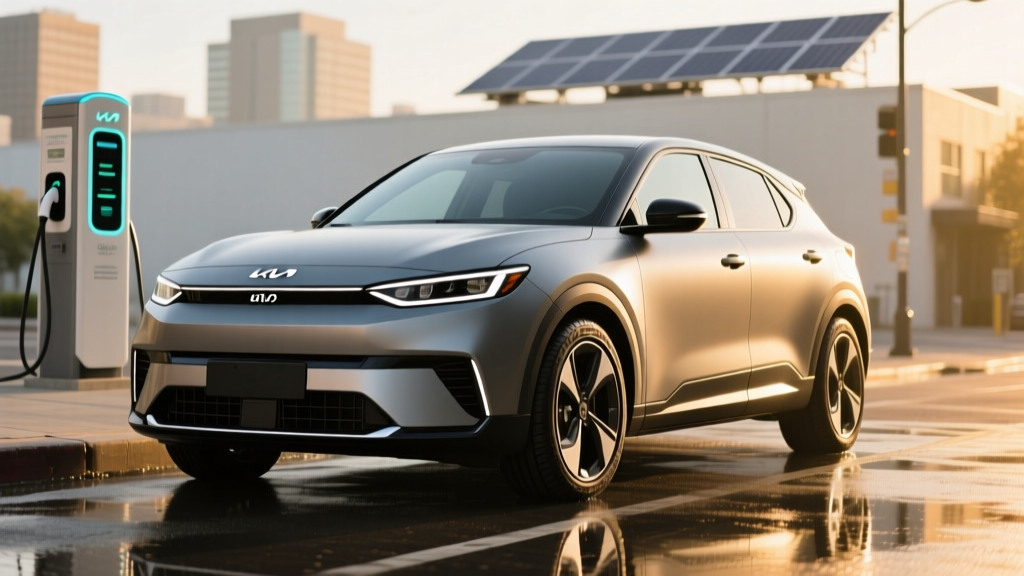
The subcompact electric crossover segment has been dominated by a handful of players, but the 2026 Kia EV3 arrives as a serious contender with aggressive pricing, competitive range, and Kia's strong warranty backing. After spending time with the spec sheets, real-world efficiency data, and pricing breakdowns, here is everything you need to know before putting down a deposit.
2026 Kia EV3 Quick Verdict
The EV3 slots below the EV6 and EV9 in Kia's electric lineup, targeting urban commuters and small families who want genuine daily usability without the premium price tag. With two battery options, a front-wheel-drive layout, and Kia's signature 10-year/100,000-mile powertrain warranty, it makes a compelling case as one of the most practical entry points into a new EV in 2026. Its biggest selling point is value: a starting price near $30,000 before incentives, paired with up to an EPA-estimated 310+ miles of range on the Long Range variant.
Range and Efficiency: EPA Estimates vs. Real-World Driving
Kia offers the 2026 EV3 with two battery packs. The Standard Range model carries a 58.3 kWh usable lithium-ion battery (NMC chemistry), while the Long Range variant steps up to an 81.4 kWh pack. The larger pack is the one most buyers will want for its range advantage.
Real-World Expectation: On mixed highway driving at 70-75 mph, expect roughly 260-280 miles from the Long Range before needing a charge. In cold weather (below 30°F), plan for a 20-30% reduction, bringing effective range to around 190-220 miles on the Long Range. City driving with regenerative braking engaged can push efficiency closer to or slightly above the EPA sticker.
Efficiency ratings land at approximately 120 MPGe combined for the Long Range model, translating to roughly 28 kWh per 100 miles. That's competitive with the Chevrolet Equinox EV and slightly behind the Hyundai Kona Electric, but perfectly reasonable for the segment. The Standard Range model's smaller battery makes it lighter and slightly more efficient per mile, but the trade-off in total range is significant for anyone planning road trips beyond a daily commute.
According to fueleconomy.gov, real-world highway efficiency in EVs typically drops 10-15% below combined EPA figures, and the EV3 is no exception. If your commute is primarily highway miles, budget accordingly.
Battery, Charging Speed, and Home Setup
The EV3 uses Kia's proven battery thermal management system with active liquid cooling and heating — critical for both longevity and fast-charge performance in extreme temperatures. Both battery packs use NMC (nickel manganese cobalt) chemistry rather than LFP, which gives them higher energy density but means you'll want to follow best practices for long-term health: avoid regularly sitting at 100% state of charge, and try to keep the pack between 20-80% for daily use.
| Charging Level | Power / Rate | Time (10-80%) | Miles Added per Hour |
|---|---|---|---|
| Level 1 (120V household) | ~1.4 kW | N/A (overnight top-up only) | ~4-5 mi/hr |
| Level 2 (240V home/public) | 11 kW onboard charger | ~6-7.5 hours (full charge) | ~33-37 mi/hr |
| DC Fast Charge (CCS) | Peak ~150 kW | ~31 minutes (Long Range) | N/A (curve-dependent) |
The 150 kW peak DC fast-charge rate means the EV3 won't set records at a 350 kW Electrify America or Ionity station, but it's practical. Expect the charge curve to sustain around 120-140 kW through the 10-50% state of charge window, then taper progressively. The 10-80% time of roughly 31 minutes on the Long Range is acceptable for highway rest stops, though competitors like the Hyundai Ioniq 5 (with its 800V architecture and ~18-minute 10-80%) have a clear advantage on road trips.
For home charging, the 11 kW onboard charger is a strong point. On a 48-amp Level 2 circuit (requiring a 60-amp breaker), you'll add about 33-37 miles of range per hour — enough to fully replenish the Long Range battery overnight. If your electrical panel supports it, a Level 2 home installation typically costs $800-$2,000 including equipment and electrician labor, depending on run length and permit requirements.
Performance and Drivetrain
The 2026 EV3 is front-wheel drive across all trims, powered by a single permanent-magnet synchronous motor. There is no dual-motor AWD option, which keeps the price down and efficiency up but limits its appeal in heavy snow or for anyone wanting spirited acceleration.
| Specification | Standard Range | Long Range |
|---|---|---|
| Horsepower | 201 hp | 201 hp |
| Torque | 195 lb-ft | 195 lb-ft |
| 0-60 mph | ~7.5 sec (est.) | ~7.7 sec (est.) |
| Drivetrain | FWD | FWD |
| Top Speed | ~106 mph (governed) | ~106 mph (governed) |
The 201-hp motor provides adequate acceleration for merging and city driving. It's not the punchy, seat-of-the-pants EV experience you get from a Tesla Model Y or even the Kia EV6, but it's perfectly competent. The Long Range model is slightly heavier, which accounts for the marginally slower 0-60 time. For most buyers in this segment, the trade-off favors range over acceleration.
Interior, Cargo, and Technology
Inside, the EV3 borrows design cues from the EV9 — a minimalist dashboard with a dual-screen setup (12.3-inch digital instrument cluster and 12.3-inch infotainment display on higher trims). Lower trims receive a smaller 10.25-inch infotainment screen. Wireless Apple CarPlay and Android Auto are standard across the lineup.
Passenger space is competitive for the subcompact class:
- Front legroom: ~41.5 inches
- Rear legroom: ~37.8 inches
- Cargo volume (behind rear seats): ~16.0 cu ft
- Cargo volume (rear seats folded): ~45.0 cu ft
- Front trunk (frunk): ~1.6 cu ft (enough for a charging cable bag)
The cargo area is the EV3's weakest point compared to the Hyundai Kona Electric or the Chevrolet Equinox EV. If you regularly haul gear, strollers, or groceries for a family, the 16 cu ft behind the rear seats will feel tight. Fold the 60/40 split rear seats and you get a more usable 45 cu ft, but that eliminates rear passenger seating.
On the tech front, Kia includes its latest Highway Driving Assist 2 (HDA2) system on mid and upper trims — a Level 2 SAE driver-assistance suite combining adaptive cruise control with lane centering. It works well on divided highways but requires constant driver supervision and hands-on-wheel (or hands-on with torque detection). This is not a hands-off system, and it does not approach Level 3 or Level 4 autonomy.
Pricing, Trims, and Federal Tax Credit Eligibility
The 2026 EV3 is positioned as Kia's most affordable electric vehicle, undercutting the EV6 by a significant margin. Pricing breaks down as follows (destination charge included):
| Trim | Battery | MSRP | Est. After §30D Credit* |
|---|---|---|---|
| Light (Standard Range) | 58.3 kWh | ~$29,990 | ~$22,490 |
| Wind (Long Range) | 81.4 kWh | ~$34,990 | ~$27,490 |
| GT-Line (Long Range) | 81.4 kWh | ~$38,990 | ~$31,490 |
*Federal tax credit estimates assume full §30D eligibility. Actual credit varies.
The IRS §30D clean vehicle credit offers up to $7,500 for qualifying new EVs, but eligibility depends on several factors that change frequently:
- MSRP cap: The EV3 qualifies as an SUV/crossover (cap: $80,000) — all trims well below this threshold.
- Buyer income limits: Modified adjusted gross income must not exceed $150,000 (single), $225,000 (head of household), or $300,000 (joint filers).
- Battery sourcing requirements: A percentage of critical minerals and battery components must be sourced from the U.S. or free-trade-agreement countries. Kia has been actively reconfiguring supply chains, but verify current-year sourcing compliance on the IRS qualified vehicles list before purchasing.
- Point-of-sale transfer: As of 2024, the credit can be transferred to the dealer at purchase, reducing your out-of-pocket cost immediately rather than waiting for tax filing.
Because battery-sourcing rules tighten each year, always confirm the EV3's eligibility status on the fueleconomy.gov qualified vehicles page at the time of purchase. A tax professional can help verify your personal income eligibility.
Warranty Coverage
Kia's warranty remains one of the best in the industry and a major reason buyers choose the brand:
- Battery: 10 years / 100,000 miles (capacity retention guaranteed above ~70% state of health)
- Powertrain: 10 years / 100,000 miles
- Bumper-to-bumper: 5 years / 60,000 miles
- Roadside assistance: 5 years / 60,000 miles
The 10-year battery warranty provides genuine peace of mind against degradation. If the battery falls below the guaranteed capacity threshold within the warranty period, Kia will repair or replace it at no cost.
Pros, Cons, and Who Should Buy
Pros
- Aggressive pricing — one of the most affordable new EVs available
- Up to ~310 miles EPA range (Long Range)
- Industry-leading 10-year/100,000-mile battery warranty
- 11 kW onboard charger for fast Level 2 home charging
- Competitive efficiency (~120 MPGe combined)
- HDA2 driver-assist standard on mid/upper trims
Cons
- FWD only — no AWD option for snow-belt buyers
- Modest cargo space (16 cu ft behind rear seats)
- 150 kW peak DC charging trails 800V competitors
- No frunk to speak of (1.6 cu ft cable storage only)
- Tax credit eligibility dependent on evolving sourcing rules
- Rear legroom tighter than some compact SUV rivals
Who Is the 2026 Kia EV3 For?
Choose the EV3 if: You want an affordable new EV with strong range for commuting and errands, you value a long warranty, you can charge at home, and you don't need AWD or large cargo capacity.
Look elsewhere if: You need AWD for harsh winters, you regularly haul cargo or take long road trips where faster DC charging matters, or you want a sportier driving experience (consider the EV6 or Tesla Model Y).
How the EV3 Stacks Up Against Competitors
The EV3's most direct rivals include the Hyundai Kona Electric, Chevrolet Equinox EV, and Volvo EX30. Here's how they compare on the metrics that matter:
| Metric | Kia EV3 LR | Hyundai Kona Electric | Chevy Equinox EV |
|---|---|---|---|
| EPA Range | ~310 mi | ~261 mi | ~319 mi |
| Base MSRP | ~$29,990 | ~$32,975 | ~$33,600 |
| Peak DC Charge | ~150 kW | ~100 kW | ~150 kW |
| Battery Warranty | 10yr/100k mi | 10yr/100k mi | 8yr/100k mi |
| Drivetrain | FWD | FWD | FWD / AWD opt. |
The Equinox EV offers slightly more range and an available AWD powertrain but costs more at the base level and has a shorter warranty. The Kona Electric trails on both range and charging speed. The EV3's sweet spot is its combination of low price, strong range, and long warranty — a triangle that's hard to beat at this price point.
Frequently Asked Questions
What is the real-world range of the 2026 Kia EV3?
The EPA rates the Long Range EV3 at approximately 310 miles. In real-world mixed driving at highway speeds, expect 260-280 miles. In cold weather below 30°F, plan for 190-220 miles from a full charge. The Standard Range model delivers roughly 190-210 miles real-world.
How fast does the Kia EV3 charge at home and on the road?
On a Level 2 home charger (240V, 48A), the EV3 charges at up to 11 kW, adding about 33-37 miles of range per hour — a full charge takes roughly 6-7.5 hours depending on the battery. On DC fast chargers, it peaks at approximately 150 kW and reaches 10-80% in about 31 minutes for the Long Range model.
Does the 2026 Kia EV3 qualify for the $7,500 federal tax credit?
The EV3 meets the MSRP cap (under $80,000 for SUVs) and many buyers will meet the income requirements. However, eligibility depends on current-year battery critical-mineral and component sourcing rules under IRS §30D, which change annually. Check the IRS qualified vehicle list and confirm with your dealer before purchase.
Is the Kia EV3 worth buying over the Chevy Equinox EV or Hyundai Kona Electric?
The EV3 wins on value — it undercuts both on price while matching or exceeding their range, and it carries a superior 10-year battery warranty. If you need AWD or more cargo space, the Equinox EV is a better fit. If you prioritize the lowest possible purchase price with solid range, the EV3 is the stronger choice.
Is the EV3's driver-assist system self-driving?
No. Kia's Highway Driving Assist 2 (HDA2) is an SAE Level 2 driver-assistance system. It combines adaptive cruise control and lane centering, but the driver must remain fully engaged, monitor the road, and keep hands on the steering wheel at all times. It does not handle city streets, construction zones, or adverse weather autonomously.
What is the battery replacement cost after the warranty expires?
Out-of-warranty EV battery replacement for packs in the 80 kWh range typically costs $10,000-$15,000 at current market rates. However, NMC batteries with active thermal management routinely retain 85-90% capacity after 150,000+ miles based on industry degradation data, making full replacement uncommon within a typical ownership period.