The Real Math Behind 2026 Kia EV Lease Deals
If you've been searching for Kia EV lease deals, you've likely seen aggressive monthly payment offers on the EV6 crossover and the three-row EV9 SUV. But a low monthly lease payment only tells part of the story. To determine whether leasing a Kia EV actually saves you money — or costs you more than a gas alternative — you need to evaluate the full five-year ownership picture: fuel savings, maintenance reductions, insurance premiums, depreciation, and federal tax credit eligibility.
This guide breaks down the exact numbers for the 2026 Kia EV6 and EV9, using EPA data, IRS §30D tax credit rules, and real-world ownership variables. We'll show you where the savings are genuine, where costs sneak up, and how to evaluate a lease offer with your eyes open.
5-Year Total Cost of Ownership: Kia EV6 vs. Gas Crossover Baseline
To ground the lease conversation, let's look at what owning a 2026 Kia EV6 GT-Line AWD actually costs over five years compared to a similarly priced gas crossover (we'll use the Kia Sportage 2.5T AWD as a baseline). These figures assume 15,000 miles driven annually, home Level 2 charging at the national average electricity rate, and current fuel prices.
| Category | 2026 Kia EV6 GT-Line AWD | Gas Crossover Baseline |
|---|---|---|
| Purchase/Lease Cost (5 yr) | $28,500 (lease total, incl. $3,999 down) | $27,000 (lease total, incl. $2,500 down) |
| Fuel / Electricity | $3,750 (at $0.15/kWh, 3.5 mi/kWh) | $8,100 (at $3.60/gal, 25 MPG combined) |
| Maintenance | $1,800 | $4,200 |
| Insurance (5 yr total) | $11,250 | $8,500 |
| Depreciation (if purchased) | ~55-60% over 5 yr | ~45-50% over 5 yr |
| Estimated 5-Yr Total (Leased) | ~$45,300 | ~$47,800 |
The EV6 wins on fuel and maintenance by a wide margin — saving roughly $6,750 over five years. But higher insurance premiums eat back approximately $2,750 of that advantage. The net savings land around $2,500 over the lease term, assuming you charge primarily at home. If you rely on DC fast charging at $0.35-$0.48/kWh, the fuel savings narrow considerably.
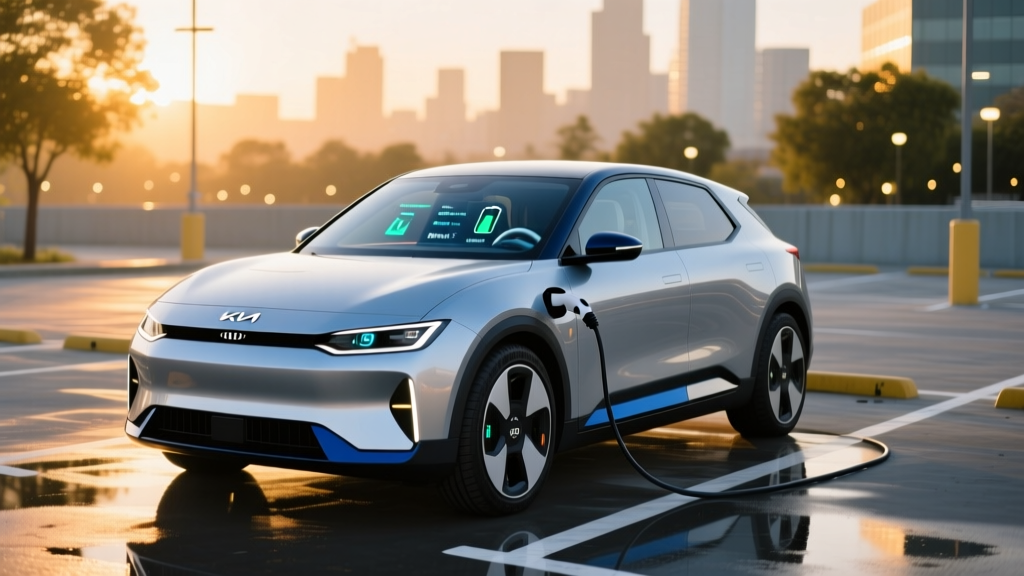
2026 Kia EV6 GT-Line AWD — Key Specs: 77.4 kWh usable battery (NMC chemistry), EPA-estimated 282 miles range, peak DC fast charging at 240 kW (10-80% in ~18 minutes on a 350 kW charger), 320 hp, 0-60 mph in 5.1 seconds, 117 MPGe combined. Source: fueleconomy.gov
Federal Tax Credit: Do You Qualify for §30D on a Kia EV?
The federal EV tax credit under IRS §30D can deliver up to $7,500 — and since 2024, it can be transferred to the dealer as a point-of-sale rebate, effectively reducing your lease's capitalized cost or your purchase price. But eligibility is not automatic. The rules are strict and subject to change.
§30D Federal Tax Credit Eligibility Checklist (2026 Rules)
- Income caps: Modified adjusted gross income (MAGI) must not exceed $300,000 (married filing jointly), $225,000 (head of household), or $150,000 (single filers).
- MSRP caps: Vans, SUVs, and pickups capped at $80,000 MSRP; sedans and other vehicles capped at $55,000. The EV6 qualifies (MSRP under $55K-$62K depending on classification); the EV9 qualifies as an SUV under the $80K cap.
- Battery sourcing requirements: The battery's critical minerals and components must meet phased-in percentages sourced from the U.S. or FTA partners. Kia's South Korean-manufactured battery cells have faced sourcing challenges — verify current eligibility on the IRS clean vehicle credits page before signing.
- Point-of-sale transfer: You can elect to transfer the credit to the dealer at purchase, reducing your out-of-pocket cost immediately. For leases, the lessor (financing company) technically claims the credit — but many Kia lease deals pass this benefit through as a capitalized cost reduction.
- One vehicle per year: You can only claim the credit once per calendar year (once every three years for used EVs).
Lease loophole advantage: Under §45W, the commercial clean vehicle credit applies to leased EVs. Because the leasing company (not you) is the legal owner, the MSRP and income caps may not apply in the same way. Many Kia dealers structure EV9 leases to capture this credit and pass the savings to you. Confirm with your tax professional — this is a nuanced area that the IRS has addressed but that varies by lessor.
Charging Cost vs. Gas: The Per-Mile Reality
The single largest ongoing savings from a Kia EV comes at the fuel pump — or rather, the charger. But your actual cost per mile depends heavily on where and how you charge.
| Charging/Fuel Scenario | Cost Per Mile | Annual Cost (15,000 mi) |
|---|---|---|
| Home Level 2 ($0.15/kWh) | $0.043 | $643 |
| Home with time-of-use off-peak ($0.09/kWh) | $0.026 | $386 |
| Public DC fast charging ($0.40/kWh avg) | $0.114 | $1,714 |
| Gas crossover at $3.60/gal, 25 MPG | $0.144 | $2,160 |
| Gas crossover at $4.20/gal, 25 MPG | $0.168 | $2,520 |
At home on a Level 2 charger, the EV6 costs roughly 70% less per mile than a gas crossover. Even at public DC fast-charging rates, you still save — though the margin drops to about 20-47%. The lesson for lease shoppers: if your lease deal doesn't include home charging access (garage, Level 2 install), your fuel savings shrink fast. Budget $500-$1,500 for a home Level 2 installation if you don't already have one.
Maintenance Savings: Where EVs Genuinely Cost Less
Electric vehicles eliminate several routine maintenance items that gas vehicles require. The EV6's electric powertrain has far fewer moving parts than an internal combustion engine, and regenerative braking significantly extends brake pad life.
| Service Item | Kia EV6 | Gas Crossover |
|---|---|---|
| Oil changes | None — $0 | ~10 changes at $50-80 = $500-$800 |
| Brake pads | Often last 100K+ mi (regen braking) — $0 | 1-2 replacements = $400-$800 |
| Transmission fluid | None (single-speed reduction gear) | $150-$300 |
| Coolant flush | Every ~60K mi — $150 | Every ~50K mi — $150 |
| Cabin air filter | Every 15-20K mi — $150 (5 yr) | Every 15-20K mi — $150 (5 yr) |
| Tire rotation | Every 7,500 mi — $250 (5 yr) | Every 7,500 mi — $250 (5 yr) |
| Tire replacement | May wear faster (EV torque + weight) — $1,000-$1,400 | $800-$1,100 |
| Estimated 5-Year Total | ~$1,800 | ~$4,200 |
The net maintenance savings over five years is approximately $2,400. One caveat: EV tires tend to wear faster due to instant torque delivery and heavier vehicle weight. The EV6 GT-Line AWD weighs approximately 4,500 lbs. Budget for a potential tire replacement during a longer lease or ownership period. Kia's battery warranty covers 10 years/100,000 miles with a capacity retention threshold of 70%, which provides peace of mind well beyond any standard lease term.
The Insurance Reality: Why EV Leases Cost More to Insure
Here's the cost category where EV owners consistently pay more. Insurance premiums for the Kia EV6 and EV9 typically run 15-30% higher than comparable gas crossovers. According to industry data, the EV6 averages approximately $2,250/year for full coverage, while a gas Sportage averages around $1,700/year.
The reasons are structural:
- Higher repair costs: EV battery packs and specialized electronics require certified technicians and OEM parts. A minor collision that damages high-voltage components can total a vehicle that a gas car would survive.
- Higher vehicle values: The EV6's MSRP ($42,000-$62,000 depending on trim) sits above many gas crossovers, driving up comprehensive and collision premiums.
- Limited repair network: Fewer body shops are certified for high-voltage EV repairs, increasing labor rates and claim processing times.
Before signing any Kia EV lease, get an insurance quote for the exact trim and ZIP code. Some insurers now offer EV-specific discounts — ask about them. If your insurance quote jumps by more than $600/year, it will materially reduce your five-year savings.
State, Local, and Utility Incentives: The Variable Layer
Beyond the federal §30D credit, many states, municipalities, and electric utilities offer additional rebates and incentives that can stack on top of a Kia EV lease deal.
Common Regional Incentives (Verify Current Availability)
- California (CVRP): Up to $2,000 rebate for income-qualified buyers; additional $1,000 in disadvantaged communities. Check CARB for current program status.
- Colorado: State tax credit of up to $5,000 for new EVs (income and price caps apply).
- New York (Drive Clean Rebate): Point-of-sale rebate up to $2,000 based on income and vehicle price.
- Utility rebates: Many utilities (PG&E, ConEdison, Xcel Energy, etc.) offer $300-$1,500 rebates for home Level 2 charger installation or time-of-use rate enrollment. Check your local utility's EV programs.
- HOV lane access: Several states grant single-occupant HOV lane access for EVs — a non-monetary but high-value perk in congested metro areas.
Note: State and local incentives change frequently, have limited funding pools, and vary by jurisdiction. Always verify current eligibility with your state energy office and utility provider before relying on these amounts in your budget.
Depreciation and Resale Value: What Happens at Lease-End
If you're leasing, depreciation is technically the leasing company's problem — your monthly payment already bakes in the projected residual value. But understanding EV depreciation matters for two reasons: (1) it determines how competitive your lease payment is, and (2) if you decide to buy out the lease at term-end, you want to know whether you're getting a deal or overpaying.
EV depreciation trends through 2025-2026 have been steeper than gas vehicles, driven by several factors:
- Price wars: Tesla's aggressive price cuts in 2023-2024 rippled through the entire EV market, compressing used values across all brands.
- Battery health uncertainty: Used-EV buyers discount for potential battery degradation, even though most modern packs (including the EV6's NMC pack) retain 85-92% capacity at 100,000 miles based on current fleet data.
- Rapid tech advancement: Newer models with NACS connectors, faster charging, and longer range make 2-3 year-old EVs feel dated faster than gas cars.
- Tax credit effect: The $7,500 new-EV credit effectively reduces the "real" purchase price, which compresses used values relative to original MSRP.
The Kia EV6 has held its value somewhat better than average for EVs, aided by strong 800V charging capability and distinctive styling. Expect roughly 55-60% depreciation over five years (from original MSRP), compared to 45-50% for a gas crossover. For the three-row EV9, depreciation may be softer given the scarcity of electric three-row SUVs in the used market.
Lease buyout strategy: If the EV market continues to soften, your lease residual may be set above actual market value at term-end — giving you leverage to negotiate a lower buyout price with Kia Motors Finance. Conversely, if EV demand rebounds, a buyout could represent strong value.
2026 Kia EV6 and EV9: Quick Spec Reference for Lease Shoppers
| Spec | 2026 EV6 GT-Line AWD | 2026 EV9 Land AWD |
|---|---|---|
| EPA Range | 282 mi (real-world highway ~245 mi, cold ~220 mi) | 280 mi (real-world highway ~240 mi) |
| Battery | 77.4 kWh usable, NMC | 100.0 kWh usable, NMC |
| Peak DC Fast Charge | 240 kW (10-80% ~18 min) | 210 kW (10-80% ~24 min) |
| Level 2 Charge Rate | 10.9 kW (~7.5 hrs full charge) | 10.9 kW (~10 hrs full charge) |
| Connector | CCS1 (NACS adapter available) | CCS1 (NACS adapter available) |
| Horsepower | 320 hp | 379 hp |
| 0-60 mph | 5.1 sec | 5.0 sec |
| MPGe (combined) | 117 MPGe | 88 MPGe |
| Starting MSRP | ~$52,200 | ~$63,900 |
| Battery Warranty | 10 yr / 100,000 mi (70% retention) | 10 yr / 100,000 mi (70% retention) |
Both models use 800V architecture, enabling the fast DC charging speeds that remain a competitive advantage over 400V rivals. Kia includes a NACS adapter for Tesla Supercharger access, expanding your public charging network significantly for road trips. See Kia's official EV6 page and EV9 page for the latest trim configurations.
Frequently Asked Questions
How much does it really cost to own a Kia EV over 5 years?
Based on our analysis, a leased 2026 Kia EV6 GT-Line AWD costs approximately $45,300 over five years (75,000 miles) including lease payments, electricity, insurance, and maintenance. That's roughly $2,500 less than a comparable gas crossover — assuming you charge primarily at home at $0.15/kWh. If you rely exclusively on public DC fast charging, the savings narrow to near zero.
Do I qualify for the $7,500 federal tax credit on a Kia EV lease?
For leases, the situation is favorable. The §45W commercial clean vehicle credit often applies to leased EVs, and the lessor (not you) is the legal owner. Many Kia dealers structure leases to capture this credit and pass it through as a capitalized cost reduction, lowering your monthly payment. For purchases, you must meet §30D income caps ($150K single / $300K joint), MSRP caps, and battery-sourcing requirements. Verify current eligibility at IRS.gov and with your tax professional.
How much do I save on fuel and maintenance with a Kia EV?
Combined fuel and maintenance savings average approximately $6,750 over five years (15,000 miles/year). Fuel savings alone are roughly $4,350 (home charging at $0.15/kWh vs. gas at $3.60/gal, 25 MPG). Maintenance savings add another $2,400, primarily from eliminated oil changes and extended brake pad life via regenerative braking.
Are Kia EVs more expensive to insure?
Yes. Expect to pay 15-30% more for insurance on a Kia EV6 or EV9 compared to a gas crossover — roughly $550-$750 more per year. Over five years, that's an additional $2,750-$3,750 in premiums. Get a quote before signing a lease to confirm the impact on your budget.
How well do Kia EVs hold their value?
EVs have depreciated faster than gas vehicles in recent years — the EV6 is estimated at 55-60% depreciation over five years vs. 45-50% for a gas crossover. However, if you're leasing (not buying), this is already priced into your monthly payment. At lease-end, a soft EV market may present a buyout opportunity below the residual value.
What should I look for in a Kia EV lease deal?
Prioritize these elements: (1) confirm whether the $7,500 federal credit is applied as a cap cost reduction, (2) check the money factor (lease interest rate — multiply by 2,400 to get the APR equivalent), (3) verify the residual percentage (higher = lower monthly payment), (4) confirm mileage allowance (10K vs. 12K vs. 15K/year), and (5) factor in your insurance quote and home charging setup cost before committing.