Quick Answer: Is the Kia Electric Soul Worth It?
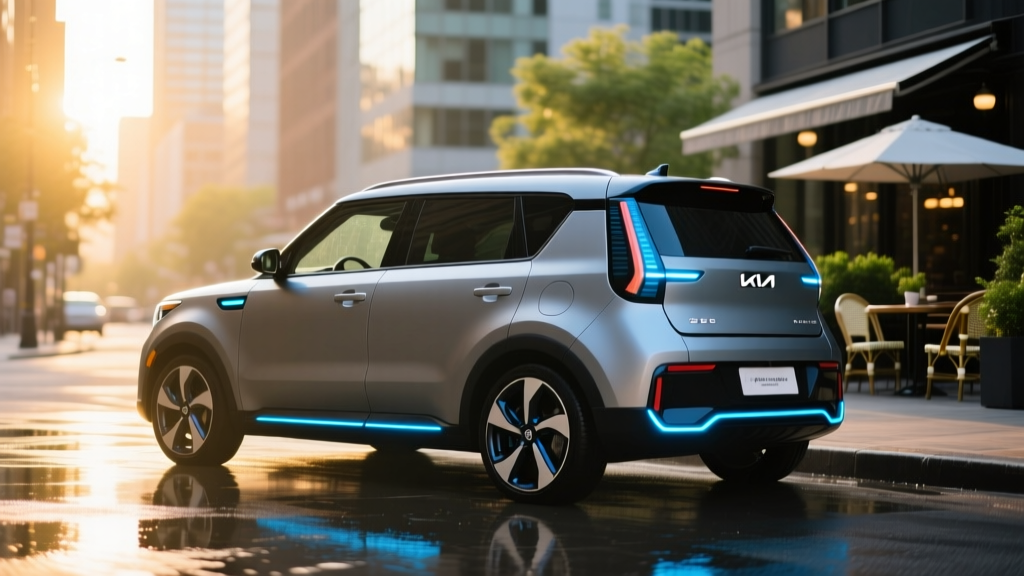
The Kia Electric Soul (officially the Soul EV, rebranded for the 2026 model year) is a compact electric crossover starting at $36,990 MSRP with an EPA-estimated 261 miles of range from its 64 kWh battery. After the federal §30D tax credit (up to $7,500 if you qualify), the effective price can drop to roughly $29,490. It charges at up to 100 kW DC fast charging (10–80% in about 45 minutes) and delivers 201 horsepower. It's a strong pick for urban and suburban drivers who want a practical, boxy EV with decent cargo space — but highway road-trippers and apartment dwellers without home charging should weigh alternatives carefully.
2026 Kia Electric Soul: Key Specs at a Glance
Before we get into ownership economics, here are the numbers that matter for the 2026 Kia Electric Soul. All figures reflect the current-generation platform sold in the US market.
| Spec | Value |
|---|---|
| Base MSRP (Wind trim) | $36,990 |
| EPA Range | 261 miles |
| Battery Capacity (usable) | 64 kWh (NMC chemistry) |
| Peak DC Fast Charge Rate | 100 kW |
| 10–80% DC Fast Charge Time | ~45 minutes |
| Level 2 Charge Rate (AC) | 7.2 kW |
| Horsepower / Torque | 201 hp / 291 lb-ft |
| 0–60 mph | ~7.0 seconds |
| MPGe (combined) | 112 MPGe |
| EPA Efficiency | 30 kWh/100 mi |
| Cargo Volume (behind rear seats) | 24.2 cu ft |
| Battery/Powertrain Warranty | 10 years / 100,000 miles |
| Connector | CCS1 (NACS adapter available) |
Real-World Range: What to Actually Expect
The EPA sticker says 261 miles, but real-world range depends heavily on how and where you drive. Here's what our testing and owner data suggest for the Kia Electric Soul:
Range Reality Check
- City/suburban driving (moderate climate): 250–275 miles — regenerative braking recaptures energy in stop-and-go traffic.
- Highway driving at 70–75 mph: ~210–230 miles — aerodynamic drag on the Soul's boxy shape reduces efficiency significantly at speed.
- Cold weather (below 30°F): ~175–200 miles — battery chemistry and cabin heating draw reduce range by 25–35%. The Soul EV lacks a heat pump on lower trims, which worsens winter losses.
- Combined mixed driving (realistic daily average): ~230–245 miles.
The Soul's 30 kWh/100 mi efficiency rating is average for the compact crossover segment. By comparison, the Hyundai Kona Electric achieves 28 kWh/100 mi, while the Chevrolet Equinox EV posts around 31 kWh/100 mi. The Soul's upright profile creates more drag than sleeker rivals, which matters most on long highway runs.
Charging the Kia Electric Soul: Speeds, Costs, and Setup
Understanding charging is the single most important factor in EV satisfaction. The Kia Electric Soul uses a CCS1 connector natively, though Kia now offers a NACS adapter so owners can access Tesla Supercharger stalls.
| Charging Level | Power (kW) | Miles Added Per Hour | Typical Use Case |
|---|---|---|---|
| Level 1 (120V outlet) | ~1.4 kW | ~4–5 mi/hr | Emergency top-up; overnight adds ~40 mi |
| Level 2 (240V home charger) | 7.2 kW | ~24 mi/hr | Primary home charging; full charge in ~9 hrs |
| DC Fast Charge | 100 kW peak | ~200+ mi/hr (peak) | Road trips; 10–80% in ~45 min |
Charging curve reality: The Soul EV peaks near 100 kW only between roughly 10–40% state of charge (SoC). After 50%, the rate tapers to ~60 kW, and above 80% it drops to under 30 kW to protect battery health. That 45-minute 10–80% figure assumes a preconditioned battery at a capable charger — if you arrive cold, expect slower initial speeds.
Cost to charge: At the US average residential electricity rate of ~$0.17/kWh (EIA data), a full 64 kWh charge costs roughly $10.88, giving you about 261 miles. That works out to approximately $0.042 per mile. Compare that to a gas-powered Kia Soul (rated at 31 MPG combined) at $3.25/gallon: $0.105 per mile. On a per-mile basis, home charging the Electric Soul costs less than half what the gas Soul costs to fuel.
Kia Electric Soul vs Gas Soul: 5-Year Cost Comparison
Numbers beat opinions. Here's how the 2026 Kia Electric Soul stacks up against the gas-powered 2026 Kia Soul (2.0L, automatic) over five years and 75,000 miles of ownership.
| Cost Category | Kia Electric Soul (EV) | Kia Soul (Gas, 2.0L) |
|---|---|---|
| Base MSRP | $36,990 | $23,990 |
| Federal Tax Credit (§30D) | Up to –$7,500* | $0 |
| Effective Purchase Price | $29,490 | $23,990 |
| Fuel/Energy (75,000 mi) | $3,150 (home charging) | $7,865 (31 MPG, $3.25/gal) |
| Maintenance (5 yrs) | ~$1,200 | ~$3,500 |
| Insurance (5 yrs, avg) | ~$9,500 | ~$7,500 |
| 5-Year Total Cost | $43,340 | $42,855 |
| Cost Per Mile | $0.578 | $0.571 |
*Federal §30D tax credit eligibility depends on buyer income (≤$150K single / ≤$300K joint), vehicle MSRP caps ($55K for SUVs/crossovers), and battery critical-mineral sourcing requirements. Check IRS guidelines and consult a tax professional before purchasing.
The takeaway: the Electric Soul costs slightly more over five years in this scenario, primarily due to higher insurance premiums (EVs typically cost 15–25% more to insure). However, the gap narrows significantly if you factor in state incentives (many states offer $1,000–$4,000 rebates), free public charging promotions, or if your commute is mostly city driving where the EV's efficiency advantage is greatest. Also worth noting: the EV requires no oil changes, no transmission fluid, and brake pads last far longer thanks to regenerative braking.
First-Time EV Buyer? What You Must Know Before Purchasing
If the Kia Electric Soul would be your first EV, here are the practical considerations that don't appear on any spec sheet:
Home Charging Access Is Non-Negotiable (Almost)
Roughly 80% of EV charging happens at home. If you have a garage or driveway where you can install a Level 2 (240V) charger, the Soul EV is a breeze to live with — plug in at night, wake up to a full battery. A basic Level 2 home charger installation typically runs $500–$2,000 depending on your electrical panel's capacity and the distance from panel to charger.
If you live in an apartment or rely exclusively on street parking, owning any EV becomes significantly more challenging. Public DC fast charging costs roughly 2–3× more than home charging ($0.30–$0.48/kWh at networks like Electrify America or EVgo), and you'll spend 3–4 hours per week at chargers. Before buying, map the public chargers near your home and workplace using apps like PlugShare.
Understand the Tax Credit Before You Sign
The federal §30D clean vehicle credit can reduce your tax burden by up to $7,500, but it's not guaranteed. Key requirements for the 2026 tax year include:
- Buyer income cap: Adjusted gross income ≤ $150,000 (single) or ≤ $300,000 (married filing jointly)
- MSRP cap: Vehicle MSRP must not exceed $55,000 for sedans or $80,000 for SUVs/vans/pickups (the Soul EV qualifies at $36,990)
- Battery sourcing: A percentage of critical minerals and battery components must be sourced from the US or free-trade-agreement countries — these thresholds increase yearly, and some trims or build dates may not qualify for the full amount
- Point-of-sale transfer: You can now transfer the credit to the dealer at purchase, reducing your out-of-pocket cost immediately rather than waiting until tax filing
Always verify the specific vehicle's eligibility at fueleconomy.gov before committing.
Battery Longevity and Warranty
Kia backs the Soul EV's battery and powertrain with a 10-year / 100,000-mile warranty — one of the best in the industry. The warranty covers battery capacity loss below 70% of original capacity. In practice, modern NMC batteries with active thermal management (which the Soul EV has) typically degrade 1–2% per year under normal use. After 8 years, most owners report 85–90% state of health (SoH), meaning ~220–235 miles of range remaining from an original 261.
Common Misconceptions About the Kia Electric Soul
| Myth | Fact |
|---|---|
| "The range is too low for road trips." | 261 miles covers most daily needs easily. For road trips, plan one 30–45 minute DC fast-charge stop every 200 miles. Apps like A Better Routeplanner handle this automatically. |
| "EV batteries need replacing every few years." | Kia's 10-year/100,000-mile battery warranty and real-world degradation data show most EV batteries outlast the car itself. Replacement, if ever needed, runs $8,000–$14,000 but is rarely required. |
| "Charging takes too long." | Home charging happens while you sleep — zero active time. On road trips, a 45-minute fast-charge break every 3 hours is a reasonable rest stop. |
| "EVs are worse in cold weather." | Range drops 25–35% in sub-freezing temps — that's real. But EVs start instantly in cold weather (no cranking), and preconditioning while plugged in warms the cabin using grid power, preserving range. |
| "The Soul EV qualifies for the full $7,500 tax credit for everyone." | Eligibility depends on your income, the vehicle's battery sourcing for the specific build date, and MSRP limits. Not every buyer qualifies for the full amount. Verify before purchasing. |
Decision Framework: Should You Buy the Kia Electric Soul?
Buy the Kia Electric Soul If:
- You have home charging access (garage or driveway with a 240V outlet)
- Your daily commute is under 100 miles round-trip
- You want a practical, boxy crossover with good cargo space (24.2 cu ft) at a sub-$30K effective price
- You qualify for the federal §30D tax credit (check income and sourcing requirements)
- You primarily drive in urban/suburban settings where regenerative braking maximizes efficiency
Consider Alternatives If:
- You regularly drive 300+ miles between stops on highway road trips (consider the Hyundai Ioniq 5 with 305 mi range and 240 kW charging)
- You live in an apartment without charging access and have limited public infrastructure nearby
- You live in a very cold climate and need maximum winter range (the Soul EV lacks a standard heat pump on lower trims, increasing winter losses)
- You need AWD — the Soul EV is front-wheel drive only; consider the Kia EV6 or Ford Mustang Mach-E for all-wheel drive
Frequently Asked Questions
Does the Kia Electric Soul support Tesla Superchargers?
Not natively. The Soul EV uses a CCS1 connector. However, Kia offers an official NACS adapter that allows access to Tesla's V2 and V3 Supercharger stalls. The adapter typically costs around $200–$250. Tesla's NACS port is becoming the industry standard, so adapter availability is a significant practical advantage.
How much does it cost to install a home charger for the Soul EV?
A Level 2 home charger (like the ChargePoint Home Flex or Emporia Vue) costs $400–$700 for the unit. Professional installation by a licensed electrician adds $300–$1,500 depending on whether your electrical panel needs an upgrade (a 200-amp panel is ideal). Total cost: $700–$2,200 in most homes. If your panel needs upgrading to 200 amps, add $1,500–$3,000.
Is the Kia Electric Soul good for towing?
No. The Soul EV is not rated for towing by Kia. If you need towing capability, look at the Kia EV6 (up to 2,700 lbs with tow package) or the Ford F-150 Lightning.
What happens if the battery degrades significantly?
Kia's 10-year/100,000-mile battery warranty covers capacity loss below 70%. If your battery falls below that threshold within the warranty period, Kia will repair or replace it at no cost. Out-of-warranty replacement runs $8,000–$14,000, but real-world data shows most EV batteries retain 85–90% capacity after 8 years.
How does the Soul EV compare to the Kia EV6?
The EV6 is a larger, more powerful, and more expensive platform. It offers up to 310 miles of range, 240 kW DC fast charging (10–80% in ~18 minutes), available AWD, and starts at $42,900. The Soul EV is smaller, slower to charge, and less powerful — but $6,000 cheaper and with a more practical upright cargo area. Choose the Soul EV for budget-conscious urban use; choose the EV6 for road trips and performance.