Quick Answer: Which 2025 Kia EV Is Right for You?
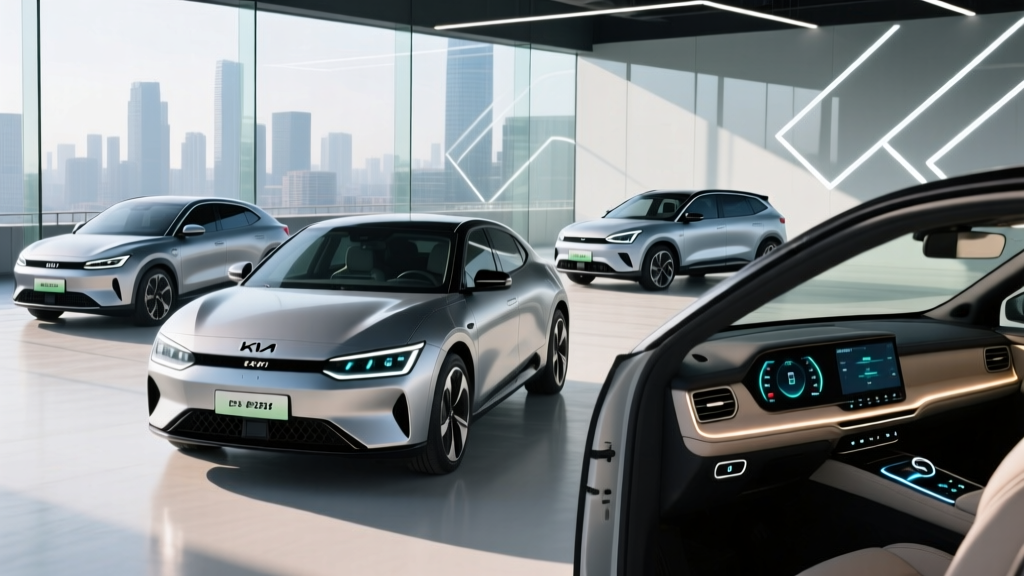
Kia's 2025 electric lineup centers on three battery-electric models: the EV6 (sporty crossover, EPA 310 miles, from ~$42,900), the EV9 (three-row SUV, EPA 304 miles, from ~$54,900), and the Niro EV (compact crossover, EPA 239 miles, from ~$39,600). If you need max range and fast charging, the EV6 Light RWD at 310 EPA miles and 239 kW peak DC charging is the standout. If you need three rows, the EV9 is one of the few mainstream electric options. If budget is the priority and most driving is under 50 miles daily, the Niro EV suffices — but its 239-mile EPA range and ~85 kW peak charging are limiting on road trips. All three qualify for varying levels of the federal §30D tax credit depending on battery sourcing and your income, so verify eligibility before purchasing.
The 2025 Kia EV Lineup at a Glance
Kia has invested heavily in its E-GMP (Electric Global Modular Platform) architecture, which underpins both the EV6 and EV9 with 800V electrical systems capable of ultra-fast DC charging. The Niro EV rides on an older platform with a 400V architecture, meaning slower charging but a lower entry price. Here is how the three models stack up on paper:
| Spec | 2025 Niro EV | 2025 EV6 | 2025 EV9 |
|---|---|---|---|
| EPA Range (max trim) | 239 mi | 310 mi (Light RWD) | 304 mi (Light RWD) |
| Battery Capacity (usable) | 64.8 kWh (NMC) | 77.4 kWh (NMC) | 100.0 kWh (NMC) |
| Peak DC Fast Charge | ~85 kW | 239 kW | ~210 kW |
| 10–80% DC Charge Time | ~43 min | ~18 min | ~24 min |
| Level 2 Charge Rate | 7.2 kW | 10.9 kW | 10.9 kW |
| Horsepower | 201 hp | 167–576 hp (trim dependent) | 215–379 hp |
| 0–60 mph | ~7.8 sec | 3.4–8.0 sec | 5.0–8.2 sec |
| Starting MSRP | $39,600 | $42,900 | $54,900 |
| Drivetrain | FWD | RWD or AWD | RWD or AWD |
| Battery/Powertrain Warranty | 10 yr / 100,000 mi | 10 yr / 100,000 mi | 10 yr / 100,000 mi |
Real-World Range vs. EPA Stickers
EPA range estimates assume a mix of city and highway driving at moderate temperatures. In real-world highway driving at 70+ mph, expect the EV6 Light RWD to deliver roughly 260–280 miles before needing a charge. In cold weather (below 30°F), plan on a 20–30% range reduction across all three models due to cabin heating loads and reduced battery efficiency — meaning an EV6 that stickers at 310 miles may realistically give you 220–250 miles on a frigid winter road trip. The EV9, with its larger frontal area and heavier curb weight, tends to lose range more quickly at sustained highway speeds; expect 240–260 miles real-world in fair conditions.
EV vs Gas: What the Numbers Actually Show
Shopping a Kia EV means you are likely cross-shopping gas-powered crossovers like the Kia Sportage or Telluride. The upfront cost of an EV is higher, but operating costs tilt the long-term math in electrification's favor — especially if you charge at home.
| Metric | 2025 EV6 (Light RWD) | 2025 Sportage (2.5L FWD) |
|---|---|---|
| Base MSRP | $42,900 | $28,590 |
| Fed. Tax Credit (potential max) | Up to $7,500 (§30D) | $0 |
| Effective Starting Price | ~$35,400 | $28,590 |
| Energy/Fuel Economy | 134 MPGe (3.5 mi/kWh) | 28 MPG combined |
| Cost per Mile (home charging / gas) | ~$0.04 (at $0.14/kWh) | ~$0.12 (at $3.40/gal) |
| Annual Fuel/Energy (15,000 mi) | ~$600 | ~$1,821 |
| Annual Maintenance (est.) | ~$300 | ~$650 |
| 5-Year Fuel + Maint. Total | ~$4,500 | ~$12,355 |
The EV6's effective price after the full federal credit drops below $36,000, closing the gap with a mid-trim Sportage dramatically. Over five years, the energy and maintenance savings — roughly $7,800 — further offset the initial premium. However, this math depends on home charging access at residential electricity rates. If you rely exclusively on DC fast charging at $0.35–$0.48/kWh (common on Electrify America and EVgo networks), your per-mile cost rises to $0.10–$0.14, erasing much of the savings advantage.
Federal Tax Credit: What You Actually Qualify For
The §30D Clean Vehicle Credit can deliver up to $7,500 at the point of sale, but not every buyer — and not every Kia EV — qualifies for the full amount. The credit splits into two $3,750 halves: one for battery component sourcing and one for critical minerals sourcing. Kia has worked to localize battery supply chains, but eligibility shifts as sourcing agreements change.
- Income caps: AGI ≤ $150,000 (single), ≤ $225,000 (head of household), ≤ $300,000 (joint) — per IRS §30D rules
- MSRP caps: SUVs/vans ≤ $80,000; sedans/other ≤ $55,000 — all current Kia EVs fall under these caps
- Battery sourcing: Up to $3,750 for critical minerals, up to $3,750 for components — percentages increase annually
- Assembly: Vehicle must undergo final assembly in North America — all US-market EV6, EV9, and Niro EV qualify
- Point-of-sale transfer: You can transfer the credit to the dealer for an immediate price reduction at purchase
Important: Sourcing requirements tighten each year. A model that qualifies for the full $7,500 in early 2025 may see its credit reduced later. Always confirm current eligibility on fueleconomy.gov before signing paperwork, and consult a tax professional for your specific situation.
Charging at Home vs. on the Road
Kia's E-GMP vehicles (EV6 and EV9) shine at DC fast chargers. The EV6's 239 kW peak rate — enabled by its 800V architecture — means a 10–80% session in roughly 18 minutes at a compatible 350 kW station. But peak rate is not sustained rate: above 55–60% SoC, the charge curve tapers significantly. A session from 10–90% will take closer to 30–35 minutes. The Niro EV's 400V system tops out around 85 kW, making road-trip stops noticeably longer.
| Charging Level | Power (kW) | EV6 Miles/Hour | EV9 Miles/Hour | Niro EV Miles/Hour |
|---|---|---|---|---|
| Level 1 (120V outlet) | ~1.4 kW | ~4 mi/hr | ~3 mi/hr | ~4 mi/hr |
| Level 2 (240V home) | 7.2–10.9 kW | ~28 mi/hr | ~25 mi/hr | ~22 mi/hr |
| DC Fast (peak) | 85–239 kW | ~700+ mi/hr (peak) | ~550+ mi/hr (peak) | ~250 mi/hr (peak) |
Home charging reality: Installing a Level 2 home charger (240V, 40–48 amp circuit) typically costs $800–$2,200 including the charger unit, electrician labor, and permits. If your electrical panel needs an upgrade to 200A, add $1,500–$3,500. Most EV owners who charge at home report that a nightly plug-in habit eliminates range anxiety entirely for daily driving. If you live in an apartment without charging access, relying on public Level 2 and DC chargers is feasible but adds time cost and variability — check PlugShare or your Kia app for nearby infrastructure before committing to a purchase.
Ownership Costs Beyond the Sticker Price
The purchase price is only the beginning. Here is a realistic five-year cost projection for the EV6 versus a comparable gas crossover, assuming 15,000 miles per year and home charging:
| Cost Category | EV6 Light RWD | Gas Crossover (28 MPG) |
|---|---|---|
| Purchase (after credit) | $35,400 | $28,590 |
| Insurance (5-yr est.) | $9,500 | $7,800 |
| Energy/Fuel (5 yr) | $3,000 | $9,105 |
| Maintenance (5 yr) | $1,500 | $3,250 |
| Estimated Depreciation | $14,200 | $11,400 |
| 5-Year Total | $63,600 | $60,145 |
The EV6 still carries a roughly $3,400 premium over five years even with the tax credit and lower operating costs. The gap narrows further if your state offers additional rebates or if your electricity rates are below the national average. EV insurance tends to run 15–25% higher than equivalent gas vehicles due to repair-cost data, though this gap is shrinking as EV adoption grows. Depreciation on EVs remains less predictable than on gas vehicles — early data suggests E-GMP Kia models hold value reasonably well, but long-term residual values are still establishing.
Common Misconceptions — Fact-Checked
| Myth | Fact |
|---|---|
| "The battery will need replacing in a few years." | Kia warranties its EV batteries for 10 years/100,000 miles against capacity loss below 70%. Real-world degradation data from E-GMP vehicles shows roughly 5–8% capacity loss over the first 100,000 miles — a full battery replacement ($12,000–$18,000 out of warranty) is rarely needed. |
| "EVs are worse in cold weather." | Range drops 20–30% in sub-freezing temps — this is real. But preconditioning (warming the battery while plugged in) restores much of the charging speed, and EVs start instantly in cold weather with no engine warm-up. The EV6 and EV9 include heat pumps (standard on most trims) that improve winter cabin efficiency. |
| "Charging takes too long for road trips." | The EV6 adds ~200 miles of range in about 18 minutes at a 350 kW charger. Combined with a rest stop, this is manageable. The Niro EV is slower — plan for ~40-minute stops. |
| "I need a special charger at home." | Any J1772-compatible Level 2 charger works with all Kia EVs. Kia does not lock you into proprietary hardware. The EV6 and EV9 now come with the NACS port or a CCS-to-NACS adapter for Tesla Supercharger access. |
Decision Framework: Which Kia EV Fits Your Life?
Choose the Niro EV if:
- Your daily driving is under 50 miles round-trip and you rarely take road trips over 200 miles
- Budget is the primary concern and you want the lowest entry price in Kia's EV lineup
- You have reliable home Level 2 charging and don't need ultra-fast DC charging
- You want a compact footprint for city parking and commuting
Choose the EV6 if:
- You want the best combination of range (310 mi EPA), charging speed (239 kW peak), and value
- You take regular road trips and need 18-minute fast-charge stops
- You want sporty performance — the GT trim does 0–60 in 3.4 seconds with 576 hp
- You want the best real cost of ownership after the federal tax credit
Choose the EV9 if:
- You need three rows of seating and are cross-shopping the Kia Telluride or Hyundai Palisade
- You tow occasionally (up to 5,000 lbs on AWD trims)
- You value interior space and cargo versatility over maximum efficiency
- You accept the higher price and slightly lower real-world highway range as the trade-off for family utility
Frequently Asked Questions
Do all 2025 Kia electric car models qualify for the $7,500 federal tax credit?
Not automatically. Eligibility depends on your income, the vehicle's MSRP, and the battery's critical-mineral and component sourcing percentages, which change over time. All three models (Niro EV, EV6, EV9) are assembled in North America and fall under the MSRP caps, but the credit amount may be $3,750 or $7,500 depending on current sourcing compliance. Check fueleconomy.gov for the latest status and consult a tax professional.
Can I use Tesla Superchargers with a 2025 Kia EV?
Yes, with conditions. Kia has been transitioning to the NACS (North American Charging Standard) connector. Some 2025 models ship with a native NACS port; others include a CCS-to-NACS adapter. Tesla Supercharger V3 and V4 stalls with Magic Dock or adapter compatibility work for Kia EVs, though peak charge rates may be limited to 150 kW at some older stalls rather than the EV6's full 239 kW capability.
How much does it cost to install a Level 2 charger at home for a Kia EV?
Expect $800–$2,200 for a standard installation (40–48A charger, new 240V circuit, electrician labor, and permit). If your home's electrical panel needs upgrading from 100A to 200A service, add $1,500–$3,500. Get quotes from licensed electricians — never attempt a DIY 240V installation.
What is the real-world range of the 2025 EV6 on a road trip?
The EV6 Light RWD stickers at 310 EPA miles. On sustained highway driving at 70–75 mph in fair weather, expect 260–280 miles. In cold weather (below 30°F), plan for 220–250 miles. AWD trims and the GT model have lower EPA ratings (274–282 miles) and correspondingly lower real-world figures.
Is the Kia EV9 worth the premium over the EV6?
If you need three rows, yes — the EV9 is one of very few mainstream electric three-row SUVs available. Its 304-mile EPA range, 5,000-lb towing capacity, and spacious interior make it a legitimate Telluride replacement for families ready to go electric. If you only need two rows, the EV6 offers better range, faster charging, and a significantly lower price.