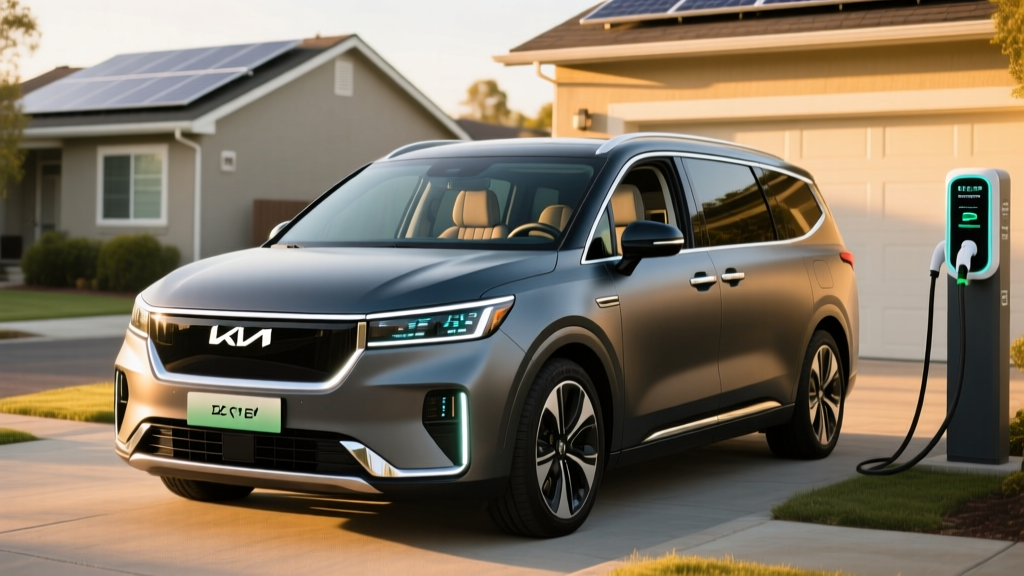
If you're searching for a Kia Carnival EV, here's the direct answer: as of early 2026, Kia has not released a fully electric Carnival minivan in the United States. The current Kia Carnival (redesigned for 2025) is offered exclusively as a conventional hybrid (HEV) and a gasoline V6 model. While Kia has signaled broader electrification across its lineup through 2030, an all-electric Carnival remains unannounced for the U.S. market. Families shopping today for an electrified minivan should consider the Kia Carnival Hybrid (estimated 33 MPG combined) or cross-shop the only true electric three-row alternatives: the Kia EV9 (EPA range up to 304 miles, starting ~$54,900) or the Chrysler Pacifica PHEV (32 miles electric-only, then 30 MPG hybrid).
What the Kia Carnival Lineup Actually Looks Like in 2026
The Kia Carnival entered its fourth generation in 2022 and received a significant refresh for the 2025 model year, which carries into 2026. That refresh introduced a conventional hybrid powertrain — not a plug-in hybrid, and not a battery-electric vehicle. Here's how the 2026 lineup breaks down:
| Model | Powertrain | EPA Fuel Economy | Starting MSRP | Federal Tax Credit |
|---|---|---|---|---|
| Kia Carnival (Gas) | 3.5L V6, 290 hp | 19 city / 26 hwy / 22 combined | ~$34,600 | None |
| Kia Carnival Hybrid | 1.6L turbo HEV, 245 hp | 34 city / 31 hwy / 33 combined | ~$40,600 | None (HEV) |
| Kia EV9 (3-row EV SUV) | BEV, 76.1–99.8 kWh battery | 230–304 mi EPA range | ~$54,900 | Up to $7,500 (§30D) |
The Carnival Hybrid's 33 MPG combined represents a meaningful 50% fuel-economy improvement over the V6 gas model. For families who drive 15,000 miles per year, that difference translates to roughly $680 in annual fuel savings (assuming $3.50/gallon), helping offset the ~$6,000 hybrid premium over about 9 years of ownership.
EV vs. Hybrid vs. Gas: What Minivan Buyers Need to Decide
The absence of a Carnival EV forces a clear three-way decision for electrified family haulers. Here's how the real options compare on the metrics that matter:
| Factor | Carnival Gas V6 | Carnival Hybrid | Kia EV9 (BEV) | Pacifica PHEV |
|---|---|---|---|---|
| Annual Fuel/Energy Cost | ~$2,386 | ~$1,591 | ~$750 (home charging) | ~$1,100 (mixed) |
| Seating Capacity | 7–8 passengers | 7–8 passengers | 6–7 passengers | 7 passengers |
| Cargo (behind 3rd row) | 41.1 cu ft | 41.1 cu ft | 20.2 cu ft | 32.3 cu ft |
| Home Charging Needed? | No | No | Yes (strongly) | Recommended |
| Road-Trip Convenience | Excellent | Excellent | Requires planning | Good (hybrid backup) |
The EV9 offers genuine zero-tailpipe-emission driving and the lowest per-mile energy cost, but it sacrifices significant cargo volume and one potential seating position compared to the Carnival. The Pacifica PHEV splits the difference: 32 miles of electric-only range covers most school runs and errands, while the gas engine eliminates range anxiety on longer trips.
Real Ownership Costs: 5-Year Breakdown
Sticker price tells only part of the story. Here's a 5-year / 75,000-mile total cost of ownership comparison for the realistic options a Carnival EV shopper should weigh:
| Cost Category | Carnival Gas V6 | Carnival Hybrid | Kia EV9 Land AWD |
|---|---|---|---|
| Purchase Price (MSRP) | $34,600 | $40,600 | $63,900 |
| Federal Tax Credit | $0 | $0 | Up to $7,500* |
| Fuel / Energy (5 yr) | $11,930 | $7,955 | $3,750 |
| Maintenance (5 yr) | $3,200 | $2,800 | $1,500 |
| Estimated Insurance (5 yr) | $9,500 | $9,800 | $11,200 |
| Net 5-Year Cost | $59,230 | $61,155 | $71,350 |
*Federal §30D tax credit eligibility depends on buyer income limits (AGI caps: $150K single / $300K joint), vehicle MSRP caps ($80K for SUVs/vans), and battery critical-mineral and component sourcing requirements. The credit can now be transferred to the dealer at point of sale as an upfront discount. Verify current eligibility at IRS.gov.
The Carnival Hybrid does not close the cost gap with the gas model within 5 years purely on fuel savings — the hybrid premium takes longer to recoup. The EV9 costs substantially more upfront even after the tax credit, though its dramatically lower fuel and maintenance costs narrow the gap over a longer ownership horizon.
Common Misconceptions About a Kia Carnival EV
| Myth | Fact |
|---|---|
| "The 2026 Kia Carnival is available as an EV." | No fully electric Carnival exists. Kia offers the Carnival as a gas V6 and a conventional hybrid only. The closest electric Kia with three rows is the EV9 SUV. |
| "The Carnival Hybrid can be plugged in." | It's a conventional HEV, not a PHEV. The small battery recharges through regenerative braking and the engine — there's no plug and no electric-only driving range. |
| "An electric minivan would save me thousands immediately." | Higher purchase prices, potential home charging installation costs ($500–$2,000+), and higher insurance premiums mean EV savings accrue over years, not months. The math depends heavily on your local electricity rates, annual mileage, and tax-credit eligibility. |
| "EVs don't work for family road trips." | The EV9 with its 99.8 kWh battery and ~210 kW peak DC fast-charging rate can add roughly 235 miles in 24 minutes (10–80%). However, towing and cold weather reduce range 20–35%, and charging stops must be planned in advance. |
| "All EVs qualify for the $7,500 tax credit." | Under current §30D rules, credits depend on battery sourcing (critical minerals and components must meet escalating domestic-content thresholds), buyer AGI limits, and MSRP caps. Many EVs qualify for partial credits or none at all. Always check the latest fueleconomy.gov listings. |
What First-Time EV Buyers Should Know Before Committing
If the lack of a Carnival EV is pushing you toward the EV9 or another electric three-row vehicle, these are the practical realities first-time EV owners frequently underestimate:
Home charging is nearly essential. Relying exclusively on public DC fast charging costs 2–3× more per mile than home Level 2 charging and adds significant time to your routine. A Level 2 home charger installation typically costs $800–$2,000 depending on your electrical panel's capacity. Homes with older 100-amp panels may need a $2,000–$4,000 panel upgrade before adding a 48-amp (11.5 kW) charger circuit.
Real-world range is less than the EPA sticker. The EV9 Long Range AWD carries an EPA rating of 282 miles. In real-world highway driving at 70+ mph, expect 230–250 miles. In freezing temperatures (below 32°F), range can drop 25–35% due to battery chemistry limitations and cabin heating demands. If your typical day involves 100+ miles of driving plus winter commutes, budget for a vehicle with at least 300 miles of EPA-rated range.
Charging speed is a curve, not a flat number. The EV9 peaks at approximately 210 kW on a compatible DC fast charger, but that peak is sustained only between roughly 10–40% state of charge. Above 80%, charging slows dramatically to protect battery longevity — a typical 10–80% session takes about 24 minutes, but 80–100% can take another 25+ minutes. Plan road-trip stops around 10–80% charges.
Maintenance is genuinely lower. EVs eliminate oil changes, spark plugs, transmission fluid, and exhaust system repairs. Brake pad life extends significantly thanks to regenerative braking. Expect annual maintenance costs of roughly $300 for an EV versus $600–$800 for a gas minivan, according to AAA ownership studies.
Decision Framework: Which Electrified Minivan Is Right for You?
Choose the Kia Carnival Hybrid if:
- You need maximum cargo space (41.1 cu ft behind the third row) and 8-passenger seating
- You don't have access to home or workplace charging
- You take frequent long road trips and don't want to plan charging stops
- You want a 50% fuel-economy improvement without changing your refueling habits
- Your budget is under $45,000 before options
Choose the Kia EV9 (electric SUV) if:
- You have reliable home Level 2 charging (or can install it)
- Your daily driving is under 200 miles round-trip
- You qualify for the full or partial §30D federal tax credit
- You want the lowest per-mile energy cost and zero tailpipe emissions
- You can accept less cargo space (20.2 cu ft) and 6–7 seating
Choose the Chrysler Pacifica PHEV if:
- You want electric-only driving for short trips (32 miles EPA) without range anxiety on long ones
- You need minivan cargo space and sliding doors
- You can charge at home but don't want to depend on it exclusively
- You want a partial federal tax credit (up to $7,500 depending on current sourcing rules)
Wait for a potential future Carnival EV if:
- A true electric minivan with 8-passenger seating and 40+ cu ft of cargo is your exact need
- Your current vehicle is functional and you can delay purchasing 2–3 years
- You expect battery costs to decline and charging infrastructure to expand further
What a Future Kia Carnival EV Would Need to Compete
Based on Kia's E-GMP platform capabilities (which underpin the EV6 and EV9) and the competitive landscape, a hypothetical electric Carnival would need to deliver the following to succeed:
- Range: At least 300 miles EPA to offset the minivan's large frontal area and weight. A ~100 kWh NMC battery pack would be the likely requirement.
- Charging: 800V architecture supporting 250+ kW peak DC fast charging, enabling 10–80% in under 20 minutes — matching the EV9's capability.
- Pricing: A starting MSRP under $55,000 to remain competitive with the Pacifica PHEV (~$50,000) and close to the gas Carnival's value proposition after incentives.
- Cargo parity: Minivan buyers demand 40+ cubic feet behind the third row. Packaging a large battery pack without intruding on the low, flat load floor is the primary engineering challenge.
- Towing: At least 3,500 pounds to match the current gas Carnival, which requires robust thermal management for the battery and motors.
Until Kia officially announces such a vehicle, the Carnival Hybrid and the EV9 represent the brand's current electrified answers for large families. Cross-shop carefully against the Pacifica PHEV, the Toyota Sienna Hybrid (36 MPG combined, no plug needed), and the upcoming wave of electric SUVs with three-row seating.
Frequently Asked Questions
Will Kia make an electric Carnival minivan?
Kia has not announced a battery-electric Carnival for any market as of early 2026. The company's electrification roadmap includes expanded EV and PHEV offerings, but a dedicated electric minivan has not been confirmed. Industry speculation points to a possible reveal in the 2027–2028 timeframe, though this is unconfirmed.
Does the Kia Carnival Hybrid qualify for any tax credits?
No. The Carnival Hybrid is a conventional HEV (not a plug-in), and the federal §30D clean vehicle credit applies only to battery-electric vehicles and plug-in hybrids that meet battery sourcing and buyer income requirements. Some states offer small rebates for HEVs, but these vary by jurisdiction — check your state energy office for details.
How much does it cost to charge the Kia EV9 at home per month?
At the U.S. average residential electricity rate of ~$0.17/kWh (per EIA data), charging the EV9's 99.8 kWh battery from empty to full costs about $17. If you drive 1,250 miles per month at 3.0 miles/kWh, you'd use roughly 417 kWh, costing approximately $71/month — compared to $199/month in gasoline for the Carnival V6 at the same mileage.
Is the Kia EV9 big enough to replace a minivan?
It depends on your cargo needs. The EV9 offers 20.2 cu ft behind the third row — adequate for groceries and a few bags, but significantly less than the Carnival's 41.1 cu ft. With the third row folded, the EV9 opens up to 81.7 cu ft. If you regularly haul 7–8 people and their cargo simultaneously, a minivan remains the more practical form factor.
What's the real-world range of the EV9 in cold weather?
The EV9 Long Range RWD carries a 304-mile EPA rating. In sustained sub-freezing temperatures, expect a 25–35% reduction, yielding roughly 195–225 real-world miles. The EV9 includes a heat pump (standard on most trims), which mitigates some cold-weather efficiency loss compared to resistive heating systems. Preconditioning the battery while plugged in before departure helps preserve range and enables faster DC charging.