The Short Answer on Kia's $10,000 EV Discount
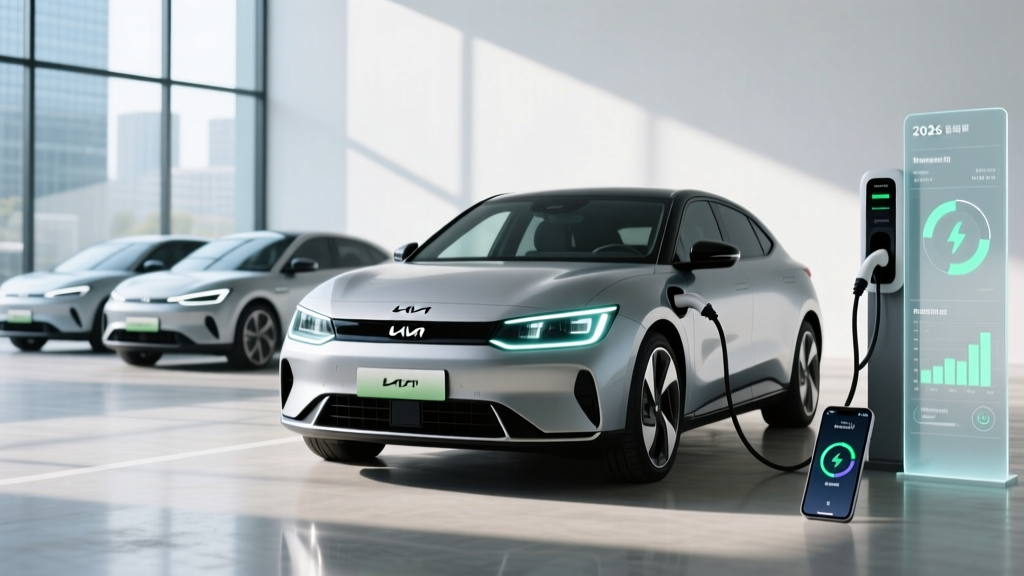
Yes — Kia is offering up to $10,000 off electric vehicles through a combination of manufacturer incentives, federal tax credit eligibility, and dealer-level discounts on select 2025 and 2026 models. The full $10,000 figure is not a single rebate but a stacking of savings: typically a $3,000–$5,000 Kia manufacturer incentive, a $2,500–$3,500 dealer discount, and the $7,500 federal tax credit (via point-of-sale transfer under IRS §30D) where applicable. The EV6, EV9, and Niro EV are the primary targets. However, not every buyer qualifies for the full stack — your adjusted gross income, the vehicle's MSRP cap, and battery-sourcing requirements all affect your final price. Below, we map out the real math so you know exactly what you'll pay.
Which Kia EVs Qualify and What They Cost
Kia's current electrified lineup spans three battery-electric models in the US market for the 2026 model year. Here's how the pricing breaks down before and after incentives:
| Model | Trim | MSRP | EPA Range | Battery (kWh) | Max DC Charge (kW) | 10–80% Time | 0–60 mph |
|---|---|---|---|---|---|---|---|
| Kia Niro EV | Wind | $39,900 | 239 mi | 64.8 (NMC) | 85 kW | ~45 min | 7.8 sec |
| Kia EV6 | Wind RWD | $42,900 | 310 mi | 77.4 (NMC) | 240 kW | ~18 min | 7.2 sec |
| Kia EV6 | GT-Line AWD | $52,500 | 282 mi | 77.4 (NMC) | 240 kW | ~18 min | 5.1 sec |
| Kia EV9 | Light RWD | $54,900 | 304 mi | 76.1 (NMC) | 210 kW | ~20 min | 7.8 sec |
| Kia EV9 | Land AWD | $63,900 | 270 mi | 99.8 (NMC) | 210 kW | ~24 min | 6.8 sec |
The Niro EV's relatively slow 85 kW DC fast-charging peak is its biggest practical limitation — expect 45 minutes for a 10–80% session at a 150+ kW station, and the charge curve tapers sharply above 70%. The EV6's 800-volt architecture is a genuine advantage: it sustains high charge rates longer, meaning the advertised 18-minute 10–80% figure is achievable on a 350 kW Electrify America or Ionity charger, not just a laboratory number. The EV9, despite its 5,400-pound curb weight, manages respectable efficiency at 3.0–3.5 kWh/mile.
Real-World Range Reality: EPA estimates assume mixed city/highway driving at moderate temperatures. In our experience, expect the EV6 Wind RWD to deliver approximately 260–280 miles on a highway-heavy road trip at 70 mph, and as low as 220–240 miles in sub-freezing winter conditions. The EV9 Land AWD drops to roughly 220–230 highway miles in summer and 180–200 in cold weather. Plan charging stops accordingly.
How the $10,000 Savings Stack Actually Works
The headline "up to $10,000 off" requires unpacking. No single incentive writes you a $10,000 check. Here's the anatomy of the discount stack:
1. Federal §30D Tax Credit — Up to $7,500
Under current IRS §30D rules, qualifying buyers can receive up to $7,500 as a point-of-sale price reduction (transferred to the dealer) rather than waiting to claim it at tax time. Eligibility requirements:
- Income caps: Modified AGI ≤ $150,000 (single), ≤ $225,000 (head of household), ≤ $300,000 (joint)
- MSRP caps: ≤ $55,000 for sedans/wagons (Niro EV, EV6); ≤ $80,000 for SUVs/trucks (EV9)
- Battery sourcing: Critical minerals and battery components must meet phased domestic-content thresholds — Kia's supply chain has been adapting, and eligibility can shift by model and build date. Always verify with your dealer at point of purchase.
- Point-of-sale transfer: You elect to transfer the credit to the dealer, reducing your out-of-pocket cost directly. You must still file IRS Form 8936 with your return.
2. Kia Manufacturer Incentives — $2,000 to $5,000
Kia periodically offers cash-back or loyalty bonuses. As of early 2026, EV6 and Niro EV trims have carried $3,000–$5,000 in manufacturer incentives in competitive markets. These are region-dependent and change monthly — check Kia's current offers page or ask your local dealer for the incentive bulletin on the specific VIN.
3. Dealer Discounts — $1,500 to $3,500
EV inventory has been building on lots, and many Kia dealers are negotiating below MSRP, particularly on 2025 carryover stock and higher-trim EV6 and EV9 models where margins are fatter. A $2,000–$3,000 negotiated discount is achievable in most metro markets if you're willing to compare quotes across 2–3 dealers.
Stacking example (EV6 Wind RWD): $42,900 MSRP − $7,500 (federal) − $3,500 (mfr incentive) − $2,000 (dealer discount) = $29,900 out-of-pocket before state incentives and fees. That's a $13,000 reduction, though the "up to $10,000" figure Kia advertises conservatively accounts for scenarios where the full stack doesn't align.
EV vs Gas: What Kia Ownership Actually Costs Over 5 Years
Price is only the starting point. The real question is total cost of ownership (TCO). Below, we compare the EV6 Wind RWD against the closest gas equivalent — the Kia Sportage EX AWD — over 5 years and 75,000 miles:
| Cost Category | 2026 EV6 Wind RWD | 2026 Sportage EX AWD |
|---|---|---|
| Purchase Price (after incentives) | $29,900* | $33,500 |
| Fuel/Energy (75k mi) | $3,750 (home L2, $0.14/kWh avg) | $9,375 (28 MPG combined, $3.50/gal) |
| Maintenance (5 yr) | $1,200 (cabin filter, wipers, tire rotation) | $4,500 (oil, filters, brakes, spark plugs) |
| Insurance (5 yr avg) | $9,500 (~$1,900/yr) | $7,500 (~$1,500/yr) |
| Estimated Depreciation | $14,000 | $12,000 |
| Total 5-Year Cost | $58,350 | $66,875 |
*Assumes full $13,000 incentive stack. Your actual savings depend on eligibility.
The EV6 comes out approximately $8,500 ahead over five years, primarily driven by fuel and maintenance savings. However, two caveats matter: EV insurance premiums run 15–25% higher on average (repair costs, battery replacement risk), and EV depreciation has been steeper than gas cars in the 2024–2025 cycle due to price wars and rapid model turnover. If you plan to keep the car 8+ years, the EV's TCO advantage widens. If you trade every 3 years, the depreciation gap may eat your fuel savings.
Home Charging vs Public Charging: The Cost Reality
Your charging setup is the single biggest variable in EV ownership satisfaction and cost.
| Charging Level | Power (kW) | Miles Added/Hour | Cost per kWh | Cost per Mile (EV6) |
|---|---|---|---|---|
| Level 1 (120V outlet) | 1.4 kW | ~4 mi/hr | $0.14 (avg residential) | $0.04 |
| Level 2 (240V home) | 7.2–11.5 kW | 25–40 mi/hr | $0.14 (avg residential) | $0.04 |
| DC Fast (public 150+ kW) | 50–240 kW | 150–600 mi/hr | $0.35–$0.55 | $0.12–$0.18 |
If you charge 80%+ at home on Level 2, your energy cost stays around $0.04/mile — roughly one-third the cost of a 28 MPG gas car at $3.50/gallon. Rely on DC fast charging exclusively, and your cost per mile climbs to $0.12–$0.18, narrowing the gap significantly.
Home Level 2 Installation Costs
Most EV owners install a 240V Level 2 charger at home. Here's what to budget:
| Item | Cost Range |
|---|---|
| Level 2 charger (hardwired, 40–48A) | $400–$700 |
| Electrician labor (run 240V/50A circuit) | $800–$2,500 |
| Permit and inspection | $100–$300 |
| Electrical panel upgrade (if needed, 100A→200A) | $1,500–$3,500 |
| Total typical install | $1,300–$3,500 (no panel upgrade) / $2,800–$7,000 (with upgrade) |
The EV6's onboard charger accepts up to 10.9 kW on Level 2 (48A), meaning a full 0–100% charge takes about 7.5 hours — ideal for overnight charging. The Niro EV tops out at 11 kW. Always hire a licensed electrician and pull a permit; unpermitted EV charger installs can void home insurance claims.
Common Misconceptions About Kia EV Deals
| Myth | Fact |
|---|---|
| "The $10,000 off is a single coupon anyone can use." | It's a combination of federal credit, manufacturer incentive, and dealer discount. Each has its own eligibility rules, and not all stack to $10,000 for every buyer or trim. |
| "Kia EVs don't qualify for the federal tax credit." | Several Kia EV trims qualify under §30D, including the EV6 and EV9, subject to MSRP caps, income limits, and battery-sourcing rules. Eligibility can change — verify at purchase. |
| "I'll save money even if I only use public fast chargers." | DC fast charging at $0.40–$0.55/kWh brings your per-mile cost to $0.12–$0.18 — still below gas in most cases, but the savings shrink dramatically. Home charging is where the economics work best. |
| "EV batteries need replacing every 5 years." | Kia warranties its EV batteries for 10 years/100,000 miles with a capacity retention threshold of 70%. Real-world data from similar Hyundai/Kia E-GMP packs shows 10–15% degradation over 100,000 miles, meaning a 310-mile EV6 would still deliver ~265+ miles at that point. |
| "The EV9 is too expensive even with incentives." | The EV9 Land AWD at $63,900 MSRP clears the $80,000 SUV cap for §30D. With $7,500 federal credit, $3,000 manufacturer incentive, and negotiated dealer discount, real-world transaction prices have landed in the $50,000–$53,000 range — competitive with a loaded Kia Telluride. |
Decision Framework: Should You Buy a Kia EV Now?
Buy a Kia EV now if:
- You have access to home Level 2 charging (garage, driveway, or landlord-approved installation)
- Your daily commute is under 80 miles round-trip (covers 95% of US drivers, per FHWA data)
- You qualify for the §30D credit based on income and can transfer it at point of sale
- You're comparing against a mid-price gas crossover ($30,000–$45,000) and the Kia incentive stack brings the EV below or near parity
- You plan to own the vehicle 5+ years, letting fuel and maintenance savings compound
Wait or look elsewhere if:
- You live in an apartment with no charging access and your area has sparse public DC infrastructure
- Your AGI exceeds the §30D caps ($150k single / $300k joint) and the manufacturer incentive alone doesn't close the price gap
- You regularly tow heavy loads or drive 400+ miles in a single day in cold climates — the EV9 can handle it with planning, but a PHEV like the Kia Sorento Plug-In Hybrid (32 miles electric-only, then gas) may be more practical
- You trade vehicles every 2–3 years — steeper EV depreciation may offset your fuel savings
Battery Warranty and Long-Term Ownership
Kia provides a 10-year/100,000-mile battery warranty across its EV lineup, covering defects and capacity loss below 70% of original capacity. The powertrain (motors, reduction gear) carries the same 10-year/100,000-mile coverage, while the basic vehicle warranty is 5 years/60,000 miles.
All three Kia EVs use NMC (nickel manganese cobalt) chemistry, which offers higher energy density than LFP but is more sensitive to sustained high states of charge. Best practice for longevity:
- Set daily charge limit to 80% for routine driving; charge to 100% only before long trips
- Avoid leaving the car at 100% SoC for extended periods (days), especially in hot climates
- Use DC fast charging when needed, but favor Level 2 for daily top-ups — frequent 240 kW sessions accelerate degradation marginally
- Precondition the battery (via the car's navigation-based preconditioning) before fast charging in cold weather to protect the cells and achieve peak charge rates
A full battery replacement outside warranty currently costs $12,000–$18,000 for the EV6's 77.4 kWh pack, though this figure is expected to decline as cell prices continue their downward trend. According to fueleconomy.gov, modern liquid-cooled NMC packs like Kia's are engineered for 150,000–200,000+ miles before reaching 70% capacity.
Frequently Asked Questions
Does the Kia EV6 qualify for the full $7,500 federal tax credit in 2026?
The EV6 (MSRP ≤ $55,000 for sedan classification) is eligible for §30D, provided the buyer meets income limits and the specific VIN's battery satisfies critical-mineral and component sourcing thresholds. Kia has been working to localize battery supply, but eligibility can vary by build date and trim. Always ask the dealer to confirm §30D eligibility on the exact VIN before signing, and cross-reference with the IRS clean vehicle credit page.
Can I combine the $7,500 federal credit with my state EV incentive?
Generally, yes. Federal §30D and most state rebates (Colorado, California, Massachusetts, etc.) stack independently. Some states offer additional point-of-sale rebates of $2,000–$5,000. Check your state energy office for current programs, as these change frequently and often have their own income or price caps.
Is the Kia EV9 really a viable family hauler compared to the Telluride?
The EV9 offers three rows, up to 304 miles of range, and a 5,000-pound towing capacity — comparable to the Telluride on paper. In practice, towing cuts EV range by 30–50%, making it less ideal for frequent boat or trailer duty. For daily family logistics (school runs, grocery trips, road trips under 250 miles between stops), the EV9 works well and costs significantly less to fuel. For heavy towing or 500-mile road trips in rural areas, the gas Telluride remains the pragmatic pick.
What happens if I take the point-of-sale credit but then my income exceeds the cap at tax time?
If your modified AGI exceeds the §30D threshold for the tax year in which you take the point-of-sale transfer, the IRS will recapture the credit — meaning you'll owe it back when you file. Be honest with yourself about projected income, especially if you're near the cap and expecting a bonus or capital gains.
How does the EV6's charging speed compare to competitors?
The EV6's 800-volt architecture and 240 kW peak DC rate are class-leading. The Hyundai Ioniq 5 (same E-GMP platform) matches it. The Tesla Model Y Long Range peaks around 250 kW but on the Supercharger network, which is now accessible to Kia via the included NACS adapter (starting 2025 models). The Ford Mustang Mach-E peaks at ~150 kW, and the Volkswagen ID.4 at ~175 kW. In real-world 10–80% sessions, the EV6 consistently delivers 18–22 minutes at a 350 kW station — a meaningful advantage on road trips.
Should I buy or lease a Kia EV given current incentives?
Leasing can unlock the $7,500 commercial clean vehicle credit (§45W) that the lessor receives and typically passes through as a capitalized-cost reduction — sometimes with fewer sourcing restrictions than §30D. If you don't qualify for §30D due to income or sourcing rules, a lease may still deliver substantial savings. Compare the lease money factor and residual against a purchase with the incentive stack to determine which is cheaper over your intended ownership period.