Quick Answer: Who Should Buy Kenworth Electric Trucks?
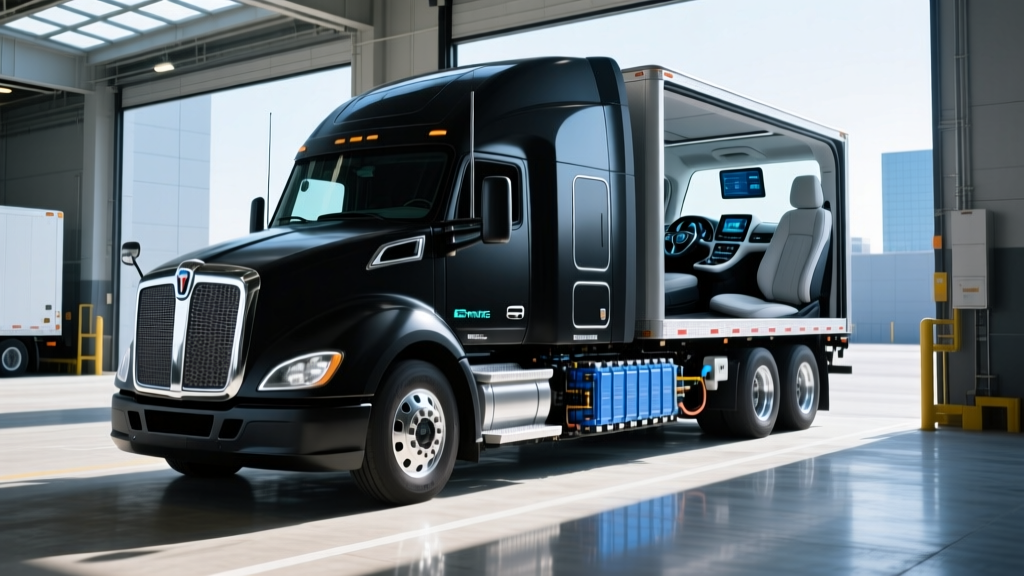
Kenworth's 2026 electric truck lineup — the Class 6 K270E, Class 7 K370E, and Class 8 T680E — targets regional-haul and last-mile fleet operators running predictable routes under 200 miles per day. With battery capacities ranging from 167 kWh to 396 kWh, EPA-estimated ranges between 130 and 230 miles depending on model and payload, and DC fast-charging capability up to 350 kW, these trucks are viable for depot-based operations with overnight Level 2 or daytime DC fast charging. Purchase prices remain steep: expect $250,000–$430,000 before federal and state incentives. The economics work when daily routes are short, depot charging is available, and diesel fuel costs are high. They do not work for long-haul, irregular routes, or operations without charging infrastructure.
The 2026 Kenworth Electric Lineup at a Glance
Kenworth, a subsidiary of PACCAR, offers three battery-electric models for the 2026 model year. Each shares the Meritor/PACCAR electric powertrain architecture but targets different duty cycles. Here are the core specifications:
| Specification | K270E (Class 6) | K370E (Class 7) | T680E (Class 8) |
|---|---|---|---|
| GVWR | 26,000 lbs | 33,000 lbs | 82,000 lbs (GCWR) |
| Battery Capacity | 167 kWh (NMC) | 282 kWh (NMC) | 396 kWh (NMC) |
| EPA Est. Range | ~130–150 mi | ~150–180 mi | ~150–230 mi |
| Motor Output | 250 kW (335 hp) | 350 kW (469 hp) | 400 kW (536 hp) |
| Peak Torque | 1,600 lb-ft | 2,500 lb-ft | 3,200 lb-ft |
| DC Fast Charge (peak) | 150 kW | 200 kW | 350 kW |
| 10–80% DC Charge | ~60 min | ~75 min | ~45 min |
| Level 2 Charge (AC) | 19.2 kW | 19.2 kW | 19.2 kW |
| Base MSRP (est.) | ~$250,000 | ~$330,000 | ~$430,000 |
| Warranty (battery) | 5 yr / 300,000 mi | 5 yr / 300,000 mi | 5 yr / 300,000 mi |
Sources: Kenworth K270E specs, Kenworth T680E specs, PACCAR press releases.
Real-World Range: What the EPA Numbers Don't Tell You
The EPA range figures above assume mixed driving cycles with moderate payload. In practice, electric truck range is far more sensitive to operating conditions than a diesel truck's fuel range.
Range Reality Check — T680E Example
EPA Estimate: Up to 230 miles (light load, mixed cycle)
Real-world loaded (60,000 lb GCW, highway): ~140–170 miles
Cold weather (below 32°F), loaded: ~110–140 miles
Urban stop-start delivery, moderate load: ~170–200 miles (regen recovery helps)
Three factors dominate real-world electric truck range:
- Payload weight: A fully loaded T680E at 80,000 lbs GCWR consumes roughly 2.0–2.5 kWh/mile. At 55,000 lbs, that drops to ~1.5–1.8 kWh/mile. This is the single biggest variable.
- Ambient temperature: NMC lithium-ion batteries lose 15–30% usable capacity below freezing. Cabin and battery thermal management draw additional power. Unlike diesel engines, there is no waste heat to repurpose for heating — every BTU comes from the traction battery.
- Route topography: Regenerative braking recovers energy on downgrades and in stop-start traffic, making urban and hilly routes more efficient than steady-state highway driving at 65+ mph. This is the inverse of diesel efficiency patterns.
For fleet planning, budget for the worst-case range (cold, loaded, highway) and add a 15% operational buffer. If your longest route day is 120 miles, a T680E will work year-round. If you regularly need 200+ miles, you need opportunity charging mid-route or a different solution.
Kenworth Electric vs. Diesel: Total Cost of Ownership
The purchase price of a Kenworth electric truck is 2.5–3.5× the cost of a comparable diesel model. A new T680 diesel runs roughly $150,000–$180,000; the T680E starts near $430,000. The question for fleet operators is whether operating savings close that gap over the vehicle's life.
| Cost Category | T680E (Electric) | T680 (Diesel) |
|---|---|---|
| Purchase Price | $430,000 | $165,000 |
| Federal Tax Credit (§45W Commercial) | –$40,000 | $0 |
| State/Utility Incentives (varies) | –$50,000 to –$120,000 | $0 |
| Net Acquisition Cost | $270,000–$340,000 | $165,000 |
| Fuel/Energy (5 yrs, 250,000 mi) | $50,000–$75,000 | $175,000–$225,000 |
| Maintenance (5 yrs) | $15,000–$25,000 | $45,000–$65,000 |
| Charging Infrastructure (share per truck) | $20,000–$60,000 | $0 |
| DEF / Emissions Systems | $0 | $5,000–$10,000 |
| Estimated 5-Year TCO | $355,000–$500,000 | $390,000–$465,000 |
Key assumptions: electricity at $0.10–$0.15/kWh (commercial/depot rate), diesel at $4.00–$4.80/gallon, 6.5 mpg diesel average, 2.0 kWh/mi electric average. Actual figures vary dramatically by region, utility rate structure, and route profile. Source: U.S. DOE Alternative Fuels Data Center TCO calculators and fleet operator case studies.
The breakeven window typically falls between years 4 and 7, heavily dependent on incentive availability and fuel cost differentials. In California, with CARB's Advanced Clean Trucks regulation and HVIP incentives, breakeven can arrive by year 3. In states with cheap diesel and no EV incentives, breakeven may not occur within a typical 7-year trade cycle.
Charging Infrastructure: The Hidden Cost Center
Unlike diesel, where fueling infrastructure is ubiquitous and paid for by fuel margins, electric truck charging requires fleet-specific capital investment. This is often the most underestimated cost in EV fleet adoption.
Depot Charging Options
| Charging Level | Power (kW) | Miles Added/Hour | Use Case | Est. Install Cost per Stall |
|---|---|---|---|---|
| Level 2 (AC) | 19.2 kW | ~8–10 mi/hr | Overnight (8–10 hrs) | $8,000–$25,000 |
| DC Fast (50–150 kW) | 50–150 kW | ~25–75 mi/hr | Opportunity / mid-day top-up | $40,000–$100,000 |
| DC Ultra-Fast (180–350 kW) | 180–350 kW | ~90–150 mi/hr | Fast turnaround, multi-shift ops | $100,000–$200,000+ |
For most depot-based regional fleets, the practical setup is:
- Level 2 overnight charging at each parking stall (19.2 kW AC, adding ~80–100 miles over 8 hours — sufficient for most daily routes).
- One or two DC fast chargers (150–350 kW) shared across the fleet for mid-day top-ups and schedule flexibility.
Infrastructure costs scale with fleet size but not linearly. A 10-truck fleet might spend $150,000–$300,000 on depot charging (panel upgrades, trenching, chargers, permits, utility demand charges). A 50-truck fleet might spend $500,000–$1.5 million but benefit from shared infrastructure and utility fleet-rate negotiations.
Utility demand charges are a frequently overlooked cost. Commercial electricity billing includes peak-demand charges ($10–$25/kW/month in many markets). Simultaneously charging 10 trucks at 19.2 kW creates a 192 kW demand spike, potentially adding $2,000–$5,000/month in demand charges alone. Smart charging software (staggered start times, power management) is essential to control this.
Common Misconceptions About Electric Trucks
| Myth | Fact |
|---|---|
| "Electric trucks can't pull heavy loads" | The T680E delivers 3,200 lb-ft of torque at 0 RPM and is rated for 82,000 lbs GCWR. Torque delivery is instant and superior to diesel at low speeds. The trade-off is range reduction under heavy loads, not capability. |
| "Batteries won't last" | Kenworth warranties the NMC battery pack for 5 years / 300,000 miles with a minimum 70% capacity retention threshold. Fleet data from early adopters (Penske, Schneider) shows 8–12% degradation over the first 150,000 miles. Replacement cost, if needed out of warranty, is estimated at $40,000–$80,000 depending on model. |
| "Charging takes too long for commercial operations" | For overnight depot operations, Level 2 charging over 8–10 hours is fully sufficient for sub-150-mile routes. DC fast charging at 350 kW restores 10–80% on a T680E in roughly 45 minutes — viable for driver lunch-break opportunity charging. The issue is infrastructure cost, not time. |
| "Federal tax credits cover most of the cost" | The §45W Commercial Clean Vehicle Credit provides up to $40,000 for vehicles over 14,000 lbs GVWR — meaningful but covering only 10–15% of a T680E's price. State incentives (California HVIP, New York Truck Voucher) can add $50,000–$120,000 but are jurisdiction-specific and subject to funding availability. |
| "Electric trucks have lower insurance costs" | Currently, commercial EV insurance premiums are often 10–25% higher than diesel equivalents due to higher replacement values, specialized repair requirements, and limited actuarial data. This gap is expected to narrow as the fleet population grows. |
First-Time EV Fleet Buyer: What You Need to Know
If your fleet has never operated electric trucks, the learning curve extends well beyond the vehicle itself. Plan for these operational shifts:
Charging Access and Site Assessment
Before ordering a single truck, commission an electrical site assessment. Key questions:
- What is your current panel capacity? Most depots need a 400A–800A service upgrade for even a small EV fleet.
- What will your utility charge for the service upgrade and ongoing demand charges? Lead times for utility transformer upgrades can be 6–18 months.
- Do you own the depot property? Leased sites complicate infrastructure investment.
- Is your route profile compatible? Map every route for the past 90 days. If the 95th-percentile daily mileage is under 150 miles, electric is feasible.
Driver Training and Acceptance
Electric trucks drive differently. Regenerative braking is aggressive — most operators use a form of one-pedal driving in urban settings. The absence of engine noise creates pedestrian safety considerations in yards and loading docks. Preconditioning the battery before DC fast charging (often automated via fleet management software) is critical for achieving rated charge speeds. Budget 2–4 hours of driver training per operator.
Maintenance Paradigm Shift
Electric trucks eliminate engine oil, fuel filters, DEF systems, DPF regeneration, and multi-speed transmissions. Maintenance costs typically drop 40–60% versus diesel. However, tire wear increases 10–20% due to instant torque and heavier vehicle weight (battery mass). HVAC systems and battery thermal management require specialized service. Ensure your maintenance provider has EV-certified technicians or plan for PACCAR dealer service.
Decision Framework: Should Your Fleet Go Electric?
Choose Kenworth Electric If:
- Your daily routes are predictable and under 150 miles (loaded)
- You operate from a fixed depot where you can install charging
- You operate in a state with strong commercial EV incentives (CA, NY, NJ, WA, OR)
- You face regulatory pressure (CARB Advanced Clean Trucks, zero-emission zone mandates)
- Your diesel fuel costs exceed $4.00/gallon consistently
- You plan to hold trucks 5+ years (to reach TCO breakeven)
Stick With Diesel (or Wait) If:
- Your routes regularly exceed 200 miles or are unpredictable
- You operate long-haul or irregular-route freight
- You lack depot charging access and rely on public infrastructure
- Your state offers no commercial EV incentives
- You trade trucks every 3 years (you won't hit breakeven)
- You operate in extreme cold climates (–20°F or below) without heated depot facilities
Frequently Asked Questions
What is the actual payload capacity of a Kenworth T680E versus the diesel T680?
The T680E's battery pack adds approximately 4,000–5,000 lbs to the tractor weight. Under current federal weight limits (80,000 lbs GCWR for standard permits), this reduces available payload by the same amount. For weight-sensitive freight (e.g., liquids, aggregates), this is a meaningful revenue reduction — roughly 5–8% less payload per trip. The Federal Highway Administration has granted limited exemptions for EV trucks in some corridors, and battery energy density improvements in the 2027–2028 timeframe are expected to narrow this gap.
Can I charge a Kenworth electric truck at public DC fast-charging stations?
Technically yes — the T680E uses a CCS1 connector (standard for North American commercial EVs). However, most public DC fast-charging stations are designed for passenger vehicles: pull-through lanes are rare, amperage is often limited to 150 kW, and commercial vehicle parking is restricted. Fleets should plan for depot-based charging as the primary strategy and treat public charging as an emergency backup only. The Tesla Semi and some upcoming models use the MCS (Megawatt Charging System) connector, but Kenworth's 2026 lineup remains on CCS1.
How does the §45W commercial EV tax credit work?
The IRS §45W Commercial Clean Vehicle Credit provides a credit equal to the lesser of 15% of the vehicle's basis (30% if no depreciation is claimed) or the incremental cost over a comparable ICE vehicle, up to a maximum of $40,000 for vehicles over 14,000 lbs GVWR. The credit is not refundable but can offset tax liability. Eligibility requires the vehicle to be used in a trade or business and to meet battery-component and critical-mineral sourcing requirements that tighten annually. Consult a tax professional — the rules for commercial credits differ significantly from the consumer §30D credit.
What happens to a Kenworth electric truck battery at end of life?
PACCAR has partnerships with battery recyclers (including Redwood Materials) for end-of-life NMC pack processing. At 70% State of Health, a truck battery may still have 10–15 years of useful life in stationary storage applications (second-life use). Replacement cost for a full pack out of warranty is estimated at $40,000–$80,000 depending on the model. Individual module replacement (for isolated cell failures) is significantly cheaper and is supported by PACCAR dealer service networks.
Do Kenworth electric trucks qualify for any state-level incentives?
Yes, in many jurisdictions. California's Hybrid and Zero-Emission Truck and Bus Voucher Incentive Project (HVIP) offers $60,000–$120,000 per Class 8 electric truck. New York's Truck Voucher Program offers up to $185,000 for Class 8 BEVs. New Jersey, Washington, Oregon, and Colorado also have active programs. Funding is often first-come, first-served and subject to annual appropriations. Check your state's clean transportation portal for current availability — incentive amounts change frequently and vary by fleet size, location (disadvantaged-community bonuses), and vehicle class.
How does cold weather affect Kenworth electric truck operations?
Below freezing, NMC battery chemistry becomes less efficient, and energy used for battery and cabin heating increases consumption. Expect 15–30% range reduction in sustained sub-freezing operation, and up to 40% reduction in extreme cold (below –10°F). DC fast charging speeds also drop significantly when batteries are cold — preconditioning is essential. Fleets in northern climates should spec depot charging with battery preconditioning capability, plan for reduced winter range, and consider heated depot parking where feasible. Operators in Minnesota and Canada report successful winter EV fleet operations, but only with deliberate cold-weather planning.