Who Is Jon McNeill and Why Does He Matter to Tesla Buyers?
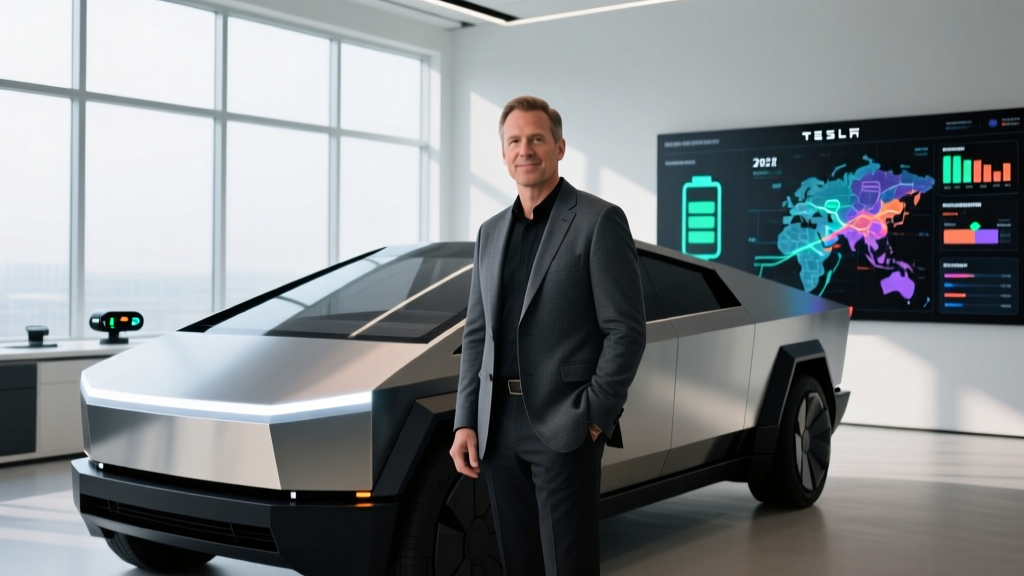
If you've searched "Jon McNeill Tesla" while researching your next EV purchase, you're not alone — but you may have stumbled onto a story that's more about corporate leadership than a specific car model. Jon McNeill served as Tesla's Chief Financial Officer from 2017 to 2018, arriving from a distinguished career at Lyft, Morgan Stanley, and the U.S. Department of Transportation. While his tenure at Tesla was relatively brief, the operational frameworks he helped establish — particularly around service infrastructure, Supercharger expansion, and financial discipline — continue to influence Tesla's 2026 vehicle lineup and ownership experience.
For EV shoppers, understanding McNeill's impact matters because the operational backbone he helped build directly affects what it's like to own a Tesla today: service center availability, Supercharger reliability, and the company's pricing strategy. Below, we break down how McNeill's legacy connects to the current Tesla lineup, then provide a detailed spec-and-value analysis of the Tesla Model Y — the best-selling EV that benefits most from the infrastructure McNeill helped scale.
The McNeill Era: Operational Foundations Still Paying Off in 2026
During McNeill's time as CFO, Tesla was navigating the critical Model 3 production ramp. His background in transportation logistics and financial structuring brought discipline to a company famous for ambitious timelines. Key initiatives from that era that still resonate in 2026 include:
- Supercharger network scaling: McNeill oversaw financial planning that helped grow the network from roughly 850 stations to the 7,000+ global stations Tesla operates today, including the open NACS ecosystem now used by Ford, GM, Rivian, and others.
- Service center expansion: He pushed for mobile service and regional hub models that reduced warranty repair wait times — still a competitive advantage over newer EV brands.
- Direct-to-consumer financial model: McNeill helped refine Tesla's direct sales and lease structures, which in 2026 allow point-of-sale federal tax credit transfers under IRS §30D rules.
McNeill left Tesla in late 2018, later co-founding the autonomous vehicle advisory firm Tesla Alumni Ventures and consulting on EV fleet operations. His fingerprints, however, remain on the ownership experience every 2026 Tesla buyer encounters.
The 2026 Tesla Model Y: The EV McNeill's Infrastructure Was Built For
The Model Y remains Tesla's volume leader and the clearest beneficiary of the Supercharger and service infrastructure McNeill helped plan. For the 2026 model year, the refreshed Model Y (internally called "Juniper") carries forward the improvements introduced in 2025: a redesigned interior, ventilated seats, ambient lighting, and a slightly larger battery pack.
| Specification | 2026 Model Y Long Range AWD | 2026 Model Y Performance |
|---|---|---|
| EPA Range | 330 miles | 300 miles |
| Battery (usable) | 78.1 kWh (NMC) | 78.1 kWh (NMC) |
| Drivetrain | Dual Motor AWD | Dual Motor AWD |
| Horsepower | 384 hp | 456 hp |
| 0-60 mph | 4.8 seconds | 3.5 seconds |
| Peak DC Fast Charge | 250 kW | 250 kW |
| 10-80% DC Charge Time | ~25 minutes | ~25 minutes |
| Level 2 Home Charging | 11.5 kW (~37 mi/hr) | 11.5 kW (~37 mi/hr) |
| Efficiency | 28 kWh/100 mi (119 MPGe) | 30 kWh/100 mi (111 MPGe) |
| Cargo Volume | 76 cu ft (rear seats folded) | 76 cu ft (rear seats folded) |
| Base MSRP | $46,630 | $53,130 |
Real-World Range Reality Check
EPA sticker: 330 miles (Long Range AWD). Expect in practice: 270-295 miles on a mixed highway trip at 70 mph; 220-250 miles in sub-30°F winter conditions with cabin heat. Tesla's heat pump (standard since 2021) mitigates cold-weather loss better than most competitors, but NMC chemistry still loses roughly 20-30% range in deep cold. City driving with regenerative braking can push real-world results above 310 miles.
Charging Speed and the Supercharger Advantage McNeill Helped Build
The Model Y charges at a peak rate of 250 kW on Tesla's V3 Superchargers, which now number over 30,000 connectors globally. On a V3 stall with a preconditioned battery (the car automatically warms the pack when you navigate to a Supercharger), you'll see the following charge curve:
| Charging Level | Power (kW) | Miles Added Per Hour | Typical Use Case |
|---|---|---|---|
| Level 1 (120V outlet) | 1.4 kW | ~5 mi/hr | Emergency / overnight trickle |
| Level 2 (240V home) | 11.5 kW | ~37 mi/hr | Daily home charging |
| DC Fast (V3 Supercharger) | 250 kW peak | ~1,000 mi/hr (at peak) | Road trips — 10-80% in ~25 min |
| DC Fast (V4 Supercharger) | 350 kW capable | ~1,200+ mi/hr | Model Y capped at 250 kW acceptance |
Charging curve caveat: The 250 kW peak only holds between roughly 10-30% state of charge. Above 50%, the rate tapers to ~100 kW, and above 80% it drops further to ~40 kW. This is standard for NMC lithium-ion chemistry and is why Tesla's navigation system recommends charging stops that keep you in the 10-80% sweet spot. For a deeper understanding of why this happens, see our charge curve explainer.
2026 Pricing, Tax Credits, and Total Cost
Tesla's direct-sales model — refined during McNeill's tenure — makes pricing transparent. There are no dealer markups, and the point-of-sale tax credit transfer is available at checkout on Tesla's website.
| Trim | MSRP | Federal Credit (§30D) | Effective Price* |
|---|---|---|---|
| Long Range AWD | $46,630 | Up to $7,500 | ~$39,130 |
| Performance | $53,130 | Up to $7,500 | ~$45,630 |
*Effective price assumes full $7,500 credit eligibility. Under 2026 IRS §30D rules, you must meet adjusted gross income caps ($150K single / $300K joint), the vehicle MSRP must be under $55,000 for SUVs (both trims qualify), and the battery must meet critical-mineral and battery-component sourcing thresholds. Tesla's U.S.-assembled packs currently meet these requirements, but rules can shift — always verify at IRS.gov before purchasing.
The Model Y's 5-year total cost of ownership is compelling for buyers who can charge at home. At the U.S. average electricity rate of $0.17/kWh and the Long Range's 28 kWh/100 mi efficiency, fuel cost runs roughly $0.048/mile — compared to $0.14/mile for a 25 MPG gas crossover at $3.50/gallon. Over 60,000 miles, that's a fuel savings of approximately $5,520, partially offsetting Tesla's higher insurance premiums (typically 15-25% above segment average, per III.org data).
Tech, Driver Assistance, and Interior
The 2026 Model Y's cabin received the Juniper refresh treatment: a 15.4-inch center touchscreen, rear-seat entertainment display, ventilated front seats, acoustic glass, and a redesigned center console with wireless charging. Cargo space is generous at 76 cu ft with the 60/40 rear seats folded, plus a small front trunk (frunk) for charging cables or groceries.
Driver assistance (SAE Level 2): Tesla's Autopilot comes standard and includes adaptive cruise control, lane centering, and automatic emergency braking. Full Self-Driving (Supervised), a $8,000 option or $99/month subscription, adds city-street navigation, traffic light recognition, and lane changes — but remains a Level 2 system requiring constant driver supervision. This is not a Level 4 robotaxi; you must keep your hands near the wheel and eyes on the road at all times. For hands-free Level 2+ driving on mapped highways, GM's Super Cruise and Ford's BlueCruise remain strong alternatives with more robust driver-monitoring systems.
⚠️ Autopilot/FSD Is Not Self-Driving
Tesla's Autopilot and FSD (Supervised) are SAE Level 2 driver-assistance systems. The driver is legally and operationally responsible for the vehicle at all times. "Full Self-Driving" is Tesla's marketing name, not a description of capability. Do not sleep, read, or look away from the road while FSD is engaged.
Pros, Cons, and Who Should Buy
✅ Pros
- Class-leading Supercharger network with 30,000+ connectors — the most reliable public charging ecosystem in the U.S.
- 330-mile EPA range (Long Range) covers most road trips with a single stop
- 250 kW DC fast charging with preconditioning — 10-80% in ~25 minutes
- Spacious 76 cu ft cargo area; practical family SUV
- Over-the-air updates continuously add features
- Point-of-sale tax credit transfer available directly from Tesla
❌ Cons
- No Apple CarPlay or Android Auto — Tesla's proprietary infotainment only
- Insurance premiums 15-25% above segment average
- FSD (Supervised) costs $8,000 and remains Level 2 — not autonomous
- Ride quality firm on 20-inch wheels; road noise noticeable on rough pavement
- Service center wait times still 1-3 weeks in some metro areas
Who This EV Suits Best
The 2026 Model Y is ideal for families and commuters who have access to home Level 2 charging and take road trips within the Supercharger network. If you regularly drive 40+ miles each way on your commute, the 330-mile range means charging every 4-5 days at home. For towing, the Model Y is rated at 3,500 lbs — adequate for a small trailer but not a camper. Buyers who prioritize hands-free highway driving should also cross-shop the Hyundai Ioniq 5 (with Highway Driving Assist 2) or the Ford Mustang Mach-E (with BlueCruise).
Model Y vs. Key Competitors: Is It Still Worth It?
The 2026 EV SUV market is crowded. Here's how the Model Y Long Range stacks up against its closest rivals:
| Spec | Tesla Model Y LR | Hyundai Ioniq 5 LR | Ford Mach-E ER |
|---|---|---|---|
| EPA Range | 330 mi | 318 mi | 312 mi |
| Peak DC Charge | 250 kW | 238 kW | 150 kW |
| 10-80% Time | ~25 min | ~26 min | ~38 min |
| Base MSRP | $46,630 | $48,950 | $45,995 |
| Charging Network | Tesla Supercharger (NACS) | NACS adapter (Supercharger access) | NACS adapter (Supercharger access) |
| CarPlay/Android Auto | No | Yes | Yes |
The Model Y's edge remains the integrated Supercharger experience — plug-and-charge without adapters, apps, or payment screens. With Ford and Hyundai now offering NACS adapters, that gap is narrowing, but Tesla owners still enjoy the most seamless charging UX in 2026. For buyers who value CarPlay, a smoother ride, or more competitive pricing, the Ioniq 5 and Mach-E are strong alternatives. See our full EPA comparison at fueleconomy.gov.
Frequently Asked Questions
What is the real-world range of the 2026 Tesla Model Y?
The EPA rates the Long Range AWD at 330 miles. In real-world highway driving at 70 mph, expect 270-295 miles. In freezing temperatures with cabin heat, range drops to 220-250 miles. City driving with regenerative braking can exceed 310 miles.
How fast does the Model Y charge at home and on the road?
On a Level 2 home charger (240V, 48A), the Model Y charges at 11.5 kW, adding about 37 miles per hour — a full charge overnight. On a V3 Supercharger, it peaks at 250 kW and reaches 10-80% in approximately 25 minutes with battery preconditioning.
How much does the 2026 Model Y cost after federal tax credits?
The Long Range AWD starts at $46,630. With the full $7,500 federal §30D credit applied at point of sale, the effective price drops to approximately $39,130. Eligibility requires income below $150K (single) or $300K (joint), and the vehicle must meet battery sourcing rules — verify current status at IRS.gov.
Is the Model Y still worth buying vs. the Hyundai Ioniq 5 or Ford Mach-E?
Yes, if you prioritize Supercharger convenience, range, and software integration. The Ioniq 5 offers a more comfortable ride and CarPlay; the Mach-E is slightly cheaper. But the Model Y's 330-mile range, 250 kW charging, and native Supercharger access still make it the default choice for road-trip-heavy buyers.
Does the Tesla Model Y qualify for the $7,500 federal EV tax credit in 2026?
As of early 2026, the Model Y qualifies for the full $7,500 credit under §30D, provided the buyer meets income caps and the battery sourcing requirements remain satisfied. Tesla offers point-of-sale credit transfer at checkout. Rules can change — always confirm at IRS.gov before ordering.
What was Jon McNeill's role at Tesla?
Jon McNeill served as Tesla's Chief Financial Officer from 2017 to 2018, overseeing financial operations during the Model 3 production ramp. His work on service infrastructure, Supercharger network planning, and direct-sales financial models continues to influence Tesla's 2026 ownership experience.
Battery/powertrain warranty: 8 years / 120,000 miles (whichever comes first) with a minimum 70% capacity retention threshold. Vehicle limited warranty: 4 years / 50,000 miles. Source: Tesla.com warranty page.