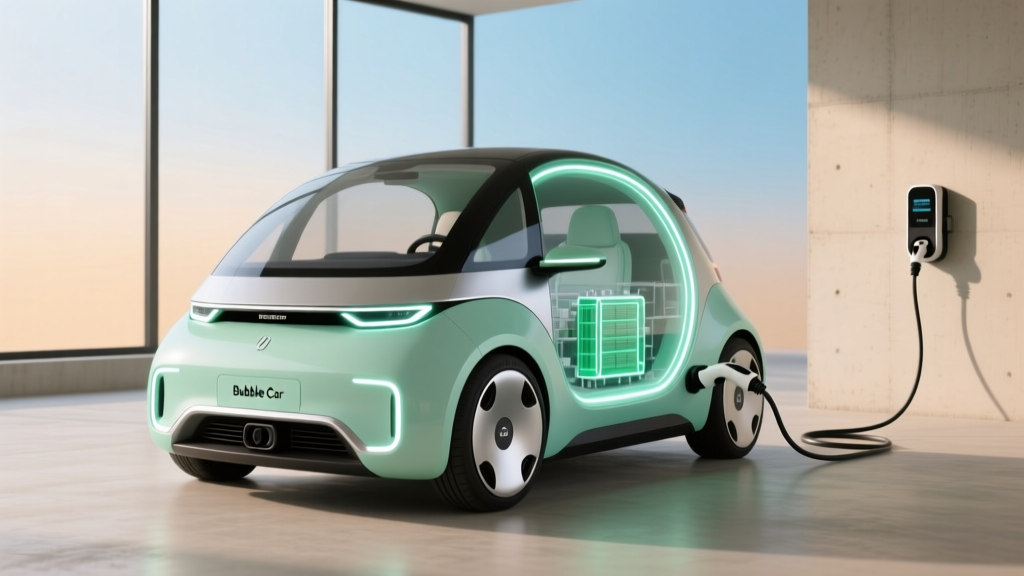
Quick Answer: What Is a Bubble Car Electric Vehicle?
A "bubble car electric" refers to compact, rounded-design micro-EVs optimized for urban commuting. In 2026, the most practical options include the Microlino (EPA-estimated 100-125 miles range, ~$22,000), Citroën Ami (43 miles, ~$12,500 where available), and Baojun E200/E300 series (124-186 miles, pricing varies by import status). These vehicles prioritize parking ease and efficiency over highway performance. Most qualify as Low-Speed Vehicles (LSVs) or Neighborhood Electric Vehicles (NEVs) under federal law, limiting top speed to 25 mph unless classified as full passenger vehicles.
Range, Efficiency, and Real-World Expectations
Bubble car electrics trade range for compactness. Here's what 2026 models actually deliver:
| Model | Battery (kWh) | EPA Est. Range | Real-World Range* | Efficiency (MPGe) | Top Speed |
|---|---|---|---|---|---|
| Microlino 2.0 (14.4 kWh) | 14.4 kWh (LFP) | 125 miles | 95-110 miles | 115 MPGe | 56 mph |
| Citroën Ami | 5.5 kWh (LFP) | 43 miles | 30-38 miles | 95 MPGe | 28 mph (LSV) |
| Baojun E300 Plus | 31.9 kWh (LFP) | 186 miles | 140-160 miles | 108 MPGe | 62 mph |
| Renault Twizy (discontinued 2024) | 6.1 kWh | 50 miles | 35-45 miles | 100 MPGe | 50 mph |
*Real-world range assumes mixed city/highway driving at 65-70°F. Expect 20-30% reduction in cold weather (below 32°F) due to battery chemistry limitations and cabin heating demands.
Cold-Weather Reality Check
LFP (lithium iron phosphate) batteries dominate the bubble car segment for cost and longevity, but they suffer more capacity loss in freezing temperatures than NMC chemistries. A Microlino rated for 125 miles may deliver only 85-95 miles in 20°F weather. If you live in northern climates, budget for 25% less range in winter.
Charging: What You Need to Know
Most bubble car electrics use standard Level 1 (120V) charging, which is slow but sufficient for overnight replenishment given their small batteries.
| Charging Level | Power (kW) | Microlino (14.4 kWh) | Citroën Ami (5.5 kWh) | Baojun E300 (31.9 kWh) |
|---|---|---|---|---|
| Level 1 (120V household) | 1.4-1.9 kW | 8-10 hours (0-100%) | 3-4 hours (0-100%) | 17-22 hours (0-100%) |
| Level 2 (240V home/public) | 3.3-7.2 kW | 2-4 hours (0-100%) | 1-2 hours (0-100%) | 4-9 hours (0-100%) |
| DC Fast Charging | Not available on most models | N/A | N/A | N/A |
Home charging access is critical. If you can install a Level 2 charger (240V), expect to pay $500-$1,500 for equipment plus $300-$1,200 for electrician labor, depending on panel capacity and distance from your electrical panel. Without home charging, public Level 2 stations cost $0.12-$0.30 per kWh, making "fueling" 3-5x more expensive than home rates ($0.10-$0.15/kWh national average).
Cost Breakdown: Bubble Car Electric vs Gas Car
Let's compare a Microlino against a fuel-efficient gas car like the 2026 Honda Fit (hypothetical, 35 MPG combined) over 5 years and 60,000 miles:
| Cost Category | Microlino (Electric) | Gas Car (35 MPG) |
|---|---|---|
| Purchase Price (MSRP) | $22,000 | $21,000 |
| Federal Tax Credit (§30D) | $0-$3,750* | $0 |
| Fuel/Energy (60k miles) | $720-$1,080** | $5,140*** |
| Maintenance (5 years) | $400-$800 | $2,500-$3,500 |
| Insurance (5 years) | $6,000-$9,000 | $5,500-$8,000 |
| Total 5-Year Cost | $27,040-$32,080 | $34,140-$37,640 |
*The IRS §30D tax credit for micro-EVs is limited. Most bubble cars fall under the $25,000 MSRP cap for sedans, but battery sourcing and critical mineral requirements often reduce the credit to $3,750 or disqualify it entirely. Verify eligibility before purchase.
**Assumes 15 kWh/100 miles efficiency and $0.12-$0.18/kWh electricity cost.
***Assumes $3.00/gallon gas and 35 MPG combined.
Common Misconceptions About Bubble Car Electrics
| Myth | Fact |
|---|---|
| "They're just golf carts" | LSV-class bubble cars meet federal safety standards (seatbelts, VIN, insurance), unlike golf carts. However, they lack airbags and crash-test ratings required for full passenger vehicles. |
| "You can drive them on any road" | Most states restrict LSVs to roads with speed limits of 35 mph or less. Highway use is illegal and dangerous. |
| "The battery will die in 5 years" | LFP batteries in bubble cars typically carry 8-year/100,000-mile warranties with 70% capacity retention guarantees. Real-world degradation is 1-2% annually. |
| "They're exempt from insurance" | Every state requires liability insurance for street-legal vehicles, including LSVs. Premiums are lower than full-size EVs but not zero. |
Decision Framework: Is a Bubble Car Electric Right for You?
Choose a Bubble Car Electric IF:
- Your daily commute is under 40 miles round-trip
- You have home charging access (garage or driveway with 120V/240V outlet)
- You live in a mild climate or accept 25% winter range loss
- Your area permits LSVs on roads you need to use
- Parking is scarce and you value a sub-10-foot vehicle length
- You want a second car for errands, not a primary highway vehicle
Choose a Full-Size EV or Hybrid IF:
- You regularly drive on highways (speeds above 45 mph)
- Your daily commute exceeds 60 miles
- You need to carry more than 2 passengers or significant cargo
- You live in a state that bans or restricts LSVs on your routes
- You lack reliable home charging and depend on public infrastructure
- Safety ratings (NHTSA/IIHS) are a priority—bubble cars are rarely crash-tested
Federal Tax Credit Reality for Micro-EVs
The §30D Clean Vehicle Credit offers up to $7,500, but bubble car electrics face unique hurdles:
- MSRP Cap: Sedans and "other vehicles" (including micro-EVs) must have an MSRP under $55,000—most bubble cars qualify.
- Income Limits: Buyer AGI must not exceed $150,000 (single), $225,000 (head of household), or $300,000 (joint).
- Battery Sourcing: To receive the full $7,500, at least 80% of critical minerals must be sourced from the U.S. or free-trade partners. Most Chinese-manufactured bubble cars (Baojun, some Microlino variants) fail this test, reducing the credit to $3,750 or $0.
- Point-of-Sale Transfer: You can transfer the credit to the dealer for an upfront price reduction, but only if the vehicle qualifies.
Consult a tax professional before assuming credit eligibility. Rules change annually.
FAQ: Bubble Car Electric Ownership
Are bubble car electrics street-legal in all 50 states?
No. LSV-class vehicles are federally legal but state laws vary. Some states (like Texas and Florida) permit them on roads up to 35 mph; others (like New York) impose additional restrictions. Check your state's DMV regulations before purchasing.
Can I drive a bubble car on the highway?
No. LSVs are limited to 25 mph by federal law and cannot safely or legally operate on highways. Full-speed micro-EVs like the Baojun E300 (62 mph top speed) may technically access highways but are dangerously underpowered for merging and sustained high-speed travel.
How long do bubble car batteries last?
LFP batteries typically last 2,000-3,000 charge cycles before degrading to 80% capacity. At 100 miles per charge and 12,000 miles/year, that's 16-25 years of use. Most manufacturers warrant the battery for 8 years or 100,000 miles with 70% capacity retention.
What's the cheapest bubble car electric in 2026?
The Citroën Ami starts around $12,500 (where imported), but availability is limited in the U.S. The Microlino at $22,000 is more widely available and offers triple the range. Chinese imports like the Baojun E200 can be found for $10,000-$15,000 but lack U.S. homologation, making them illegal for street use in most states.
Do bubble cars qualify for HOV lane access?
Most states require a minimum of 2 occupants for HOV lanes, regardless of vehicle type. Some states (like California) offer single-occupant HOV stickers for EVs, but these typically apply to full-size vehicles with CARB certification—bubble cars rarely qualify.