Quick Answer: Is the John Deere Gator TE 4x2 Electric Right for You?
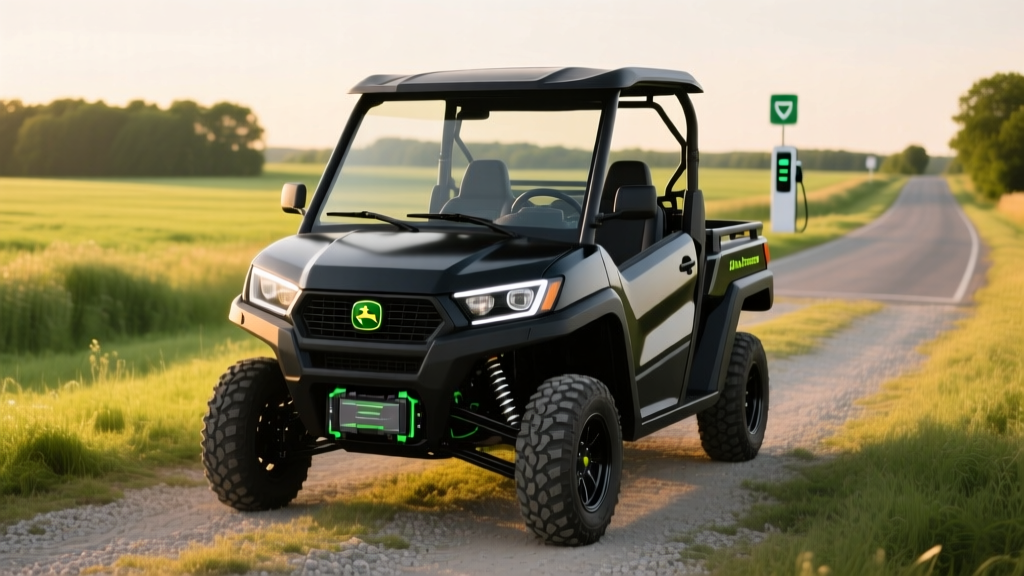
The John Deere Gator TE 4x2 Electric is a battery-electric utility vehicle (UTV) designed for property maintenance, farm work, and commercial fleet use — not highway driving. It pairs a ~14 kWh lithium-ion battery pack with a rear-wheel-drive electric motor producing approximately 23 hp equivalent, delivering an estimated 25–35 miles of range under typical utility use (stop-start work at low speeds). It charges on standard 120V household power in roughly 8–10 hours. If you need a near-silent, zero-tailpipe-emission work vehicle for noise-sensitive environments (livestock operations, early-morning residential work, indoor warehouse use) and have a 120V outlet near your garage, the TE 4x2 Electric makes strong economic sense. If you need highway-speed travel or 50+ mile daily range across rough terrain, a gas-powered Gator remains the better tool.
What the Gator TE 4x2 Electric Actually Is
Before we get into specs, a critical distinction: the Gator TE 4x2 Electric is a utility task vehicle (UTV), not a street-legal passenger car. It's built on the same Traditions platform as John Deere's gas-powered Gator lineup, but replaces the internal combustion engine with a battery-electric powertrain. This means it does not carry EPA fuel-economy ratings, is not eligible for the federal §30D EV tax credit (which applies to on-road vehicles meeting specific MSRP and sourcing requirements per IRS guidelines), and is typically registered as off-road equipment rather than a motor vehicle.
The TE 4x2 Electric occupies a specific niche: light-to-medium utility work where low noise, no exhaust fumes, and minimal maintenance outweigh the need for extended range or high speed. Think livestock barns, greenhouse complexes, university campuses, parks departments, and warehouse yards.
| Specification | Value |
|---|---|
| Battery Capacity | ~14 kWh (lithium-ion) |
| Motor Output | ~23 hp equivalent (17 kW peak) |
| Drive Configuration | 2WD (rear-wheel drive) |
| Top Speed | ~25 mph (governed) |
| Estimated Range (utility use) | 25–35 miles* |
| Charging (120V Level 1) | 8–10 hours (0–100%) |
| Cargo Bed Capacity | ~400 lbs |
| Towing Capacity | ~600 lbs |
| Estimated Base Price | ~$14,000–$16,000 MSRP† |
*Range varies significantly with payload, terrain, temperature, and stop-start frequency. Low-speed utility work yields longer range than sustained hill climbing.
†Pricing varies by dealer and configuration. Contact your local John Deere dealer for current quotes.
Range Reality: What 25–35 Miles Means in the Field
Unlike highway-driven EVs where range anxiety centers on 200–300+ mile trips, UTV range is measured differently. A typical work day on a property — checking fence lines, hauling feed, moving tools between outbuildings — rarely exceeds 10–15 miles of cumulative travel. The Gator TE 4x2 Electric's 25–35 mile range covers a full workday for most users with margin to spare.
Real-World Range Expectations
- Light property work (flat terrain, light loads, stop-start): 30–35 miles
- Moderate work (hills, 200+ lb payloads, frequent starts): 20–28 miles
- Heavy work (max payload, steep terrain, cold weather below 32°F): 15–20 miles
- Cold-weather penalty: Expect 15–25% range reduction below freezing due to battery chemistry and lack of waste heat from an ICE
The lithium-ion pack in the TE 4x2 does not have active thermal management (liquid heating/cooling) like a passenger EV. This means cold-weather performance drops noticeably, and charging in extreme cold will be slower. For users in northern climates, storing and charging the vehicle in a heated or insulated garage is strongly recommended to preserve battery health and range.
Charging: Simple but Slow
The Gator TE 4x2 Electric charges via a standard 120V household outlet — the same plug you'd use for a phone charger. There is no DC fast charging capability and no Level 2 (240V) option from the factory. This is both the vehicle's greatest convenience and its biggest limitation.
| Charging Level | Power | Time (0–100%) | Availability |
|---|---|---|---|
| Level 1 (120V standard outlet) | ~1.4 kW | 8–10 hours | Anywhere with a standard outlet |
| Level 2 (240V) | Not supported | N/A | N/A |
| DC Fast Charging | Not supported | N/A | N/A |
Practical charging workflow: Plug in at the end of the workday. The vehicle is fully charged by morning. For most utility users, this overnight charging cycle is perfectly adequate — you're not taking a UTV on a road trip. The 120V convenience also means zero electrical upgrade costs. No need to hire an electrician for a 240V circuit, which can run $500–$2,000 for passenger EV home charger installations.
One caveat: if you run the battery very low during a workday and need a mid-day top-up, you're looking at hours, not minutes. Plan your work cycles accordingly. Some commercial fleet operators keep a second unit in rotation or schedule charging during lunch breaks.
Cost Comparison: Electric Gator vs. Gas Gator
The purchase price of the TE 4x2 Electric sits higher than a comparable gas-powered Gator, but the operating cost story flips quickly. Here's a five-year ownership comparison assuming 2,000 miles per year of utility work:
| Cost Category | Gator TE 4x2 Electric | Gas Gator (comparable 4x2) |
|---|---|---|
| Purchase Price (est.) | $15,000 | $11,000 |
| Fuel/Energy (5 years) | $450 ($0.14/kWh, ~320 Wh/mi) | $3,500 ($3.50/gal, ~20 mpg) |
| Oil Changes (5 years) | $0 | $500 (10 changes @ $50) |
| Air/Spark Plug Filters | $0 | $250 |
| Drive Belt / Clutch Maintenance | $0 | $400 |
| Other Maintenance | $200 (tires, brakes, fluid) | $600 |
| 5-Year Total | ~$15,650 | ~$16,250 |
The electric Gator breaks even on total cost within approximately 3–4 years of typical use, depending on local electricity rates and gas prices. For commercial fleet operators running vehicles daily, the payback period shortens further. The key savings drivers are fuel (electricity at ~$0.14/kWh national average vs. gasoline at $3.50/gallon) and the elimination of ICE maintenance items: no oil, no spark plugs, no air filters, no CVT belt wear, no exhaust system.
Important note on incentives: The federal §30D clean vehicle tax credit does not apply to off-road UTVs. However, some state and local programs offer rebates for electric off-road equipment — check with your state energy office. The USDA's Rural Energy for America Program (REAP) has also funded electric agricultural equipment in some cases. Consult a tax professional for eligibility specifics.
Common Misconceptions About Electric UTVs
| Myth | Fact |
|---|---|
| "Electric UTVs have no power for real work" | Electric motors deliver maximum torque from 0 RPM. The TE 4x2 Electric's towing and hauling capacity (600 lbs towing, 400 lbs bed) handles typical property work. It won't match a gas Gator HP for high-speed trail riding, but low-speed torque is excellent. |
| "The battery will need replacing in 2–3 years" | Modern lithium-ion packs in utility vehicles are rated for 1,000+ charge cycles before reaching 80% capacity. At one full cycle per day, 250 workdays/year, that's 4+ years to 80% State of Health — and the pack remains usable beyond that point at reduced range. |
| "You can't use it in the rain or cold" | The TE 4x2 Electric is built to the same weather-sealing standards as gas Gators. Rain, mud, and dust are not issues. Cold weather reduces range (15–25% below freezing) but does not prevent operation. |
| "Charging takes all day" | Charging takes 8–10 hours on 120V — which is overnight. For a vehicle used during work hours and parked at night, this is functionally equivalent to refueling a gas tank. The limitation is mid-day fast charging, which isn't available. |
| "Electric UTVs are silent, so they're safer around livestock" | This one is actually true. The near-silent operation reduces animal stress compared to gas-engine noise and vibration — a genuine advantage for ranchers and livestock operations. |
Real-World Ownership Considerations
Home and Property Charging Access
Unlike passenger EVs where public charging infrastructure matters, the Gator TE 4x2 Electric lives and dies by your on-property charging setup. You need a standard 120V outlet within reach of where you park the vehicle — typically a garage, barn, or covered equipment shed. A dedicated 15A or 20A circuit is recommended to avoid tripping breakers if other equipment shares the circuit. The charging cord is typically 15–25 feet long, so plan your parking accordingly.
Climate and Terrain
If your property features steep hills, heavy clay soil, or frequent mud, the 2WD configuration of the TE 4x2 limits traction compared to 4x4 gas Gators. The electric model is best suited to maintained paths, flat-to-moderate terrain, and hard-packed surfaces. Users in regions with harsh winters should budget for a heated storage space — charging a cold lithium-ion battery below freezing can cause permanent cell damage if the BMS (battery management system) doesn't adequately restrict charge current.
Battery Longevity and Replacement
John Deere typically offers a battery warranty of 3–5 years on electric UTV packs (check your dealer for current terms). When the battery eventually degrades past usable capacity, replacement costs for UTV lithium packs in this class typically range from $3,000–$5,000 depending on the pack configuration. This is a significant future cost to factor into long-term ownership — similar to how gas-vehicle owners budget for eventual engine or transmission rebuilds.
Decision Framework: Should You Buy the Gator TE 4x2 Electric?
Choose the Electric TE 4x2 if:
- You work in noise-sensitive environments (livestock, residential areas, early mornings)
- Your daily travel is under 20 miles on maintained terrain
- You have a 120V outlet where you park the vehicle overnight
- You want to eliminate oil changes, filter replacements, and belt maintenance
- Indoor or enclosed-space operation is required (no exhaust fumes)
- You're a fleet operator who can quantify fuel and maintenance savings at scale
Choose a Gas Gator instead if:
- You need 4WD capability for rough, muddy, or steep terrain
- Your daily work exceeds 30+ miles of driving
- You need highway-capable speeds (above 25 mph)
- You operate in extreme cold without heated storage
- You need mid-day refueling for back-to-back work shifts
- Upfront purchase price is the primary constraint
What First-Time Electric UTV Buyers Should Know
If you're transitioning from a gas-powered UTV or considering your first electric work vehicle, here are the ownership realities that matter most:
- Range is use-dependent, not a fixed number. Unlike a car's EPA range sticker, UTV range fluctuates wildly based on payload, terrain, speed, and temperature. Plan for worst-case (heavy load, hills, cold) when sizing your needs.
- There is no public charging network for UTVs. You are entirely dependent on your own property's electrical infrastructure. This is fine for most users but means zero flexibility for off-property use.
- Torque delivery feels different. Electric motors provide instant, smooth torque with no engine revving. This is an advantage for precise, low-speed work but can feel "muted" if you're accustomed to the throttle response of a gas engine.
- Regenerative braking is minimal. Unlike passenger EVs that use aggressive regen for one-pedal driving, the TE 4x2 Electric uses conventional braking. Don't expect the battery to recharge significantly during downhill runs.
- Dealer support varies. Not all John Deere dealers have equal expertise with electric UTVs. Before purchasing, confirm your local dealer can service the electric powertrain and source replacement battery cells or packs.
Frequently Asked Questions
Is the John Deere Gator TE 4x2 Electric street-legal?
No. The Gator TE 4x2 Electric is classified as an off-road utility vehicle. It does not meet FMVSS (Federal Motor Vehicle Safety Standards) for on-road registration. Some states allow limited road use of UTVs with specific modifications (mirrors, turn signals, insurance), but this varies by jurisdiction. Check your state and local regulations.
Does the Gator TE 4x2 Electric qualify for any tax credits?
The federal §30D clean vehicle credit applies only to on-road vehicles meeting specific MSRP, buyer income, and battery-sourcing requirements. Off-road UTVs do not qualify. However, certain USDA programs, state clean-equipment rebates, or utility-company incentives may apply. Consult a tax professional and check IRS Publication 8936 for current rules.
How long does the battery last before needing replacement?
Lithium-ion packs in utility vehicles are typically rated for 1,000+ full charge cycles to 80% State of Health (SoH). At typical use rates (one charge cycle per workday, ~250 days/year), expect 4–6 years before noticeable range degradation. The battery doesn't "die" at that point — it simply holds less energy, reducing range proportionally.
Can I tow a trailer with the electric Gator?
Yes, within its rated capacity of approximately 600 lbs (including tongue weight). The electric motor's instant torque is well-suited to low-speed towing. However, towing at or near maximum capacity will significantly reduce range — expect a 30–40% range penalty under heavy tow loads on hilly terrain.
What maintenance does the electric Gator require?
Significantly less than a gas Gator. There are no oil changes, spark plugs, air filters, fuel filters, exhaust components, or CVT drive belts. You'll still need tire rotations/replacements, brake pad inspections, suspension checks, and occasional coolant top-offs for the motor/controller thermal system. Annual maintenance costs typically run 60–70% lower than a gas equivalent.
How does it perform in cold weather?
Below freezing, expect 15–25% range reduction. The battery's internal resistance increases in cold temperatures, reducing usable capacity. Charging speed also slows in extreme cold. For best results, store and charge the vehicle in an insulated or heated space. The vehicle will still operate in cold weather — it just won't go as far on a charge.
The Bottom Line
The John Deere Gator TE 4x2 Electric is not a replacement for every gas UTV — it's a specialized tool for specific use cases where silence, zero emissions, and low maintenance outweigh the need for extended range, 4WD, or high speed. For livestock operations, campus maintenance, warehouse yards, and noise-sensitive properties, it's a compelling option that pays for itself through fuel and maintenance savings within 3–4 years. For trail riders, heavy-haul ranchers, or anyone needing 4WD and all-day range, the gas Gator lineup remains the right choice. Match the tool to the job, and the electric Gator earns its place in the shed.