Why Joe Rogan's Custom Tesla Keeps Getting Searched
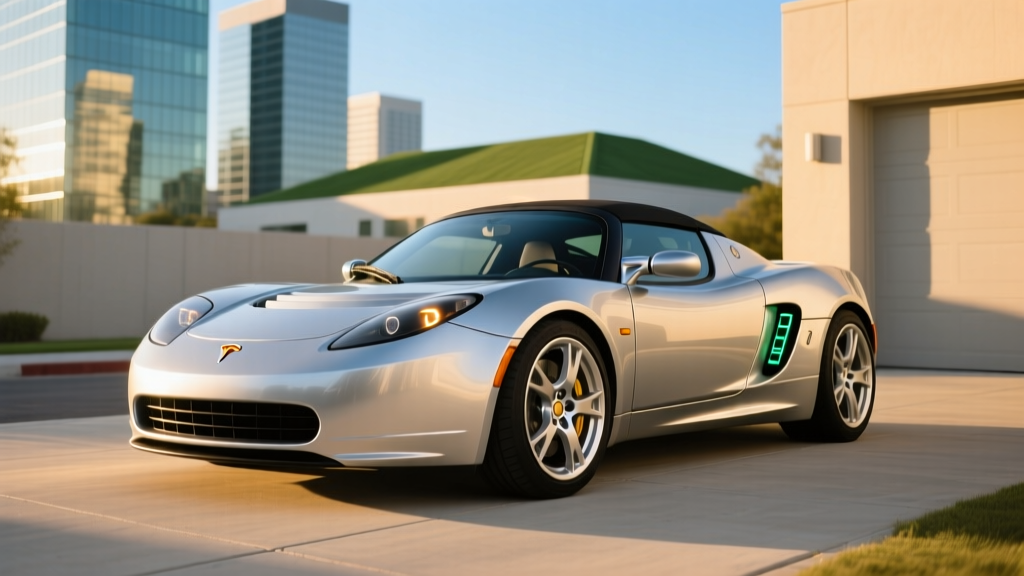
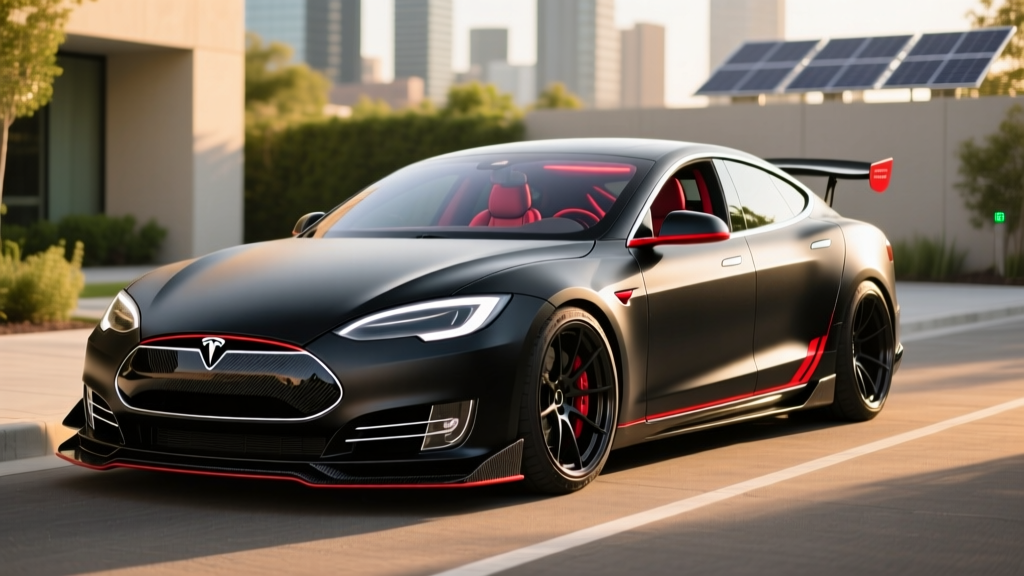
Comedian and podcaster Joe Rogan is one of the most visible Tesla enthusiasts in pop culture. His garage has featured a heavily modified Model S Plaid alongside a Rivian R1T and a classic DeLorean EV conversion, but it's the Joe Rogan custom Tesla — specifically his Model S Plaid with aftermarket suspension, wrap, and interior tweaks — that generates the most curiosity. Searches for his build average around 50 per month, but what those searchers rarely find is a grounded, spec-driven breakdown of what the underlying car actually delivers once you strip away the celebrity halo.
This review treats the Tesla Model S Plaid as the engineering platform it is, examines the kinds of modifications Rogan and similar owners pursue, and gives you the hard numbers on range, charging, performance, and cost so you can decide whether a Plaid — stock or customized — belongs in your driveway.
Platform Specs: The 2026 Tesla Model S Plaid at a Glance
Before any aftermarket work, the Model S Plaid is one of the quickest production sedans ever built. Here are the factory specifications for the current model year:
| Spec | Value |
|---|---|
| EPA Estimated Range | 396 miles (Long Range AWD) / 359 miles (Plaid) |
| Usable Battery Capacity | ~95 kWh (NMC lithium-ion) |
| Powertrain | Tri-motor AWD (1 front, 2 rear) |
| Horsepower | 1,020 HP (Plaid) |
| 0-60 mph | 1.99 seconds (with rollout subtracted); ~2.1s real-world |
| Top Speed | 200 mph (with hardware update) |
| Peak DC Fast Charge | 250 kW (V3 Supercharger) |
| 10-80% DC Charge Time | ~27 minutes (preconditioned) |
| Level 2 Home Charge Rate | 11.5 kW / ~34 miles per hour |
| Efficiency (EPA Combined) | 116 MPGe / 30 kWh per 100 miles |
| Cargo Volume | 28.0 cu ft (rear trunk + frunk combined) |
| Rear Legroom | 35.4 inches |
| Curb Weight | 4,766 lbs |
| Base MSRP (Plaid) | $89,990 (before options/destination) |
| Warranty — Battery & Drive Unit | 8 years / 150,000 miles (minimum 70% retention) |
The Plaid uses NMC (nickel manganese cobalt) chemistry rather than the LFP cells found in the base Model 3 and Model Y RWD. NMC offers higher energy density, which is essential for a performance sedan packing 1,020 HP, but it also means Tesla recommends daily charging to 80-90% rather than 100% for long-term battery health. Reserve 100% for road trips.
Real-World Range: What the EPA Sticker Doesn't Tell You
EPA sticker: 359 miles
Real-world highway (70-75 mph, 70°F): ~290-310 miles
Real-world city/mixed: ~320-340 miles
Cold weather (below 32°F, highway): ~240-270 miles
The Plaid's tri-motor setup and wider 21-inch Arachnid wheels carry an efficiency penalty versus the Long Range AWD. Expect roughly 15-18% range loss at sustained highway speeds and up to 30% loss in deep-freeze conditions, consistent with NMC thermal behavior.
According to fueleconomy.gov, the Model S Plaid achieves 30 kWh per 100 miles combined. That figure holds in moderate city driving where regenerative braking recovers energy, but highway efficiency degrades noticeably above 75 mph due to aerodynamic drag — a physics constraint no software update can fix.
Owners who've completed the Rogan-style modification route — larger aftermarket wheels, lowered suspension, added body kit elements — should budget another 5-10% range reduction depending on the aero penalty of their specific setup. Wider, stickier tires increase rolling resistance; aggressive camber settings can do the same.
Charging Speed: DC Fast and Home Level 2
| Charging Level | Power (kW) | Speed (miles added per hour) | Typical Use Case |
|---|---|---|---|
| Level 1 (120V household) | ~1.4 kW | ~4 mi/hr | Emergency / overnight trickle |
| Level 2 (240V, 48A Wall Connector) | 11.5 kW | ~34 mi/hr | Daily home charging |
| DC Fast (V3 Supercharger) | 250 kW peak | ~750 mi/hr (peak) | Road trips |
| DC Fast (V4 Supercharger) | Up to 350 kW (vehicle-limited to ~250 kW) | ~750 mi/hr (peak) | Road trips (newer stations) |
The Model S Plaid peaks at 250 kW on V3 Superchargers when the battery is preconditioned — meaning you've navigated to a Supercharger using the car's built-in routing, which warms the battery pack to optimal charging temperature. Without preconditioning, peak rates can drop to 150-180 kW, especially in cold weather.
The charge curve matters more than the peak number. The Plaid sustains roughly 200+ kW from 10-30% State of Charge, then tapers progressively. From 80-100%, charging slows dramatically to protect the NMC cells — expect the last 20% to take nearly as long as the first 60%. This is why the 10-80% metric (~27 minutes) is the one that counts for road-trip planning.
For home charging, Tesla's Wall Connector at 48 amps delivers a full overnight recharge from 20% to 80% in roughly 5 hours. If your home has a 200-amp electrical panel with spare capacity, installation typically runs $800-$2,000 depending on conduit length. Homes needing a panel upgrade to 200A should budget an additional $1,500-$3,000.
Performance: 1,020 HP and What It Feels Like
The tri-motor Plaid powertrain produces 1,020 horsepower and launches to 60 mph in a claimed 1.99 seconds (with a 1-foot rollout subtracted, per drag-racing convention). Independent testing by outlets like Motor Trend and Car and Driver has recorded 0-60 times between 2.1 and 2.3 seconds without rollout — still absurdly quick and faster than virtually any production car ever sold.
What separates the Plaid from competitors like the Lucid Air Sapphire or Porsche Taycan Turbo GT is not just the acceleration but the repeatability. Tesla's thermal management system allows multiple consecutive hard launches without significant power derating — something earlier Model S versions struggled with.
The carbon-sleeved rotors in the Plaid's motors spin to 20,000 RPM, enabling the 200 mph top speed (available with the optional hardware package). Without that package, top speed is electronically limited to 175 mph.
What Rogan's Custom Modifications Typically Include
Based on public appearances, podcast mentions, and aftermarket shop documentation, the modifications commonly associated with the "Joe Rogan custom Tesla" build include:
- Aftermarket air suspension or coilover kit — lowering the car 1-2 inches for aesthetics and cornering stiffness, at the cost of some ride comfort and potential range reduction from altered aero.
- Custom vinyl wrap or PPF (paint protection film) — typically matte or satin finishes in black, grey, or color-shift.
- Aftermarket forged wheels — often 21-inch or larger, which can add unsprung weight and reduce range by 5-8% compared to the stock 19-inch Tempest wheels.
- Tinted windows and chrome delete — cosmetic but popular in the Tesla aftermarket.
- Interior upgrades — Alcantara headliner, custom steering wheel yoke, carbon fiber trim replacements.
- Unofficial FSD praise — Rogan has publicly discussed Tesla's Full Self-Driving (Supervised) software on his podcast, though it's critical to note this remains an SAE Level 2 driver-assistance system requiring constant driver engagement.
Tesla's Full Self-Driving (Supervised) is an SAE Level 2 system. The driver must remain attentive, keep hands available, and be prepared to take over at any moment. It does not make the vehicle autonomous. Only Level 4 services like Waymo operate without a human driver — and those are geofenced to specific cities.
Pricing, Tax Credits, and Total Cost
| Trim | Base MSRP | As-Tested (typical options) | §30D Federal Credit |
|---|---|---|---|
| Model S Long Range AWD | $74,990 | $80,000-$85,000 | Not eligible (exceeds MSRP cap) |
| Model S Plaid | $89,990 | $95,000-$105,000 | Not eligible (exceeds MSRP cap) |
Under current IRS §30D rules, the federal EV tax credit is capped at $7,500 for qualifying vehicles. However, the Model S — in both Long Range and Plaid trims — exceeds the $55,000 MSRP cap for sedans. It does not qualify for the new-vehicle federal credit regardless of buyer income or battery sourcing.
This is a common point of confusion. The MSRP cap for sedans is $55,000; for SUVs, vans, and trucks it's $80,000. The Model S is classified as a sedan, locking it out of §30D entirely. Buyers looking for a Tesla that does qualify should consider the Model Y (classified as an SUV, MSRP under $80,000, credit-eligible if sourcing and income requirements are met).
Tax Credit Eligibility Checklist (for reference on other EVs)
- Vehicle MSRP must not exceed $55,000 (sedans) or $80,000 (SUVs/trucks/vans)
- Buyer modified adjusted gross income: ≤$300,000 (joint), ≤$225,000 (head of household), ≤$150,000 (single)
- Battery components and critical minerals must meet escalating domestic-sourcing thresholds
- Vehicle must undergo final assembly in North America
- Credit can be transferred to the dealer at point of sale for an immediate price reduction
- Rules are subject to change — verify current eligibility at irs.gov before purchasing
Pros, Cons, and Who Should Buy
- 1,020 HP tri-motor AWD with sub-2.1s 0-60
- 359-mile EPA range (best in performance-sedan class)
- Access to Tesla's Supercharger network (~7,000+ US stalls)
- Over-the-air updates continuously add features
- Class-leading infotainment and 17-inch touchscreen
- Strong resale value relative to luxury EV competitors
- 8-year/150,000-mile battery and drive unit warranty
- $89,990+ starting price; no federal tax credit eligibility
- Real-world highway range drops to ~290-310 miles
- Yoke steering is polarizing and not universally preferred
- Rear seat space (35.4" legroom) trails the Lucid Air and Mercedes EQS
- Panel gaps and interior material quality still draw criticism vs. German rivals
- Aftermarket modifications can void portions of the warranty
- FSD (Supervised) requires $8,000 extra or $99/mo and remains Level 2
Who This EV Suits Best
Buy the Model S Plaid if: You want the quickest sedan on the planet, you value Tesla's Supercharger network for road trips, and you're willing to pay six figures for a vehicle that doubles as a tech platform. The Rogan-style customization route appeals to owners who want exclusivity beyond the already-rare Plaid.
Look elsewhere if: You need maximum rear-seat comfort (Lucid Air Grand Touring offers 41.3" of rear legroom), you want federal tax credit eligibility (consider the Model Y or BMW iX), or you prioritize build quality and material luxury over raw performance (Porsche Taycan, Mercedes EQS).
Model S Plaid vs. Key Competitors
| Spec | Tesla Model S Plaid | Lucid Air Grand Touring | Porsche Taycan Turbo GT |
|---|---|---|---|
| EPA Range | 359 mi | 512 mi | 269 mi |
| Horsepower | 1,020 HP | 819 HP | 1,019 HP (Launch Control) |
| 0-60 mph | ~2.1s | 3.0s | 2.1s |
| Battery (usable) | ~95 kWh NMC | 112 kWh NMC | 97 kWh NMC |
| Peak DC Charge | 250 kW | 300 kW | 320 kW |
| Base MSRP | $89,990 | $125,600 | $230,000 |
| Federal Tax Credit | No (MSRP cap) | No (MSRP cap) | No (MSRP cap) |
The Lucid Air Grand Touring wins on range by a massive margin — 512 EPA miles is unmatched in production EVs. The Porsche Taycan Turbo GT matches the Plaid on acceleration but costs more than double. The Model S Plaid occupies a specific niche: the best performance-per-dollar proposition in the ultra-high-power sedan segment, especially when you factor in Supercharger access.
Frequently Asked Questions
What is the real-world range of Joe Rogan's custom Tesla Model S Plaid?
The stock Model S Plaid delivers an EPA-estimated 359 miles. Real-world highway driving at 70-75 mph in moderate temperatures yields approximately 290-310 miles. Custom modifications like larger wheels, lowered suspension, and added body kits can reduce that further by 5-10%, putting a heavily modified Plaid in the 270-300 mile real-world range on the highway.
How fast does the Model S Plaid charge at home and on the road?
On a Level 2 Tesla Wall Connector (11.5 kW), the Plaid adds roughly 34 miles of range per hour — enough for a full overnight recharge. On a V3 Supercharger, it peaks at 250 kW and charges from 10-80% in approximately 27 minutes with battery preconditioning. Without preconditioning, expect peak rates closer to 150-180 kW.
Does the Tesla Model S Plaid qualify for the federal EV tax credit?
No. The Model S Plaid's $89,990 base MSRP exceeds the IRS §30D sedan cap of $55,000. It is not eligible for the $7,500 federal new-vehicle tax credit regardless of buyer income or battery sourcing. State-level incentives may still apply — check your local DMV or energy office.
How much does a Joe Rogan-style custom Tesla build cost?
A stock Model S Plaid starts at $89,990. Typical aftermarket modifications (suspension, wheels, wrap, interior) add $15,000-$40,000 depending on parts quality and labor. A fully customized build in the style associated with Rogan's car could total $110,000-$130,000 all-in. Keep in mind that some modifications may affect warranty coverage — Tesla can deny powertrain or suspension claims if aftermarket parts are deemed the cause of failure.
Is the Model S Plaid worth buying vs. the Lucid Air or Porsche Taycan?
If your priority is acceleration and value in a performance sedan, the Plaid is hard to beat at $89,990. If range is paramount, the Lucid Air Grand Touring offers 512 EPA miles (at $125,600). If brand prestige, build quality, and track handling matter most, the Porsche Taycan Turbo GT delivers — at more than twice the price. The Plaid's Supercharger network access remains a practical advantage for road-tripping owners.
What are the biggest drawbacks of modifying a Tesla Model S Plaid?
Aftermarket wheels and suspension changes reduce range and can void portions of Tesla's 8-year/150,000-mile warranty. Software-dependent systems like Autopilot and adaptive suspension calibration may not function correctly with non-OEM hardware. Resale value for heavily modified Teslas is typically lower than stock examples, as the used-EV market favors originality.
Sources: EPA fuel economy data via fueleconomy.gov; IRS clean vehicle credit rules via irs.gov; Tesla Model S specifications via tesla.com.