Is the Electric Wrangler Worth It?
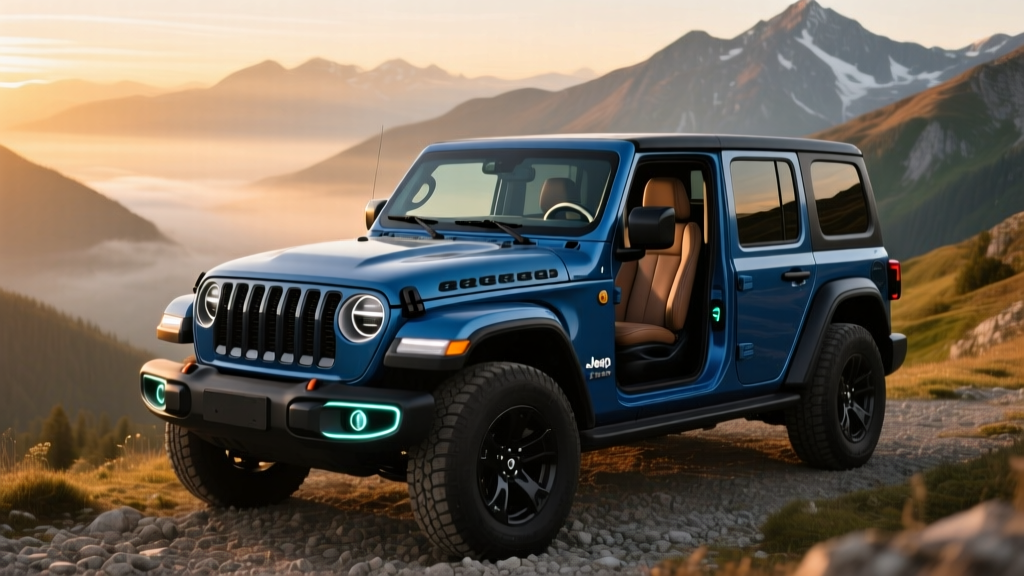
The 2026 Jeep Wrangler 4xe is a plug-in hybrid (PHEV), not a fully electric vehicle. It delivers an EPA-rated 22 miles of electric-only range and 49 MPGe combined from a 17.3 kWh battery paired with a 2.0L turbo engine. Starting around $51,790, it qualifies for partial federal tax credits (up to $3,750–$7,500 depending on battery sourcing and your income). For short commutes under 20 miles with home charging, the 4xe can run mostly on electricity. For long off-road trips or highway-heavy driving without charging access, the gas-only Wrangler may cost less upfront and deliver similar real-world efficiency. The 4xe makes the most sense if you have Level 2 home charging, a commute within its electric range, and want off-road capability without range anxiety.
What Exactly Is the "Electric Wrangler"?
When shoppers search for an electric Wrangler, they're almost always looking for the Jeep Wrangler 4xe (pronounced "four-by-e"). This is a plug-in hybrid electric vehicle (PHEV), meaning it combines a gasoline engine with an electric motor and a battery you can plug in to charge. It is not a battery-electric vehicle (BEV) like a Tesla Model Y or Ford F-150 Lightning.
As of early 2026, Jeep has not announced a fully electric Wrangler. Stellantis has teased an all-electric off-roader concept (the Recon), but it rides on a different platform and is positioned as a separate model. If you want a Wrangler with a plug, the 4xe is your only option.
2026 Wrangler 4xe Powertrain Specs
| Specification | Value |
|---|---|
| Powertrain | 2.0L Turbo I4 + 2 electric motors (PHEV) |
| Combined Output | 375 hp / 470 lb-ft torque |
| Battery (usable) | 17.3 kWh, NMC lithium-ion |
| EPA Electric Range | 22 miles |
| EPA MPGe (combined) | 49 MPGe |
| Gas-Only MPG (combined) | 20 MPG |
| Total EPA Range | ~370 miles (electric + gas) |
| Max DC Fast Charge | Not supported (Level 2 AC only) |
| Level 2 Charge Time (0–100%) | ~2.0 hours at 7.2 kW |
| Level 1 Charge Time (0–100%) | ~12 hours at 1.4 kW |
| 0–60 mph | 6.0 seconds |
| Towing Capacity | 3,500 lbs |
| Starting MSRP (Willys 4xe) | $51,790 |
| Battery Warranty | 8 years / 100,000 miles |
Real-World Electric Range: The EPA rates the 4xe at 22 miles electric-only. In mixed suburban driving at moderate temperatures, expect 18–22 miles. Highway driving at 70+ mph drops this to roughly 14–17 miles. In freezing weather (below 32°F), plan for 12–16 miles of electric range due to cabin heating demands and reduced battery efficiency.
Wrangler 4xe vs Gas Wrangler: Cost & Efficiency Comparison
The core buying decision comes down to whether the 4xe's electric capability saves you enough to justify its higher purchase price. Here's a direct comparison with the gas-only Wrangler equipped with the 2.0L turbo engine.
| Factor | Wrangler 4xe (PHEV) | Wrangler 2.0L Turbo (Gas) |
|---|---|---|
| Base MSRP | $51,790 | $36,590 |
| Price Gap | ~$15,200 more for the 4xe | |
| Combined MPG / MPGe | 49 MPGe (electric+gas) / 20 MPG (gas only) | 22 MPG combined |
| Annual Fuel Cost* | ~$1,050 (with home charging) | ~$2,310 |
| Annual Fuel Savings | ~$1,260/year for the 4xe | |
| Federal Tax Credit (§30D) | Up to $3,750–$7,500** | $0 |
| Maintenance (annual est.) | ~$450 | ~$650 |
| 5-Year Fuel + Maint. Cost | ~$7,500 | ~$14,800 |
*Based on 15,000 miles/year, $3.50/gallon gas, $0.14/kWh electricity, and 60% of miles driven on electricity. Actual costs vary significantly by driving pattern and local energy prices.
**Per IRS §30D rules, eligibility depends on your modified adjusted gross income, vehicle MSRP caps, and battery component/critical mineral sourcing. Consult a tax professional.
The break-even math: If you qualify for a $3,750 federal credit, the effective price gap narrows to ~$11,450. At $1,260 in annual fuel savings, you'd break even in roughly 9 years. With the full $7,500 credit (increasingly rare as battery sourcing rules tighten in 2025–2026), break-even drops to ~6 years. For most buyers, the 4xe's financial case hinges on maximizing electric-only driving and qualifying for the maximum credit.
Real-World Ownership: Charging, Climate, and Daily Life
Home Charging Is Essential
The 4xe's 22-mile electric range is only useful if you charge daily. On a standard 120V outlet (Level 1), a full charge takes about 12 hours — workable if you plug in overnight and drive less than 22 miles the next day. A Level 2 home charger (240V, 7.2 kW) cuts this to roughly 2 hours, making it easy to top up between errands.
If you live in an apartment without charging access or rely exclusively on street parking, the 4xe's electric advantage largely disappears. You'll be driving a heavier, more expensive gas Wrangler getting 20 MPG. Without home or workplace charging, the gas Wrangler is the better buy.
Cold Weather Impact
The 4xe's NMC battery loses efficiency in cold temperatures. In sub-freezing conditions, expect:
- Electric range drops 25–35% — from 22 miles down to 12–16 miles
- Cabin heating draws heavily from the battery, accelerating range loss
- The gas engine kicks in more frequently to provide heat, reducing electric-only operation
- Regenerative braking is reduced when the battery is cold
If you live in the northern US or Canada and your commute is 15+ miles, much of your winter driving will use the gas engine regardless.
Off-Road Considerations
The 4xe's extra battery weight (~700 lbs more than the gas model) slightly affects off-road dynamics, but the instant electric torque at low speeds is a genuine advantage for rock crawling. The battery pack is mounted under the rear seats and is sealed for water fording. However, the additional weight increases tire and brake wear over time, a cost to factor into long-term ownership.
Cost Breakdown: 5-Year Total Cost of Ownership
| Cost Category | Wrangler 4xe | Wrangler Gas (2.0T) |
|---|---|---|
| Purchase Price (base) | $51,790 | $36,590 |
| Federal Tax Credit | –$3,750 (est. 2026)* | $0 |
| Effective Purchase Price | $48,040 | $36,590 |
| Home Charger Install (Level 2) | $800–$2,000 | $0 |
| Fuel/Energy (5 years) | $5,250 | $11,550 |
| Maintenance (5 years) | $2,250 | $3,250 |
| Insurance (5 years, avg.) | $9,500 | $8,250 |
| Depreciation (est. 5-yr) | $22,000 | $16,000 |
| 5-Year Total Cost | ~$87,840 | ~$75,640 |
*Tax credit amount depends on 2026 battery sourcing requirements. Per fueleconomy.gov, verify current credit eligibility before purchase. Insurance estimates based on national averages; Wrangler insurance tends to run 10–20% higher than average due to off-road use and theft rates.
The 4xe costs roughly $12,200 more over 5 years in this scenario. The gap narrows if you qualify for the full $7,500 credit, drive predominantly on electricity, or live in a state with additional PHEV rebates. But the numbers make clear: the 4xe is not a cost-savings play for most buyers. You're paying a premium for the electric driving experience, instant torque, and the satisfaction of running errands on electricity.
Common Misconceptions About the Electric Wrangler
| Myth | Fact |
|---|---|
| "The electric Wrangler is a full EV." | The 4xe is a PHEV. It has a gas engine and requires gasoline for longer trips. Only 22 miles of range are electric-only. |
| "I'll save thousands on gas." | Savings depend on how many miles you drive on electricity. If your commute exceeds 22 miles or you don't charge daily, savings shrink dramatically. Most owners save $800–$1,500/year. |
| "It can DC fast charge on road trips." | The 4xe does not support DC fast charging. It tops out at 7.2 kW on Level 2 AC. You cannot quickly recharge the battery at highway rest stops. |
| "The battery will need expensive replacement." | Stellantis warranties the 4xe battery for 8 years/100,000 miles with a capacity retention threshold. PHEV batteries are smaller and cycle less than BEV batteries. Out-of-warranty replacement runs $8,000–$12,000, but most owners won't need one within typical ownership periods. |
| "I'll get 49 MPG all the time." | 49 MPGe is the EPA combined figure when using both electric and gas power. Once the battery depletes, you're driving a 20 MPG gas Wrangler. MPGe is a conversion metric — it does not mean 49 miles per gallon of gasoline. |
Federal Tax Credit: What You Actually Qualify For
The IRS §30D clean vehicle credit for PHEVs has become more restrictive in 2025–2026. Here's what determines your eligibility:
- Income caps: Modified AGI must not exceed $150,000 (single), $225,000 (head of household), or $300,000 (joint filers).
- MSRP cap: The vehicle's MSRP must not exceed $80,000 for SUVs (Wrangler qualifies).
- Battery sourcing: Increasing percentages of battery components must be manufactured or assembled in North America, and critical minerals must be sourced from the US or free-trade-agreement countries. These thresholds tighten annually.
- Credit amount: Up to $7,500, split into $3,750 for battery components and $3,750 for critical minerals. Many PHEVs in 2026 qualify for only the $3,750 component portion.
- Point-of-sale transfer: You can transfer the credit to the dealer at purchase to reduce your out-of-pocket cost, rather than waiting to claim it on your tax return.
Before purchasing, verify the 4xe's current credit status on fueleconomy.gov and confirm with your tax advisor. Credit eligibility can change mid-year as manufacturers update battery supply chains.
Decision Framework: Should You Buy the Electric Wrangler?
Buy the Wrangler 4xe If:
- Your daily round-trip commute is under 20 miles and you can charge at home every night — you'll run mostly on electricity and save $1,000+ per year on fuel.
- You want off-road capability with instant electric torque for rock crawling and low-speed trail driving.
- You qualify for at least $3,750 in federal tax credits and potentially state PHEV incentives, narrowing the price gap.
- You want a Wrangler but prefer a smoother, quieter commute — the electric motor eliminates engine noise and vibration on short trips.
- You have access to Level 2 charging at home or work, making daily recharging practical.
Buy the Gas Wrangler Instead If:
- Your commute is 30+ miles each way — you'll exceed the electric range daily, negating most efficiency benefits.
- You don't have home or workplace charging access — without daily plug-in, the 4xe becomes a heavier, thirstier gas Wrangler.
- You're budget-conscious — the $15,200 price premium takes 6–9 years to recoup through fuel savings in most scenarios.
- You take frequent long road trips — the 4xe cannot DC fast charge, and highway MPG is nearly identical to the gas model once the battery is depleted.
- You live in extreme cold — winter electric range drops to 12–16 miles, reducing the PHEV advantage for months at a time.
Frequently Asked Questions
Can the Wrangler 4xe drive on electricity alone on the highway?
Yes, but only up to about 75 mph and for roughly 14–17 highway miles before the gas engine engages. Highway speeds drain the 17.3 kWh battery quickly due to the Wrangler's boxy aerodynamics and 5,000+ lb curb weight. For highway-heavy driving, the 4xe operates primarily as a gas vehicle getting around 20 MPG.
How much does it cost to charge the Wrangler 4xe at home?
A full charge from empty to full uses about 17.3 kWh. At the US average residential rate of $0.14/kWh, a full charge costs roughly $2.42. That works out to about $0.11 per electric mile — compared to $0.16–$0.18 per mile on gasoline at $3.50/gallon. Over a year of 9,000 electric miles, you'd spend about $218 on electricity versus $1,575 on gasoline for the same distance.
Is the Wrangler 4xe reliable compared to the gas model?
The 4xe adds complexity — two electric motors, a high-voltage battery, and additional power electronics on top of the gas powertrain. Early model years (2021–2022) saw some software and electrical complaints tracked by NHTSA. By 2025–2026, most issues have been addressed through recalls and software updates, but the 4xe's long-term reliability data is still shorter than the gas Wrangler's decades-long track record. The 8-year/100,000-mile battery warranty provides meaningful protection.
What happens if the battery dies completely?
The 4xe's hybrid system maintains a small buffer even when the dashboard shows "0 miles electric." If the battery depletes, the 2.0L gas engine takes over seamlessly, and the vehicle operates as a conventional hybrid. You can continue driving on gasoline indefinitely — there is no risk of being stranded due to a depleted battery. However, you will get only 20 MPG in gas-only mode.
Does the 4xe qualify for HOV lane access?
This varies by state. California, Colorado, and several other states have offered HOV lane stickers or exemptions for PHEVs, but many programs have expired, have waitlists, or require specific application. Check your state's DMV for current PHEV incentive programs — these can add meaningful daily value beyond fuel savings.
Will Jeep ever make a fully electric Wrangler?
As of early 2026, Jeep has not announced a battery-electric Wrangler. The brand has launched the all-electric Recon SUV, which offers Wrangler-adjacent off-road styling but is a separate model on the STLA Large platform. A true BEV Wrangler would require a dedicated electric off-road architecture with robust battery protection — technically feasible, but not yet confirmed for production. If one is announced, expect an EPA range of 250–300+ miles and a starting price above $60,000.