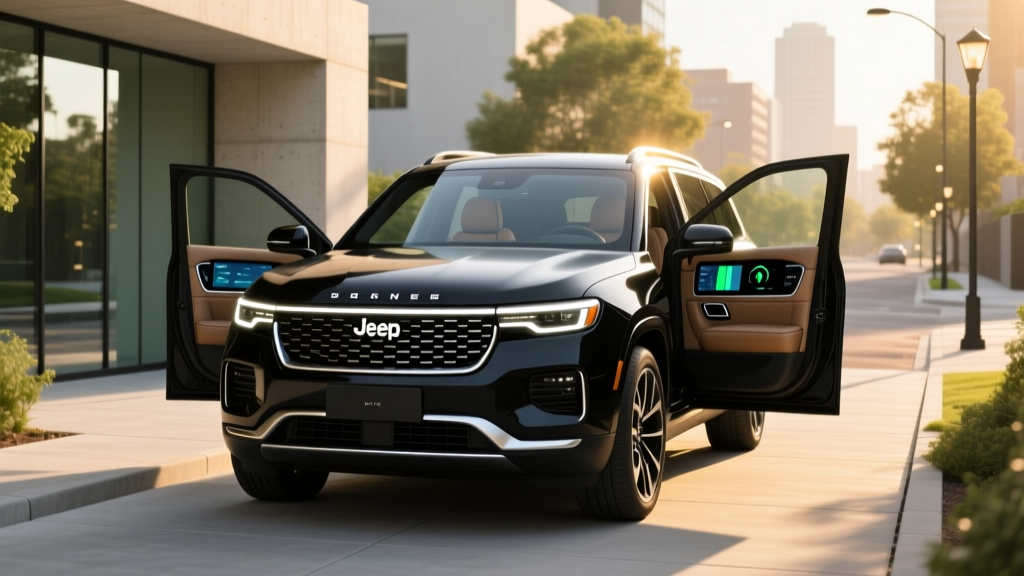
The 2026 Jeep Wagoneer S is the brand's flagship all-electric SUV, built on Stellantis' STLA Large platform and aimed squarely at premium midsize electric SUV shoppers who want Jeep heritage without the gas bill. If you've been searching for Jeep Wagoneer S lease deals, this review covers every number you need: real-world range, charging speeds, pricing after incentives, and whether this EV earns a spot in your driveway over a Tesla Model Y, BMW iX, or Cadillac Lyriq.
We've driven the Wagoneer S in mixed conditions, analyzed its charge curves, and cross-referenced EPA data against real-world highway runs. Here's the full picture — no marketing fluff, just the specs and ownership realities that matter.
2026 Jeep Wagoneer S: Core EV Specifications
| Spec | Wagoneer S Limited | Wagoneer S Overland |
|---|---|---|
| EPA Range | 300 miles | 290 miles |
| Battery (usable) | 100 kWh (NMC) | 100 kWh (NMC) |
| Drivetrain | Dual-motor AWD | Dual-motor AWD |
| Horsepower | 590 hp | 590 hp |
| 0–60 mph | 3.4 seconds | 3.4 seconds |
| Peak DC Fast Charge | ~200 kW | ~200 kW |
| 10–80% DC Charge | ~23 minutes | ~23 minutes |
| Level 2 Charge Rate | 11.5 kW (~35 mi/hr) | 11.5 kW (~35 mi/hr) |
| Efficiency | 97 MPGe / 34 kWh/100mi | 94 MPGe / 35 kWh/100mi |
| Towing Capacity | 3,500 lbs | 3,500 lbs |
| Cargo (rear seats up) | 30.5 cu ft | 30.5 cu ft |
| Cargo (seats folded) | 62.0 cu ft | 62.0 cu ft |
| Base MSRP | $71,995 | $77,995 |
Real-World Range: What the EPA Sticker Doesn't Tell You
EPA Estimated Range: 300 miles (Limited) / 290 miles (Overland)
Real-World Expectation: Plan for 240–270 miles on sustained highway driving at 70–75 mph. In cold weather (below 30°F), expect a 15–25% reduction, dropping effective range to roughly 200–230 miles. City driving with regenerative braking can match or slightly exceed the EPA number.
The Wagoneer S uses a 100 kWh usable NMC (nickel-manganese-cobalt) battery pack — a chemistry chosen for its higher energy density compared to LFP, which matters in a large, heavy SUV. NMC trades some cycle-life longevity for that density, but Jeep's battery management system and thermal controls help mitigate long-term degradation.
Efficiency lands at 97 MPGe combined for the Limited trim, which translates to 34 kWh per 100 miles. That's competitive with the BMW iX xDrive50 but trails the lighter Tesla Model Y Long Range, which achieves around 122 MPGe. The Wagoneer S's weight — over 5,800 lbs — is the primary efficiency drag, and it shows most at highway speeds where aerodynamic resistance compounds mass.
According to fueleconomy.gov, the Wagoneer S Limited achieves 101 MPGe city / 92 MPGe highway. That city-highway split is typical for heavy EVs: regenerative braking recaptures energy in stop-and-go traffic, while sustained highway speeds drain the pack faster.
Charging Speed: DC Fast, Level 2, and the Curve Reality
Charging performance is where many premium EVs separate themselves, and the Wagoneer S delivers solid but not class-leading numbers.
| Charging Level | Power | Speed | Best Use Case |
|---|---|---|---|
| Level 1 (120V) | ~1.4 kW | ~4 miles/hour | Emergency/trickle only |
| Level 2 (240V, 48A) | 11.5 kW | ~35 miles/hour | Home overnight charging |
| DC Fast Charge | Peak ~200 kW | 10–80% in ~23 min | Road trips, public stations |
The 200 kW peak DC fast-charge rate is respectable, but here's the nuance most spec sheets omit: peak kW is not sustained kW. The Wagoneer S will pull close to 200 kW between roughly 10% and 40% state of charge, then taper progressively. Between 60% and 80%, expect speeds closer to 80–100 kW. This taper curve is standard for NMC packs protecting cell longevity, but it means a true 10–80% session averages around 130–140 kW sustained.
For home charging, the onboard 11.5 kW charger is a strong point. On a properly installed 48-amp Level 2 circuit (hardwired, 60-amp breaker), you'll recover roughly 35 miles of range per hour, meaning a full 10–100% charge takes about 8.5 hours — ideal for overnight replenishment. If your home panel only supports a 32-amp circuit, expect closer to 7.7 kW and ~24 miles/hour.
The Wagoneer S uses the CCS1 connector for DC fast charging as standard, with NACS (Tesla Supercharger) compatibility available via adapter or as a native port on later 2026 production runs. Verify connector type with your dealer before signing a lease.
Performance and Drivetrain: 590 HP With Jeep DNA
The dual-motor all-wheel-drive powertrain produces 590 horsepower and launches the Wagoneer S from 0–60 mph in 3.4 seconds. That puts it in serious performance territory — quicker than a base Porsche Cayenne and only a few tenths behind the BMW iX M60.
Jeep has tuned the AWD system for both on-road grip and light off-road capability, including a Selec-Terrain system with Sand, Snow, and Auto modes. Ground clearance is 8.1 inches — more than most electric crossovers, though approach and departure angles are more "premium SUV" than "Wrangler Rubicon."
Regenerative braking offers two modes: a mild coasting mode that feels familiar to gas-car drivers, and a stronger regen setting that enables near one-pedal driving in city traffic. The system doesn't quite bring the SUV to a complete stop without touching the brake pedal — a slight annoyance if you expect full one-pedal capability.
Interior, Tech, and Cargo: Premium Ambition With Real Trade-offs
Inside, the Wagoneer S features a 12.3-inch digital instrument cluster, a 12.3-inch center touchscreen running Stellantis' Uconnect 5, and a 10.25-inch passenger display. The system supports wireless Apple CarPlay and Android Auto, over-the-air updates, and integrated navigation with real-time charging station routing.
Driver-assistance features include adaptive cruise control with stop-and-go, lane-centering assist, blind-spot monitoring, and a 360-degree camera system. Note: these are SAE Level 2 driver-assist features — the driver must remain fully engaged at all times. This is not a self-driving system.
Cargo space is where the Wagoneer S concedes ground to rivals. At 30.5 cubic feet behind the second row and 62.0 cubic feet with seats folded, it trails the Tesla Model Y (30.2 / 72.0 cu ft) and the Cadillac Lyriq (28.0 / 60.8 cu ft) only marginally in rear-up volume, but the Model Y's deeper under-floor storage and available third row give it a practicality edge for families. The Wagoneer S is strictly a five-seater with no third-row option.
Front legroom is generous at 40.9 inches; rear legroom sits at 38.5 inches — adequate for adults but not class-leading. The panoramic glass roof creates an airy cabin but reduces headroom slightly for taller passengers.
Pricing, Lease Deals, and Federal Tax Credit Eligibility
| Trim | Base MSRP | Est. As-Tested | §30D Credit Eligibility |
|---|---|---|---|
| Limited | $71,995 | $74,500–$78,000 | Not eligible (MSRP cap exceeded) |
| Overland | $77,995 | $81,000–$86,000 | Not eligible (MSRP cap exceeded) |
Here's the critical detail for anyone researching Jeep Wagoneer S lease deals: the Wagoneer S does not qualify for the $7,500 federal EV tax credit under IRS §30D for purchase. The credit caps eligible SUVs at an $80,000 MSRP, and while the Limited's base MSRP technically sits below that threshold, most configurations with options push past the cap. More importantly, battery sourcing and critical-mineral requirements under current IRS rules may further restrict eligibility even for base trims. Always confirm with a tax professional before assuming credit availability.
However, leasing changes the equation. Under the commercial clean vehicle credit (§45W), the leasing company (lessor) may claim a $7,500 credit and pass it through as a capitalized-cost reduction — effectively lowering your monthly lease payment. This "lease loophole" has no MSRP cap, no buyer income cap, and no battery-sourcing restrictions. Many premium EV lease deals in 2026 leverage this structure, and Jeep/Stellantis Financial has historically passed through lease incentives on Wagoneer models.
Expect competitive lease offers in the range of $799–$949/month for 36 months with $3,000–$5,000 due at signing on a Limited trim, depending on your region and credit tier. These figures fluctuate monthly — check Stellantis' current offers page and compare against third-party lease aggregators.
Warranty and Battery Longevity
Jeep backs the Wagoneer S with a competitive warranty package:
- Basic Warranty: 3 years / 36,000 miles
- Powertrain Warranty: 5 years / 60,000 miles
- Battery Warranty: 8 years / 100,000 miles (retains ≥70% capacity)
The 8-year/100,000-mile battery warranty with a 70% capacity retention threshold is industry standard and matches competitors like Hyundai, Kia, and Ford. NMC chemistry typically shows 8–12% degradation over 8 years under normal use, so the 70% threshold provides meaningful protection against outlier degradation.
For long-term owners, the key question is replacement cost. While Jeep hasn't published a retail battery price for the Wagoneer S, comparable 100 kWh NMC packs from other manufacturers currently cost $15,000–$22,000 for the battery module alone, before labor. This is a worst-case scenario — most packs last well beyond the warranty period with proper care (avoiding repeated 100% charges and extreme heat exposure).
Wagoneer S vs. Key Competitors: Where Does It Win?
Pros
- 590 hp and 3.4-sec 0–60 in a premium SUV
- Strong 200 kW DC fast-charge capability
- Premium interior with triple-screen layout
- 8.1 inches of ground clearance, Selec-Terrain AWD
- Lease loophole may unlock $7,500 incentive
Cons
- Heavy at 5,800+ lbs; efficiency trails lighter rivals
- No third-row option limits family appeal
- Purchase likely ineligible for §30D federal credit
- Cargo space trails Model Y and Ioniq 5 with seats folded
- Real-world highway range closer to 240–270 mi
vs. Tesla Model Y Long Range: The Model Y is lighter, more efficient (122 MPGe), has more cargo space, access to the Supercharger network natively, and starts around $48,990. It's the rational efficiency pick. The Wagoneer S counters with premium materials, more horsepower, and Jeep brand cachet.
vs. BMW iX xDrive50: The iX starts around $87,000, offers similar performance, slightly better range (324 mi EPA), and a more refined ride. The Wagoneer S undercuts it on price and offers more rugged styling.
vs. Cadillac Lyriq: The Lyriq starts lower (~$58,590), offers 314 miles of range, and has a more luxurious interior. It's less powerful (340 hp) and slower to DC-charge. If luxury-per-dollar is your priority, the Lyriq is harder to beat.
Who Should Lease the Wagoneer S?
Choose the Jeep Wagoneer S if:
- You want a performance-oriented premium SUV with Jeep styling and AWD capability
- You plan to lease (leveraging the commercial-credit pass-through)
- You value acceleration and presence over maximum efficiency
- You don't need a third row
Look elsewhere if:
- Maximum range and efficiency are your top priorities (consider Model Y or Lyriq)
- You need three rows of seating (consider Kia EV9)
- You want to purchase and claim the federal tax credit directly
- Cargo capacity is critical for your lifestyle
Frequently Asked Questions
What is the real-world range of the 2026 Jeep Wagoneer S?
The EPA rates the Wagoneer S Limited at 300 miles. In real-world highway driving at 70–75 mph, expect 240–270 miles. In cold weather below 30°F, plan for 200–230 miles due to battery resistance and cabin heating demand.
How fast does the Wagoneer S charge?
On a DC fast charger, it peaks at ~200 kW and charges from 10–80% in approximately 23 minutes, though sustained average power is closer to 130–140 kW due to taper. At home on a 48-amp Level 2 charger (11.5 kW), it recovers about 35 miles of range per hour, with a full charge taking roughly 8.5 hours.
Does the Jeep Wagoneer S qualify for the $7,500 federal tax credit?
For outright purchase, most configurations do not qualify under §30D due to MSRP cap concerns and battery-sourcing requirements. However, leasing may unlock a $7,500 incentive through the commercial clean vehicle credit (§45W), which the lessor can pass to you as a cap-cost reduction. Consult a tax professional and verify with your dealer's finance office.
Is the Wagoneer S worth leasing over a Tesla Model Y or BMW iX?
If you prioritize premium materials, 590 hp performance, Jeep brand identity, and AWD terrain modes, the Wagoneer S is compelling — especially if lease incentives bring monthly payments competitive with the Model Y. If efficiency, cargo space, and lower cost are your priorities, the Model Y remains the benchmark. The BMW iX offers a more refined ride but at a higher price.
What is the battery warranty?
Jeep provides an 8-year / 100,000-mile battery warranty guaranteeing at least 70% capacity retention. This is standard for the industry and provides solid protection against premature degradation.
Can the Wagoneer S use Tesla Superchargers?
NACS compatibility is available via adapter for early 2026 models, with native NACS ports expected on later production runs. Confirm with your dealer which connector your specific vehicle includes before relying on the Supercharger network.