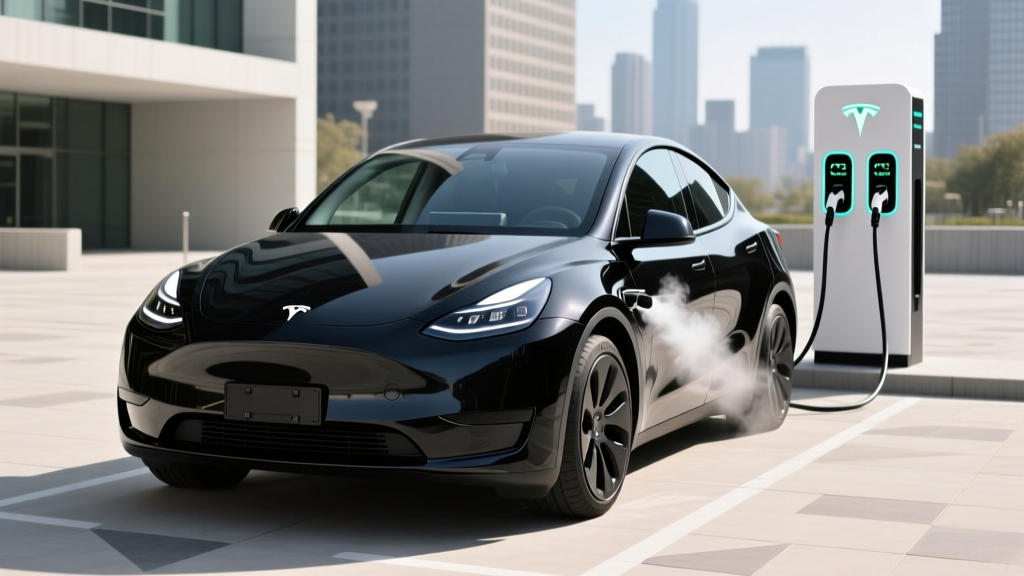
The Tesla Model Y remains the benchmark against which every compact electric SUV is measured. Following the extensive "Juniper" refresh that debuted for the 2025 model year, the 2026 Tesla Model Y carries forward with significant update features that refine its aerodynamics, cabin acoustics, and software ecosystem. While competitors like the Hyundai Ioniq 5 and Ford Mustang Mach-E have closed the gap in styling and ride comfort, the Model Y's combination of efficiency, Supercharger network access, and continuous over-the-air (OTA) improvements keeps it at the top of the sales charts.
This review breaks down exactly what the latest update features mean for real-world buyers—from revised EPA range figures and charging speeds to the practical impact of the ambient lighting and ventilated seats introduced in the refresh. We'll also cover the critical question of federal tax credit eligibility under current IRS §30D rules.
2026 Tesla Model Y: Core Specifications at a Glance
| Specification | Long Range AWD | Performance (if available) |
|---|---|---|
| EPA Range | 320 miles | 293 miles (est.) |
| Battery (usable) | ~78 kWh (NMC) | ~78 kWh (NMC) |
| Drivetrain | Dual-Motor AWD | Dual-Motor AWD |
| Horsepower | 384 hp | ~456 hp |
| 0-60 mph | 4.8 sec | 3.5 sec |
| MPGe (combined) | 111 MPGe | ~102 MPGe |
| Efficiency | 30 kWh/100 mi | ~33 kWh/100 mi |
| Max DC Fast Charge | 250 kW | 250 kW |
| 10-80% DC Time | ~25 min | ~25 min |
| Level 2 Charge Rate | 11.5 kW (~44 mi/hr) | 11.5 kW |
| Cargo (rear seats up) | 30.2 cu ft | 30.2 cu ft |
| Cargo (seats folded) | 72.1 cu ft | 72.1 cu ft |
| Base MSRP | $44,990 | $52,990 (est.) |
| Battery Warranty | 8 yr / 120,000 mi | 8 yr / 120,000 mi |
Range and Efficiency: EPA Sticker vs. Real-World Driving
The 2026 Model Y Long Range AWD carries an EPA-estimated range of 320 miles, a slight improvement attributed to the Juniper refresh's revised front fascia, flush door handles, and improved underbody paneling that reduce the drag coefficient. On the efficiency side, it achieves 111 MPGe combined (30 kWh per 100 miles), which remains best-in-class for the segment according to fueleconomy.gov.
The EPA figure assumes a mix of city and highway driving at moderate temperatures. In our experience and consistent with independent testing:
- Highway (70-75 mph, 70°F): Expect 270–290 miles. Aerodynamic drag hits EVs harder than gas cars at sustained speed.
- City / stop-and-go: 310–330 miles is achievable thanks to regenerative braking recapturing energy.
- Cold weather (below 32°F): Range drops 20–30%, yielding roughly 220–255 miles. The heat pump (standard on all 2026 trims) mitigates this compared to older resistive-heater EVs, but physics still wins.
- Towing: If equipped with the tow package (3,500-lb capacity), cut range estimates nearly in half at highway speeds.
For most daily commutes and weekend road trips, 320 miles is generous—you'll rarely need to charge above 80% on daily drives, which also preserves long-term battery health.
Charging Speeds: DC Fast, Level 2, and the Supercharger Advantage
Charging speed is where the Model Y's ecosystem advantage becomes tangible. The 2026 model retains a 250 kW peak DC fast-charge rate on Tesla's V3 and V4 Superchargers, as well as on CCS-equipped third-party networks via the built-in NACS port (now the North American standard).
| Charging Level | Power / Rate | Speed (Miles Added) | Typical Use Case |
|---|---|---|---|
| Level 1 (120V household) | ~1.4 kW | ~5 mi/hr | Emergency / overnight trickle |
| Level 2 (240V home Wall Connector) | 11.5 kW | ~44 mi/hr | Daily home charging (full in ~7 hrs) |
| DC Fast (Supercharger V3/V4) | Peak 250 kW | ~175 mi in 15 min | Road trips; 10-80% in ~25 min |
| DC Fast (CCS adapter / 3rd party) | Up to 250 kW | Varies by station | Non-Tesla networks (EA, EVgo) |
Charging curve reality: The 250 kW peak is not sustained across the entire session. The Model Y charges aggressively from 10% to roughly 50% SoC, then tapers. Expect an average rate closer to 150–170 kW across a full 10–80% session, which still delivers roughly 200 miles of range in 25 minutes. Battery preconditioning—triggered automatically when you navigate to a Supercharger—is essential for hitting peak rates, especially in cold weather.
At home, the Tesla Wall Connector on a 60-amp circuit (48-amp continuous) delivers the full 11.5 kW, replenishing the battery from 20% to 80% in roughly 4 hours. Most owners who plug in nightly never think about range again.
Performance, Ride, and the Juniper Update Features
The 2026 Model Y Long Range AWD hits 0-60 mph in 4.8 seconds with 384 horsepower from its dual-motor setup. That's quick enough to merge confidently and pass without drama, though the Performance variant's 3.5-second sprint remains the thrill-seeker's choice.
The Juniper update features that carry into 2026 address the most common criticisms of the pre-refresh Model Y:
- Acoustic glass: Laminated glass on all windows significantly reduces wind and road noise at highway speeds—a genuine improvement over the 2024 model.
- Retuned suspension: Softer damping and revised bushings absorb potholes and expansion joints more gracefully. The ride is no longer punishing, though it's still firmer than an Ioniq 5.
- Ambient lighting and ventilated front seats: Previously reserved for the Model S/X, these now appear in the Model Y, adding a premium feel that competitors have offered for years.
- Rear-seat touchscreen: An 8-inch display for rear passengers controls climate, media, and streaming—useful for families.
- Power-folding second row: Available on select trims, improving cargo flexibility.
Inside, the minimalist dashboard remains. The 15.4-inch center touchscreen handles all vehicle controls, navigation, and entertainment. Build quality has improved noticeably—panel gaps are tighter, and materials feel more substantial than the 2022–2024 era.
Autopilot, FSD (Supervised), and Driver Assistance
Tesla's Autopilot and Full Self-Driving (Supervised) are Level 2 driver-assistance systems under the SAE J3016 standard. This means the driver must remain fully engaged, hands on or near the wheel, and eyes on the road at all times. These systems are not "self-driving" and cannot operate without active human supervision. Only Level 4 services like Waymo operate without a driver in defined geographic zones.
The 2026 Model Y ships with Tesla's latest vision-only hardware suite (HW4/AI4 cameras). Standard Autopilot includes Traffic-Aware Cruise Control and Autosteer (lane centering). The optional FSD (Supervised) package adds automatic lane changes, traffic light and stop sign recognition, and Navigate on Autopilot for highway on/off-ramp management.
- It does not make the car autonomous. You are the driver and liable for all actions.
- It can misread construction zones, faded lane markings, and complex intersections.
- It may require sudden driver intervention at any moment.
- It does not qualify as "self-driving" under any U.S. federal regulation as of 2026.
In terms of safety, the Model Y continues to earn top marks from both NHTSA (5-star overall) and IIHS (Top Safety Pick+), though buyers should note that IIHS ratings can shift with updated test protocols year to year.
Pricing, Trims, and Federal Tax Credit Eligibility
The 2026 Tesla Model Y lineup is streamlined:
- Long Range AWD: $44,990 MSRP (before destination)
- Performance AWD: ~$52,990 MSRP (estimated; confirm at order)
- Rear-Wheel Drive (base): Expected ~$39,990 (availability varies by market and production schedule)
Popular options include the $2,000 FSD (Supervised) subscription or one-time purchase, premium paint colors ($1,000–$2,500), and 20-inch wheels ($2,000, which reduce range by roughly 10 miles).
Federal Tax Credit: IRS §30D Rules for 2026
- MSRP Cap: SUVs/vans/pickups must have MSRP ≤ $80,000. The Model Y qualifies on all trims.
- Buyer Income Cap: AGI must not exceed $150,000 (single), $225,000 (head of household), or $300,000 (joint filers).
- Battery Sourcing: A percentage of critical minerals and battery components must be sourced from the U.S. or free-trade-agreement partners. These thresholds increase annually. Tesla's U.S.-built cells (via Panasonic at Giga Nevada/Texas) generally satisfy this, but verify at point of sale.
- Final Assembly: Must occur in North America. All U.S.-sold Model Ys are built at Giga Texas—qualifies.
- Point-of-Sale Transfer: You may transfer the credit to the dealer at purchase, reducing your out-of-pocket cost immediately, rather than waiting to claim it on your tax return.
Source: IRS.gov §30D. Rules are subject to change. Consult a tax professional before purchasing.
| Trim | Base MSRP | Est. §30D Credit | Effective Price (if eligible) |
|---|---|---|---|
| Long Range AWD | $44,990 | Up to $7,500 | ~$37,490 |
| Performance AWD | $52,990 | Up to $7,500 | ~$45,490 |
Who Should Buy the 2026 Model Y?
- You want access to the most reliable DC fast-charging network (Supercharger) without adapters or app fragmentation.
- Efficiency and range-per-dollar are top priorities.
- You value OTA software updates that add features post-purchase.
- You need a practical family SUV with strong cargo space (72 cu ft) and available towing.
- You prefer physical buttons and a traditional dashboard layout (try the Ioniq 5 or Mach-E).
- Ride comfort on rough roads is paramount—the Model Y is improved but still firm.
- You want Apple CarPlay/Android Auto (Tesla uses its own proprietary infotainment).
Pros and Cons
- Best-in-class efficiency (30 kWh/100 mi)
- Supercharger network reliability
- 320-mile EPA range covers most needs
- Improved cabin quietness post-Juniper
- Continuous OTA feature additions
- Strong resale value relative to EV segment
- No Apple CarPlay / Android Auto
- FSD (Supervised) is expensive and still Level 2
- Ride still firmer than some rivals
- Minimalist interior isn't for everyone
- 250 kW peak charge rate trails 800V competitors (Ioniq 5 at 350 kW)
Frequently Asked Questions
What is the real-world range of the 2026 Tesla Model Y?
The EPA estimates 320 miles for the Long Range AWD. In real-world highway driving at 70-75 mph, expect 270–290 miles. In cold weather (below freezing), range can drop to 220–255 miles due to battery chemistry limitations and cabin heating demand, even with the standard heat pump.
How fast does the Model Y charge at home and on the road?
At home on a Level 2 Tesla Wall Connector (11.5 kW), you'll add roughly 44 miles of range per hour, fully charging overnight. On a V3/V4 Supercharger, the peak rate is 250 kW, delivering a 10–80% charge in approximately 25 minutes. Note that the charge curve tapers significantly above 50% SoC—don't plan road-trip stops around the peak number alone.
Does the 2026 Model Y qualify for the $7,500 federal EV tax credit?
It can, but eligibility depends on your income, the vehicle's MSRP, and battery-sourcing compliance. The Model Y is built in Texas (qualifying final assembly), falls under the $80,000 SUV MSRP cap, and Tesla's U.S. battery supply chain generally meets critical-mineral thresholds. However, your adjusted gross income must be below $150K (single) or $300K (joint). Always verify current rules at IRS.gov and consult a tax professional.
Is the Model Y worth buying vs. the Hyundai Ioniq 5 or Ford Mustang Mach-E?
The Model Y wins on efficiency, range, and charging network access. The Ioniq 5 offers 800V architecture (350 kW peak charging, 10–80% in ~18 min), a more comfortable ride, and Apple CarPlay. The Mach-E provides a more traditional driving feel and competitive range. If Supercharger access and software are priorities, the Model Y remains the default. If you want faster peak charging or a softer ride, test-drive the Ioniq 5.
What update features are new for the 2026 model year?
The 2026 Model Y carries forward the Juniper refresh features introduced in 2025: acoustic glass, retuned suspension, ventilated front seats, ambient interior lighting, rear-seat touchscreen, and a revised front/rear fascia for improved aerodynamics. Software updates continue to add features like improved voice commands, enhanced Dashcam capabilities, and trip planning refinements via OTA.
What is the battery warranty?
Tesla covers the Model Y's battery and drive unit for 8 years or 120,000 miles, whichever comes first, with a guaranteed minimum 70% capacity retention over that period. This is competitive with the segment standard (Hyundai offers 10 yr/100,000 mi on the Ioniq 5 battery).