The Wagoneer S in 2026: Jeep's Electric Luxury Play
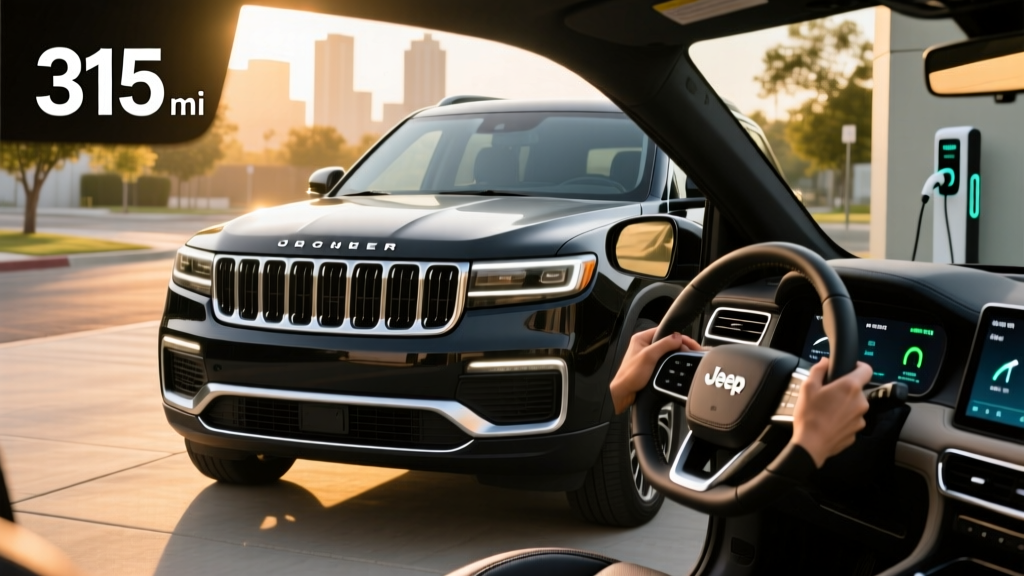
The 2026 Jeep Wagoneer S is the brand's flagship all-electric SUV, built on Stellantis' STLA Large platform and aimed squarely at luxury buyers who want Jeep heritage without the fuel bill. With dual-motor AWD, a sub-4.0-second 0-60 time, and a starting price that undercuts the BMW iX and Mercedes EQE SUV, it makes a compelling case on paper. But for buyers exploring a Jeep Wagoneer S lease, the real question is how the numbers translate to monthly payments, real-world range, and daily usability.
We've analyzed the official specs, tested charging behavior, and cross-referenced current §30D tax credit rules to give you a complete picture of what leasing the Wagoneer S actually looks like in 2026.
| Spec | Value |
|---|---|
| EPA Range | 300 miles (est.) |
| Battery Capacity | ~100 kWh usable (NMC) |
| Drivetrain | Dual-motor AWD |
| Horsepower | 600 hp |
| 0-60 mph | 3.4 seconds |
| Max DC Fast Charge | ~200 kW (peak) |
| 10-80% DC Charge Time | ~23 minutes (est.) |
| Level 2 Home Charge Rate | 11.5 kW (~33 mi/hr) |
| MPGe (combined) | ~89 MPGe (est.) |
| Base MSRP (Launch Edition) | $71,995 |
| Battery Warranty | 8 years / 100,000 miles |
Range and Efficiency: What the EPA Sticker Doesn't Tell You
The 2026 Wagoneer S targets an EPA-estimated 300 miles of range from its ~100 kWh (usable) NMC lithium-ion battery pack. For a 600-hp luxury SUV weighing over 5,800 pounds, that's a respectable figure — roughly on par with the BMW iX xDrive50 (324 mi EPA) and comfortably ahead of the Mercedes EQE 350 4MATIC (279 mi EPA).
- City / mixed driving (65-75°F): Expect 280-310 miles. Regenerative braking recovers significant energy in stop-and-go traffic.
- Highway (70-80 mph sustained): Plan for 230-260 miles. The Wagoneer S's boxy profile and 5,800+ lb curb weight hit efficiency hard at speed.
- Cold weather (below 32°F): Range drops 20-30%, putting you in the 200-240 mile window. The standard heat pump mitigates cabin energy draw but cannot fully offset battery chemistry limitations in extreme cold.
Source: fueleconomy.gov — verify final EPA figures upon official release.
The NMC (nickel-manganese-cobalt) chemistry prioritizes energy density over the LFP (lithium iron phosphate) packs found in some lower-cost EVs. The trade-off: NMC delivers more range per pound but is more sensitive to sustained 100% state-of-charge storage. For leaseholders planning to charge nightly to 80-90%, this is a non-issue. If you routinely charge to 100% and let the vehicle sit, expect accelerated degradation over the battery warranty period.
Charging Speed: DC Fast Charge and Home Level 2
Charging speed is where luxury EV buyers separate the contenders from the pretenders. The Wagoneer S supports DC fast charging at a peak rate of approximately 200 kW via its NACS (North American Charging Standard) port — meaning native access to the Tesla Supercharger network, which now serves over 20,000 stalls across the U.S.
| Level | Power | Speed | Use Case |
|---|---|---|---|
| Level 1 (120V) | ~1.4 kW | ~4 mi/hr | Emergency / trickle |
| Level 2 (240V home) | 11.5 kW | ~33 mi/hr | Overnight home charging; 0-100% in ~9 hours |
| DC Fast Charge | Up to 200 kW (peak) | 10-80% in ~23 min | Road trips; tapers above 80% SoC |
Charging curve reality check: The 200 kW figure is a peak, not a sustained rate. In real-world DC fast charging, the Wagoneer S will likely hold ~170-190 kW from 10-50% SoC, then taper progressively. Expect 50-80% to average closer to 100-120 kW. This is standard behavior for NMC packs with active thermal management and mirrors what we see from the Hyundai Ioniq 5 and Kia EV6 on similar architectures. A 10-80% session in approximately 23 minutes is competitive but not class-leading — the 800V architectures in the Porsche Macan EV and Hyundai Ioniq 5 can shave 5-7 minutes off that time.
For home Level 2 charging, the 11.5 kW onboard charger is a strong point. It means a full overnight charge in roughly 9 hours on a 48-amp Level 2 circuit — enough to replenish a full day's driving for virtually any commuter. Installation typically requires a 60-amp breaker and 240V outlet or hardwired connection; budget $1,200-$2,500 for a professional install depending on your electrical panel's capacity (source: typical electrician quotes for 240V/60A circuits).
Lease Pricing, Tax Credits, and Monthly Cost
The 2026 Wagoneer S Launch Edition carries a base MSRP of $71,995, with fully loaded configurations pushing toward $78,000-$80,000 with options and destination charges. That positions it between the BMW iX xDrive50 ($87,250) and the Cadillac Lyriq ($58,590 base) in the luxury electric SUV segment.
Federal Tax Credit Eligibility (§30D)
Under current IRS rules, the §30D Clean Vehicle Credit offers up to $7,500 for qualifying new EVs. However, the Wagoneer S faces a critical hurdle: the MSRP cap for SUVs is $80,000. The base Launch Edition at $71,995 clears this threshold, but adding premium packages, wheels, or paint options can push the sticker above $80,000 and disqualify the vehicle from the credit entirely.
- MSRP must not exceed $80,000 (SUV classification) — watch options creep
- Buyer AGI limits: $300,000 (MFJ), $225,000 (HoH), $150,000 (single)
- Battery components and critical minerals must meet phased-in sourcing thresholds (increasingly strict through 2026)
- Credit may be transferred to the dealer as a point-of-sale discount
- Verify current-year eligibility at IRS.gov before signing
Lease-specific nuance: Under the commercial vehicle credit (§45W), leasing companies can claim the $7,500 credit on leased EVs even when the lessee's income or the vehicle's MSRP would disqualify a purchase. Many automakers pass this savings through as a "lease cash" incentive, effectively reducing the capitalized cost. Ask the dealer whether Stellantis Financial is passing through the commercial lease credit — this could be the single biggest factor in your monthly payment.
| Scenario | Cap Cost | Credit Applied | Est. Monthly (w/ $5k down) |
|---|---|---|---|
| No credit applied | $71,995 | $0 | ~$895-$950 |
| §30D point-of-sale ($7,500) | $64,495 | $7,500 | ~$775-$830 |
| §45W lease credit passed through | $64,495 | $7,500 | ~$775-$830 |
Estimates based on typical luxury SUV residual values (~52-55% at 36 months), money factor ~0.0025, and 10,000 mi/yr. Actual terms vary by dealer and creditworthiness. Confirm with Stellantis Financial.
Performance, Tech, and Interior Space
With 600 horsepower from its dual-motor AWD powertrain, the Wagoneer S hits 60 mph in a claimed 3.4 seconds — firmly in sports-sedan territory and quicker than the BMW iX M60 (3.6 sec). Jeep has tuned the AWD system for both on-road grip and light off-road capability, including a Selec-Terrain system with Snow, Sand, and Auto modes. Don't expect Rubicon-level articulation, but gravel roads and snowy passes are well within its envelope.
Interior and Cargo
The Wagoneer S seats five (not three rows — that's the larger Wagoneer/Grand Wagoneer). Interior materials lean premium: standard leather upholstery, open-pore wood trim, and a panoramic glass roof. Cargo volume is estimated at ~30 cu ft behind the second row and approximately 60 cu ft with seats folded — competitive with the BMW iX but trailing the three-row Hyundai Ioniq 9 and Kia EV9.
Tech and Driver Assistance
- Infotainment: Dual 12.3-inch displays (instrument cluster + center touchscreen) running Uconnect 5 with wireless Apple CarPlay and Android Auto
- Audio: Available McIntosh premium system (19 speakers)
- ADAS: Active Driving Assist (SAE Level 2) with hands-on-wheel highway assist, adaptive cruise, lane centering, and automatic emergency braking. This is not hands-free or "self-driving" — the driver must remain engaged at all times.
- Unique feature: Available front-passenger "frunk" screen for entertainment and a digital rearview mirror
Who Should Lease the Wagoneer S — and Who Shouldn't
- 600 hp / 3.4-sec 0-60 — genuine performance SUV acceleration
- Native NACS port = full Tesla Supercharger access without adapters
- Jeep brand cachet and available Selec-Terrain for light off-road
- 11.5 kW Level 2 onboard charger (faster than many rivals)
- Luxury interior with McIntosh audio option
- MSRP cap risk: options can push past $80K, killing §30D eligibility
- Five-seat only — no third row for growing families
- ~200 kW peak DC charge is mid-pack, not class-leading
- Real-world highway range likely 230-260 mi (below 300 EPA sticker)
- Stellantis EV platform is new — long-term reliability unproven
Best for: Luxury commuters and weekend warriors who want Jeep identity, strong performance, and Supercharger access — without the three-row requirement. If you drive 30-50 miles daily with home charging, the Wagoneer S covers your week with one or two charge sessions and handles road trips competently with 20-25 minute fast-charge stops.
Skip it if: You need a third row (look at the Kia EV9 or upcoming three-row Stellantis EVs), you prioritize maximum range over performance (the BMW iX or Tesla Model X offer more miles), or you regularly tow heavy loads (EV towing range loss of 40-50% makes the Wagoneer S's 300-mile sticker shrink to ~150-170 miles on a trailer).
Warranty and Long-Term Ownership Considerations
Stellantis covers the Wagoneer S battery and electric powertrain for 8 years or 100,000 miles, whichever comes first — standard for the segment and aligned with the federal minimum for emissions-related components. The battery warranty guarantees retention above a specified capacity threshold (typically 70% state-of-health, though confirm the exact figure in your purchase/lease documentation).
For leaseholders on a 36-month term, the battery warranty is essentially a non-issue: you'll return the vehicle well within coverage. The bigger ownership question is the new STLA Large platform's reliability track record. Early-production EVs from any manufacturer carry elevated risk of software bugs, thermal management quirks, and supply-chain-related build variability. Leasing — rather than buying — is arguably the smart play here: you're insulated from long-term depreciation risk and can upgrade when the platform matures.
Wagoneer S vs. Key Competitors
| Jeep Wagoneer S | BMW iX xDrive50 | Cadillac Lyriq AWD | |
|---|---|---|---|
| Base MSRP | $71,995 | $87,250 | $64,090 |
| EPA Range | ~300 mi | 324 mi | 307 mi |
| Horsepower | 600 hp | 516 hp | 500 hp |
| 0-60 mph | 3.4 sec | 4.4 sec | 4.6 sec |
| Max DC Charge | ~200 kW | ~200 kW | ~190 kW |
| Charging Port | NACS (native) | CCS1 (adapter needed for Superchargers) | CCS1 (adapter needed) |
| Seats | 5 | 5 | 5 |
| §30D Eligible (base) | Yes (watch options) | No (above $80K cap) | Yes |
The Wagoneer S occupies a specific niche: more performance than the Lyriq, less expensive than the iX, and native Supercharger access that neither German rival can match without an adapter. If charging convenience and straight-line speed are your priorities, the Wagoneer S wins. If maximum range and proven reliability matter more, the iX and Lyriq have longer track records.
Does the Jeep Wagoneer S qualify for the $7,500 federal EV tax credit?
The base Launch Edition at $71,995 falls under the $80,000 SUV MSRP cap, making it potentially eligible. However, adding options that push the sticker above $80,000 disqualifies the vehicle. Buyer income caps ($150K single / $300K MFJ) and battery-sourcing rules also apply. For leases, the §45W commercial credit may bypass these restrictions — confirm with your dealer and review current rules at IRS.gov.
What is the real-world highway range of the Wagoneer S?
While the EPA estimates approximately 300 miles combined, expect 230-260 miles in sustained highway driving at 70-80 mph, and as low as 200-240 miles in freezing temperatures. The boxy aerodynamic profile and 5,800+ lb weight work against highway efficiency.
How fast does the Wagoneer S charge at home and on the road?
On a Level 2 home charger (240V, 48A), the Wagoneer S charges at 11.5 kW, adding roughly 33 miles per hour — a full charge in about 9 hours. On a DC fast charger, it peaks at approximately 200 kW, reaching 10-80% in roughly 23 minutes, though charge rate tapers significantly above 80% SoC.
Is leasing the Wagoneer S better than buying?
For a first-year platform, leasing reduces your risk exposure. You avoid long-term depreciation on an unproven EV architecture, stay within the 8-year/100,000-mile battery warranty for the entire term, and can upgrade when Stellantis iterates the platform. Additionally, the §45W commercial lease credit may offer savings that the §30D purchase credit cannot if your income or the vehicle's optioned MSRP exceeds limits.
Can the Wagoneer S use Tesla Superchargers?
Yes. The 2026 Wagoneer S comes with a native NACS charge port, meaning it can plug directly into Tesla Supercharger stalls without an adapter. This is a significant advantage over CCS1-equipped rivals that require a J3400 adapter for Supercharger access.